
Where Precision Manufacturing saves money and where it does not
Precision Manufacturing can cut costs dramatically when tolerances, yield, compliance, and lifecycle reliability directly affect profit. But for finance approvers, the real question is where higher precision creates measurable return—and where it only raises capital and operating expense without strategic value. This article helps decision-makers separate necessary investment from unnecessary overengineering.
Why finance teams should use a checklist before approving Precision Manufacturing spend
For a finance approver, the biggest risk is not underinvesting in Precision Manufacturing. It is funding the wrong level of precision for the wrong process step. In many industrial programs, the cost difference between a standard machining or assembly route and an ultra-precise route can range from 20% to well above 200%, depending on metrology depth, environmental control, materials, and qualification requirements. That spread makes checklist-based review essential.
A checklist works because precision is not a single benefit. It influences scrap rate, first-pass yield, inspection time, downtime frequency, warranty exposure, regulatory acceptance, and product longevity. In semiconductor tooling, aerospace components, medical implants, precision fluid control, optics, and advanced coatings, one tolerance decision can affect 6 to 12 downstream cost nodes. Finance teams need to review those nodes before treating higher precision as either a cost saver or a premium feature.
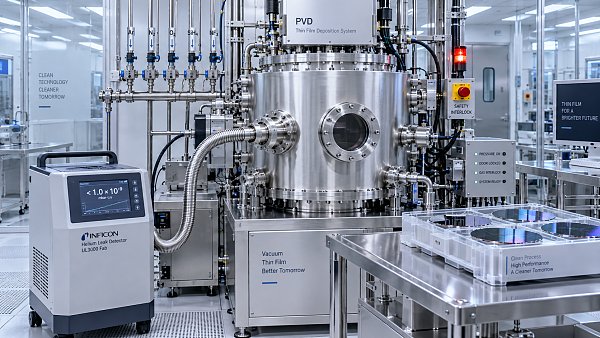
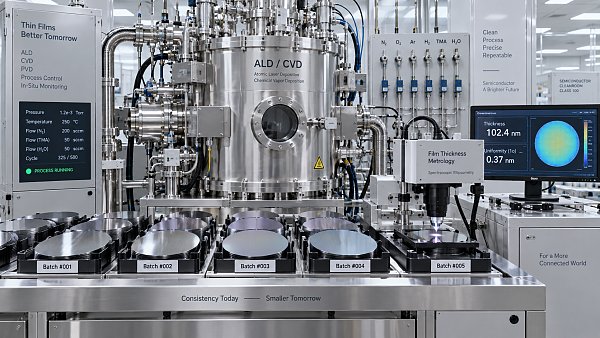
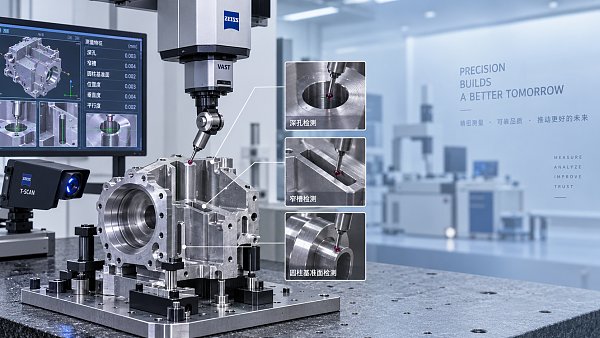
This is especially relevant in multidisciplinary procurement environments such as thin-film deposition systems, CMM and multi-sensory metrology, ultra-high purity chemicals, and nano-positioning platforms. In these sectors, the value of Precision Manufacturing often depends less on brochure-level accuracy and more on process repeatability over 12 to 60 months. A checklist prevents approvals based on headline micron or sub-micron numbers without business context.
First-pass review: the five questions to ask before approving budget
- Does tighter precision directly improve sellable output, such as higher yield, lower defect escape, or fewer rejected lots?
- Is the tolerance linked to a standard, customer contract, or regulatory requirement rather than internal preference?
- Will the precision level reduce total lifecycle cost across maintenance, calibration, rework, and field failure over at least 2 to 5 years?
- Can upstream and downstream processes actually preserve the specified tolerance, or will variation elsewhere erase the benefit?
- Is there evidence that the business loses margin today because current precision is insufficient, not because scheduling, training, or process control are weak?
If the answer to at least 3 of these 5 questions is unclear, budget approval should usually be conditional rather than immediate. Precision investments tend to deliver strong returns when they solve a quantified cost problem. They disappoint when they are approved as a generic quality upgrade.
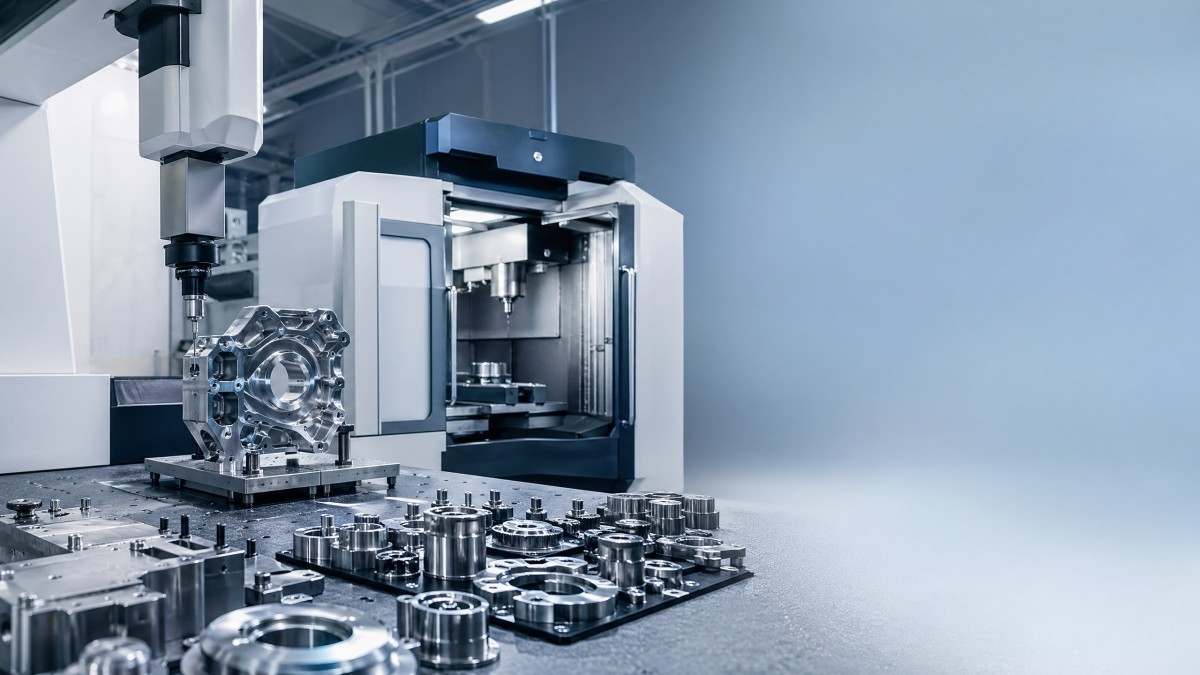
Where Precision Manufacturing usually saves money: a decision checklist
Precision Manufacturing most often saves money when the cost of variation is high. That sounds obvious, but finance teams should define “high” in operating terms: expensive scrap, long validation cycles, hard-to-replace materials, compliance exposure, or mission-critical performance. In these cases, reducing dimensional, positional, surface, or flow variability can produce measurable savings within 6 to 24 months.
The strongest returns usually appear in products or subsystems where failure is amplified downstream. A precision valve seat in a fluid control system, a tightly controlled coating thickness in an advanced deposition stack, or a sub-micron stage alignment issue in metrology equipment may each look small in isolation. But when one deviation causes retest, contamination, throughput loss, or assembly mismatch, the business cost becomes large relative to the machining premium.
Finance approvers should also look for process chains in which every rejected unit carries hidden costs beyond replacement. Those include operator time, engineering review, documentation updates, qualification reruns, and delayed customer acceptance. In many B2B industrial programs, a single nonconforming precision part can trigger 3 to 7 internal labor events before final disposition.
High-return conditions for Precision Manufacturing
The table below can be used as a practical approval screen. It focuses on where tighter precision tends to create a defensible business case rather than simply a technical preference.
The common thread is simple: Precision Manufacturing saves money when process variation is already costly, visible, and traceable. If the financial pain appears only in theory, the investment case is weak. If it appears in scrap reports, field failure logs, yield excursions, or customer claims, the case is stronger.
Checklist: signs that precision is likely to pay back
- Current defect or rework rate is above 2% to 5% on value-critical components.
- Calibration or verification already occurs weekly, monthly, or per lot because variation matters operationally.
- Downtime from alignment, leakage, fit-up, or vibration causes measurable throughput loss.
- Product performance depends on surface finish, flatness, concentricity, flow uniformity, or motion stability rather than visual acceptance alone.
These indicators are particularly relevant for advanced manufacturing systems benchmarked against ISO, SEMI, and IEEE-aligned practices, where repeatability and verification are as important as nominal specification.
Where Precision Manufacturing does not save money: overengineering red flags
Precision Manufacturing does not automatically reduce cost. It can become a source of excess spend when tolerances are tightened beyond functional need, when the production environment cannot hold those tolerances consistently, or when inspection burden grows faster than value creation. Finance teams should be alert when engineering proposes a high-precision route without a clear cost-of-poor-quality baseline.
A common example is applying ultra-fine tolerances to non-critical housings, brackets, covers, or support features that do not control product performance. Another is requiring premium metrology, climate control, or special fixturing for parts that will later be installed in assemblies with looser stack-up. In such cases, the business pays for precision that gets diluted within the next one or two process steps.
Overengineering also appears when procurement compares suppliers only by achievable tolerance instead of total process capability. A supplier offering a very tight nominal tolerance may still increase total cost through longer lead times, lower throughput, higher calibration dependency, or expensive change control. A 10-day delivery slip or a 15% lower production rate can erase the value of a more precise component if the end-use does not require it.
Red-flag checklist for unnecessary precision spend
- Tolerance is specified because “tighter is safer,” but no functional failure mode is identified.
- Inspection cost per part rises sharply, but defect cost has not been quantified.
- The process needs expensive environmental control, yet the final application operates in a much looser environment.
- The component is replaced frequently, making lifecycle durability less valuable than low unit cost.
- Supplier qualification time expands from weeks to months due to unnecessary precision demands.
If three or more of these red flags are present, finance should push for a tolerance-to-function review. In many programs, rightsizing tolerance bands saves 8% to 25% in component cost without affecting customer outcomes, especially for secondary features and non-critical interfaces.
Cost areas that often get underestimated
The next table highlights where Precision Manufacturing can create hidden cost if deployed without a clear value threshold. This is useful when reviewing capital requests, supplier change proposals, or engineering change orders.
The interpretation is straightforward: if added precision mainly increases verification effort, facility overhead, and supplier complexity without reducing meaningful failure cost, it is not saving money. It is shifting spend into a more expensive operating model.
How to judge Precision Manufacturing by application, not by headline tolerance
Finance decisions improve when Precision Manufacturing is reviewed by application type. The same tolerance can be mission-critical in one use case and irrelevant in another. For example, a micro-positioning system, a CMM reference structure, and a biomedical interface may all justify extremely tight geometry control. A protective frame, external panel, or low-risk mount may not.
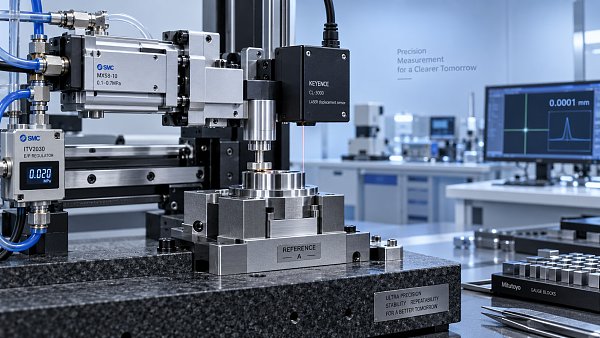
The key is to evaluate functional sensitivity. In coating systems, thickness uniformity or surface condition may affect deposition consistency. In pneumatic and fluid control, internal sealing geometry and flow path finish may influence leakage, response time, or contamination behavior. In metrology and stage systems, straightness, vibration response, and thermal stability can have direct measurement consequences over ranges such as 100 mm, 300 mm, or 1 m travel.
By contrast, many non-contacted, non-sealing, non-alignment-critical, or easily replaceable parts should be reviewed under cost-efficient manufacturability first. If no measurable gain appears in yield, uptime, compliance, or service life, a premium precision route may not be justified.
Application-based approval guide
Use the following matrix to align spending level with business impact instead of relying on a generic “high precision is better” assumption.
This table helps finance teams ask a more useful question: what business function does this precision protect? When the answer is contamination control, motion accuracy, inspection integrity, sealing reliability, or regulated performance, approval logic is strong. When the answer is mostly aesthetic or habitual, caution is appropriate.
Information to request from engineering before sign-off
- Current tolerance band and proposed tolerance band, with the affected functional feature clearly identified.
- Estimated effect on yield, rework, service interval, calibration frequency, and delivery time.
- Whether the requirement is customer-driven, regulation-driven, or internally selected.
- Whether existing metrology, environmental controls, and supplier capability can sustain the requirement at production volume.
These four inputs often reveal whether the proposed Precision Manufacturing route is solving a real bottleneck or simply increasing specification intensity.
Execution checklist: how to build a defensible approval decision
A sound approval process should compare total cost, not just purchase price. That means including internal metrology time, qualification effort, supplier lead time, warranty risk, and field service exposure. In many industrial settings, a component with a 12% higher unit cost may still be the lower-cost option if it avoids recurring rework or downtime. The reverse is also true.
Finance can improve decision quality by asking for a narrow business case over a realistic period such as 12, 24, or 36 months. This avoids inflated lifetime assumptions while still capturing repeat failures or maintenance trends. The business case should identify at least one measurable baseline, such as scrap percentage, leak rate, calibration interval, assembly time, or field replacement frequency.
It is also useful to separate prototype logic from production logic. Precision Manufacturing that is justified in early-stage validation may not remain justified after design stabilization. Once a product is mature, tolerance rationalization can often release cash without compromising performance.
Recommended approval workflow
- Map the feature to a business outcome: yield, uptime, compliance, performance, or warranty reduction.
- Confirm whether the requirement is mandatory, customer-specific, or internally optional.
- Quantify the current failure cost using recent production, service, or inspection data from the last 3 to 12 months.
- Compare at least two manufacturing routes: current method versus proposed precision method, including metrology and lead-time effects.
- Approve fully, approve conditionally for pilot lots, or reject pending additional evidence.
Common mistakes during financial review
The first mistake is approving based on technical prestige rather than functional necessity. The second is rejecting a high-precision proposal because unit cost looks high, even when the current process is already generating expensive hidden loss. The third is ignoring verification cost. A tolerance is not free just because a supplier claims they can hold it; someone still has to measure, document, and maintain it.
The fourth mistake is failing to ask whether adjacent processes support the precision level. If assembly fixtures, thermal conditions, or operating environments vary widely, a premium-machined component may not preserve its value in service. This is why end-to-end process capability matters more than isolated part capability.
The fifth mistake is skipping pilot validation. For many high-value applications, a limited run of 10 to 50 units can provide clearer cost evidence than lengthy internal debate. Pilot lots help finance teams verify whether proposed precision actually improves yield, calibration stability, or service intervals.
Why choose us for Precision Manufacturing evaluation and sourcing support
For finance approvers in advanced industrial procurement, the challenge is rarely finding a supplier that promises precision. The challenge is identifying where Precision Manufacturing creates measurable business value across coatings, fluid control, metrology, ultra-high purity systems, and nano-positioning applications. That is where structured technical benchmarking becomes commercially useful.
At G-UPE, we focus on the intersection of engineering detail and procurement decision quality. Our multidisciplinary coverage helps buyers compare process capability, tolerance relevance, compliance considerations, lifecycle risk, and delivery implications across multiple industrial pillars. This is especially valuable when a proposed precision upgrade affects more than one subsystem, such as motion control plus metrology, or purity handling plus fluid sealing.
If you need to move from a general discussion to a defensible approval decision, contact us with the specific feature, application, and cost concern under review. We can help you prioritize the right questions before budget is committed.
What you can contact us about
- Parameter confirmation for tolerance, surface finish, motion accuracy, purity level, or coating-related requirements
- Product and process selection between standard manufacturing and Precision Manufacturing routes
- Lead-time review, pilot-lot planning, and supplier capability comparison
- Custom solution review for regulated, mission-critical, or high-yield applications
- Certification and standards-related checkpoints, including general ISO, SEMI, and IEEE-aligned evaluation contexts
- Sample support, quote discussion, and total-cost review for procurement approval packages
The most effective next step is to share your current specification, the business risk you are trying to reduce, and the expected production or service environment. With those three inputs, the discussion can quickly shift from abstract precision claims to a realistic recommendation on cost, suitability, delivery, and return potential.
Recent Articles
 2026.10.18How linear motor stage settling time affects inspection throughputOptimize your linear motor stage for inspection systems: learn how settling time, vibration, and exposure timing affect throughput—and boost inspection output without sacrificing accuracy.
 2026.10.17Choosing a microfluidic probe manufacturer for stable flow confinementChoose a micro fluidic probe manufacturer with proven flow confinement. Compare geometry, flow control, validation, and repeatability to find the right fit for your application.
 2026.10.16What does measurement accuracy specified as % of full scale mean?Understand measurement specification accuracy as % of full scale. Learn to calculate error, compare sensor ranges, and choose the right instrument with confidence.
 2026.10.15How temperature affects high-accuracy dimensional analysis systemsDiscover how temperature affects high accuracy dimensional analysis systems, and learn practical ways to control thermal drift, improve compensation, and verify measurement accuracy.
 2026.10.14How air pressure affects precision pneumatic actuator repeatabilityPrecision Pneumatic actuator repeatability depends on more than supply pressure. Discover how pressure, friction, and flow affect positioning—and how to improve consistency in your application.
 2026.10.13How to choose a packaging manufacturer for small production runsChoose a packaging manufacturer for small production runs with confidence. Discover how to compare costs, verify samples, and secure quality packaging without excess inventory.
 2026.10.12Ultra-Pure Silane Gas for Thin Films: Matching Gas Grade to Film RequirementsChoose ultra-pure silane gas for thin films with confidence. Learn to match impurity limits, supplier evidence, and delivery conditions to film requirements while avoiding unnecessary costs.
 2026.10.12Ultra-Pure Silane Gas for PECVD: Linking Impurities to Film DefectsQualify ultra-pure silane gas for PECVD with confidence. Learn how impurities affect film defects and use gas analysis, delivery checks, and film testing to set reliable acceptance limits.
 2026.10.12Qualifying an Ultra-Pure Silane Gas Manufacturer: Batch Consistency and TraceabilityQualify an ultra-pure silane gas manufacturer with confidence. Learn how to verify batch consistency, analytical results, and cylinder traceability to reduce sourcing risks.
 2026.10.12Choosing an Ultra-Pure Silane Gas Supplier: Lead Times, Delivery, and Backup SupplyChoose an ultra-pure silane gas supplier with reliable lead times, compliant delivery, and qualified backup supply. Learn what to verify to protect production and reduce supply risks.
 2026.10.12Ultra-Pure Chemicals in Latin America: What Shapes Regional Supply and Demand?Ultra-pure chemicals Latin America: explore demand drivers, qualified supply, and purity risks to uncover smarter sourcing and investment opportunities.
 2026.10.12How Can You Verify a Thin-Film Deposition Supplier Meets SEMI Standards?How can I verify whether a thin-film deposition supplier meets SEMI requirements? Discover key standards, evidence checks, and acceptance tests to qualify suppliers with confidence.
 2026.10.12How Do You Compare ALD/CVD Suppliers for Process Consistency?How do I compare semiconductor manufacturing suppliers for process consistency? Discover how to assess ALD/CVD film quality, run-to-run stability, and drift controls to select with confidence.
 2026.10.12What Materials Data Is Needed to Qualify a New PVD Target Supplier?Which material science data is essential before qualifying a new supplier? Discover PVD target checks for purity, microstructure, density and bond integrity to qualify suppliers with confidence.
 2026.10.12What Should a Private-Label Photoresist Quality Agreement Include?Build a stronger private label manufacturing quality agreement for photoresist. Discover essential clauses for specifications, batch release, change control, and traceability.
 2026.10.12How Much Does an Optical Tweezers System Cost?Explore optical tweezers system price ranges, key cost drivers, and ownership expenses. Compare configurations and learn how to choose the right setup for your research budget.
 2026.10.12How to size commercial refrigerators for a restaurant kitchenDiscover how commercialrefrigerators should be sized for peak demand, smarter workflow, food safety, and reliable restaurant kitchen performance.
 2026.10.11How procurement planning reduces supply risk in Latin AmericaProcurement planning Latin America helps reduce supply risk with supplier qualification, import readiness, inventory controls, and contingency sourcing.
 2026.10.10How to build a supplier capability evaluation scorecard for critical partsSupplier capability evaluation scorecard: build a risk-based framework with gates, evidence, and weighted criteria to qualify critical-part suppliers with confidence.
 2026.10.09When do sub micron pneumatic actuators improve metrology repeatability?Sub micron pneumatic actuators for metrology improve repeatability by reducing friction, controlling contact force, and accelerating settling time. Discover when they deliver measurable inspection gains.
 2026.10.08How to assess measurement uncertainty from a precision metrology supplierPrecision metrology supplier guide: assess measurement uncertainty, traceability, environmental effects, calibration, and decision rules for reliable results.
 2026.10.07Metrology application notes for choosing CMM probe strategiesMetrology application notes for selecting CMM probe strategies, improving accuracy, access, repeatability, and confidence in complex feature inspection.
 2026.10.06What refresh rate do VR headsets need to reduce motion sicknessVR headsets need at least 90Hz to help reduce motion sickness. Discover why stable frame rates, low latency, and 120Hz support can deliver smoother, more comfortable VR experiences.
 2026.10.05What drives nano-indentation systems cost for a new lab?Nano-indentation systems cost: discover the real budget drivers for a new lab, from configuration and site readiness to software, calibration, and service.
 2026.10.04When does a micro fluidic probe OEM need custom channel geometry?Micro fluidic probe OEM guide: learn when custom channel geometry improves confinement, shear control, reagent savings, and process reliability.
 2026.10.03How to prevent cross-contamination in semiconductor gas handlingSemiconductor Gas Handling best practices to prevent cross-contamination, protect gas purity, improve process stability, and strengthen fab safety.
 2026.10.02How healthcare engineering improves the accuracy of diagnostic equipmentHealthcare engineering improves diagnostic accuracy through precision design, calibration, fluid control, and traceable validation for reliable clinical results.
 2026.10.01When does a steel-frame vibration isolation table provide enough stability?Vibration isolation table steel frame stability explained: assess stiffness, resonance, payload, and isolator performance for precise, reliable measurements.
 2026.09.30How probe station procurement alerts prevent costly supply delaysProbe station procurement alerts help teams spot configuration risks, lead-time changes, and compliance issues early—protecting test schedules and avoiding costly supply delays.
 2026.09.29When Are Optical Tweezers Better Than Mechanical Micro-Manipulators?When are optical tweezers better than mechanical micro-manipulators? Compare non-contact precision, force control, sample safety, and the right tool for your workflow.
 2026.09.29How Do You Troubleshoot Inconsistent CMM Measurements?How do I troubleshoot inconsistent CMM measurements? Discover practical checks for temperature, fixturing, probes, programs, and machine health to improve confidence.
 2026.09.29How Often Should a Laser Interferometer System Be Calibrated?How often should a laser-interferometer system be calibrated? Explore risk-based intervals, traceability, verification checks, and compliance tips for precision measurements.
 2026.09.29Is Private Label Manufacturing Suitable for Regulated Components?Is private label manufacturing suitable for regulated components? Explore traceability, quality controls, change management, and supplier qualification essentials.
 2026.09.29How Can Procurement Planning Reduce Single-Source Supply Risk?How can procurement planning reduce single-source supply risk? Discover practical strategies for qualifying alternatives, mapping dependencies, building buffers, and protecting critical operations.


























FILTER_CORE
REF_NO: 0042
Editors' Picks
- 00
0000-00
How linear motor stage settling time affects inspection throughput - 00
0000-00
Choosing a microfluidic probe manufacturer for stable flow confinement - 00
0000-00
What does measurement accuracy specified as % of full scale mean? - 00
0000-00
How temperature affects high-accuracy dimensional analysis systems