
Is Private Label Manufacturing Suitable for Regulated Components?
Is Private Label Manufacturing Suitable for Regulated Components?
Private label manufacturing can be suitable for regulated components, but only when the commercial model is matched to a disciplined quality, documentation, and change-control system. In aerospace, medical technology, semiconductor equipment, high-purity gas handling, and other controlled environments, a component does not become acceptable simply because it meets a drawing at the moment of shipment. Buyers must be able to establish what was made, from which material lot, using which process conditions, under whose authority, and against which acceptance criteria.
That distinction matters. A private-label arrangement may be commercially attractive because it gives an OEM, distributor, or systems integrator control over branding, market access, and product configuration. Yet the manufacturer remains part of the technical evidence chain. If the supplier cannot sustain traceability, document revisions, calibrated inspection, corrective action, and controlled process changes, the private-label model can create more regulatory exposure than value.
The practical question is not whether private label manufacturing is inherently acceptable. It is whether the proposed supplier and governance structure can demonstrate repeatable conformity for the specific component, intended use, market, and applicable standard. A machined enclosure for a general industrial sensor and a valve body used in a high-purity semiconductor gas system may both be sold under a customer’s brand, but they carry very different validation burdens.
Private Label Is a Commercial Model, Not a Compliance Strategy
Private label is often used loosely. It can mean a standard product rebranded by a buyer, a modified catalog component made to a buyer’s specification, or a fully custom design produced by a contract manufacturer. These arrangements should not be treated as equivalent.
The more the buyer changes the specification, material, coating, cleaning method, software configuration, or intended application, the more responsibility shifts from simple sourcing toward design and process governance. A nominally standard component can become a new risk profile when it is installed in a safety-related assembly, exposed to aggressive media, or required to meet particle, leakage, outgassing, biocompatibility, or dimensional-stability limits.
This is why the first procurement conversation should avoid starting with price, annual volume, or logo placement. It should start with the controlled product definition: drawings, critical-to-quality characteristics, materials, applicable regulations, inspection method, record-retention expectations, and the permitted range of manufacturing variation. If those items remain vague, a private-label program may look efficient during qualification and become difficult to defend after a field issue, audit, or product redesign.
Where the Model Can Work Well
A private-label arrangement is generally more workable when the product architecture is stable, the manufacturing process is mature, and responsibilities are unambiguous. A buyer may specify a proven alloy, a validated coating stack, a controlled cleaning process, and a defined inspection plan, while the manufacturing partner produces the part under approved work instructions. In this setting, private labeling does not reduce control; it formalizes how control is divided.
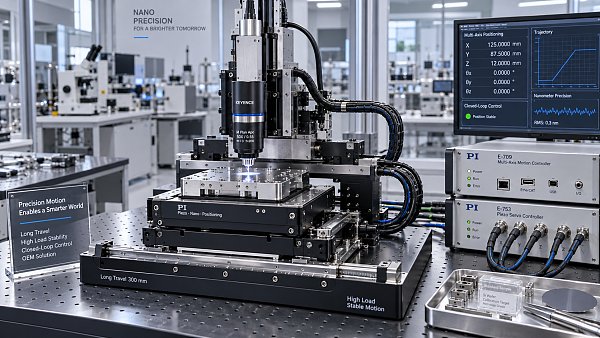
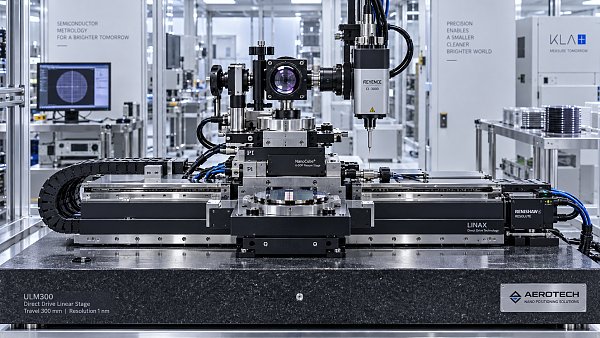
It can also be practical where a qualified manufacturer already has deep capability in a narrow process that the brand owner does not intend to develop internally. Precision pneumatic assemblies, specialty thin-film parts, high-purity fittings, metrology fixtures, and nano-positioning subassemblies often depend on process knowledge that is difficult to recreate quickly. The buyer may own the application requirements and market relationship, while the manufacturing partner owns the controlled production method.
The condition is that both sides recognize the difference between proprietary know-how and undocumented dependency. A supplier may reasonably protect process details, but the buyer still needs enough verified information to approve the component, investigate deviations, manage obsolescence, and support its own regulatory obligations.

The Controls That Decide Whether a Supplier Is Truly Qualified
For regulated components, supplier qualification should test the system behind the sample. A clean first article or prototype is useful, but it is not proof that the supplier can repeat the result over multiple lots, changing operators, revised tooling, or material substitutions. Procurement teams need evidence that production discipline extends beyond the inspection bench.
Certification can be relevant, but it should not end the evaluation. A quality management certificate may indicate that a supplier operates within a documented system; it does not automatically prove competence for a particular implantable device component, flight-critical feature, contamination-sensitive valve, or nanometer-scale positioning assembly. The applicable framework may involve ISO-based quality systems, sector requirements such as aerospace or medical quality standards, customer specifications, or market-specific regulatory expectations. Buyers should determine which requirements apply to the actual product rather than treating any one certificate as a universal passport.
Traceability Is More Than a Certificate Packet
Traceability is frequently reduced to a request for material certificates. That is only one layer. A robust record trail links the finished component to the relevant material lot, manufacturing route, inspection results, nonconformance decisions, and shipment identity. For some applications, it may also need to capture cleaning, packaging, environmental controls, or special-process records.
The required depth depends on risk. A component exposed to ultra-high-purity chemicals or electronic gases may require careful attention to wetted materials, surface treatment, residual contamination, and packaging integrity. A precision actuator may require repeatable performance across pressure, temperature, or cycle conditions. A coated optical or semiconductor-related part may require process records that explain deposition conditions and inspection methods, not merely a final visual approval.
Buyers should ask a simple but revealing question: if one shipment later proves suspect, can the supplier identify the affected population and show why adjacent lots are or are not affected? If the answer depends on spreadsheets maintained outside the formal quality system, undocumented operator knowledge, or a vague assurance that “nothing changed,” the program is not yet ready for a regulated application.
Precision Does Not Eliminate Regulatory Risk
Ultra-precision manufacturing can introduce a false sense of security. A supplier with advanced CMM capability, optical measurement, laser interferometry, or high-resolution surface analysis may be technically impressive. Yet a regulated component can still fail because the wrong revision was used, a sub-tier process changed without approval, a measurement method was not correlated to functional performance, or a cleaning step was omitted during a production transfer.
Conversely, a supplier with modest marketing claims but strong document discipline, experienced process engineering, and candid deviation management may be the better long-term partner. The goal is not to select the supplier with the longest equipment list. It is to select one whose equipment, process knowledge, inspection methods, and quality records form a coherent system.
This is particularly important when specifications approach the frontier of accuracy. At sub-micron or nanometer-sensitive levels, measurement strategy becomes part of manufacturing strategy. A tolerance must be connected to functional need, environmental condition, datum scheme, and measurement uncertainty. Requiring a number on a drawing without defining how it will be measured can produce disputes that no amount of final inspection can resolve.
Ownership, Liability, and the Problem of Silent Changes
Private-label programs often fail at the boundary between commercial ownership and technical ownership. The branded company may assume the factory is responsible for compliance because it manufactures the item. The factory may assume the branded company is responsible because it defines the market application. In regulated sectors, that ambiguity is dangerous.
A written quality agreement or equivalent controlled arrangement should establish who owns the design file, who approves deviations, which changes require notice, who can release a lot, how complaints are investigated, and how records remain accessible if the relationship ends. It should also address sub-tier suppliers. A manufacturer may outsource plating, heat treatment, sterilization-related packaging, cleaning, electronics assembly, or specialized testing. Those outsourced steps can be acceptable, but they cannot disappear from the buyer’s risk assessment.
Silent changes deserve special attention. A material substitution made for availability, a different polishing medium, a replacement seal compound, or a revised machining tool can appear operationally minor. In a controlled application, it may affect particle generation, fatigue life, leakage, chemical compatibility, surface condition, or dimensional behavior. Supplier flexibility is useful only when it operates inside an agreed change-control boundary.
A More Useful Qualification Path
A sensible evaluation usually moves from product risk to evidence, rather than from supplier reputation to assumptions. Begin by classifying the component’s intended function and failure consequences. Identify the characteristics that are critical to safety, performance, purity, fit, or regulatory submission. Then determine what objective evidence is needed at prototype, first article, production-lot, and post-change stages.
Before committing to a long production run, buyers can review sample documentation, conduct a focused quality-system assessment, and test whether the supplier handles questions about nonconformance and change control with specificity. A capable partner should be able to explain its escalation path, not merely promise that defects will be prevented. Early production should be treated as a learning period in which capability, inspection plans, packaging, transport conditions, and document flow are verified under real operating conditions.
For global sourcing, the review should include export controls, end-use restrictions, regional market requirements, and the practical availability of records across borders. These matters may affect whether parts, technical documents, software, materials, or process knowledge can be transferred as planned. They should be assessed early, particularly in semiconductor, aerospace, advanced materials, and high-purity process applications.
Using Independent Technical Intelligence Before the Decision
The hardest part of private-label sourcing is often comparing evidence across disciplines. A procurement team may need to assess coating performance, fluid-path purity, dimensional verification, chemical compatibility, and trade constraints in the same program. These fields use different technical language and different evidence standards, yet a weakness in any one of them can affect final compliance.
G-UPE approaches this problem through cross-sector technical benchmarking across specialized coatings and thin-film deposition, precision pneumatic and fluid control, CMM and multi-sensory metrology, ultra-high-purity chemicals and electronic gases, and micro-manipulation and nano-positioning systems. For buyers, the value of this perspective is not a generic supplier ranking. It is the ability to compare manufacturing claims with relevant ISO, SEMI, IEEE, customer, and application-level expectations, while keeping an eye on export-control and patent-landscape developments that may influence supply continuity.
Private label manufacturing is therefore suitable for regulated components when it is supported by auditable technical control—not when it is used as a shortcut around qualification. The right next step is to map the component’s critical characteristics, required records, applicable market obligations, and change-approval rules before selecting a brand owner or manufacturing partner. If those foundations are clear, private labeling can be a controlled route to market. If they are not, a lower unit price rarely compensates for the cost of uncertainty later.
Taglist:
- Specialized Coatings
- Thin-Film Deposition
- Precision Pneumatic
- Fluid Control
- Multi-Sensory Metrology
- Electronic Gases
- Micro-Manipulation
- Nano-Positioning
- Precision Manufacturing
- Technical Benchmarking
- ultra-precision manufacturing
- nano-positioning systems
- private label manufacturing
- high-purity gas handling
- laser interferometry
- Is private label manufacturing suitable for regulated components?
Recent Articles
 2026.10.15How temperature affects high-accuracy dimensional analysis systemsDiscover how temperature affects high accuracy dimensional analysis systems, and learn practical ways to control thermal drift, improve compensation, and verify measurement accuracy.
 2026.10.14How air pressure affects precision pneumatic actuator repeatabilityPrecision Pneumatic actuator repeatability depends on more than supply pressure. Discover how pressure, friction, and flow affect positioning—and how to improve consistency in your application.
 2026.10.13How to choose a packaging manufacturer for small production runsChoose a packaging manufacturer for small production runs with confidence. Discover how to compare costs, verify samples, and secure quality packaging without excess inventory.
 2026.10.12Choosing an Ultra-Pure Silane Gas Supplier: Lead Times, Delivery, and Backup SupplyChoose an ultra-pure silane gas supplier with reliable lead times, compliant delivery, and qualified backup supply. Learn what to verify to protect production and reduce supply risks.
 2026.10.12Ultra-Pure Chemicals in Latin America: What Shapes Regional Supply and Demand?Ultra-pure chemicals Latin America: explore demand drivers, qualified supply, and purity risks to uncover smarter sourcing and investment opportunities.
 2026.10.12What Should a Private-Label Photoresist Quality Agreement Include?Build a stronger private label manufacturing quality agreement for photoresist. Discover essential clauses for specifications, batch release, change control, and traceability.
 2026.10.12How Much Does an Optical Tweezers System Cost?Explore optical tweezers system price ranges, key cost drivers, and ownership expenses. Compare configurations and learn how to choose the right setup for your research budget.
 2026.10.12How to size commercial refrigerators for a restaurant kitchenDiscover how commercialrefrigerators should be sized for peak demand, smarter workflow, food safety, and reliable restaurant kitchen performance.
 2026.10.11How procurement planning reduces supply risk in Latin AmericaProcurement planning Latin America helps reduce supply risk with supplier qualification, import readiness, inventory controls, and contingency sourcing.
 2026.10.10How to build a supplier capability evaluation scorecard for critical partsSupplier capability evaluation scorecard: build a risk-based framework with gates, evidence, and weighted criteria to qualify critical-part suppliers with confidence.
 2026.10.09When do sub micron pneumatic actuators improve metrology repeatability?Sub micron pneumatic actuators for metrology improve repeatability by reducing friction, controlling contact force, and accelerating settling time. Discover when they deliver measurable inspection gains.
 2026.10.08How to assess measurement uncertainty from a precision metrology supplierPrecision metrology supplier guide: assess measurement uncertainty, traceability, environmental effects, calibration, and decision rules for reliable results.
 2026.10.07Metrology application notes for choosing CMM probe strategiesMetrology application notes for selecting CMM probe strategies, improving accuracy, access, repeatability, and confidence in complex feature inspection.
 2026.10.06What refresh rate do VR headsets need to reduce motion sicknessVR headsets need at least 90Hz to help reduce motion sickness. Discover why stable frame rates, low latency, and 120Hz support can deliver smoother, more comfortable VR experiences.
 2026.10.05What drives nano-indentation systems cost for a new lab?Nano-indentation systems cost: discover the real budget drivers for a new lab, from configuration and site readiness to software, calibration, and service.
 2026.10.04When does a micro fluidic probe OEM need custom channel geometry?Micro fluidic probe OEM guide: learn when custom channel geometry improves confinement, shear control, reagent savings, and process reliability.
 2026.10.03How to prevent cross-contamination in semiconductor gas handlingSemiconductor Gas Handling best practices to prevent cross-contamination, protect gas purity, improve process stability, and strengthen fab safety.
 2026.10.02How healthcare engineering improves the accuracy of diagnostic equipmentHealthcare engineering improves diagnostic accuracy through precision design, calibration, fluid control, and traceable validation for reliable clinical results.
 2026.10.01When does a steel-frame vibration isolation table provide enough stability?Vibration isolation table steel frame stability explained: assess stiffness, resonance, payload, and isolator performance for precise, reliable measurements.
 2026.09.30How probe station procurement alerts prevent costly supply delaysProbe station procurement alerts help teams spot configuration risks, lead-time changes, and compliance issues early—protecting test schedules and avoiding costly supply delays.
 2026.09.29Is Private Label Manufacturing Suitable for Regulated Components?Is private label manufacturing suitable for regulated components? Explore traceability, quality controls, change management, and supplier qualification essentials.
 2026.09.29How Can Procurement Planning Reduce Single-Source Supply Risk?How can procurement planning reduce single-source supply risk? Discover practical strategies for qualifying alternatives, mapping dependencies, building buffers, and protecting critical operations.
 2026.09.29What Should a Precision Manufacturing Supplier Audit Include?What should be included in a precision manufacturing supplier audit? Explore essential checks for process capability, metrology, traceability, and risk control.
 2026.09.29How Do Export Controls Affect Semiconductor Equipment Lead Times?How do export controls affect semiconductor equipment lead times? Discover licensing, screening, supplier, and service risks—and plan smarter to protect fab schedules.
 2026.09.29What Maintenance Does a Micro-Manipulation System Need?What maintenance does a micro-manipulation system need? Explore calibration, cleaning, motion checks, cable care, and environmental controls for reliable precision.
 2026.09.29Microdynamics in Precision Motion: What Engineers Need to MeasureMicrodynamics in precision motion: learn what engineers must measure to control vibration, settling, friction, compliance, and servo response for reliable nanometer-level results.
 2026.09.29OEM Nanopositioning Solutions: Specifying Travel, Load, and Control RequirementsOEM nanopositioning solutions guide: specify usable travel, real payload dynamics, feedback, and control integration for reliable precision instruments.
 2026.09.29Factory-Price Photoresist Chemicals: What Buyers Should Verify Before OrderingFactory price photoresist chemicals: learn the essential checks for process fit, lot control, purity, packaging, and total cost before ordering.
 2026.09.29When Does Laser Interferometer Precision Limit a Metrology System?Laser interferometer precision: learn when it limits metrology systems, from air-path effects and alignment errors to uncertainty budgets and smarter upgrades.
 2026.09.29Selecting a Semi-Automatic Wafer Prober for Low-Volume Test LinesChoose a semi automatic wafer prober for low-volume test lines with guidance on contact stability, flexible wafer handling, probe compatibility, and repeatable workflows.
 2026.09.29Piezo Valves for Fast Gas Dosing: Matching Response Time to Process NeedsPiezo valves for fast gas dosing: learn how to match response time, pressure conditions, and system design for stable, repeatable process control.
 2026.09.29Why a Piezo Valve Loses Repeatability—and How to Diagnose ItPiezo valve repeatability issues? Learn how to diagnose drive signals, contamination, pressure instability, bubbles, and wear before costly replacement.
 2026.09.29Nanopositioning Stages: Comparing Direct-Drive and Piezo-Flexure DesignsNanopositioning stages compared: explore direct-drive and piezo-flexure designs for travel, stiffness, settling time, thermal stability, and precision control.
 2026.09.29ArF Photoresist in Vietnam: Supply-Chain Risks for Semiconductor FabsArF photoresist in Vietnam: uncover supply-chain, compliance, logistics, and qualification risks. Build resilient sourcing strategies for semiconductor fabs.
























FILTER_CORE
REF_NO: 0042
Editors' Picks
- 00
0000-00
How temperature affects high-accuracy dimensional analysis systems - 00
0000-00
How air pressure affects precision pneumatic actuator repeatability - 00
0000-00
How to choose a packaging manufacturer for small production runs - 00
0000-00
Choosing an Ultra-Pure Silane Gas Supplier: Lead Times, Delivery, and Backup Supply