
Fluid Control choices that change dosing repeatability
In high-precision manufacturing, Fluid Control decisions often determine whether dosing stays consistent or drifts beyond tolerance. For technical evaluators comparing systems, seemingly minor choices in valve design, wetted materials, pressure stability, and response time can directly affect repeatability, contamination risk, and process yield. This article examines the key Fluid Control factors that influence dosing performance and how to assess them with greater confidence.
Why dosing repeatability changes from one application scenario to another
For technical evaluation teams, the first mistake is often treating dosing repeatability as a universal specification. In reality, the same Fluid Control architecture can perform well in one environment and underperform in another. A dispenser handling low-viscosity cleaning chemistry at 0.5 mL to 5 mL per cycle may behave very differently when asked to meter high-value precursor fluids in microliter ranges or adhesive media with strong temperature sensitivity.
This matters across the broader industrial landscape represented by advanced electronics, aerospace assemblies, medical component processing, analytical instrumentation, and precision automation. In each case, repeatability is shaped by a chain of variables: inlet pressure variation, valve dead volume, seal compression set, tubing compliance, bubble formation, and cycle frequency. A system running 10 cycles per hour can tolerate a different control strategy than one running 30 to 120 cycles per minute.
From a procurement and qualification standpoint, the real question is not only whether a vendor lists repeatability, but under what conditions that figure was obtained. Was it measured with water-like media, at 20°C to 25°C, under constant head pressure, or with actual process fluid? Evaluators who align Fluid Control choices to operating scenario usually reduce requalification risk, startup scrap, and hidden maintenance costs over the first 6 to 18 months of deployment.
Scenario-driven evaluation is more reliable than headline specifications
When systems are compared only on nominal flow rate, buyers can miss more important indicators of dose stability. Response time below 20 ms may look attractive, but if pressure ripple remains above the process tolerance band, actual deposited volume can still drift. Likewise, a chemically resistant valve body is valuable, yet not sufficient if the wetted path introduces trapped volume that delays purge effectiveness.
Technical evaluators should therefore map every candidate system to a use case. Common review dimensions include dose volume range, acceptable coefficient of variation, startup stabilization time, fluid viscosity window, allowable particle generation, and maintenance interval. For many B2B applications, a repeatability target within ±0.5% to ±2% may be realistic, but only if the full Fluid Control chain is assessed, not just the actuator or valve in isolation.
- Low-volume dosing scenarios usually amplify dead volume, air entrainment, and thermal drift.
- High-throughput scenarios expose response lag, wear rate, and pressure regulator stability.
- Chemically aggressive scenarios prioritize wetted materials, seal life, and purge effectiveness.
- Contamination-sensitive scenarios place more weight on surface finish, cleanliness control, and particle shedding.
Three common application scenarios where Fluid Control choices matter most
The table below helps technical evaluators compare how dosing repeatability priorities shift across representative industrial scenarios. These are not narrow niche cases; they reflect recurring decision patterns in precision assembly lines, regulated process environments, and advanced materials handling workflows.
A useful takeaway is that repeatability does not degrade for the same reason in every case. In micro-volume work, trapped gas and actuation timing are often dominant. In viscous dispensing, rheology and temperature control may outweigh nominal valve speed. In purity-sensitive lines, a stable dose that introduces contamination is still a process failure. That is why Fluid Control evaluation should be tied to the business process, not only to catalog data.
Scenario 1: Micro-volume dosing for precision process windows
Micro-volume environments are especially unforgiving because small disturbances become large percentage errors. A 3 µL deviation in a 300 µL dose is 1%, but the same deviation in a 20 µL dose is 15%. In such settings, technical teams should review not just metering principle but also priming behavior, upstream reservoir position, pulse-to-pulse pressure stability, and the extent of line elasticity.
Valve architecture matters here. Diaphragm and isolation-style designs may reduce contamination pathways, while precision needle or piezo-assisted approaches can improve short-pulse control. The best option depends on fluid chemistry and maintenance strategy. If line purge takes 10 to 15 minutes after every fluid change, overall production efficiency may decline even if laboratory repeatability looks strong.
Another hidden issue is startup stabilization. Some systems deliver acceptable repeatability only after 20 to 50 cycles once pressure and meniscus conditions settle. Evaluators should ask whether first-shot performance is critical, especially in intermittent production or high-mix manufacturing cells.
What to verify in micro-volume Fluid Control
- Whether dose variation is stated across a full shift or only during a short test run.
- Whether tubing length, inner diameter, and elevation change were fixed during validation.
- Whether the system can maintain repeatability at both low and peak cycle frequencies.
- Whether bubble detection, degassing, or low-volume refill control is available.

Scenario 2: Adhesive and resin dispensing in assembly operations
Assembly-oriented dosing is a common cross-industry case, covering electronics packaging, sensor bonding, structural joining, and controlled sealing. Here, Fluid Control decisions affect not only volume consistency but bead geometry, wet-out behavior, cure quality, and rework rate. A line targeting 500 to 2,000 parts per shift often values stable repeatability over theoretical maximum speed.
Viscosity can vary significantly with temperature, lot age, and shear history. A resin that flows well at 25°C may thicken noticeably at 20°C, changing the actual delivered mass even when time-pressure settings remain constant. This is why evaluators should consider fluid conditioning, recirculation, and nozzle management as part of the Fluid Control system, not as separate accessories.
For these applications, anti-drip function and shutoff sharpness are especially important. If the valve closes cleanly but residual pressure remains in the line, the system may still create tails or inconsistent bead starts. In high-value assemblies, that can lead to cosmetic rejection, insulation problems, or bondline thickness drift that only appears later in reliability testing.
Scenario 3: Purity-sensitive or chemically aggressive fluid delivery
In semiconductor-adjacent processing, analytical equipment, and certain medical or specialty chemical workflows, dosing repeatability cannot be separated from cleanliness. Fluid Control components must protect the chemistry as much as meter it. Materials such as fluoropolymers, high-grade stainless steel, ceramic elements, or specially selected elastomers may be appropriate, but suitability depends on media reactivity, temperature exposure, and cleaning protocol.
Technical teams should also examine internal geometry. Sharp transitions, rough surfaces, and dead legs may promote residue retention or difficult-to-remove particles. A system that holds repeatability within ±1% but requires frequent disassembly for cleaning can become operationally expensive. Maintenance intervals of 1 month, 3 months, or 6 months can create very different total cost profiles depending on labor constraints and downtime penalties.
Leak integrity is another scenario-dependent concern. A low leak rate may be acceptable in some bulk chemical handling contexts, yet entirely unsuitable in trace-level dosing or hazardous media transfer. Evaluators should assess whether the Fluid Control design supports purge verification, containment, and predictable seal replacement before drift or corrosion becomes visible.
How different Fluid Control design choices influence repeatability
Once the application scenario is clear, the next step is to connect design choices to dosing behavior. The table below summarizes how common Fluid Control decisions tend to influence repeatability, maintenance, and process risk. It can be used during supplier comparison, internal design review, or pre-qualification testing.
The most important insight is that no single design choice solves every repeatability problem. Technical evaluators should look for fit between control method and process reality. For example, a low dead-volume path may be highly effective in a 50 µL pulse application, while closed-loop regulation may deliver more value in a long-run production line where utility pressure varies by 5% to 10% over the day.
Pressure stability and response time
Pressure fluctuation is one of the most common sources of unexplained dose shift. Even where average inlet pressure appears acceptable, short transients can change discharge behavior. In practical terms, a regulator that recovers slowly after each cycle may cause shot-to-shot variation at higher frequencies. This is especially relevant above 30 cycles per minute or where multiple dispensing heads share one supply source.
Response time should be reviewed together with repeatability, not separately. Fast actuation is only beneficial if opening and closing events are predictable under the actual fluid load. Technical teams should ask whether timing data was generated dry, with air, or with real process liquid. The difference can be significant once viscosity and backpressure are introduced.
Wetted materials, seals, and contamination pathways
Wetted path selection affects both chemistry compatibility and long-term stability. Seal swell, hardening, or micro-cracking can gradually alter opening behavior and cause drift long before catastrophic failure occurs. In some processes, preventive replacement every 500,000 to 2,000,000 cycles may be appropriate, but this depends heavily on media, pressure, and temperature exposure.
For contamination-sensitive lines, evaluate cleanability, drainability, and particle shedding risk. Surface finish, joint design, and maintenance access all influence whether the system can return to a known clean state after service. A robust Fluid Control design should support stable operation not only on day one, but after repeated maintenance and fluid changeovers.
Practical selection criteria for technical evaluators
Selection improves when evaluators use a structured review process tied to the intended scenario. Instead of starting with a preferred valve family or supplier tradition, begin with process boundaries: target volume, fluid characteristics, cycle profile, contamination tolerance, and maintenance window. This approach helps prevent over-specification in simple duties and under-specification in critical ones.
Where possible, qualification should include at least three stages: bench validation, process-simulated testing, and early production monitoring. Bench testing may confirm baseline repeatability over 100 to 1,000 cycles, but process-simulated testing is where thermal drift, line routing effects, and refill behavior usually become visible. Early production monitoring during the first 2 to 4 weeks often identifies issues that do not appear in short demonstration runs.
For cross-functional teams, it is also useful to align quality, process engineering, and procurement on pass-fail criteria before comparing suppliers. A system that is slightly more expensive at purchase may reduce scrap, calibration burden, or service downtime enough to improve full-life economics.
A practical checklist before approval
- Define the true operating dose range, not only the nominal target.
- Confirm fluid viscosity range across realistic temperature conditions, such as 18°C to 28°C if relevant.
- Review whether repeatability data reflects the intended cycle rate, shift length, and startup pattern.
- Check wetted material compatibility and seal replacement assumptions for the actual media.
- Ask about purge, cleaning, and changeover time if multiple fluids or frequent maintenance are expected.
- Evaluate spare part availability and realistic delivery lead time, which in some markets can range from 2 to 12 weeks.
Common misjudgments that affect repeatability
One frequent misjudgment is validating with a surrogate fluid that has similar viscosity but very different wetting behavior or volatility. Another is overlooking installation geometry. Vertical lift, tubing bends, and reservoir placement can all change pressure conditions enough to influence repeatability. Technical evaluators should also be cautious when vendor performance claims do not clearly state test media, cycle duration, and environmental conditions.
A second common issue is separating controls evaluation from fluid path evaluation. In many real systems, the actuator, regulator, tubing, fitting layout, and nozzle form one dynamic unit. Reviewing these elements independently can hide interactions that only emerge after integration. This is where disciplined Fluid Control benchmarking creates better decision confidence.
Why work with a partner that understands scenario-based Fluid Control evaluation
For technical evaluators, the value of an engineering intelligence partner lies in reducing uncertainty before procurement commitments are made. G-UPE supports scenario-based comparison across precision pneumatic and Fluid Control systems by focusing on the metrics that matter in real deployment: repeatability context, material compatibility, contamination risk, response characteristics, integration impact, and practical maintenance burden.
If your team is comparing options for micro-dosing, adhesive dispensing, specialty chemical handling, or another precision process, we can help you narrow the decision set with greater technical clarity. That may include parameter confirmation, application-fit review, support for custom configuration discussions, expected delivery window assessment, and guidance on standard-oriented evaluation points such as ISO, SEMI, or related engineering benchmarks where appropriate.
Contact us to discuss your Fluid Control scenario in practical terms: required dose range, fluid type, repeatability target, contamination threshold, line layout, service interval expectations, sample support needs, or quotation planning. If you are preparing a technical review or supplier shortlist, we can help structure the selection criteria so the final choice aligns with your process reality rather than generic specification claims.
Recent Articles
 2026.10.27India Hosts 61st CIML Meeting for First Time, Advances International Metrology AlignmentIndia hosts the 61st CIML meeting, highlighting OIML-CS status and legal metrology reforms. Explore what international alignment could mean for instrument certification and equipment trade.
 2026.10.27When should you call emergency medical services instead of driving?When should you call emergency medical services instead of driving? Learn the critical warning signs, why an ambulance can be safer, and what to do while help arrives.
 2026.10.26Mycronic Wins $12–14 Million Photomask System Order from Asian CustomerMycronic secures a $12–14 million photomask system order from an existing Asian customer. Explore the writing and measurement systems and their planned 2027 deliveries.
 2026.10.26Piezoelectric Actuator Selection: Balancing Stroke, Force, and BandwidthSelect the right piezoelectric actuator by balancing loaded stroke, force, and bandwidth. Explore key design checks to improve precision and avoid costly sizing mistakes.
 2026.10.26Layer Deposition Equipment: ALD vs. CVD for High-Aspect-Ratio FeaturesCompare layer deposition equipment for high-aspect-ratio features. Explore ALD vs. CVD conformality, throughput, and costs to choose the right system with confidence.
 2026.10.26Checking repeatability in bulk orders of encoder-feedback nano stagesCompare encoder feedback nano-positioning stage wholesale offers using repeatability tests, lot acceptance criteria, and traceable reports. Learn how to reduce risk and buy with confidence.
 2026.10.25Sidea Semiconductor Granted Patent for Probe Card Alignment CalibrationSidea Semiconductor's probe card alignment calibration patent aims for precise, low-cost automation without a calibration target. Explore its potential for semiconductor testing.
 2026.10.25How to assess long-term drift in a high-stability laser interferometerAssess long-term drift in a high stability laser interferometer with reliable reference tests, environmental tracking, and clear acceptance limits. Learn how to validate lasting measurement accuracy.
 2026.10.24SIA Submits Comments to EPA on Draft Trans-DCE Risk AssessmentSIA backs EPA’s draft Trans-DCE risk assessment for semiconductor manufacturing. Explore what its comments could mean for continued lawful use, supply stability, and production planning.
 2026.10.24How to size plastic extrusion machines for your target outputSize plasticextrusionmachines for your target output with practical throughput calculations, resin checks, and line-capacity tips. Avoid costly sizing mistakes and choose with confidence.
 2026.10.23Leadmicro Showcases Full ALD, CVD and PVD Lineup at Bay Area Semiconductor ExpoExplore Leadmicro’s ALD, CVD and PVD lineup at the Bay Area Semiconductor Expo, including magnetron sputtering solutions and key checks for smarter equipment procurement.
 2026.10.23How much does closed-loop control add to the price of PZT drivers?Understand PZT drivers price increases for closed-loop control. Compare sensors, electronics, and installation costs to make a smarter purchasing decision.
 2026.10.22Leadmicro Adds PVD Products, Expanding ALD, CVD and PVD CoverageLeadmicro expands ALD, CVD and PVD coverage with new iMagtron PVD products and a ruthenium ALD process. Explore what these advances mean for thin-film deposition and equipment buyers.
 2026.10.22What limits commercial adoption of micro-robotics in Latin America?Micro-robotics Latin America: What limits commercial adoption? Explore costs, integration hurdles, and service gaps—and learn how to reduce investment risks.
 2026.10.21NTT, Furukawa Electric and Partners Launch Photonics Mass-Production R&DExplore NTT and Furukawa Electric's photonics mass-production R&D with partners, targeting scalable chip manufacturing for energy-efficient AI computing and higher-bandwidth data centers.
 2026.10.21What ultra-precision engineering case studies reveal about thermal driftExplore ultra-precision engineering project cases to uncover hidden thermal drift, assess compensation, and learn what evidence to request before choosing a precision system.
 2026.10.20BASF Signs Letter of Intent with Taiwan Ministry to Expand Guanyin Semiconductor MaterialsBASF’s planned Guanyin semiconductor materials expansion targets sub-2nm manufacturing. Explore what its letter of intent with Taiwan’s Ministry of Economic Affairs could mean for chipmakers.
 2026.10.20How to estimate medical technology costs beyond the purchase priceEstimate medical technology cost beyond the purchase price. Uncover hidden expenses, compare lifecycle costs, and use this guide to make smarter procurement decisions.
 2026.10.1960 Minutes: Iran War Drives Global Helium Shortage, Threatening Semiconductor SupplyIran war-linked global helium shortage reportedly threatens semiconductor supply. Explore chipmaking risks and practical steps to verify inventories, shipments and supplier commitments.
 2026.10.19How to specify zinc coating weight for prepainted GI steel coilsSpecify zinc coating weight for prepainted gi steel coils with confidence. Learn how to define Z275, compare standards, and verify compliance to avoid costly purchasing mistakes.
 2026.10.18How linear motor stage settling time affects inspection throughputOptimize your linear motor stage for inspection systems: learn how settling time, vibration, and exposure timing affect throughput—and boost inspection output without sacrificing accuracy.
 2026.10.17Choosing a microfluidic probe manufacturer for stable flow confinementChoose a micro fluidic probe manufacturer with proven flow confinement. Compare geometry, flow control, validation, and repeatability to find the right fit for your application.
 2026.10.16What does measurement accuracy specified as % of full scale mean?Understand measurement specification accuracy as % of full scale. Learn to calculate error, compare sensor ranges, and choose the right instrument with confidence.
 2026.10.15How temperature affects high-accuracy dimensional analysis systemsDiscover how temperature affects high accuracy dimensional analysis systems, and learn practical ways to control thermal drift, improve compensation, and verify measurement accuracy.
 2026.10.14How air pressure affects precision pneumatic actuator repeatabilityPrecision Pneumatic actuator repeatability depends on more than supply pressure. Discover how pressure, friction, and flow affect positioning—and how to improve consistency in your application.
 2026.10.13How to choose a packaging manufacturer for small production runsChoose a packaging manufacturer for small production runs with confidence. Discover how to compare costs, verify samples, and secure quality packaging without excess inventory.
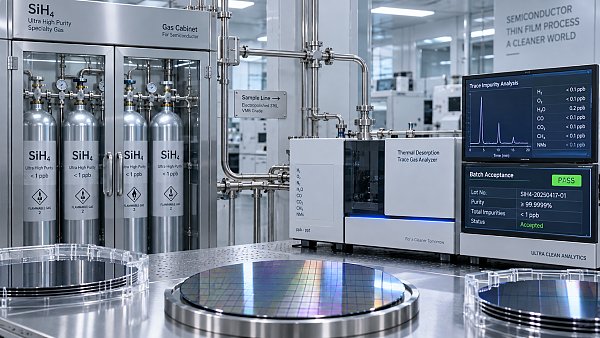
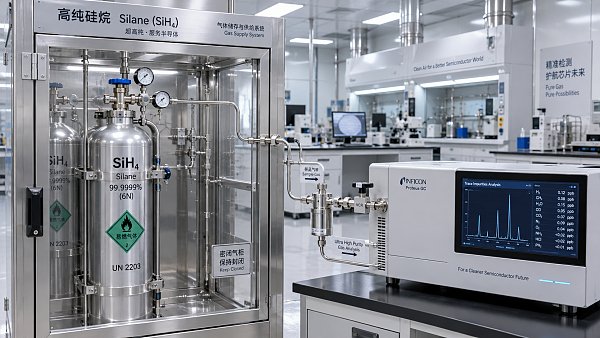
 2026.10.12Low-Impurity Silane Gas: Setting Acceptance Limits Beyond Total PurityEvaluate low impurity silane gas beyond total purity. Learn how to set contaminant limits, verify testing, and qualify suppliers for more reliable deposition.
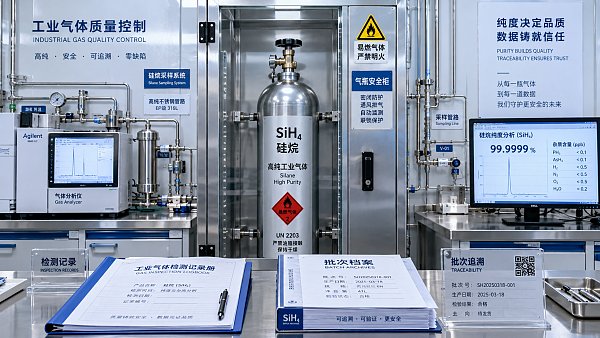
 2026.10.12SEMI-Compliant Silane Gas: Which Specifications and Test Records Should You Check?SEMI compliant silane gas: Discover the standards, impurity limits, test records, and cylinder traceability checks that support confident purchasing and safer release decisions.
 2026.10.12Ultra-Pure Silane Gas Price: Comparing Quotes Beyond Cost per CylinderCompare ultra-pure silane gas price beyond cylinder costs. Learn how purity, usable quantity, freight, and return terms shape true value—and make a smarter purchasing decision.
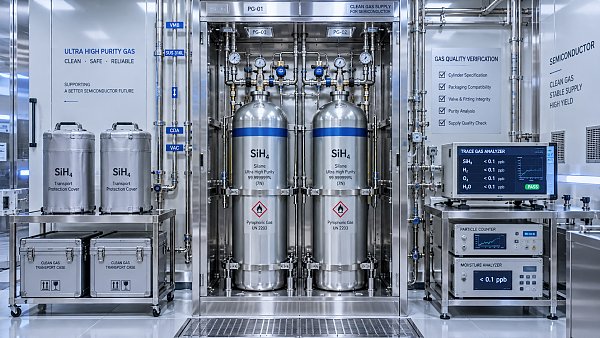
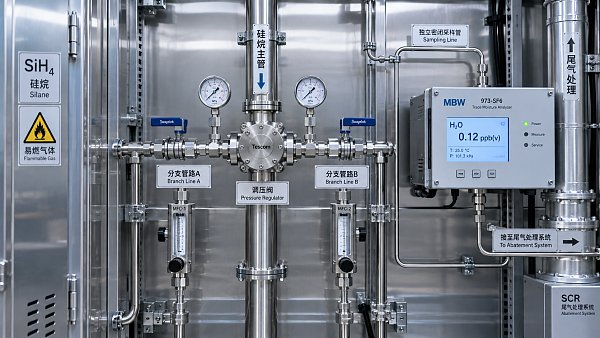
 2026.10.12Moisture-Controlled Silane Gas: Tracing Water Contamination in Delivery LinesKeep moisture controlled silane gas reliable. Learn how to validate readings, trace water contamination in delivery lines, and verify recovery with safety-focused diagnostic insights.
 2026.10.12What Does 99.99999% Silane Gas Mean? Understanding 7N Purity and Detection LimitsEvaluate 99.99999 silane gas with confidence. Discover what 7N purity means, how detection limits affect results, and which supplier data to check before qualification.
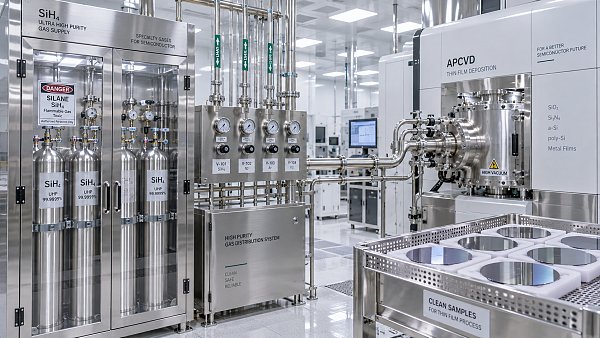
 2026.10.12Ultra-Pure Silane Gas for Thin Films: Matching Gas Grade to Film RequirementsChoose ultra-pure silane gas for thin films with confidence. Learn to match impurity limits, supplier evidence, and delivery conditions to film requirements while avoiding unnecessary costs.
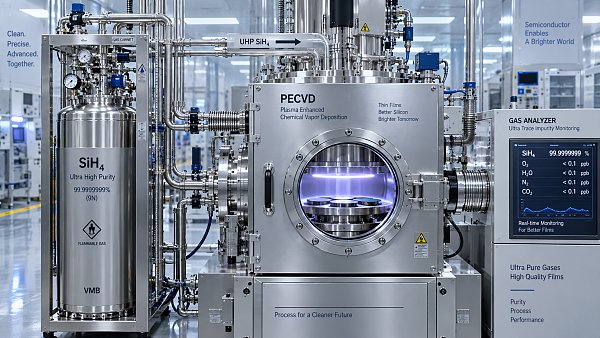
 2026.10.12Ultra-Pure Silane Gas for PECVD: Linking Impurities to Film DefectsQualify ultra-pure silane gas for PECVD with confidence. Learn how impurities affect film defects and use gas analysis, delivery checks, and film testing to set reliable acceptance limits.
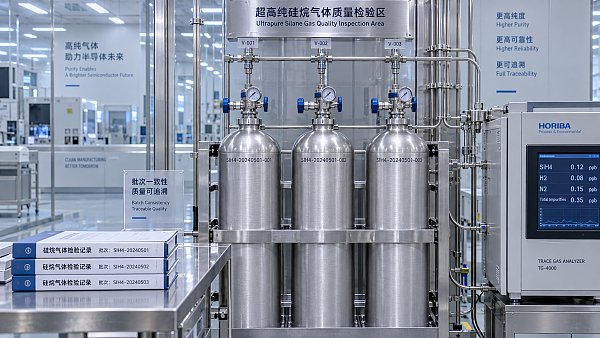
 2026.10.12Qualifying an Ultra-Pure Silane Gas Manufacturer: Batch Consistency and TraceabilityQualify an ultra-pure silane gas manufacturer with confidence. Learn how to verify batch consistency, analytical results, and cylinder traceability to reduce sourcing risks.














FILTER_CORE
REF_NO: 0042
Editors' Picks
- 00
0000-00
India Hosts 61st CIML Meeting for First Time, Advances International Metrology Alignment - 00
0000-00
When should you call emergency medical services instead of driving? - 00
0000-00
Mycronic Wins $12–14 Million Photomask System Order from Asian Customer - 00
0000-00
Piezoelectric Actuator Selection: Balancing Stroke, Force, and Bandwidth