
PSA Singapore Launches Precision Instruments Fast Lane
Singapore’s Port of Singapore Authority (PSA) launched the ‘High-Precision Instruments Green Channel’ at Jurong Island Terminal on 29 April 2026 — a development with direct implications for exporters of micro-robots, probe stations, and nano-positioning stages from China’s Yangtze River Delta and Pearl River Delta regions. This initiative signals a shift in customs handling for high-value, low-risk precision equipment, warranting close attention from manufacturers, logistics providers, and trade compliance teams.
Event Overview
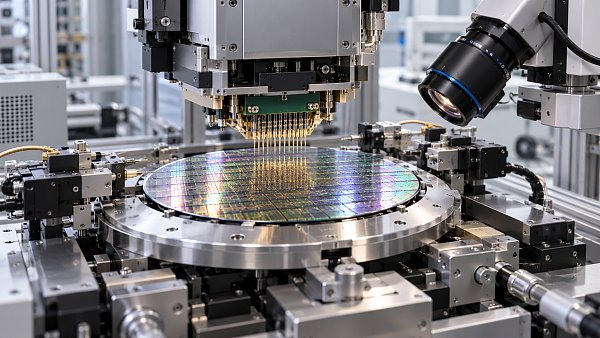
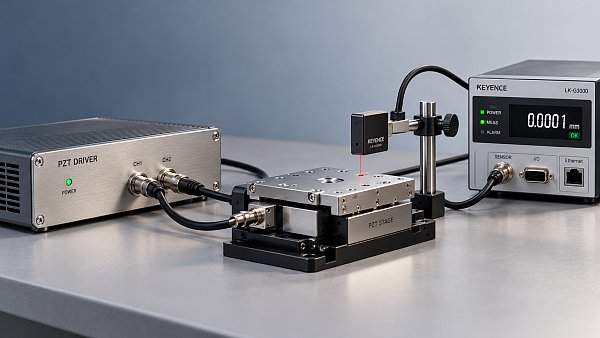
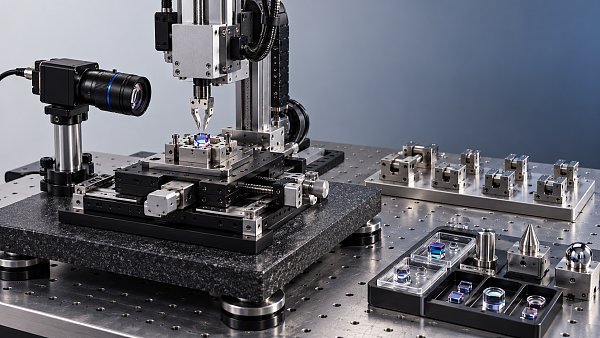
On 29 April 2026, PSA announced the pilot launch of the ‘High-Precision Instruments Green Channel’ at Jurong Island Terminal. The channel applies AI-powered image pre-screening and targeted non-intrusive inspection to selected G-UPE (Goods of Ultra-Precision Equipment) categories — specifically micro-robots, probe stations, and nano-positioning stages. Under this framework, average inspection rates dropped from 15% to 6%, and average clearance time was reduced to under 8 hours. Pre-registration is now open to qualified precision manufacturing exporters based in China’s Yangtze River Delta and Pearl River Delta.
Industries Affected
Direct Exporters (Precision Equipment Manufacturers)
Manufacturers exporting micro-robots, probe stations, or nano-positioning stages to Singapore — particularly those shipping via PSA terminals — face lower physical inspection frequency and faster release cycles. This directly affects order-to-cash timelines, inventory turnover at destination, and responsiveness to just-in-time delivery requirements in semiconductor and R&D lab supply chains.
Supply Chain Service Providers (Freight Forwarders & Customs Brokers)
Third-party logistics and customs agents serving precision equipment exporters must adapt documentation workflows to align with the new channel’s eligibility criteria and pre-registration process. Since the channel relies on AI pre-screening, consistency in cargo description, HS code classification, and digital image quality becomes operationally critical — not merely procedural.
Regional Sourcing & Procurement Teams (Multinational Tech Firms)
Procurement units managing inbound shipments of test and measurement equipment into Singapore-based regional hubs may see improved predictability in lead times and reduced risk of shipment delays due to manual inspection. However, this benefit applies only to the specified G-UPE categories — not broadly to all lab or industrial equipment.
What Relevant Enterprises Should Monitor and Do Now
Confirm Eligibility and Complete Pre-Registration
Exporters should verify whether their specific product models fall under PSA’s defined G-UPE scope (micro-robots, probe stations, nano-positioning stages) and initiate pre-registration without assuming automatic inclusion. PSA has not published a public product taxonomy — eligibility remains subject to terminal-level verification.
Review and Standardize Cargo Documentation
Since AI pre-screening depends on consistent, high-fidelity imaging and precise textual descriptions, companies should audit current packing list formats, HS code assignments, and photo documentation protocols. Minor inconsistencies — such as ambiguous model naming or mismatched unit counts — may trigger manual review despite channel enrollment.
Track Expansion Beyond Jurong Island and G-UPE Scope
The channel is currently limited to Jurong Island Terminal and three named equipment types. Companies should monitor PSA announcements for potential extension to other PSA terminals (e.g., Pasir Panjang), additional G-UPE categories, or integration with Singapore’s TradeXchange platform — none of which are confirmed at launch.
Distinguish Between Policy Signal and Operational Reality
While the 60% reduction in inspection rate is a measurable outcome, it reflects pilot-phase performance under controlled conditions. Exporters should treat early results as indicative, not guaranteed — especially during peak shipping periods or when new equipment variants enter the channel.
Editorial Perspective / Industry Observation
Observably, this initiative functions less as a broad regulatory reform and more as a targeted operational refinement — one that prioritizes throughput efficiency for a narrow, high-trust equipment segment. Analysis shows PSA is testing a risk-based clearance model anchored in product classification, origin traceability, and digital documentation fidelity — not just volume or value. From an industry perspective, it reflects growing recognition that ultra-precision instruments represent low contraband risk but high time-sensitivity, making them suitable candidates for differentiated customs treatment. It is not yet a scalable template for general cargo, but it does set a precedent for AI-assisted, category-specific facilitation in global port ecosystems.
Current implementation remains confined to a single terminal and three equipment types — meaning its immediate impact is real but highly segmented. Its broader significance lies in signaling how port authorities may increasingly triage clearance pathways by technical category rather than solely by trader status (e.g., AEO certification).
Conclusion: This is a concrete, limited-scope improvement — not a systemic overhaul. It delivers measurable time and cost savings for a tightly defined group of exporters and their partners, but its value is contingent on strict adherence to channel requirements and awareness of its current boundaries. For most stakeholders, the appropriate stance is pragmatic adoption — not strategic repositioning.
Source: PSA International official announcement, 29 April 2026. Note: Expansion timeline, eligibility criteria beyond stated product types, and integration with national trade platforms remain unconfirmed and require ongoing monitoring.
Taglist:
Recent Articles
 2026.10.27India Hosts 61st CIML Meeting for First Time, Advances International Metrology AlignmentIndia hosts the 61st CIML meeting, highlighting OIML-CS status and legal metrology reforms. Explore what international alignment could mean for instrument certification and equipment trade.
 2026.10.27When should you call emergency medical services instead of driving?When should you call emergency medical services instead of driving? Learn the critical warning signs, why an ambulance can be safer, and what to do while help arrives.
 2026.10.26Mycronic Wins $12–14 Million Photomask System Order from Asian CustomerMycronic secures a $12–14 million photomask system order from an existing Asian customer. Explore the writing and measurement systems and their planned 2027 deliveries.
 2026.10.26Piezoelectric Actuator Selection: Balancing Stroke, Force, and BandwidthSelect the right piezoelectric actuator by balancing loaded stroke, force, and bandwidth. Explore key design checks to improve precision and avoid costly sizing mistakes.
 2026.10.26Layer Deposition Equipment: ALD vs. CVD for High-Aspect-Ratio FeaturesCompare layer deposition equipment for high-aspect-ratio features. Explore ALD vs. CVD conformality, throughput, and costs to choose the right system with confidence.
 2026.10.26Checking repeatability in bulk orders of encoder-feedback nano stagesCompare encoder feedback nano-positioning stage wholesale offers using repeatability tests, lot acceptance criteria, and traceable reports. Learn how to reduce risk and buy with confidence.
 2026.10.25Sidea Semiconductor Granted Patent for Probe Card Alignment CalibrationSidea Semiconductor's probe card alignment calibration patent aims for precise, low-cost automation without a calibration target. Explore its potential for semiconductor testing.
 2026.10.25How to assess long-term drift in a high-stability laser interferometerAssess long-term drift in a high stability laser interferometer with reliable reference tests, environmental tracking, and clear acceptance limits. Learn how to validate lasting measurement accuracy.
 2026.10.24SIA Submits Comments to EPA on Draft Trans-DCE Risk AssessmentSIA backs EPA’s draft Trans-DCE risk assessment for semiconductor manufacturing. Explore what its comments could mean for continued lawful use, supply stability, and production planning.
 2026.10.24How to size plastic extrusion machines for your target outputSize plasticextrusionmachines for your target output with practical throughput calculations, resin checks, and line-capacity tips. Avoid costly sizing mistakes and choose with confidence.
 2026.10.23Leadmicro Showcases Full ALD, CVD and PVD Lineup at Bay Area Semiconductor ExpoExplore Leadmicro’s ALD, CVD and PVD lineup at the Bay Area Semiconductor Expo, including magnetron sputtering solutions and key checks for smarter equipment procurement.
 2026.10.23How much does closed-loop control add to the price of PZT drivers?Understand PZT drivers price increases for closed-loop control. Compare sensors, electronics, and installation costs to make a smarter purchasing decision.
 2026.10.22Leadmicro Adds PVD Products, Expanding ALD, CVD and PVD CoverageLeadmicro expands ALD, CVD and PVD coverage with new iMagtron PVD products and a ruthenium ALD process. Explore what these advances mean for thin-film deposition and equipment buyers.
 2026.10.22What limits commercial adoption of micro-robotics in Latin America?Micro-robotics Latin America: What limits commercial adoption? Explore costs, integration hurdles, and service gaps—and learn how to reduce investment risks.
 2026.10.21NTT, Furukawa Electric and Partners Launch Photonics Mass-Production R&DExplore NTT and Furukawa Electric's photonics mass-production R&D with partners, targeting scalable chip manufacturing for energy-efficient AI computing and higher-bandwidth data centers.
 2026.10.21What ultra-precision engineering case studies reveal about thermal driftExplore ultra-precision engineering project cases to uncover hidden thermal drift, assess compensation, and learn what evidence to request before choosing a precision system.
 2026.10.20BASF Signs Letter of Intent with Taiwan Ministry to Expand Guanyin Semiconductor MaterialsBASF’s planned Guanyin semiconductor materials expansion targets sub-2nm manufacturing. Explore what its letter of intent with Taiwan’s Ministry of Economic Affairs could mean for chipmakers.
 2026.10.20How to estimate medical technology costs beyond the purchase priceEstimate medical technology cost beyond the purchase price. Uncover hidden expenses, compare lifecycle costs, and use this guide to make smarter procurement decisions.
 2026.10.1960 Minutes: Iran War Drives Global Helium Shortage, Threatening Semiconductor SupplyIran war-linked global helium shortage reportedly threatens semiconductor supply. Explore chipmaking risks and practical steps to verify inventories, shipments and supplier commitments.
 2026.10.19How to specify zinc coating weight for prepainted GI steel coilsSpecify zinc coating weight for prepainted gi steel coils with confidence. Learn how to define Z275, compare standards, and verify compliance to avoid costly purchasing mistakes.
 2026.10.18How linear motor stage settling time affects inspection throughputOptimize your linear motor stage for inspection systems: learn how settling time, vibration, and exposure timing affect throughput—and boost inspection output without sacrificing accuracy.
 2026.10.17Choosing a microfluidic probe manufacturer for stable flow confinementChoose a micro fluidic probe manufacturer with proven flow confinement. Compare geometry, flow control, validation, and repeatability to find the right fit for your application.
 2026.10.16What does measurement accuracy specified as % of full scale mean?Understand measurement specification accuracy as % of full scale. Learn to calculate error, compare sensor ranges, and choose the right instrument with confidence.
 2026.10.15How temperature affects high-accuracy dimensional analysis systemsDiscover how temperature affects high accuracy dimensional analysis systems, and learn practical ways to control thermal drift, improve compensation, and verify measurement accuracy.
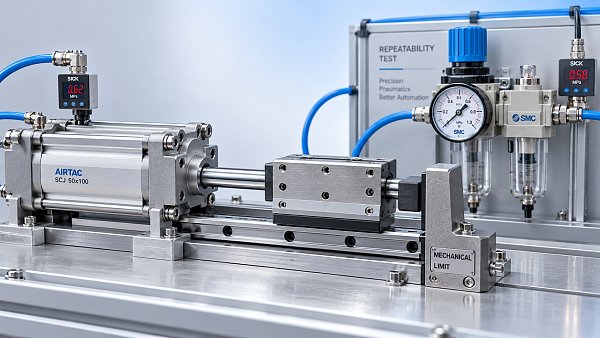
 2026.10.14How air pressure affects precision pneumatic actuator repeatabilityPrecision Pneumatic actuator repeatability depends on more than supply pressure. Discover how pressure, friction, and flow affect positioning—and how to improve consistency in your application.
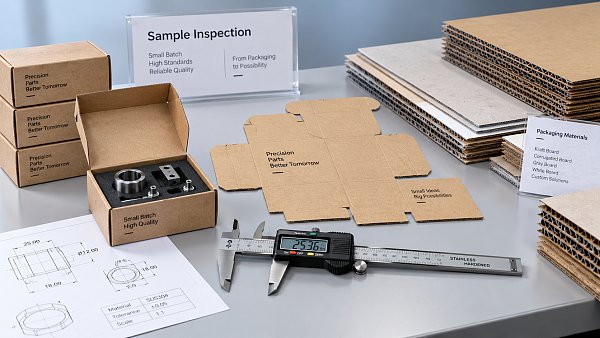
 2026.10.13How to choose a packaging manufacturer for small production runsChoose a packaging manufacturer for small production runs with confidence. Discover how to compare costs, verify samples, and secure quality packaging without excess inventory.
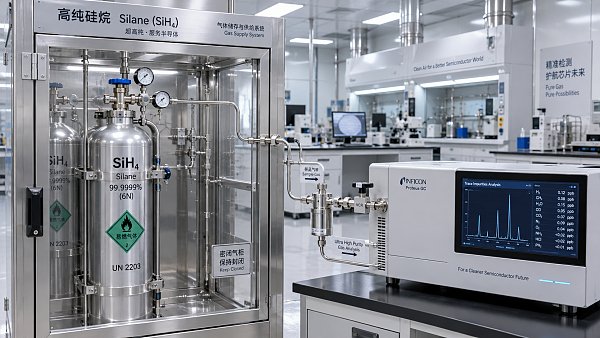
 2026.10.12Low-Impurity Silane Gas: Setting Acceptance Limits Beyond Total PurityEvaluate low impurity silane gas beyond total purity. Learn how to set contaminant limits, verify testing, and qualify suppliers for more reliable deposition.
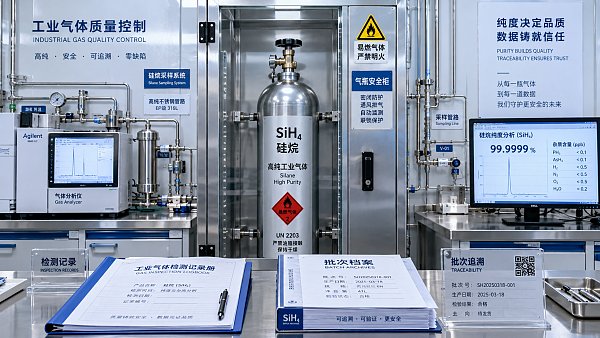
 2026.10.12SEMI-Compliant Silane Gas: Which Specifications and Test Records Should You Check?SEMI compliant silane gas: Discover the standards, impurity limits, test records, and cylinder traceability checks that support confident purchasing and safer release decisions.
 2026.10.12Ultra-Pure Silane Gas Price: Comparing Quotes Beyond Cost per CylinderCompare ultra-pure silane gas price beyond cylinder costs. Learn how purity, usable quantity, freight, and return terms shape true value—and make a smarter purchasing decision.
 2026.10.12Moisture-Controlled Silane Gas: Tracing Water Contamination in Delivery LinesKeep moisture controlled silane gas reliable. Learn how to validate readings, trace water contamination in delivery lines, and verify recovery with safety-focused diagnostic insights.
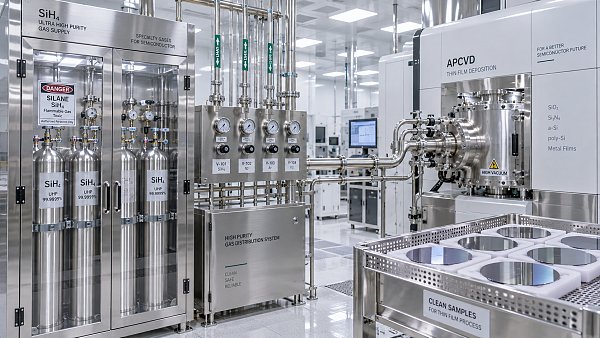
 2026.10.12What Does 99.99999% Silane Gas Mean? Understanding 7N Purity and Detection LimitsEvaluate 99.99999 silane gas with confidence. Discover what 7N purity means, how detection limits affect results, and which supplier data to check before qualification.
 2026.10.12Ultra-Pure Silane Gas for Thin Films: Matching Gas Grade to Film RequirementsChoose ultra-pure silane gas for thin films with confidence. Learn to match impurity limits, supplier evidence, and delivery conditions to film requirements while avoiding unnecessary costs.
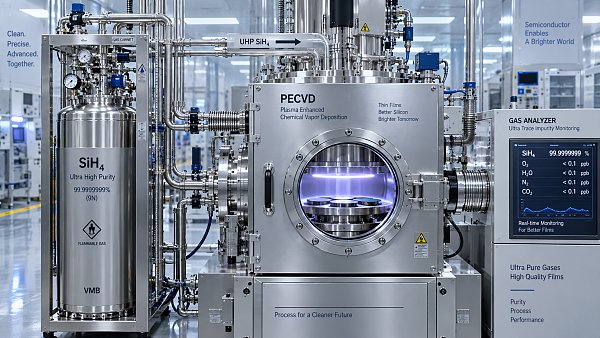
 2026.10.12Ultra-Pure Silane Gas for PECVD: Linking Impurities to Film DefectsQualify ultra-pure silane gas for PECVD with confidence. Learn how impurities affect film defects and use gas analysis, delivery checks, and film testing to set reliable acceptance limits.
 2026.10.12Qualifying an Ultra-Pure Silane Gas Manufacturer: Batch Consistency and TraceabilityQualify an ultra-pure silane gas manufacturer with confidence. Learn how to verify batch consistency, analytical results, and cylinder traceability to reduce sourcing risks.




















FILTER_CORE
REF_NO: 0042
Editors' Picks
- 00
0000-00
India Hosts 61st CIML Meeting for First Time, Advances International Metrology Alignment - 00
0000-00
When should you call emergency medical services instead of driving? - 00
0000-00
Mycronic Wins $12–14 Million Photomask System Order from Asian Customer - 00
0000-00
Piezoelectric Actuator Selection: Balancing Stroke, Force, and Bandwidth