Patent Landscape Gaps That Distort Technology Decisions
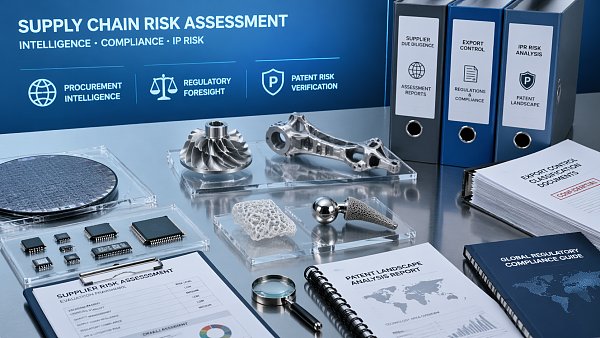
Patent Landscape gaps can quietly skew technology choices in Semiconductor Manufacturing, Aerospace Components, and Biological Implants, where Zero-Defect Manufacturing and Industrial Integrity are non-negotiable. For procurement, quality, and executive teams, combining Procurement Intelligence, Export Control awareness, and Regulatory Foresight with Multidisciplinary Engineering insight is essential to avoid costly blind spots and make defensible decisions.
Why patent landscape gaps lead to expensive technology decisions
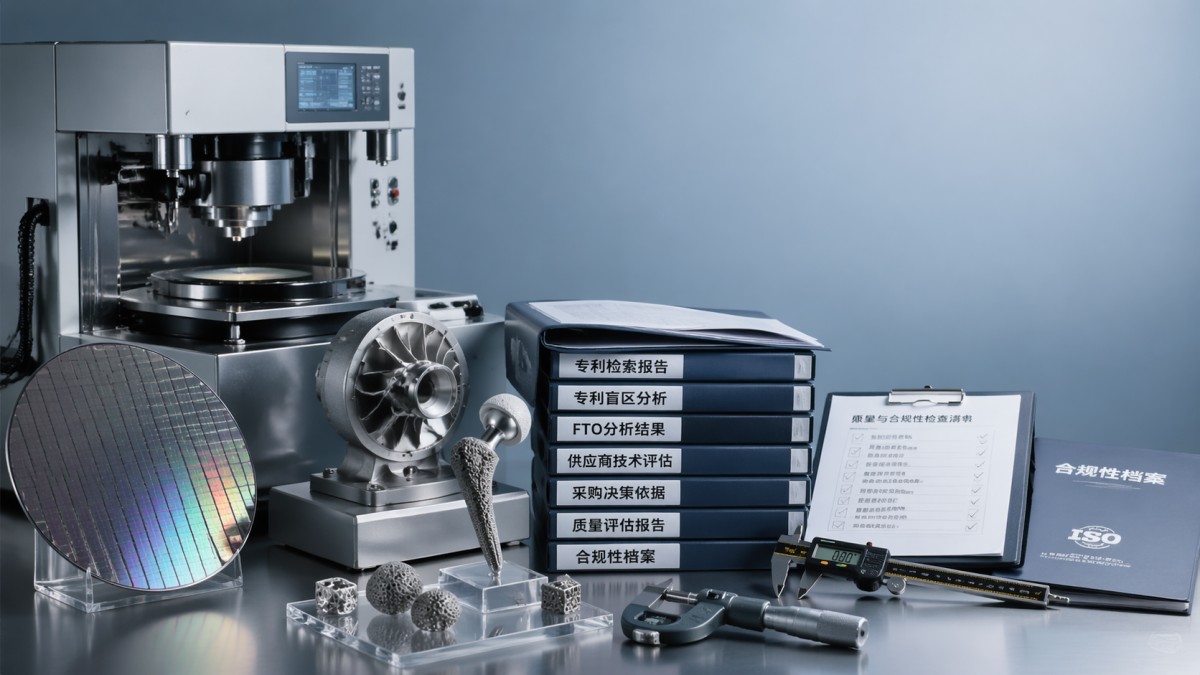
A patent landscape is often treated as a legal map, yet in advanced industry it is also a decision map for engineering, sourcing, compliance, and timing. When that map is incomplete, teams can overestimate freedom to operate, underestimate supplier concentration, or miss process dependencies hidden in adjacent patents. The result is not only legal exposure but distorted capital allocation, delayed qualification, and misaligned procurement plans.
In ultra-precision sectors, these distortions become sharper because one overlooked filing can affect coating chemistry, gas purity requirements, sensor calibration strategy, actuator stability, or measurement repeatability. A gap may emerge from a 12–18 month publication delay, fragmented regional filing behavior, narrow keyword searches, or weak linkage between patents and production standards such as ISO, SEMI, and IEEE. Many teams review claims but fail to review manufacturability implications.
For information researchers and business evaluators, the challenge is not finding more documents; it is distinguishing relevant patent signals from noise across multiple disciplines. For operators and quality leaders, the challenge is different: whether a patented method changes maintenance intervals, contamination controls, metrology checkpoints, or training burdens. For procurement teams, a distorted patent landscape can lock sourcing into 1–2 high-risk suppliers without clear contingency options.
G-UPE addresses this problem by connecting patent landscape analysis with benchmarked engineering data, export control monitoring, and sector-specific technical context across five industrial pillars. That matters because a claim that looks minor in isolation may become critical once viewed alongside thin-film deposition constraints, pneumatic response tolerance, metrology traceability, ultra-high purity gas handling, or nano-positioning accuracy requirements.
Where decision distortion usually starts
The first distortion often starts with scope. Teams search direct competitors but ignore upstream materials, process modules, and control systems. The second starts with timing. They assess filed patents once during vendor screening, then fail to revisit the landscape every quarter or at key gates such as prototype freeze, pilot line approval, and regional market entry. The third starts with ownership complexity, especially when rights are split among parent companies, university assignees, and regional licensees.
- Keyword bias: searches focus on familiar terminology and miss equivalent language used in chemistry, metrology, robotics, or packaging.
- Jurisdiction bias: reviews cover the US and Europe but miss Asia-based filings that shape supplier behavior and export pathways.
- Function bias: teams read device claims but overlook process, calibration, and consumable claims that influence operating cost.
- Procurement bias: sourcing groups evaluate price and lead time first, while IP-linked substitution limits are discovered too late.
How patent blind spots affect procurement, quality, and executive planning
Patent landscape gaps are rarely abstract. In semiconductor manufacturing, they can influence whether an ALD precursor path remains scalable, whether contamination-sensitive gas delivery components have licensing limitations, or whether a metrology workflow requires a patented calibration sequence. In aerospace components, they can alter coating process selection, inspection architecture, and requalification time after material substitution. In biological implants, they can affect geometry control, surface treatment pathways, and validation documentation.
Executives feel these gaps through delayed launches and unclear investment cases. Procurement teams feel them through narrowed supplier pools and renegotiation pressure. Quality and safety managers feel them when a proposed substitute part changes validation scope from a simple incoming check to a multi-stage process review that may take 2–6 weeks depending on documentation completeness, traceability depth, and site-specific risk controls.
The table below shows how patent blind spots translate into operational risk across common B2B decision roles. It is especially useful when a company must choose between incumbent suppliers, dual-source strategies, or design revisions under tight delivery windows.
This comparison shows why patent landscape analysis should not sit in isolation. A practical review cadence usually has 3 layers: baseline mapping before sourcing, checkpoint updates at each technical gate, and event-driven reassessment when export control rules, assignee ownership, or process architecture changes. Companies that skip one of these layers often discover issues only after quotation, trial production, or audit preparation.
Cross-functional signals that should trigger a fresh patent review
Not every project needs a full legal deep dive every month. However, certain signals should automatically trigger a focused patent landscape refresh within 5–10 working days. These include supplier change requests, abnormal lead-time extensions, design-for-manufacture changes, restricted region shipping, new calibration software dependencies, and unexpected process yields tied to proprietary consumables or coatings.
Five high-priority triggers
- A second source cannot replicate performance without changing process settings or acceptance criteria.
- A regional expansion plan requires different gas, software, or sensor suppliers because of trade restrictions.
- A metrology or motion-control package depends on a proprietary algorithm or calibration routine.
- A coating, implant surface, or precision fluid control design appears easy to copy but only under a narrow legal reading.
- A supplier merger changes ownership concentration across a category that previously had 3–4 viable vendors.
What a reliable patent landscape review should include before supplier selection
For B2B technology sourcing, a useful patent landscape review must support action, not just documentation. That means translating claim coverage into sourcing flexibility, process risk, qualification workload, and future upgrade options. At G-UPE, this type of analysis is strongest when it links patent findings to benchmarked engineering variables such as purity envelope, motion stability, dimensional repeatability, coating thickness control, or contamination sensitivity.
A practical screening framework typically contains 4 layers. First, identify the relevant technology stack, including materials, equipment modules, consumables, software, and test methods. Second, map assignees, jurisdictions, and expiry windows. Third, connect patents to operating constraints such as maintenance interval, calibration burden, and clean handling requirements. Fourth, test whether alternatives remain compliant with ISO, SEMI, IEEE, or sector-specific quality systems used by your customers.
The next table can be used by procurement, quality, and business evaluation teams as a joint checklist before supplier nomination. It focuses on selection criteria rather than legal theory, which makes it more useful during RFQ review, design transfer, and vendor qualification planning.
The key interpretation is simple: a patent landscape review becomes decision-ready only when it converts legal coverage into procurement consequences. If a claim family affects calibration software, contamination-controlled packaging, or ultra-high purity chemical handling, it belongs in the sourcing conversation before supplier award, not after first article inspection or production upset.
A 4-step implementation flow for decision teams
A lean implementation model can be completed in 4 steps without slowing every project. Step 1 is category definition, usually 2–5 working days. Step 2 is targeted patent landscape mapping with assignee and region filters, often 5–10 working days. Step 3 is engineering and compliance interpretation tied to standards, process conditions, and qualification burden. Step 4 is executive decision packaging with sourcing options, watchpoints, and escalation triggers.
- Use a narrow list of critical functions first, especially those tied to purity, repeatability, and traceability.
- Separate “can buy” from “can scale,” because many patent-safe options are not production-safe.
- Document which assumptions will be rechecked at prototype, pilot, and production release stages.
Common misconceptions that weaken patent landscape analysis
One common misconception is that expired patents automatically create easy substitutes. In reality, the surrounding ecosystem may still be protected by process refinements, software controls, packaging methods, or validation-linked know-how. Another misconception is that a low number of visible patents means low risk. In some categories, low visibility simply reflects trade secret reliance, regional filing concentration, or a short innovation cycle where filings lag commercial deployment by several quarters.
A third misconception is that patent landscape analysis belongs only to legal teams. For operators and quality leaders, it can explain why a replacement component needs different cleaning protocols, why a metrology method cannot be copied exactly, or why maintenance intervals change after a software update. For procurement, it clarifies whether the cheapest quote is actually the most expensive option once requalification, downtime, or export routing changes are included.
In complex programs, decision quality improves when teams combine patent review with 3 additional lenses: technical benchmarking, standards alignment, and commercial intelligence. That is where G-UPE’s multidisciplinary structure matters. By synchronizing patent activity with project tenders, export control updates, and benchmarked performance data, the analysis becomes useful for real buying decisions rather than static reporting.
FAQ for procurement and technology evaluation teams
How often should a patent landscape be updated during sourcing?
For critical categories, a baseline review at project start is not enough. A practical rhythm is one initial assessment, one update before supplier shortlisting, and one update before final nomination. For long-cycle projects, quarterly monitoring is a reasonable baseline. If the category touches export-sensitive gases, advanced coatings, or proprietary metrology workflows, event-driven checks should also be triggered whenever supplier ownership, region coverage, or process architecture changes.
Which areas are most often missed in a patent landscape review?
Teams often miss method claims, calibration logic, packaging methods, consumables, and region-specific continuation filings. In ultra-precision environments, these overlooked elements can matter more than the hardware claim itself because they control repeatability, contamination exposure, or acceptance criteria. A robust review should therefore cover at least 5 checkpoints: device structure, process method, software dependency, consumable dependency, and jurisdiction pattern.
Does patent analysis replace supplier technical benchmarking?
No. Patent landscape analysis answers whether a route is exposed, constrained, or strategically narrow. Technical benchmarking answers whether that route can actually deliver the required tolerance, purity, throughput, and inspection stability. In sectors such as semiconductor manufacturing, aerospace components, and biological implants, both views are required. A supplier may appear legally acceptable yet fail repeatability or regulatory expectations during validation.
What should executives request in a decision memo?
A strong decision memo should summarize 4 items: risk concentration by assignee and region, effect on sourcing flexibility, likely qualification burden, and impact on delivery timeline. It should also state which assumptions remain open and when they will be rechecked. That gives leadership a clearer basis for approving CapEx, delaying launch, or authorizing a dual-source strategy.
Why decision teams use G-UPE for patent landscape insight and next-step planning
Patent landscape intelligence becomes far more useful when it is anchored to engineering reality. G-UPE supports that bridge by combining multidisciplinary analysis across specialized coatings and thin-film deposition, precision pneumatic and fluid control, CMM and multi-sensory metrology, ultra-high purity chemicals and electronic gases, and micro-manipulation and nano-positioning systems. This structure helps buyers and evaluators understand not just where patent claims exist, but where those claims influence technical feasibility and sourcing resilience.
For procurement directors, the value lies in clearer supplier comparison and earlier risk visibility. For quality and safety teams, the value lies in understanding how patent-linked process differences can affect validation workload, contamination control, or inspection consistency. For executives, the value lies in better timing: knowing whether a decision should proceed now, be split into phases over 2–3 gates, or be paused until export control and ownership conditions become clearer.
If your team is evaluating a new technology route, an alternative supplier, or a region-specific expansion strategy, G-UPE can support focused consultation on parameter confirmation, supplier selection logic, benchmark interpretation, delivery cycle expectations, compliance mapping, and quotation alignment. That is particularly useful when decisions involve narrow tolerances, high-purity media, calibration-sensitive systems, or multi-country sourcing exposure.
Contact us when you need a decision-ready view rather than a document dump. We can help structure a patent landscape review around your actual buying and implementation questions: which parameters are critical, which alternatives are realistic, what qualification burden is likely, how long key review stages may take, what export-control watchpoints matter, and how to compare suppliers without missing hidden IP-driven constraints.
Taglist:
- Specialized Coatings
- Thin-Film Deposition
- Precision Pneumatic
- Fluid Control
- Multi-Sensory Metrology
- Ultra-High Purity Chemicals
- Electronic Gases
- Micro-Manipulation
- Nano-Positioning
- Technical Benchmarking
- Regulatory Foresight
- Procurement Intelligence
- Export Control
- Patent Landscape
- Industrial Integrity
- Multidisciplinary Engineering
- Semiconductor Manufacturing
- Biological Implants
- Aerospace Components
- Zero-Defect Manufacturing
Recent Articles
 2026.04.24Where Zero-Defect Manufacturing Breaks Down FirstZero-Defect Manufacturing breaks first in Semiconductor Manufacturing, Aerospace Components, and Biological Implants—learn how metrology, suppliers, and regulatory foresight expose hidden risk.
 2026.04.24Aerospace Components Fail More Often at the InterfaceAerospace Components fail most often at the interface—discover how Zero-Defect Manufacturing, Multidisciplinary Engineering, and Procurement Intelligence reduce risk across aerospace, semiconductor manufacturing, and biological implants.
 2026.04.24Biological Implants and the Coating Problem Few Specs CatchBiological Implants face hidden coating risks that standard specs miss. Explore Zero-Defect Manufacturing, Procurement Intelligence, and Regulatory Foresight for safer sourcing decisions.
 2026.04.24What Still Causes Drift in Semiconductor Manufacturing?Semiconductor Manufacturing drift still threatens Zero-Defect Manufacturing. Learn how Multidisciplinary Engineering, Procurement Intelligence, Export Control, and Regulatory Foresight uncover hidden risks.
 2026.04.24Multidisciplinary Engineering Looks Efficient Until Handoffs StartMultidisciplinary Engineering in Zero-Defect Manufacturing: see how Aerospace Components, Biological Implants, and Semiconductor Manufacturing reduce handoff risk with Procurement Intelligence and Regulatory Foresight.
 2026.04.24Industrial Integrity Issues Often Start Before the First RunZero-Defect Manufacturing starts before launch. Learn how Industrial Integrity in Aerospace Components, Biological Implants, and Semiconductor Manufacturing depends on smarter validation, Procurement Intelligence, and Regulatory Foresight.
 2026.04.24Patent Landscape Gaps That Distort Technology DecisionsPatent Landscape gaps can distort decisions in Semiconductor Manufacturing, Aerospace Components, and Biological Implants. Discover how Procurement Intelligence, Export Control, and Regulatory Foresight reduce risk.
 2026.04.24Export Control Rules Are Shifting Faster Than Product PlansExport Control trends are reshaping Zero-Defect Manufacturing across Semiconductor Manufacturing, Aerospace Components, and Biological Implants. Discover how Regulatory Foresight drives smarter sourcing.
 2026.04.24Procurement Intelligence Fails When Supplier Data Looks CompleteProcurement Intelligence breaks down when supplier data only looks complete. Learn how Regulatory Foresight, Export Control, and Patent Landscape checks protect Zero-Defect Manufacturing.
 2026.04.24Regulatory Foresight Is Becoming a Design Constraint in 2026Regulatory Foresight is reshaping Zero-Defect Manufacturing in Semiconductor Manufacturing, Aerospace Components, and Biological Implants—see how Export Control, Patent Landscape, and Procurement Intelligence reduce risk.




FILTER_CORE
REF_NO: 0042