
Laser-Interferometer drift is often not a software problem
When Laser-Interferometer drift appears on the shop floor, many service teams first suspect software. In reality, the root cause often lies in environmental instability, alignment error, contamination, or mechanical behavior outside code logic. For after-sales maintenance personnel, understanding these physical sources is essential to faster troubleshooting, reduced downtime, and more reliable ultra-precision system performance.
Why the troubleshooting focus is shifting away from software-first assumptions
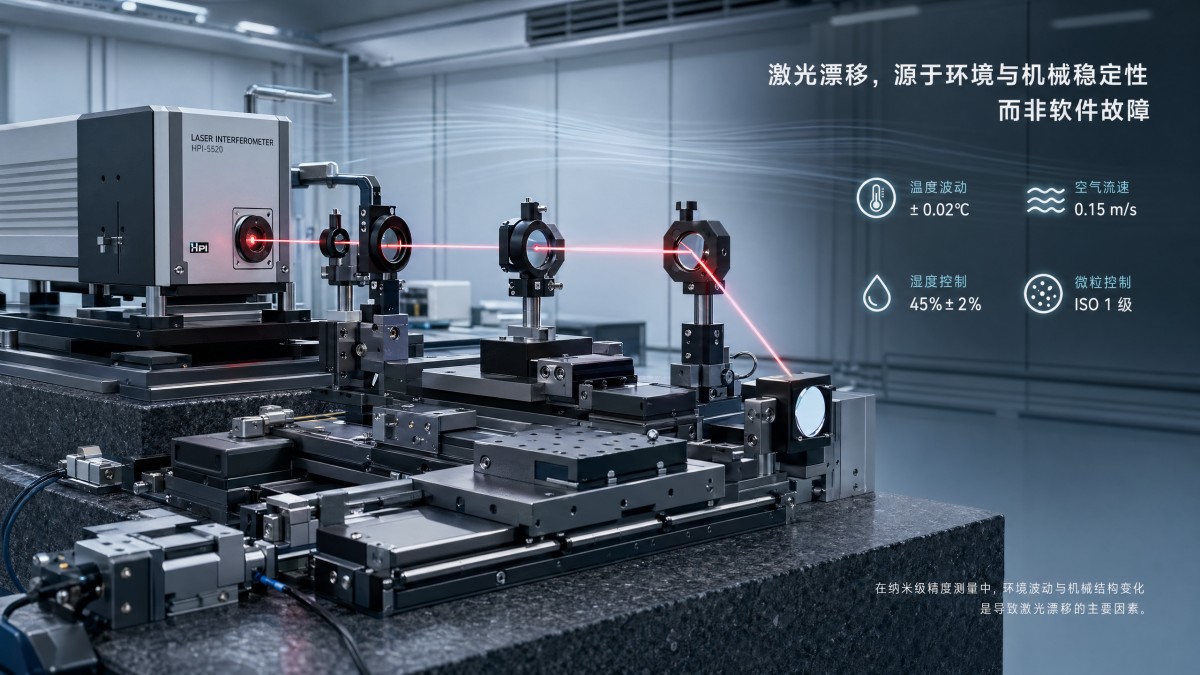
A clear industry change is underway in ultra-precision manufacturing and metrology: Laser-Interferometer drift is increasingly treated as a system-level stability issue rather than a code-level fault. This shift matters because service teams are now supporting tighter process windows, often in the sub-micron to nanometer range, where a 1 °C room change, a slight air turbulence pattern, or a small optical contamination layer can create measurement movement that looks digital but is fundamentally physical.
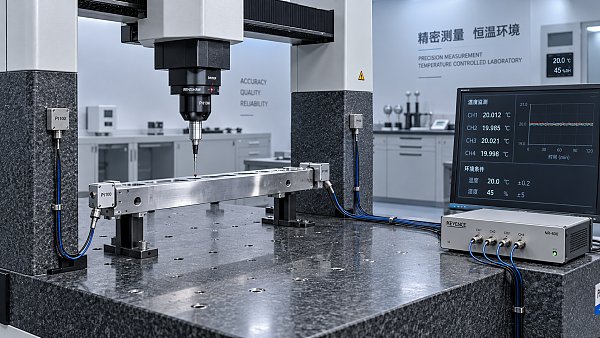
For after-sales maintenance personnel, this change affects daily work directly. In older service logic, software rollback, parameter reset, and controller reboot were often the first 3 steps. In current high-accuracy environments, those steps still have value, but they are no longer sufficient. The more advanced the machine, the more likely drift is tied to thermal gradients, refractive index variation, stage vibration, cable stress, or mounting relaxation over 24 to 72 hours of production.
This is especially visible across semiconductor support tools, precision CMM platforms, nano-positioning assemblies, optics alignment stations, and high-end motion systems. As production lines move toward lower defect tolerance and more automated compensation, the hidden assumption that software can correct everything is losing ground. Laser-Interferometer performance now depends on the interaction of optics, mechanics, air conditions, control tuning, and maintenance discipline.
Common signals behind the shift
- Machine accuracy targets have tightened from general micron-level positioning toward sub-micron and nanometer-sensitive verification tasks.
- Service intervals have shortened in many factories from quarterly intervention to monthly or event-driven checks when uptime pressure is high.
- Facilities are running more mixed-load environments, where nearby HVAC cycles, compressed air demand, or operator traffic change local thermal and vibration behavior.
- Laser-Interferometer systems are more often integrated into broader machine architectures, increasing the number of interfaces where non-software drift can emerge.
The practical implication is simple: maintenance teams who treat drift as a multidisciplinary symptom can usually isolate root causes faster than teams who remain locked into a software-first diagnosis path. In many service cases, the problem is not that the software is wrong; it is that the physical world feeding the software has changed.
What is driving the increase in apparent Laser-Interferometer drift events
The rise in reported Laser-Interferometer drift is not necessarily evidence that systems are becoming less capable. In many cases, it reflects more demanding applications and more sensitive detection. A line that once tolerated ±2 µm may now be investigating deviations below 0.5 µm. Under those conditions, environmental effects that were previously invisible now become maintenance-critical.
Another driver is system density. Modern production areas often place precision metrology, motion stages, gas delivery equipment, fluid control subsystems, and clean utility infrastructure in tighter proximity. Even when each subsystem is compliant on its own, the combined thermal load and vibration signature can influence Laser-Interferometer behavior. For service engineers, this means troubleshooting must extend beyond the instrument enclosure and into surrounding process conditions.
A third factor is the growing use of compensation layers. Software compensation can mask a slowly developing physical problem for weeks or months, then suddenly fail when the drift pattern exceeds the compensation model. This creates a misleading timeline: the software appears to become unstable, but the actual change may have started earlier through contamination, bracket creep, beam path misalignment, or air refractive instability.
Main physical drivers now drawing more attention
The table below summarizes common drift drivers that are increasingly affecting Laser-Interferometer service work in integrated industrial environments.
The important reading of this table is that Laser-Interferometer drift often emerges from conditions that evolve gradually. Service teams that record only alarm history may miss those slow changes. Teams that add environmental logging, mounting review, and optical inspection usually build a more accurate failure picture.
Why this trend matters across a general industrial support model
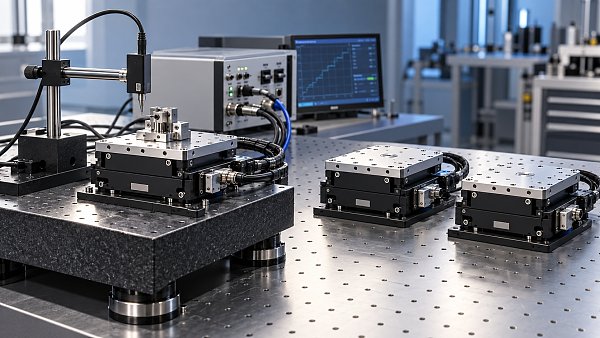
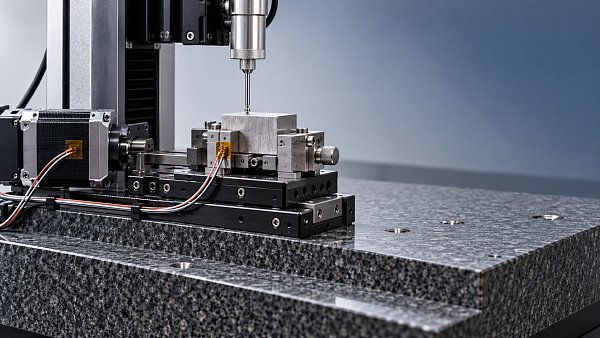
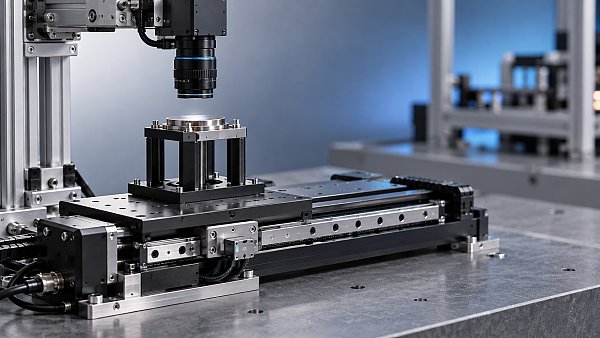
In a comprehensive industrial environment like G-UPE’s focus areas, Laser-Interferometer performance rarely stands alone. Pneumatic actuation can influence vibration, coatings or residues can influence optics, metrology workflows can expose hidden instability, and nano-positioning systems can amplify sensitivity to small physical shifts. That interdependency is why drift analysis is becoming more cross-functional and less software-centered.
How the impact differs for after-sales maintenance teams, production users, and procurement stakeholders
The current Laser-Interferometer trend does not affect every stakeholder in the same way. After-sales maintenance personnel carry the first diagnostic burden, but production operators experience immediate downtime, while procurement and engineering managers feel the cost of repeated service calls, spare allocation, and delayed acceptance. Understanding these layered impacts helps maintenance teams communicate more effectively and justify broader root-cause checks.
For service staff, the biggest operational change is the need to gather more contextual evidence before adjusting software parameters. A machine may run correctly for the first 2 hours and drift after 6 hours, or pass static checks but fail during high-duty motion cycles. These patterns suggest that time-based and condition-based testing are now as important as controller diagnostics.
For production teams, the visible impact is often inconsistency rather than total failure. Scrap risk rises, verification cycles lengthen, and confidence in process capability declines. For procurement teams, repeated Laser-Interferometer issues can trigger questions about installation quality, environmental preparation, maintenance scope, and whether acceptance criteria were realistic for the intended application.
Impact by stakeholder group
The following comparison helps explain why Laser-Interferometer drift must be framed as a shared operational issue rather than a narrow service complaint.
A key takeaway is that better Laser-Interferometer support starts with better shared language. When maintenance reports include drift timing, local thermal conditions, recent mechanical intervention, and optical cleanliness status, decision-makers can respond with more precision. This reduces the repeated cycle of software changes that do not address the true source.
Where support conversations are changing most
- Acceptance testing is increasingly expected to include warm-up behavior over defined periods such as 30 minutes, 2 hours, and a full operating shift.
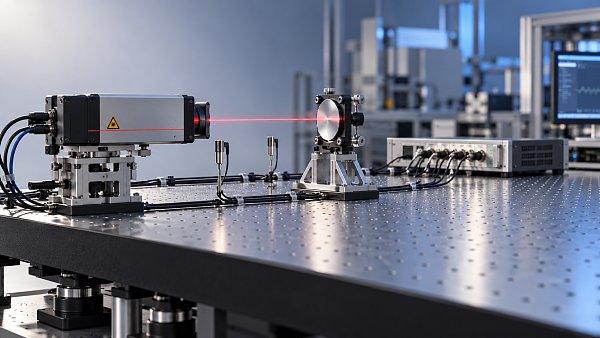
- Maintenance teams are being asked to verify not only sensor status, but also beam path integrity and environmental stability around the machine footprint.
- Procurement reviews now more often include supportability questions: spare optics, contamination control, calibration intervals, and environmental prerequisites.
Which diagnostic signals deserve closer attention in the next service cycle
One of the strongest trends in Laser-Interferometer maintenance is the move from symptom-based repair to signal-based diagnosis. Instead of asking only whether drift is present, effective teams ask when it starts, how fast it develops, whether it follows machine motion direction, and whether it correlates with temperature, airflow, or support structure conditions. These questions turn vague complaints into actionable service logic.
In practical terms, there are several warning signals that often indicate a non-software origin. If a Laser-Interferometer system is stable after reboot but degrades after thermal soak, physical expansion is a likely contributor. If drift appears after preventive maintenance, mounting tension, cable routing, or optical realignment should be reviewed. If values fluctuate during nearby door openings or HVAC transitions, refractive instability and air disturbance become strong suspects.
Another valuable signal is asymmetry. Software logic errors often affect response in a more consistent way, while mechanical or optical issues may appear differently by axis, direction, acceleration profile, or position in travel. A drift event that is stronger in the last 20% of stage travel or after repeated high-speed cycles points toward structure, cable force, support flatness, or motion-induced heat rather than pure code behavior.
Priority checklist for after-sales teams
- Record environmental conditions at the machine, not only facility setpoints; local variation can differ from room specification by meaningful margins.
- Inspect optical surfaces and beam path obstructions before changing compensation parameters.
- Compare cold-start, 1-hour, 4-hour, and end-of-shift readings to identify time-linked drift behavior.
- Review recent mechanical intervention, including bracket torque, stage service, cable replacement, and transport events.
- Check whether instability is axis-specific, location-specific, or load-specific; these patterns often narrow root cause rapidly.
This checklist is valuable because it organizes Laser-Interferometer troubleshooting around physical evidence. In many facilities, adding these 5 steps can prevent multiple unnecessary controller adjustments and reduce repeat visits. It also improves handover quality between field service, internal engineering, and the end user.
Useful standards-aware mindset without overcomplication
Service teams do not need to turn every call into a laboratory study, but they should work with a standards-aware mindset. Where applicable, reference to ISO-aligned measurement discipline, SEMI-style environmental rigor, or IEEE-related instrumentation expectations can help structure discussions. The point is not paperwork; it is consistency. Laser-Interferometer systems respond best when maintenance evidence is collected in a repeatable way.
How maintenance strategy should evolve as precision requirements continue to tighten
Looking ahead, the most important trend is that Laser-Interferometer support will become more preventive, more data-linked, and more interdisciplinary. As precision targets narrow further, the cost of treating drift as an isolated software issue will rise. Teams will need to combine optics care, motion analysis, environmental review, and service documentation into a single response model.
For many organizations, this means adjusting maintenance routines over 3 layers. First, field response should include a defined environmental and mechanical review. Second, periodic service should include contamination control and alignment verification at planned intervals, such as monthly quick checks and deeper quarterly reviews. Third, escalation paths should distinguish between compensation adjustment and root-cause correction, because those are not the same activity.
It also means better coordination between stakeholders. Facilities teams influence thermal and airflow stability. Production scheduling influences machine warm-up behavior. Engineering influences mounting design and acceptance thresholds. Procurement influences spare planning and support scope. Laser-Interferometer stability improves when these functions act on shared evidence instead of isolated assumptions.
A practical decision framework for the next 6 to 12 months
The table below can help service organizations and end users prioritize action as Laser-Interferometer demands become more stringent.
The value of this framework is that it keeps Laser-Interferometer reliability tied to observable conditions, not assumptions. It also supports a more mature service model in which maintenance is not judged only by how quickly software was touched, but by how accurately the physical cause was isolated and corrected.
Why choosing the right technical partner matters
When drift appears, many teams need more than a replacement part or a remote parameter suggestion. They need help confirming whether the issue involves optics, nano-positioning behavior, fluid-induced vibration, contamination pathways, or broader metrology conditions. That is where a multidisciplinary intelligence and benchmarking perspective becomes useful, especially in complex B2B environments where precision systems do not operate in isolation.
At G-UPE, our focus is the frontier of accuracy across coatings, precision pneumatic and fluid control, CMM and multisensory metrology, ultra-high purity chemicals and gases, and micro-manipulation and nano-positioning systems. This makes us a relevant technical discussion point for organizations trying to understand why Laser-Interferometer drift is appearing, how surrounding subsystems may be contributing, and what evidence should shape the next maintenance or procurement decision.
If you are evaluating Laser-Interferometer instability, contact us to discuss parameter confirmation, fault pattern review, product and subsystem selection, expected delivery cycle for critical components, custom diagnostic planning, applicable standards expectations, sample support options where relevant, and quotation communication for broader precision system upgrades. The earlier these questions are clarified, the easier it becomes to reduce downtime and restore stable performance with confidence.
Recent Articles
 2026.10.27India Hosts 61st CIML Meeting for First Time, Advances International Metrology AlignmentIndia hosts the 61st CIML meeting, highlighting OIML-CS status and legal metrology reforms. Explore what international alignment could mean for instrument certification and equipment trade.
 2026.10.27When should you call emergency medical services instead of driving?When should you call emergency medical services instead of driving? Learn the critical warning signs, why an ambulance can be safer, and what to do while help arrives.
 2026.10.26Mycronic Wins $12–14 Million Photomask System Order from Asian CustomerMycronic secures a $12–14 million photomask system order from an existing Asian customer. Explore the writing and measurement systems and their planned 2027 deliveries.
 2026.10.26Piezoelectric Actuator Selection: Balancing Stroke, Force, and BandwidthSelect the right piezoelectric actuator by balancing loaded stroke, force, and bandwidth. Explore key design checks to improve precision and avoid costly sizing mistakes.
 2026.10.26Layer Deposition Equipment: ALD vs. CVD for High-Aspect-Ratio FeaturesCompare layer deposition equipment for high-aspect-ratio features. Explore ALD vs. CVD conformality, throughput, and costs to choose the right system with confidence.
 2026.10.26Checking repeatability in bulk orders of encoder-feedback nano stagesCompare encoder feedback nano-positioning stage wholesale offers using repeatability tests, lot acceptance criteria, and traceable reports. Learn how to reduce risk and buy with confidence.
 2026.10.25Sidea Semiconductor Granted Patent for Probe Card Alignment CalibrationSidea Semiconductor's probe card alignment calibration patent aims for precise, low-cost automation without a calibration target. Explore its potential for semiconductor testing.
 2026.10.25How to assess long-term drift in a high-stability laser interferometerAssess long-term drift in a high stability laser interferometer with reliable reference tests, environmental tracking, and clear acceptance limits. Learn how to validate lasting measurement accuracy.
 2026.10.24SIA Submits Comments to EPA on Draft Trans-DCE Risk AssessmentSIA backs EPA’s draft Trans-DCE risk assessment for semiconductor manufacturing. Explore what its comments could mean for continued lawful use, supply stability, and production planning.
 2026.10.24How to size plastic extrusion machines for your target outputSize plasticextrusionmachines for your target output with practical throughput calculations, resin checks, and line-capacity tips. Avoid costly sizing mistakes and choose with confidence.
 2026.10.23Leadmicro Showcases Full ALD, CVD and PVD Lineup at Bay Area Semiconductor ExpoExplore Leadmicro’s ALD, CVD and PVD lineup at the Bay Area Semiconductor Expo, including magnetron sputtering solutions and key checks for smarter equipment procurement.
 2026.10.23How much does closed-loop control add to the price of PZT drivers?Understand PZT drivers price increases for closed-loop control. Compare sensors, electronics, and installation costs to make a smarter purchasing decision.
 2026.10.22Leadmicro Adds PVD Products, Expanding ALD, CVD and PVD CoverageLeadmicro expands ALD, CVD and PVD coverage with new iMagtron PVD products and a ruthenium ALD process. Explore what these advances mean for thin-film deposition and equipment buyers.
 2026.10.22What limits commercial adoption of micro-robotics in Latin America?Micro-robotics Latin America: What limits commercial adoption? Explore costs, integration hurdles, and service gaps—and learn how to reduce investment risks.
 2026.10.21NTT, Furukawa Electric and Partners Launch Photonics Mass-Production R&DExplore NTT and Furukawa Electric's photonics mass-production R&D with partners, targeting scalable chip manufacturing for energy-efficient AI computing and higher-bandwidth data centers.
 2026.10.21What ultra-precision engineering case studies reveal about thermal driftExplore ultra-precision engineering project cases to uncover hidden thermal drift, assess compensation, and learn what evidence to request before choosing a precision system.
 2026.10.20BASF Signs Letter of Intent with Taiwan Ministry to Expand Guanyin Semiconductor MaterialsBASF’s planned Guanyin semiconductor materials expansion targets sub-2nm manufacturing. Explore what its letter of intent with Taiwan’s Ministry of Economic Affairs could mean for chipmakers.
 2026.10.20How to estimate medical technology costs beyond the purchase priceEstimate medical technology cost beyond the purchase price. Uncover hidden expenses, compare lifecycle costs, and use this guide to make smarter procurement decisions.
 2026.10.1960 Minutes: Iran War Drives Global Helium Shortage, Threatening Semiconductor SupplyIran war-linked global helium shortage reportedly threatens semiconductor supply. Explore chipmaking risks and practical steps to verify inventories, shipments and supplier commitments.
 2026.10.19How to specify zinc coating weight for prepainted GI steel coilsSpecify zinc coating weight for prepainted gi steel coils with confidence. Learn how to define Z275, compare standards, and verify compliance to avoid costly purchasing mistakes.
 2026.10.18How linear motor stage settling time affects inspection throughputOptimize your linear motor stage for inspection systems: learn how settling time, vibration, and exposure timing affect throughput—and boost inspection output without sacrificing accuracy.
 2026.10.17Choosing a microfluidic probe manufacturer for stable flow confinementChoose a micro fluidic probe manufacturer with proven flow confinement. Compare geometry, flow control, validation, and repeatability to find the right fit for your application.
 2026.10.16What does measurement accuracy specified as % of full scale mean?Understand measurement specification accuracy as % of full scale. Learn to calculate error, compare sensor ranges, and choose the right instrument with confidence.
 2026.10.15How temperature affects high-accuracy dimensional analysis systemsDiscover how temperature affects high accuracy dimensional analysis systems, and learn practical ways to control thermal drift, improve compensation, and verify measurement accuracy.
 2026.10.14How air pressure affects precision pneumatic actuator repeatabilityPrecision Pneumatic actuator repeatability depends on more than supply pressure. Discover how pressure, friction, and flow affect positioning—and how to improve consistency in your application.
 2026.10.13How to choose a packaging manufacturer for small production runsChoose a packaging manufacturer for small production runs with confidence. Discover how to compare costs, verify samples, and secure quality packaging without excess inventory.
 2026.10.12Low-Impurity Silane Gas: Setting Acceptance Limits Beyond Total PurityEvaluate low impurity silane gas beyond total purity. Learn how to set contaminant limits, verify testing, and qualify suppliers for more reliable deposition.
 2026.10.12SEMI-Compliant Silane Gas: Which Specifications and Test Records Should You Check?SEMI compliant silane gas: Discover the standards, impurity limits, test records, and cylinder traceability checks that support confident purchasing and safer release decisions.
 2026.10.12Ultra-Pure Silane Gas Price: Comparing Quotes Beyond Cost per CylinderCompare ultra-pure silane gas price beyond cylinder costs. Learn how purity, usable quantity, freight, and return terms shape true value—and make a smarter purchasing decision.
 2026.10.12Moisture-Controlled Silane Gas: Tracing Water Contamination in Delivery LinesKeep moisture controlled silane gas reliable. Learn how to validate readings, trace water contamination in delivery lines, and verify recovery with safety-focused diagnostic insights.
 2026.10.12What Does 99.99999% Silane Gas Mean? Understanding 7N Purity and Detection LimitsEvaluate 99.99999 silane gas with confidence. Discover what 7N purity means, how detection limits affect results, and which supplier data to check before qualification.
 2026.10.12Ultra-Pure Silane Gas for Thin Films: Matching Gas Grade to Film RequirementsChoose ultra-pure silane gas for thin films with confidence. Learn to match impurity limits, supplier evidence, and delivery conditions to film requirements while avoiding unnecessary costs.
 2026.10.12Ultra-Pure Silane Gas for PECVD: Linking Impurities to Film DefectsQualify ultra-pure silane gas for PECVD with confidence. Learn how impurities affect film defects and use gas analysis, delivery checks, and film testing to set reliable acceptance limits.
 2026.10.12Qualifying an Ultra-Pure Silane Gas Manufacturer: Batch Consistency and TraceabilityQualify an ultra-pure silane gas manufacturer with confidence. Learn how to verify batch consistency, analytical results, and cylinder traceability to reduce sourcing risks.










FILTER_CORE
REF_NO: 0042
Editors' Picks
- 00
0000-00
India Hosts 61st CIML Meeting for First Time, Advances International Metrology Alignment - 00
0000-00
When should you call emergency medical services instead of driving? - 00
0000-00
Mycronic Wins $12–14 Million Photomask System Order from Asian Customer - 00
0000-00
Piezoelectric Actuator Selection: Balancing Stroke, Force, and Bandwidth