
Laser-Interferometer setup mistakes that skew measurements
A Laser-Interferometer can deliver extraordinary accuracy, but even small setup mistakes can quietly distort results and undermine process confidence. For operators and technicians working in precision environments, understanding where alignment, mounting, thermal drift, and vibration errors begin is essential. This article highlights the most common setup pitfalls that skew measurements and shows how to prevent them before they affect quality, calibration, or downstream decisions.
Why do Laser-Interferometer setup errors become expensive so quickly?
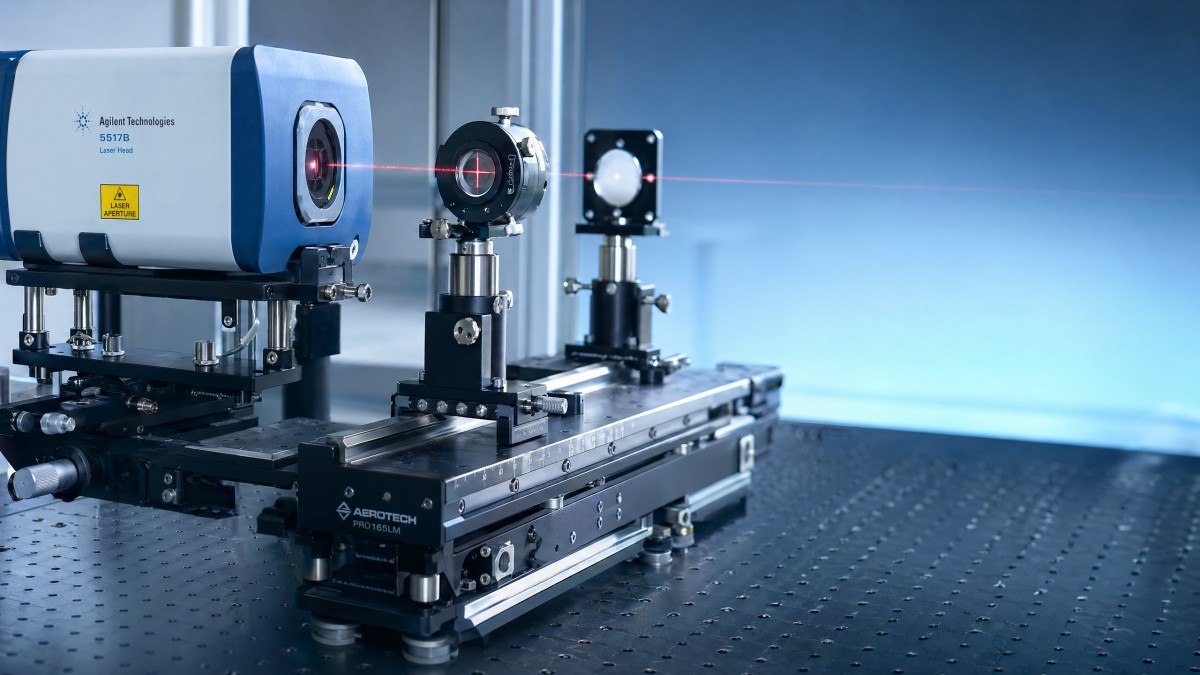
In ultra-precision manufacturing, a Laser-Interferometer is rarely used in isolation. It usually supports motion-stage verification, CMM positioning checks, machine calibration, optics alignment, or nanometer-scale displacement control. When the setup is wrong by a small amount, the error is often not obvious in the first 5–10 minutes of operation. It appears later as repeatability loss, inconsistent compensation values, or unexplained mismatch between process data and part quality.
For operators, the practical problem is simple: a skewed measurement often looks believable. The readout is stable, the signal seems clean, and the machine may pass a short verification cycle. Yet over a 100 mm, 300 mm, or 1 m travel range, Abbe offset, cosine error, thermal expansion, or unstable fixturing can shift the reported position enough to affect acceptance decisions. In aerospace, semiconductor, medical-device, and advanced research environments, that can trigger rework, false rejection, or risky release.
This is why setup discipline matters as much as instrument resolution. A Laser-Interferometer may be capable of nanometer-class sensitivity, but the measurement system only performs well when the optical path, environmental control, mechanical references, and operator procedure work together. In many facilities, the dominant risk is not the interferometer itself. It is the surrounding setup logic.
G-UPE focuses on this gap between headline specification and real operating integrity. By benchmarking metrology workflows against common ISO, SEMI, and IEEE practice, and by connecting metrology performance with motion systems, pneumatic isolation, coatings, and nano-positioning behavior, G-UPE helps B2B teams understand where measurement risk begins before it becomes a procurement, quality, or compliance issue.
The 4 setup zones that most often introduce hidden error
- Optical alignment: beam path not truly collinear with the axis of motion, creating cosine-related deviation across the full travel.
- Mechanical mounting: unstable brackets, stressed fixtures, or poor reference surfaces that move during operation or warm-up.
- Environment: air turbulence, temperature gradients, vibration, and contamination affecting refractive index or beam stability.
- Procedure: rushed setup, incomplete stabilization time, or missing verification checks before full-range measurement starts.
If operators review these 4 zones before each critical run, many of the most expensive Laser-Interferometer mistakes can be caught in 10–20 minutes instead of after a failed calibration or disputed measurement report.
Which setup mistakes skew Laser-Interferometer measurements the most?
The most damaging mistakes are not always the most dramatic. A severe vibration problem is easy to suspect. A subtle beam offset of a few millimeters from the true measurement axis is more dangerous because it can survive routine checks. The table below summarizes common setup mistakes, how they typically appear, and what operators should verify first before blaming the instrument.
A useful rule for operators is to separate errors into static and dynamic categories. Static errors show up as consistent offset or slope across the axis. Dynamic errors appear as noise, drift, or instability over time. That distinction helps narrow the root cause in 3–5 checks instead of restarting the entire setup sequence.
Alignment mistakes: small angle, large consequence
Alignment errors are common because a Laser-Interferometer setup often occurs in limited physical space. Operators may prioritize a quick optical return signal without proving true axial alignment. A strong return beam is necessary, but it does not guarantee that the measurement axis and machine axis are coincident. If the beam is laterally displaced from the line of motion, Abbe-related effects can distort the result when pitch, yaw, or roll enter the system.
This becomes more critical on longer travels, high-acceleration stages, or multi-axis platforms. In practical terms, a setup that looks acceptable over 25 mm can become unreliable over 250 mm or more. Operators should verify the beam position at multiple points in the stroke, not only at the start position. A 3-point or 5-point alignment confirmation is often more revealing than a single-end visual check.
Mounting mistakes: when the bracket becomes the error source
Rigid-looking mounts are not always stable mounts. Thin adapter plates, cantilevered reflector arms, magnet bases on marginal surfaces, and fixtures attached near machine covers rather than structural members can all move under vibration or thermal load. The Laser-Interferometer then reports a mixture of true stage motion and fixture behavior.
A practical operator test is to observe whether the measurement changes after light cable repositioning, machine acceleration change, or 20–30 minutes of spindle, stage, or enclosure operation. If the reported position shifts without a legitimate axis change, the setup may be mechanically unstable even if the optics remain visually aligned.
How should operators control thermal drift, vibration, and air-path instability?
Environmental control is often treated as a facility problem, but for Laser-Interferometer users it is an operational variable. Temperature change does not need to be dramatic to matter. A local heat source near the beam path, a recently powered stage motor, or a technician standing close to the optical line can alter air conditions enough to affect measurement stability during fine calibration work.
Most precision teams define a working band rather than assuming a single perfect temperature. For example, a controlled range such as 20°C ±1°C may be used in many labs, but what matters equally is the gradient over time and space. If the air condition at one end of the optical path differs from the other, the Laser-Interferometer can show drift even when the room display appears acceptable.
Vibration adds another layer. Floor vibration, nearby compressors, pneumatic switching, door impact, and machine acceleration profiles can all create unstable readings. In integrated manufacturing cells, this is where G-UPE’s cross-disciplinary view becomes valuable: motion accuracy is linked not only to metrology hardware, but also to pneumatic behavior, nano-positioning mechanics, and surrounding process equipment.
Operators should therefore assess the environment in timed phases. A 5-minute quick check is rarely enough. A more reliable pattern is an initial optical setup, then a 15–30 minute stabilization period, followed by a short repeatability check and only then full-range measurement. This simple timing discipline often reveals thermal and vibration effects before data collection begins.
A practical 5-point environmental checklist
- Check for direct airflow from HVAC vents, fans, or open enclosures crossing the beam path.
- Verify whether nearby axes, motors, or lighting introduce heat within the first 15–20 minutes.
- Observe whether readings change during machine acceleration, pneumatic actuation, or door movement.
- Confirm that cable routing does not transmit vibration or preload into optics or reflectors.
- Repeat a short travel test at least 3 times before the final measurement sequence.
When these 5 checks are documented, troubleshooting becomes faster. Teams can compare day shift versus night shift conditions, enclosed versus open-door operation, or isolated versus production-mode behavior without guessing which variable changed.
What should you verify before accepting Laser-Interferometer data?
Good measurement practice does not end when the Laser-Interferometer displays stable numbers. Operators need acceptance logic. In B2B settings, especially where calibration records support production release, supplier qualification, or machine compensation, the question is not only whether data exists, but whether the setup was defensible. A structured pre-acceptance review reduces the risk of passing bad data downstream.
The table below is designed for operators, supervisors, and procurement-linked technical teams that need a clear review framework. It focuses on 3 categories: setup integrity, measurement behavior, and documentation completeness. These are often enough to decide whether the result is usable, provisional, or should be repeated.
This review structure is especially useful when data moves beyond the metrology room. Procurement teams, quality managers, and machine builders often need proof that a Laser-Interferometer result was obtained under controlled conditions. Without that context, even technically correct numbers can become commercially weak in qualification or dispute scenarios.
A 4-step operator acceptance routine
- Step 1: Verify setup geometry and mounting integrity before collecting any official data.
- Step 2: Allow stabilization for a defined period, often 15–30 minutes depending on equipment and room conditions.
- Step 3: Run at least 3 repeat measurements over the relevant travel or checkpoint positions.
- Step 4: Record conditions and exceptions, especially if production equipment nearby changed state during the test.
This routine is simple enough for daily use and strong enough to support higher-level decisions such as machine acceptance, service intervention, or supplier discussion.
How do standards, procurement, and support strategy affect measurement confidence?
A Laser-Interferometer is not just a tool purchase. It sits inside a wider system of calibration policy, machine architecture, operator training, and documentation expectations. For that reason, procurement teams should evaluate not only the hardware specification, but also what support exists for setup discipline, environmental guidance, and compliance-oriented reporting.
In many industrial programs, standards such as ISO-related calibration and measurement practice, SEMI-aligned semiconductor expectations, or IEEE-referenced technical frameworks influence how data is interpreted. The exact requirement depends on the sector, but the common lesson is consistent: traceable process and controlled setup matter as much as the nominal instrument capability.
This is where G-UPE provides a different type of value. Rather than treating metrology as an isolated category, G-UPE evaluates it against interacting industrial pillars such as fluid control, multi-sensory metrology, nano-positioning systems, and export or compliance considerations. That broader intelligence is useful for buyers who must compare options over a 2–6 week procurement window and still protect long-term measurement integrity.
For operators, the procurement implication is direct. If a vendor cannot clearly explain setup constraints, environmental limits, mounting recommendations, and service response structure, the risk of field error remains high no matter how advanced the Laser-Interferometer specification appears in a brochure.
Questions procurement and operations should ask together
Before selection
- What travel range, axis count, and installation geometry will the Laser-Interferometer need to support?
- Will measurements occur in a clean metrology room, on the production floor, or in both environments?
- Are there known vibration, airflow, or thermal constraints that require accessory changes or shielding?
Before deployment
- What is the operator training plan, and how many setup checks are mandatory before formal data collection?
- How will environmental conditions, travel lengths, and repeatability runs be documented?
- What service path exists if drift or inconsistency appears after installation?
These questions reduce the gap between purchase approval and reliable daily use. In many cases, that gap is where measurement confidence is lost.
FAQ: common Laser-Interferometer setup questions from operators
How long should a Laser-Interferometer setup stabilize before measurement?
There is no single number for every installation, but 15–30 minutes is a common practical stabilization window after mounting and powering the measurement arrangement in a precision environment. If nearby machine components are warming up, or if the system was moved from storage to a controlled room, longer waiting time may be justified. The key is to observe trend behavior, not only elapsed time.
What is the most overlooked cause of skewed Laser-Interferometer readings?
Misalignment relative to the true axis of motion is one of the most overlooked causes. Operators often confirm beam return but do not fully verify collinearity over the complete travel. This can create believable but wrong data, especially when stage angular errors are present.
Can production-floor use be reliable, or is a metrology room always necessary?
Production-floor use can be reliable if environmental disturbance is understood and controlled. The decision depends on vibration level, thermal variation, airflow, contamination risk, and the required uncertainty level. Some tasks are suitable near the machine; others should be transferred to a more controlled space. A site-specific assessment is usually more useful than a blanket rule.
What should be recorded in every measurement log?
At minimum, record date, operator, equipment configuration, travel range, measurement direction, environmental notes, stabilization period, repeatability results, and any unusual events such as nearby machine activity or fixture changes. These details make later comparison and troubleshooting far more effective.
Why choose us for Laser-Interferometer benchmarking and setup guidance?
If your team uses a Laser-Interferometer for machine calibration, stage verification, multi-sensory metrology, or nano-positioning evaluation, the real challenge is not only selecting capable hardware. It is creating a setup and validation process that remains credible under production pressure, audit review, and cross-functional decision-making.
G-UPE supports that need through verifiable technical benchmarking, cross-industry metrology insight, and a multidisciplinary view of the systems surrounding precision measurement. Because our scope connects metrology with coatings, fluid control, high-purity environments, and micro-manipulation systems, we can help identify whether your risk comes from the Laser-Interferometer itself or from the operating ecosystem around it.
You can contact us for practical, decision-oriented support on parameter confirmation, application-fit review, setup risk screening, delivery-cycle expectations, standards-related documentation needs, and custom benchmarking requirements. If you are comparing solutions, preparing a tender, qualifying a supplier, or trying to reduce measurement disputes between operations and quality, we can help structure the evaluation.
For faster consultation, prepare 4 items before reaching out: your travel range, required accuracy level, operating environment, and current pain point. That allows a more focused discussion on product selection, setup recommendations, accessory needs, reporting expectations, and quotation alignment.
Recent Articles
 2026.10.27India Hosts 61st CIML Meeting for First Time, Advances International Metrology AlignmentIndia hosts the 61st CIML meeting, highlighting OIML-CS status and legal metrology reforms. Explore what international alignment could mean for instrument certification and equipment trade.
 2026.10.27When should you call emergency medical services instead of driving?When should you call emergency medical services instead of driving? Learn the critical warning signs, why an ambulance can be safer, and what to do while help arrives.
 2026.10.26Mycronic Wins $12–14 Million Photomask System Order from Asian CustomerMycronic secures a $12–14 million photomask system order from an existing Asian customer. Explore the writing and measurement systems and their planned 2027 deliveries.
 2026.10.26Piezoelectric Actuator Selection: Balancing Stroke, Force, and BandwidthSelect the right piezoelectric actuator by balancing loaded stroke, force, and bandwidth. Explore key design checks to improve precision and avoid costly sizing mistakes.
 2026.10.26Layer Deposition Equipment: ALD vs. CVD for High-Aspect-Ratio FeaturesCompare layer deposition equipment for high-aspect-ratio features. Explore ALD vs. CVD conformality, throughput, and costs to choose the right system with confidence.
 2026.10.26Checking repeatability in bulk orders of encoder-feedback nano stagesCompare encoder feedback nano-positioning stage wholesale offers using repeatability tests, lot acceptance criteria, and traceable reports. Learn how to reduce risk and buy with confidence.
 2026.10.25Sidea Semiconductor Granted Patent for Probe Card Alignment CalibrationSidea Semiconductor's probe card alignment calibration patent aims for precise, low-cost automation without a calibration target. Explore its potential for semiconductor testing.
 2026.10.25How to assess long-term drift in a high-stability laser interferometerAssess long-term drift in a high stability laser interferometer with reliable reference tests, environmental tracking, and clear acceptance limits. Learn how to validate lasting measurement accuracy.
 2026.10.24SIA Submits Comments to EPA on Draft Trans-DCE Risk AssessmentSIA backs EPA’s draft Trans-DCE risk assessment for semiconductor manufacturing. Explore what its comments could mean for continued lawful use, supply stability, and production planning.
 2026.10.24How to size plastic extrusion machines for your target outputSize plasticextrusionmachines for your target output with practical throughput calculations, resin checks, and line-capacity tips. Avoid costly sizing mistakes and choose with confidence.
 2026.10.23Leadmicro Showcases Full ALD, CVD and PVD Lineup at Bay Area Semiconductor ExpoExplore Leadmicro’s ALD, CVD and PVD lineup at the Bay Area Semiconductor Expo, including magnetron sputtering solutions and key checks for smarter equipment procurement.
 2026.10.23How much does closed-loop control add to the price of PZT drivers?Understand PZT drivers price increases for closed-loop control. Compare sensors, electronics, and installation costs to make a smarter purchasing decision.
 2026.10.22Leadmicro Adds PVD Products, Expanding ALD, CVD and PVD CoverageLeadmicro expands ALD, CVD and PVD coverage with new iMagtron PVD products and a ruthenium ALD process. Explore what these advances mean for thin-film deposition and equipment buyers.
 2026.10.22What limits commercial adoption of micro-robotics in Latin America?Micro-robotics Latin America: What limits commercial adoption? Explore costs, integration hurdles, and service gaps—and learn how to reduce investment risks.
 2026.10.21NTT, Furukawa Electric and Partners Launch Photonics Mass-Production R&DExplore NTT and Furukawa Electric's photonics mass-production R&D with partners, targeting scalable chip manufacturing for energy-efficient AI computing and higher-bandwidth data centers.
 2026.10.21What ultra-precision engineering case studies reveal about thermal driftExplore ultra-precision engineering project cases to uncover hidden thermal drift, assess compensation, and learn what evidence to request before choosing a precision system.
 2026.10.20BASF Signs Letter of Intent with Taiwan Ministry to Expand Guanyin Semiconductor MaterialsBASF’s planned Guanyin semiconductor materials expansion targets sub-2nm manufacturing. Explore what its letter of intent with Taiwan’s Ministry of Economic Affairs could mean for chipmakers.
 2026.10.20How to estimate medical technology costs beyond the purchase priceEstimate medical technology cost beyond the purchase price. Uncover hidden expenses, compare lifecycle costs, and use this guide to make smarter procurement decisions.
 2026.10.1960 Minutes: Iran War Drives Global Helium Shortage, Threatening Semiconductor SupplyIran war-linked global helium shortage reportedly threatens semiconductor supply. Explore chipmaking risks and practical steps to verify inventories, shipments and supplier commitments.
 2026.10.19How to specify zinc coating weight for prepainted GI steel coilsSpecify zinc coating weight for prepainted gi steel coils with confidence. Learn how to define Z275, compare standards, and verify compliance to avoid costly purchasing mistakes.
 2026.10.18How linear motor stage settling time affects inspection throughputOptimize your linear motor stage for inspection systems: learn how settling time, vibration, and exposure timing affect throughput—and boost inspection output without sacrificing accuracy.
 2026.10.17Choosing a microfluidic probe manufacturer for stable flow confinementChoose a micro fluidic probe manufacturer with proven flow confinement. Compare geometry, flow control, validation, and repeatability to find the right fit for your application.
 2026.10.16What does measurement accuracy specified as % of full scale mean?Understand measurement specification accuracy as % of full scale. Learn to calculate error, compare sensor ranges, and choose the right instrument with confidence.
 2026.10.15How temperature affects high-accuracy dimensional analysis systemsDiscover how temperature affects high accuracy dimensional analysis systems, and learn practical ways to control thermal drift, improve compensation, and verify measurement accuracy.
 2026.10.14How air pressure affects precision pneumatic actuator repeatabilityPrecision Pneumatic actuator repeatability depends on more than supply pressure. Discover how pressure, friction, and flow affect positioning—and how to improve consistency in your application.
 2026.10.13How to choose a packaging manufacturer for small production runsChoose a packaging manufacturer for small production runs with confidence. Discover how to compare costs, verify samples, and secure quality packaging without excess inventory.
 2026.10.12Low-Impurity Silane Gas: Setting Acceptance Limits Beyond Total PurityEvaluate low impurity silane gas beyond total purity. Learn how to set contaminant limits, verify testing, and qualify suppliers for more reliable deposition.
 2026.10.12SEMI-Compliant Silane Gas: Which Specifications and Test Records Should You Check?SEMI compliant silane gas: Discover the standards, impurity limits, test records, and cylinder traceability checks that support confident purchasing and safer release decisions.
 2026.10.12Ultra-Pure Silane Gas Price: Comparing Quotes Beyond Cost per CylinderCompare ultra-pure silane gas price beyond cylinder costs. Learn how purity, usable quantity, freight, and return terms shape true value—and make a smarter purchasing decision.
 2026.10.12Moisture-Controlled Silane Gas: Tracing Water Contamination in Delivery LinesKeep moisture controlled silane gas reliable. Learn how to validate readings, trace water contamination in delivery lines, and verify recovery with safety-focused diagnostic insights.
 2026.10.12What Does 99.99999% Silane Gas Mean? Understanding 7N Purity and Detection LimitsEvaluate 99.99999 silane gas with confidence. Discover what 7N purity means, how detection limits affect results, and which supplier data to check before qualification.
 2026.10.12Ultra-Pure Silane Gas for Thin Films: Matching Gas Grade to Film RequirementsChoose ultra-pure silane gas for thin films with confidence. Learn to match impurity limits, supplier evidence, and delivery conditions to film requirements while avoiding unnecessary costs.
 2026.10.12Ultra-Pure Silane Gas for PECVD: Linking Impurities to Film DefectsQualify ultra-pure silane gas for PECVD with confidence. Learn how impurities affect film defects and use gas analysis, delivery checks, and film testing to set reliable acceptance limits.
 2026.10.12Qualifying an Ultra-Pure Silane Gas Manufacturer: Batch Consistency and TraceabilityQualify an ultra-pure silane gas manufacturer with confidence. Learn how to verify batch consistency, analytical results, and cylinder traceability to reduce sourcing risks.










FILTER_CORE
REF_NO: 0042
Editors' Picks
- 00
0000-00
India Hosts 61st CIML Meeting for First Time, Advances International Metrology Alignment - 00
0000-00
When should you call emergency medical services instead of driving? - 00
0000-00
Mycronic Wins $12–14 Million Photomask System Order from Asian Customer - 00
0000-00
Piezoelectric Actuator Selection: Balancing Stroke, Force, and Bandwidth