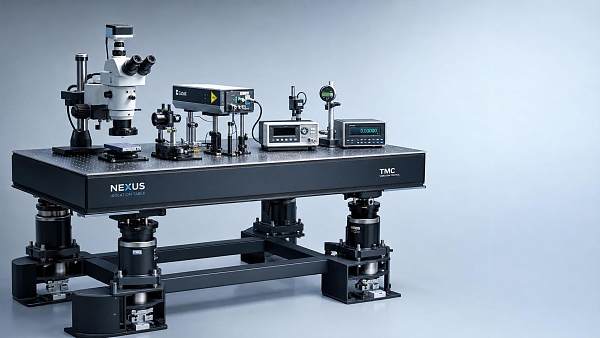
Vibration Isolation Efficiency (Hz) vs Real Lab Stability
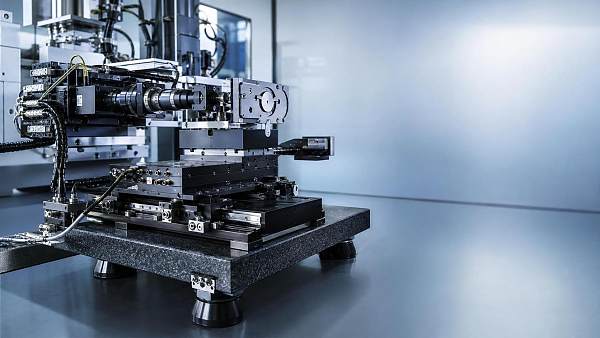
For technical evaluators, vibration isolation efficiency (Hz) is only the starting point—not the full measure of platform performance. In real laboratory environments, true stability depends on how isolation behavior translates under dynamic loads, floor-borne disturbances, and ultra-precision process demands. This article examines the gap between frequency-based specifications and measurable lab stability to support more reliable engineering decisions.
In procurement reviews for metrology benches, nano-positioning stages, thin-film process tools, and sensitive analytical instruments, a frequency figure alone rarely predicts in-use behavior. A platform rated attractively on paper may still drift, amplify motion near resonance, or lose control under payload changes of 20% to 40%.
For organizations operating at the frontier of accuracy, the practical question is not simply how low the isolation frequency starts, but whether the entire system preserves repeatability, settling time, and process yield across normal lab variability. That is the decision space where technical benchmarking becomes more valuable than headline specifications.
Why vibration isolation efficiency (Hz) does not equal real lab stability
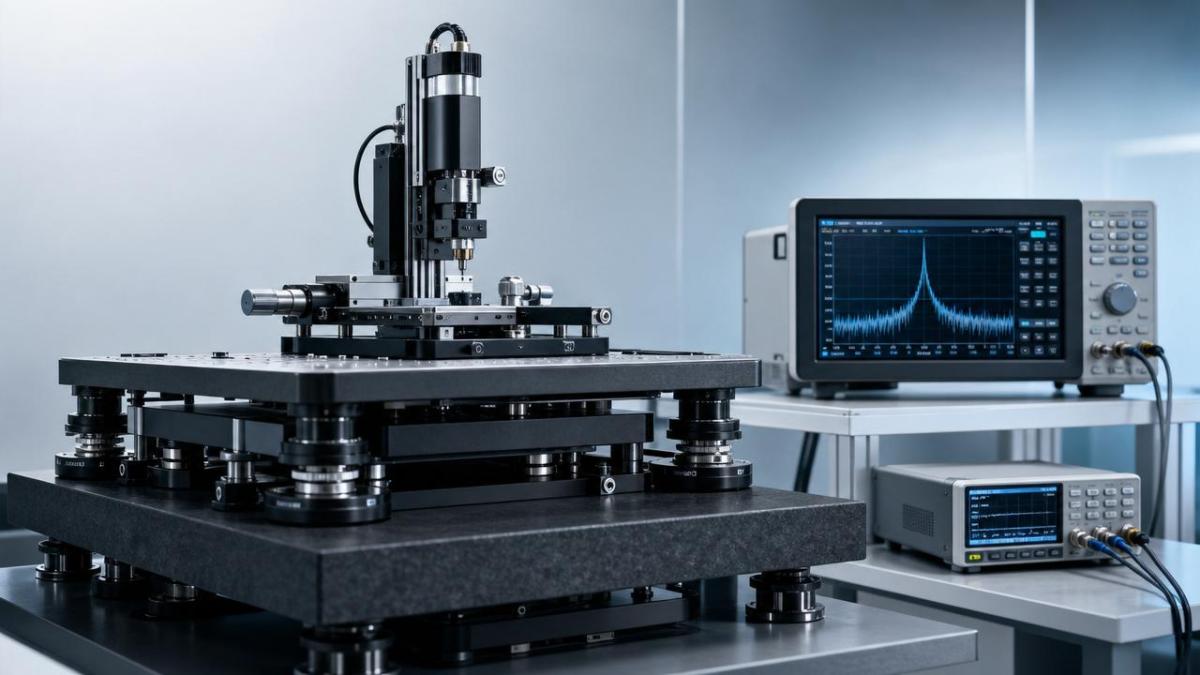
The phrase vibration isolation efficiency (Hz) usually refers to the frequency region where transmissibility begins to drop below 1, or where isolation becomes meaningful. In many vendor documents, this value is presented as a concise indicator of performance. For technical evaluators, however, it is only one point in a much wider stability model.
Two platforms can both cite a 2 Hz or 3 Hz isolation threshold and still behave very differently in operation. Differences in damping ratio, structural stiffness, control loop tuning, mass distribution, and disturbance direction can change real performance by a large margin, especially in the 1 Hz to 20 Hz band that often matters most in precision environments.
The specification gap evaluators encounter
A quoted efficiency figure often comes from controlled test conditions: fixed payload, ideal floor, narrow measurement axis, and optimized leveling. Laboratories are rarely that stable. Nearby HVAC systems, foot traffic, pumps, compressors, building sway, and stage acceleration create a mixed vibration profile that shifts throughout a 24-hour cycle.
In ultra-precision settings, even sub-micron motion can affect scan sharpness, overlay accuracy, interferometric measurement quality, or deposition uniformity. This is why G-UPE-aligned evaluation practices treat the Hz rating as an entry point, then examine the full disturbance-to-output chain before qualifying a platform for procurement.
Key variables behind real stability
When translating vibration isolation efficiency (Hz) into actual lab stability, evaluators should review at least 6 variables, not just one frequency number:
- Payload mass and center-of-gravity shift
- Horizontal versus vertical transmissibility
- Resonance amplification near 1 Hz to 5 Hz
- Passive versus active control response time
- Floor spectrum during working and non-working hours
- Settling behavior after tool motion, loading, or operator contact
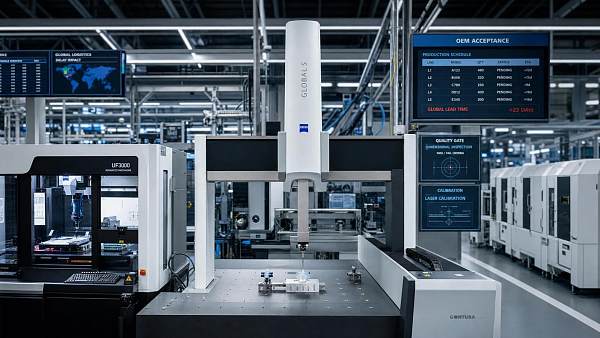
A common error is to compare systems only by “starting isolation frequency.” In practice, the more useful question is how much residual motion remains at the instrument reference point after real disturbances. That residual motion may determine whether a CMM probe stabilizes in 0.8 seconds or 3.5 seconds, and whether that difference is acceptable for throughput.
Resonance can hide behind an attractive number
If a table or platform has low natural frequency but insufficient damping, it may isolate well above a certain range while still amplifying motion below that point. For sensitive optics, semiconductor alignment, or nano-positioning work, this amplification zone can be more damaging than moderate vibration at higher frequencies.
The comparison below shows why vibration isolation efficiency (Hz) should be interpreted with context rather than used as a stand-alone purchasing metric.
The practical conclusion is clear: technical evaluators should move from a single-number comparison to a response-based assessment. In precision procurement, vibration isolation efficiency (Hz) becomes useful only when linked to measurable platform behavior under application-specific conditions.
How to evaluate stability in actual laboratory and production environments
A more reliable approach combines environmental measurement, instrument behavior, and workload simulation. This matters across the G-UPE landscape, from metrology cells and micro-manipulation systems to deposition tools and high-purity gas delivery modules mounted near sensitive process equipment.
Start with the floor, not the brochure
Before comparing suppliers, measure floor vibration over at least 8 to 24 hours if possible. Capture weekday and off-shift conditions. In many facilities, spectral peaks appear at 7 Hz to 12 Hz from rotating equipment, while low-frequency building response may appear below 3 Hz due to structural sway or nearby traffic.
Without this baseline, it is difficult to judge whether a 2 Hz passive table, a 1.5 Hz pneumatic isolator, or an active system with feedback control is the better fit. Procurement decisions made without environmental data often create expensive requalification cycles 2 to 6 months after installation.
Measure application-level outputs
The correct success metric depends on the instrument. For a coordinate measurement setup, repeatability and probe settling may be primary. For an interferometer-controlled stage, nanometer drift over a defined interval may matter more. For a biological imaging platform, image blur and stabilization time can be the purchasing threshold.
Useful acceptance metrics often include 4 categories: residual displacement, RMS velocity, settling time after disturbance, and repeatability under repeated cycles. A platform that looks strong on vibration isolation efficiency (Hz) but fails one of these four criteria may still be the wrong choice.
A 5-step field evaluation process
- Record ambient floor vibration across the operating schedule.
- Define payload range, such as 80 kg to 250 kg, including offsets and moving mass.
- Test candidate isolation systems under real cable, hose, and utility routing.
- Measure application output after impulse and operational disturbance.
- Validate repeatability over multiple cycles, usually 10 to 30 runs.
This process reduces the risk of selecting a platform that performs well only in a simplified bench test. It also creates a stronger audit trail for internal approval teams, especially where capex reviews require documented engineering justification.
The following matrix can help technical evaluators compare options more consistently during lab planning or supplier qualification.
The table highlights a key point: isolation platforms should be matched to disturbance patterns and process behavior, not selected by brochure ranking. The more demanding the process window, the less useful a single-number comparison becomes.
Selection criteria for procurement teams and technical reviewers
In B2B sourcing, the best decision usually comes from combining engineering metrics with implementation constraints. Technical evaluators should translate laboratory stability needs into a practical vendor scorecard that supports cross-functional approval from engineering, operations, and procurement.
Six questions that improve supplier comparison
- What is the validated payload range, for example 50 kg to 500 kg, without degrading isolation behavior?
- Is performance stated in vertical motion only, or in all 3 axes?
- What happens when utilities add side-load or stiffness through hoses and cables?
- How long is installation and tuning, such as 1 day versus 5 days?
- Can the vendor support field measurement before and after commissioning?
- What maintenance cycle applies to pneumatic, active, or hybrid systems over 12 months?
These questions are particularly relevant in multidisciplinary projects where isolation affects more than one subsystem. A nano-positioning stage may depend on air supply quality, mechanical flatness, and metrology alignment at the same time. A weak isolation decision can therefore cascade into process instability, false metrology alarms, and lower utilization.
Common purchasing mistakes
Mistake 1: treating vibration isolation efficiency (Hz) as a universal ranking number
A lower frequency value does not automatically produce better application stability. If the lab disturbance is dominated by a narrow band near system resonance, or if active control introduces sensitivity to certain inputs, real results may fall short of expectations.
Mistake 2: ignoring utility coupling
Rigid cables, gas lines, exhaust ducts, and coolant hoses can bypass the isolator and transmit vibration directly into the instrument frame. In some installations, utility routing changes effective performance more than the difference between two quoted isolation frequencies.
Mistake 3: accepting generic FAT-style claims without SAT verification
Factory performance data is useful, but site acceptance matters more. A practical review should include on-site verification after installation, ideally within the first 7 to 14 days, then again after full tool integration when actual payload and utilities are in place.
What strong technical documentation should include
For high-value projects, ask for more than a datasheet. A stronger technical package often includes transmissibility plots, payload sensitivity notes, installation constraints, floor requirement guidance, and expected performance variation under different environmental classes. That level of detail helps reviewers align isolation performance with ISO, SEMI, or internal process control requirements.
At the institutional benchmarking level, this is where independent evaluation adds value. When comparing platforms for semiconductor, aerospace, advanced metrology, or medical manufacturing environments, the real differentiator is not a marketing figure. It is the quality of evidence linking vibration isolation efficiency (Hz) to repeatable, in-spec output.
From specification to deployment: practical guidance for stable outcomes
Once a platform is selected, deployment discipline determines whether promised performance is actually achieved. Even well-designed systems can underperform if they are installed on unsuitable floors, loaded asymmetrically, or connected to poorly managed utilities.
Implementation checkpoints
- Confirm floor flatness and support condition before delivery.
- Validate compressed air quality and pressure stability where pneumatic isolators are used.
- Minimize cable preload and route hoses with compliant loops.
- Recheck level and response after full instrument integration.
- Document baseline readings for future maintenance comparison.
For many labs, the first 30 days are critical. That period should be used to verify that drift, settling time, and repeatability remain stable across normal operations. If performance shifts between empty and loaded states, or between day and night shifts, additional tuning or utility correction may be required.
Maintenance and lifecycle considerations
Isolation is not a one-time specification; it is a maintained condition. Pneumatic systems may require leak checks and pressure review at routine intervals. Active systems may require sensor validation, firmware review, or controller diagnostics every 6 to 12 months. For critical instruments, lifecycle support can be as important as initial purchase price.
A practical sourcing model therefore weighs at least 4 lifecycle dimensions: acquisition cost, commissioning effort, maintenance burden, and risk of process interruption. This broader view helps technical evaluators choose a solution that remains stable not only during acceptance, but over years of operation.
For technical evaluators working in high-accuracy environments, vibration isolation efficiency (Hz) should be treated as one useful indicator within a larger stability framework. The better decision comes from linking frequency behavior to payload realities, environmental measurements, installation conditions, and application-level output criteria.
G-UPE supports this decision model by focusing on verifiable engineering data, cross-disciplinary benchmarking, and procurement-relevant technical interpretation across metrology, motion control, fluid systems, coatings, and ultra-high purity process environments. If you are reviewing isolation platforms for an advanced laboratory or precision manufacturing project, contact us to obtain a tailored evaluation framework, compare solution paths, and explore more deployment-ready benchmarks.
Recent Articles
 2026.07.01ESS Trends in Semiconductor Reliability for 2026ESS trends in semiconductor reliability for 2026: discover how smarter screening, traceability, and process-linked data reduce defect risk, strengthen compliance, and protect long-cycle production.
 2026.07.01Choosing an Ultra-Precision Engineering SupplierUltra-precision engineering supplier selection starts with verified process control, compliance, and lifecycle support. Learn how to compare suppliers, reduce risk, and choose with confidence.
 2026.07.01Vibration Isolation Table Load Rating: What Matters MostVibration isolation table load rating affects stability, repeatability, and service life. Learn what really matters for precise setups and choose the right table with confidence.
 2026.07.01How to Verify an ISO Certified Factory Before OrderingISO certified factory verification starts beyond the certificate. Learn how to check scope, records, traceability, and real process control before ordering with confidence.
 2026.07.01Solution Comparison Guide for Precision Motion SystemsSolution comparison guide for precision motion systems: compare accuracy, repeatability, integration risk, and lifecycle cost to choose the right platform with confidence.
 2026.06.30VDE Adds Broad-Band EMC Test for Piezo ValvesVDE Adds Broad-Band EMC Test for Piezo Valves: learn how the new VDE-AR-E 2612-2 and IEC 61000-4-20 rule affects design, certification, exports, and market access before October 2026.
 2026.06.30Japan Opens Fast-Track Imports for Medical Micro-RobotsJapan opens fast-track imports for medical micro-robots with zero tariffs and 5-day certification. Learn how METI’s move can cut sourcing costs, speed compliance, and improve time to market.
 2026.06.30EU Draft Rule Would Require Purity Watch for Electronic GasesEU draft rule would require Purity Watch for electronic gases like SiH4, NF3, and WF6 by Jan 2027. See who is affected, key ISO Class 1 demands, and how to prepare early.
 2026.06.30SEMI: CMM System Lead Time Extends to 22 WeeksSEMI reports CMM System lead time has extended to 22 weeks, signaling tighter acceptance schedules in Asia-Pacific OEM assembly. See what it means for automotive electronics and advanced packaging now.
 2026.06.30BIS Expands Export Controls to 37 ALD/CVD Skid ItemsBIS Expands Export Controls to 37 ALD/CVD Skid Items, reshaping ECCN 3B001 compliance for China-bound exports. Learn the licensing impact, risks, and next steps for OEMs and integrators.
 2026.06.30VR in Training: Where It Works Best and Where It Falls ShortVR training works best for safety-critical tasks, equipment familiarization, and rare high-impact scenarios. Learn where VR delivers ROI, where it falls short, and how to apply it effectively.
 2026.06.30How to Compare Wellness Products by Claims, Safety, and CostWellness products can be hard to judge. Learn how to compare claims, safety, and real cost to choose smarter, lower-risk options that truly fit your needs and budget.
 2026.06.30XYZ Translation Stages: Accuracy vs Speed in Motion ControlXYZ translation stages shape the balance between accuracy and speed in motion control. Learn what impacts settling time, repeatability, and system fit across precision applications.
 2026.06.30Next-Gen Wireless Charging: What Limits Efficiency in Real UseNext-gen wireless charging: discover what really limits efficiency in real use, from alignment and heat to materials and control electronics, and how to choose a platform that performs reliably.
 2026.06.30How to Evaluate a Material Science Platform for Faster R&DMaterial Science platform evaluation made practical: learn how to compare verified data, standards alignment, regulatory visibility, and supplier signals to speed R&D with more confident decisions.
 2026.06.29VDE Guide Adds IEC 61000-4-20 EMC Test for Piezo ValvesVDE Guide Adds IEC 61000-4-20 EMC Test for Piezo Valves, reshaping EU export compliance, CE marking, lead times, and design decisions. See what manufacturers and buyers must review now.
 2026.06.29Japan Opens Zero-Tariff Window for Medical Micro-RobotsJapan opens a zero-tariff window for Medical Micro-Robots meeting JIS B 8441:2025. See how exporters, buyers, and supply-chain teams can gain pricing and market access advantages.
 2026.06.29EU Draft Rule Tightens Purity Watch for Electronic GasesEU draft rule tightens purity watch for electronic gases, adding Purity Watch certification, ISO 8573-1 Class 1 limits, and new testing demands. See how exporters and buyers should prepare now.
 2026.06.29SEMI Reports CMM System Lead Times Extend to 22 WeeksSEMI reports CMM System lead times extending to 22 weeks, raising risks for automotive and aerospace import projects. Learn what it means for commissioning, calibration, and planning.
 2026.06.29BIS Expands Controls on ALD/CVD SkidsBIS expands controls on ALD/CVD skids, raising new export licensing and compliance risks for semiconductor supply chains. See what Chinese suppliers, buyers, and integrators should review now.
 2026.06.29Solarcables Selection Guide: UV Resistance, Loss Control, and LifespanSolarcables selection guide covering UV resistance, loss control, and lifespan. Learn how to reduce energy loss, improve reliability, and choose cables that perform longer in real conditions.
 2026.06.29Wholesale Nano-Positioning Stage for Beamlines: Key Specs That MatterWholesale nano-positioning stage for beamlines: compare repeatability, load stability, settling time, and control integration to choose beamline-ready performance with confidence.
 2026.06.29PZT Raw Material Pricing in 2026: What Is Driving Cost Changes?PZT raw material pricing in 2026 is being reshaped by energy costs, compliance, supply risk, and qualification demands. See what is driving cost changes and how buyers can plan smarter.
 2026.06.29Spark Plugs Supplier Checklist: Quality Risks, Lead Times, and FitSpark plugs supplier checklist for buyers: learn how to verify quality risks, lead times, fit, and total cost before approval to avoid failures and choose with confidence.
 2026.06.29How to Compare Tinted Reflective Glass Wholesale Options by Cost and PerformanceTinted reflective glass wholesale options should be compared by more than price. Learn how to evaluate cost, solar performance, compliance, and supplier reliability for smarter buying.
 2026.06.28TUV Rheinland Tightens PVD Target Export CertificationTUV Rheinland Tightens PVD Target Export Certification: learn how new EU CE-PEP rules for ITO, AZO, and Mo targets may affect compliance, shipments, and supplier readiness.
 2026.06.28Vietnam, Thailand Micro-Robot Orders Jump 37% WoWMicro-Robots orders in Vietnam and Thailand jumped 37% WoW, signaling urgent shifts in semiconductor packaging and EMS sourcing. See what longer lead times and certification changes mean now.
 2026.06.28Japan Tightens CMM Calibration Rule for Advanced PackagingJapan Tightens CMM Calibration Rule for Advanced Packaging: learn how Japan’s new laser interferometry standard will impact CMM Systems, supplier compliance, OEM contracts, and acceptance testing before October 2026.
 2026.06.28REACH Draft Tightens Residue Limits for Optical Coating SolventsREACH Draft Tightens Residue Limits for Optical Coating Solvents: learn how the proposed 50 ppm cap could affect EU market access, supplier audits, procurement checks, and delivery compliance.
 2026.06.28ITAR Tightens Export Licensing for ALD PrecursorsITAR tightens export licensing for ALD precursors, ultra-high-purity gases, and gas delivery components. Learn what fab teams, integrators, and suppliers must do before July 15, 2026.
 2026.06.28Atomic Layer Deposition Equipment Manufacturers ComparedAtomic Layer Deposition equipment manufacturers compared for procurement teams: evaluate process stability, service, compliance, and long-term production fit before you buy.
 2026.06.28Biological Implants Manufacturing Services: Key Quality RisksBiological implants manufacturing services demand strict control of traceability, contamination, and measurement. Discover the key quality risks that impact compliance, safety, and supplier selection.
 2026.06.28How Micro-Manipulation Stroke Affects Precision ControlMicro-Manipulation stroke directly shapes precision control, affecting stiffness, repeatability, settling time, and drift. Learn how to balance travel range and accuracy for better system performance.
 2026.06.28OEM Consumer Electronics Quick Installation Guide ChecklistOEM consumer electronics quick installation guide checklist covering pre-power checks, compatibility, startup validation, and repeatable setup steps to reduce errors and speed deployment.