
KFDA Updates X-ray Metrology Device Registration Rules
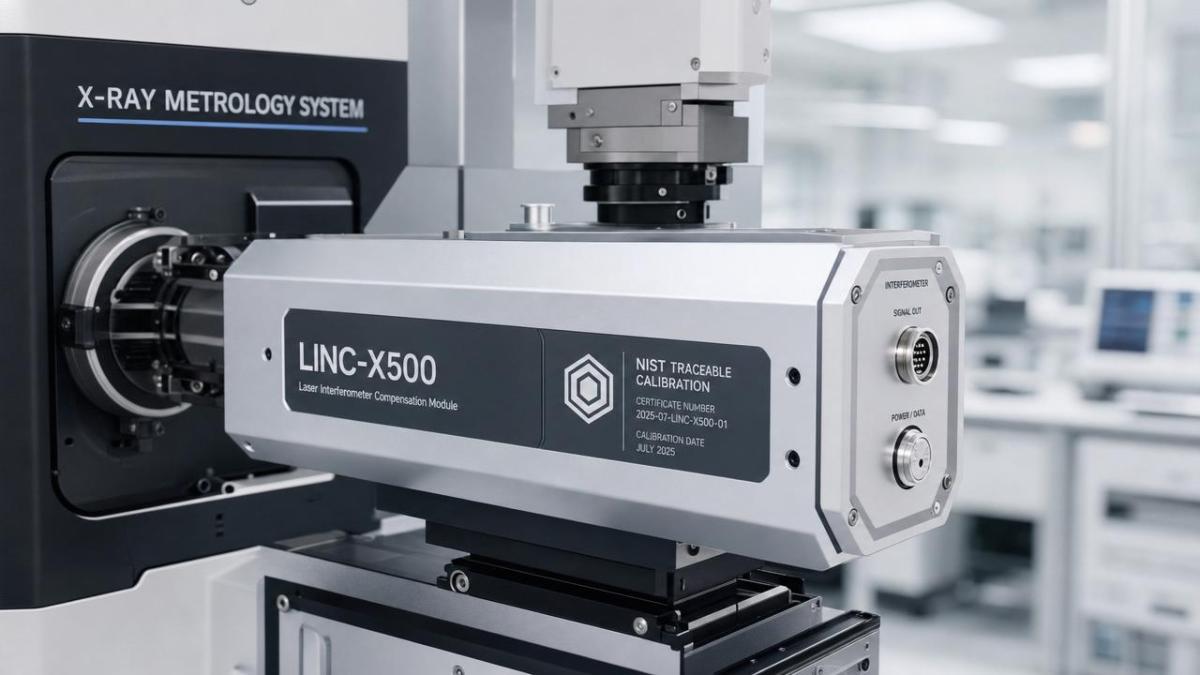
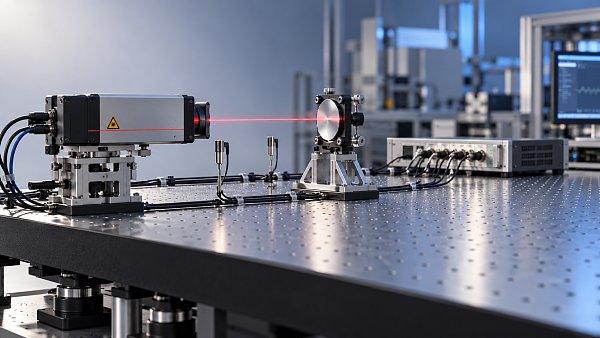
On May 16, 2026, the Korean Ministry of Food and Drug Safety (MFDS, formerly KFDA) issued the Guidance for Registration of X-ray Metrology Devices for Medical Use (2026 Revision), mandating that laser interferometric compensation modules be declared as independent functional units — with distinct model numbers, manufacturers, and NIST-traceable calibration certificates. This update directly affects manufacturers, exporters, and importers of precision X-ray metrology equipment targeting the Korean medical device market.
Event Overview
On May 16, 2026, the Korean Ministry of Food and Drug Safety (MFDS) published the Guidance for Registration of X-ray Metrology Devices for Medical Use (2026 Revision). The revision explicitly requires that any laser interferometric compensation module integrated into an X-ray metrology device must be listed separately in registration submissions, including its specific model number, manufacturer name, and a valid NIST-traceable calibration certificate. As confirmed by customs reports, this change has led to the temporary detention of multiple shipments of Chinese-made X-ray metrology devices at Incheon International Airport, pending submission of corrected documentation.
Industries Affected
Direct Exporters and Trade Enterprises
Exporters of X-ray metrology systems to Korea are immediately affected because registration dossiers must now disaggregate subsystems previously treated as integral components. The requirement introduces new technical documentation burdens and delays approval timelines if modules lack independently verifiable calibration evidence.
Equipment Manufacturers (OEMs and System Integrators)
Manufacturers embedding third-party or proprietary laser interferometric compensation modules must now ensure each module carries its own certified traceability documentation. This impacts product labeling, technical file architecture, and internal quality record-keeping — particularly where modules are sourced from suppliers without NIST-aligned calibration workflows.
Supply Chain and Regulatory Support Providers
Regulatory consultants, local representatives (Korean Authorized Representatives), and logistics service providers handling MFDS submissions face revised scope-of-work expectations. Supporting documentation must now include module-level verification, increasing review time and coordination complexity across engineering, QA, and regulatory teams.
What Relevant Enterprises or Practitioners Should Focus On and How to Respond
Monitor Official Clarifications and Implementation Timelines
Analysis shows that the guidance does not specify a grace period or transitional provisions. Enterprises should track official announcements from MFDS and Korean Notified Bodies for confirmation on enforcement start dates and acceptable formats for calibration certificates.
Verify Module-Level Documentation for Active and Pipeline Submissions
Current more appropriate action is to audit all X-ray metrology devices intended for Korean registration — especially those containing laser interferometric compensation modules — to confirm whether model-specific calibration certificates exist and whether they meet NIST traceability requirements as defined in ISO/IEC 17025 or ANSI/NCSL Z540.
Engage Module Suppliers Early to Align on Certification Requirements
Observably, many laser interferometric modules are procured from specialized optomechanical vendors who may not routinely issue NIST-traceable certificates. Firms should initiate supplier communications now to assess capability, lead times, and potential re-certification needs before resubmitting or filing new applications.
Update Internal Technical Files and Labeling Practices
From industry perspective, the revision signals a broader shift toward granular subsystem accountability in Korean medical device regulation. Companies should revise internal design history files, labeling templates, and EUA/MFDS submission checklists to reflect mandatory module-level identification and documentation.
Editorial Perspective / Industry Observation
This update is better understood as a regulatory signal — rather than an isolated procedural change — indicating MFDS’s increasing emphasis on metrological integrity in diagnostic-grade measurement tools. Analysis shows it aligns with global trends toward component-level traceability in high-precision medical instrumentation, but diverges from current EU MDR or US FDA approaches, which typically treat such modules as part of the overall system performance validation. Observably, the airport detentions suggest enforcement is already active, meaning the policy has moved beyond signaling into operational impact. Industry should therefore treat this as both a near-term compliance priority and a marker of evolving Korean expectations for measurement assurance in regulated health technologies.
Conclusion
This regulatory update underscores the growing importance of metrological traceability as a discrete compliance criterion — not just a quality attribute — in Korea’s medical device registration process. It does not represent a broad classification change or new risk category, but rather a tightening of evidentiary requirements for a specific functional unit within an established device type. Current more appropriate understanding is that this reflects targeted enforcement maturity, not a systemic overhaul; firms should prioritize documentation alignment over strategic redirection.
Information Sources
Main source: Korean Ministry of Food and Drug Safety (MFDS), Guidance for Registration of X-ray Metrology Devices for Medical Use (2026 Revision), published May 16, 2026.
Note: Ongoing observation is required regarding MFDS’s interpretation of ‘NIST-traceable’ for non-U.S.-based calibration labs and whether equivalency pathways (e.g., via APAC MRA signatories) will be accepted.
Taglist:
Recent Articles
 2026.10.27India Hosts 61st CIML Meeting for First Time, Advances International Metrology AlignmentIndia hosts the 61st CIML meeting, highlighting OIML-CS status and legal metrology reforms. Explore what international alignment could mean for instrument certification and equipment trade.
 2026.10.27When should you call emergency medical services instead of driving?When should you call emergency medical services instead of driving? Learn the critical warning signs, why an ambulance can be safer, and what to do while help arrives.
 2026.10.26Mycronic Wins $12–14 Million Photomask System Order from Asian CustomerMycronic secures a $12–14 million photomask system order from an existing Asian customer. Explore the writing and measurement systems and their planned 2027 deliveries.
 2026.10.26Piezoelectric Actuator Selection: Balancing Stroke, Force, and BandwidthSelect the right piezoelectric actuator by balancing loaded stroke, force, and bandwidth. Explore key design checks to improve precision and avoid costly sizing mistakes.
 2026.10.26Layer Deposition Equipment: ALD vs. CVD for High-Aspect-Ratio FeaturesCompare layer deposition equipment for high-aspect-ratio features. Explore ALD vs. CVD conformality, throughput, and costs to choose the right system with confidence.
 2026.10.26Checking repeatability in bulk orders of encoder-feedback nano stagesCompare encoder feedback nano-positioning stage wholesale offers using repeatability tests, lot acceptance criteria, and traceable reports. Learn how to reduce risk and buy with confidence.
 2026.10.25Sidea Semiconductor Granted Patent for Probe Card Alignment CalibrationSidea Semiconductor's probe card alignment calibration patent aims for precise, low-cost automation without a calibration target. Explore its potential for semiconductor testing.
 2026.10.25How to assess long-term drift in a high-stability laser interferometerAssess long-term drift in a high stability laser interferometer with reliable reference tests, environmental tracking, and clear acceptance limits. Learn how to validate lasting measurement accuracy.
 2026.10.24SIA Submits Comments to EPA on Draft Trans-DCE Risk AssessmentSIA backs EPA’s draft Trans-DCE risk assessment for semiconductor manufacturing. Explore what its comments could mean for continued lawful use, supply stability, and production planning.
 2026.10.24How to size plastic extrusion machines for your target outputSize plasticextrusionmachines for your target output with practical throughput calculations, resin checks, and line-capacity tips. Avoid costly sizing mistakes and choose with confidence.
 2026.10.23Leadmicro Showcases Full ALD, CVD and PVD Lineup at Bay Area Semiconductor ExpoExplore Leadmicro’s ALD, CVD and PVD lineup at the Bay Area Semiconductor Expo, including magnetron sputtering solutions and key checks for smarter equipment procurement.
 2026.10.23How much does closed-loop control add to the price of PZT drivers?Understand PZT drivers price increases for closed-loop control. Compare sensors, electronics, and installation costs to make a smarter purchasing decision.
 2026.10.22Leadmicro Adds PVD Products, Expanding ALD, CVD and PVD CoverageLeadmicro expands ALD, CVD and PVD coverage with new iMagtron PVD products and a ruthenium ALD process. Explore what these advances mean for thin-film deposition and equipment buyers.
 2026.10.22What limits commercial adoption of micro-robotics in Latin America?Micro-robotics Latin America: What limits commercial adoption? Explore costs, integration hurdles, and service gaps—and learn how to reduce investment risks.
 2026.10.21NTT, Furukawa Electric and Partners Launch Photonics Mass-Production R&DExplore NTT and Furukawa Electric's photonics mass-production R&D with partners, targeting scalable chip manufacturing for energy-efficient AI computing and higher-bandwidth data centers.
 2026.10.21What ultra-precision engineering case studies reveal about thermal driftExplore ultra-precision engineering project cases to uncover hidden thermal drift, assess compensation, and learn what evidence to request before choosing a precision system.
 2026.10.20BASF Signs Letter of Intent with Taiwan Ministry to Expand Guanyin Semiconductor MaterialsBASF’s planned Guanyin semiconductor materials expansion targets sub-2nm manufacturing. Explore what its letter of intent with Taiwan’s Ministry of Economic Affairs could mean for chipmakers.
 2026.10.20How to estimate medical technology costs beyond the purchase priceEstimate medical technology cost beyond the purchase price. Uncover hidden expenses, compare lifecycle costs, and use this guide to make smarter procurement decisions.
 2026.10.1960 Minutes: Iran War Drives Global Helium Shortage, Threatening Semiconductor SupplyIran war-linked global helium shortage reportedly threatens semiconductor supply. Explore chipmaking risks and practical steps to verify inventories, shipments and supplier commitments.
 2026.10.19How to specify zinc coating weight for prepainted GI steel coilsSpecify zinc coating weight for prepainted gi steel coils with confidence. Learn how to define Z275, compare standards, and verify compliance to avoid costly purchasing mistakes.
 2026.10.18How linear motor stage settling time affects inspection throughputOptimize your linear motor stage for inspection systems: learn how settling time, vibration, and exposure timing affect throughput—and boost inspection output without sacrificing accuracy.
 2026.10.17Choosing a microfluidic probe manufacturer for stable flow confinementChoose a micro fluidic probe manufacturer with proven flow confinement. Compare geometry, flow control, validation, and repeatability to find the right fit for your application.
 2026.10.16What does measurement accuracy specified as % of full scale mean?Understand measurement specification accuracy as % of full scale. Learn to calculate error, compare sensor ranges, and choose the right instrument with confidence.
 2026.10.15How temperature affects high-accuracy dimensional analysis systemsDiscover how temperature affects high accuracy dimensional analysis systems, and learn practical ways to control thermal drift, improve compensation, and verify measurement accuracy.
 2026.10.14How air pressure affects precision pneumatic actuator repeatabilityPrecision Pneumatic actuator repeatability depends on more than supply pressure. Discover how pressure, friction, and flow affect positioning—and how to improve consistency in your application.
 2026.10.13How to choose a packaging manufacturer for small production runsChoose a packaging manufacturer for small production runs with confidence. Discover how to compare costs, verify samples, and secure quality packaging without excess inventory.
 2026.10.12Low-Impurity Silane Gas: Setting Acceptance Limits Beyond Total PurityEvaluate low impurity silane gas beyond total purity. Learn how to set contaminant limits, verify testing, and qualify suppliers for more reliable deposition.
 2026.10.12SEMI-Compliant Silane Gas: Which Specifications and Test Records Should You Check?SEMI compliant silane gas: Discover the standards, impurity limits, test records, and cylinder traceability checks that support confident purchasing and safer release decisions.
 2026.10.12Ultra-Pure Silane Gas Price: Comparing Quotes Beyond Cost per CylinderCompare ultra-pure silane gas price beyond cylinder costs. Learn how purity, usable quantity, freight, and return terms shape true value—and make a smarter purchasing decision.
 2026.10.12Moisture-Controlled Silane Gas: Tracing Water Contamination in Delivery LinesKeep moisture controlled silane gas reliable. Learn how to validate readings, trace water contamination in delivery lines, and verify recovery with safety-focused diagnostic insights.
 2026.10.12What Does 99.99999% Silane Gas Mean? Understanding 7N Purity and Detection LimitsEvaluate 99.99999 silane gas with confidence. Discover what 7N purity means, how detection limits affect results, and which supplier data to check before qualification.
 2026.10.12Ultra-Pure Silane Gas for Thin Films: Matching Gas Grade to Film RequirementsChoose ultra-pure silane gas for thin films with confidence. Learn to match impurity limits, supplier evidence, and delivery conditions to film requirements while avoiding unnecessary costs.
 2026.10.12Ultra-Pure Silane Gas for PECVD: Linking Impurities to Film DefectsQualify ultra-pure silane gas for PECVD with confidence. Learn how impurities affect film defects and use gas analysis, delivery checks, and film testing to set reliable acceptance limits.
 2026.10.12Qualifying an Ultra-Pure Silane Gas Manufacturer: Batch Consistency and TraceabilityQualify an ultra-pure silane gas manufacturer with confidence. Learn how to verify batch consistency, analytical results, and cylinder traceability to reduce sourcing risks.













FILTER_CORE
REF_NO: 0042
Editors' Picks
- 00
0000-00
India Hosts 61st CIML Meeting for First Time, Advances International Metrology Alignment - 00
0000-00
When should you call emergency medical services instead of driving? - 00
0000-00
Mycronic Wins $12–14 Million Photomask System Order from Asian Customer - 00
0000-00
Piezoelectric Actuator Selection: Balancing Stroke, Force, and Bandwidth