
Fiber Optic Alignment System Selection Guide
Selecting a fiber optic alignment system now involves more than comparing positioning resolution. It affects yield, automation readiness, regulatory traceability, and long-term process stability across advanced industrial environments.
As photonics packaging, silicon photonics, medical sensing, aerospace assemblies, and high-speed data infrastructure evolve, alignment tolerances are tightening. At the same time, production lines demand faster cycle times and lower variation.
This shift makes the fiber optic alignment system a strategic platform decision. The right architecture supports repeatable coupling efficiency, protects throughput, and reduces hidden lifecycle cost.
Demand signals show the fiber optic alignment system is moving from tool choice to process backbone
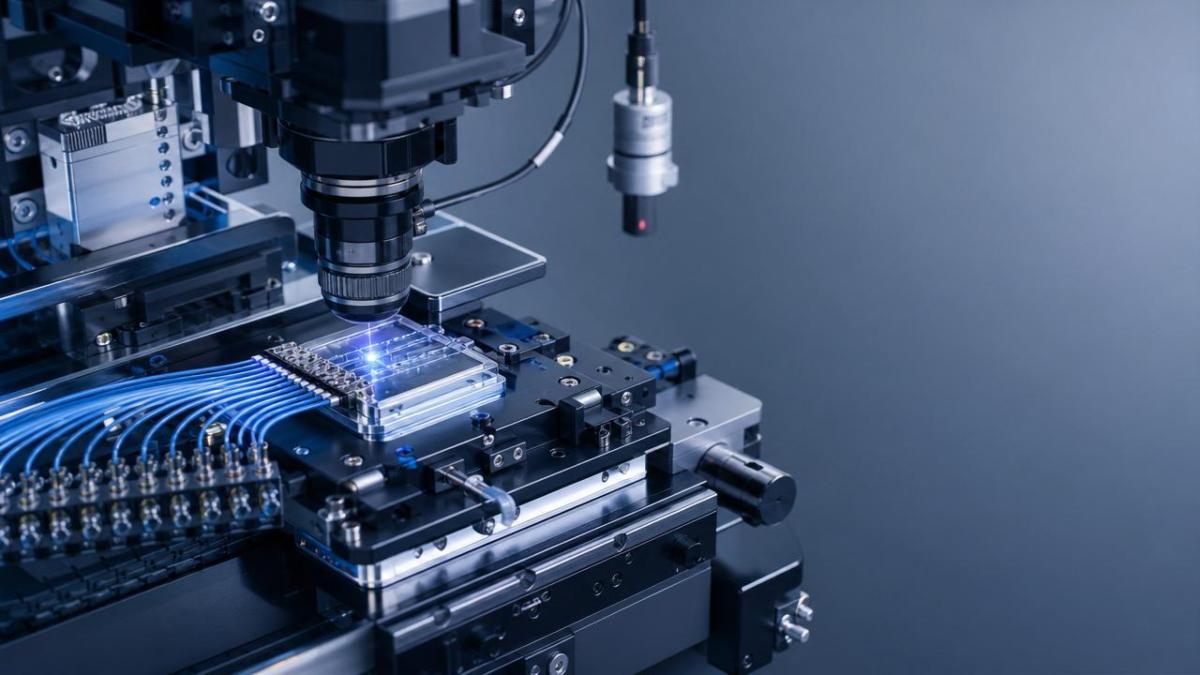
Several industries are reshaping how a fiber optic alignment system is evaluated. What once suited laboratory assembly may no longer fit scaled production, hybrid packaging, or validated quality environments.
Telecom and data center upgrades are driving dense optical interconnects. Semiconductor-adjacent packaging is pushing tighter passive and active alignment windows. Medical and aerospace applications add documentation and reliability demands.
These changes mean selection criteria now extend beyond stage travel and speed. Buyers increasingly compare software integration, metrology feedback, vibration isolation, modularity, and support for future process migration.
What has changed most in recent evaluations
- Higher channel density demands finer alignment repeatability.
- Automation is preferred over operator-dependent tuning.
- Mixed-material assemblies require adaptive motion control.
- Traceable process data is now a quality expectation.
- Lifecycle serviceability influences total ownership value.
The forces behind fiber optic alignment system upgrades are technical, commercial, and regulatory
The market is not changing for one reason. A fiber optic alignment system is being redefined by simultaneous pressure from product miniaturization, output scaling, compliance scrutiny, and interoperability expectations.
In comprehensive industrial settings, these forces often overlap. A fiber optic alignment system must therefore be judged as part of a larger manufacturing ecosystem, not as an isolated motion platform.
Selection priorities are shifting from peak specification to stable production behavior
A common mistake is focusing only on the smallest achievable step size. In practice, a fiber optic alignment system delivers value through repeatable alignment under realistic environmental and operational conditions.
Core evaluation dimensions
- Alignment accuracy and repeatability: Check closed-loop performance, drift behavior, and thermal sensitivity.
- Automation capability: Review recipe management, autofocus, search algorithms, and unattended operation support.
- Opto-mechanical compatibility: Confirm fixture flexibility for fibers, chips, arrays, connectors, and package variants.
- Metrology integration: Assess camera systems, power monitoring, interferometric options, and calibration workflows.
- Data architecture: Verify logging depth, export formats, and connection with quality systems.
- Serviceability: Consider preventive maintenance intervals, remote diagnostics, and parts availability.
These factors reveal whether the fiber optic alignment system can sustain process capability over time. Stable production behavior often outweighs headline specifications that cannot be maintained during extended runs.
Why passive versus active alignment still matters
Passive alignment may support lower cycle time when component tolerances are tightly controlled. Active alignment is often preferred where real optical feedback is essential for maximizing coupling performance.
The best fiber optic alignment system may support both approaches. Hybrid flexibility helps operations adapt to product changes, qualification phases, and future packaging strategies.
The impact reaches engineering, quality control, supply continuity, and capital efficiency
Choosing the wrong fiber optic alignment system can create problems beyond coupling loss. It may increase rework, introduce data gaps, lengthen validation, and complicate product transfers between sites.
In multi-sector manufacturing, consequences appear across several business functions. A stronger platform can improve coordination between assembly, metrology, maintenance, and compliance teams.
Operational effects by business area
- Process engineering: Faster recipe optimization and clearer parameter control.
- Quality assurance: Better traceability and more consistent acceptance criteria.
- Production planning: More predictable cycle times and lower interruption risk.
- Maintenance: Simpler diagnostics and improved calibration scheduling.
- Commercial continuity: Easier scaling across products and sites.
This broader view aligns with G-UPE’s emphasis on verified engineering performance. Precision equipment should be benchmarked by sustained process integrity, not only initial demonstration results.
What deserves the closest attention before committing to a fiber optic alignment system
A disciplined review reduces selection risk. The most valuable comparison points are those that expose real-world limitations before installation and qualification begin.
Key checkpoints
- Validate repeatability under expected temperature and vibration conditions.
- Request proof of coupling stability across long production runs.
- Review compatibility with current fixtures, vision tools, and software interfaces.
- Compare calibration routines and field service coverage.
- Assess upgrade paths for additional axes, sensors, or automation modules.
- Examine data security, user permissions, and audit trail features.
These checkpoints help determine whether a fiber optic alignment system will remain effective as products evolve, tolerances tighten, and reporting requirements expand.
A practical decision framework helps separate short-term fit from long-term value
Selection decisions improve when technical needs are ranked against operational reality. A structured framework also reduces the risk of overbuying or under-specifying critical precision functions.
A fiber optic alignment system should therefore be selected using both technical and operational evidence. This approach supports better returns across quality, continuity, and future scalability.
The next step is to benchmark fiber optic alignment system options against future process demands
The most resilient decision is not simply the system that performs well today. It is the fiber optic alignment system that can support upcoming packaging complexity, data expectations, and manufacturing expansion.
Start with a documented comparison of tolerance targets, automation needs, integration requirements, and service expectations. Then test each candidate against realistic production scenarios, not only showroom demonstrations.
For organizations operating in precision-driven sectors, this disciplined evaluation creates stronger technical confidence and lower execution risk. It also ensures the selected fiber optic alignment system remains aligned with long-term industrial performance goals.
Taglist:
Recent Articles
 2026.10.27India Hosts 61st CIML Meeting for First Time, Advances International Metrology AlignmentIndia hosts the 61st CIML meeting, highlighting OIML-CS status and legal metrology reforms. Explore what international alignment could mean for instrument certification and equipment trade.
 2026.10.27When should you call emergency medical services instead of driving?When should you call emergency medical services instead of driving? Learn the critical warning signs, why an ambulance can be safer, and what to do while help arrives.
 2026.10.26Mycronic Wins $12–14 Million Photomask System Order from Asian CustomerMycronic secures a $12–14 million photomask system order from an existing Asian customer. Explore the writing and measurement systems and their planned 2027 deliveries.
 2026.10.26Piezoelectric Actuator Selection: Balancing Stroke, Force, and BandwidthSelect the right piezoelectric actuator by balancing loaded stroke, force, and bandwidth. Explore key design checks to improve precision and avoid costly sizing mistakes.
 2026.10.26Layer Deposition Equipment: ALD vs. CVD for High-Aspect-Ratio FeaturesCompare layer deposition equipment for high-aspect-ratio features. Explore ALD vs. CVD conformality, throughput, and costs to choose the right system with confidence.
 2026.10.26Checking repeatability in bulk orders of encoder-feedback nano stagesCompare encoder feedback nano-positioning stage wholesale offers using repeatability tests, lot acceptance criteria, and traceable reports. Learn how to reduce risk and buy with confidence.
 2026.10.25Sidea Semiconductor Granted Patent for Probe Card Alignment CalibrationSidea Semiconductor's probe card alignment calibration patent aims for precise, low-cost automation without a calibration target. Explore its potential for semiconductor testing.
 2026.10.25How to assess long-term drift in a high-stability laser interferometerAssess long-term drift in a high stability laser interferometer with reliable reference tests, environmental tracking, and clear acceptance limits. Learn how to validate lasting measurement accuracy.
 2026.10.24SIA Submits Comments to EPA on Draft Trans-DCE Risk AssessmentSIA backs EPA’s draft Trans-DCE risk assessment for semiconductor manufacturing. Explore what its comments could mean for continued lawful use, supply stability, and production planning.
 2026.10.24How to size plastic extrusion machines for your target outputSize plasticextrusionmachines for your target output with practical throughput calculations, resin checks, and line-capacity tips. Avoid costly sizing mistakes and choose with confidence.
 2026.10.23Leadmicro Showcases Full ALD, CVD and PVD Lineup at Bay Area Semiconductor ExpoExplore Leadmicro’s ALD, CVD and PVD lineup at the Bay Area Semiconductor Expo, including magnetron sputtering solutions and key checks for smarter equipment procurement.
 2026.10.23How much does closed-loop control add to the price of PZT drivers?Understand PZT drivers price increases for closed-loop control. Compare sensors, electronics, and installation costs to make a smarter purchasing decision.
 2026.10.22Leadmicro Adds PVD Products, Expanding ALD, CVD and PVD CoverageLeadmicro expands ALD, CVD and PVD coverage with new iMagtron PVD products and a ruthenium ALD process. Explore what these advances mean for thin-film deposition and equipment buyers.
 2026.10.22What limits commercial adoption of micro-robotics in Latin America?Micro-robotics Latin America: What limits commercial adoption? Explore costs, integration hurdles, and service gaps—and learn how to reduce investment risks.
 2026.10.21NTT, Furukawa Electric and Partners Launch Photonics Mass-Production R&DExplore NTT and Furukawa Electric's photonics mass-production R&D with partners, targeting scalable chip manufacturing for energy-efficient AI computing and higher-bandwidth data centers.
 2026.10.21What ultra-precision engineering case studies reveal about thermal driftExplore ultra-precision engineering project cases to uncover hidden thermal drift, assess compensation, and learn what evidence to request before choosing a precision system.
 2026.10.20BASF Signs Letter of Intent with Taiwan Ministry to Expand Guanyin Semiconductor MaterialsBASF’s planned Guanyin semiconductor materials expansion targets sub-2nm manufacturing. Explore what its letter of intent with Taiwan’s Ministry of Economic Affairs could mean for chipmakers.
 2026.10.20How to estimate medical technology costs beyond the purchase priceEstimate medical technology cost beyond the purchase price. Uncover hidden expenses, compare lifecycle costs, and use this guide to make smarter procurement decisions.
 2026.10.1960 Minutes: Iran War Drives Global Helium Shortage, Threatening Semiconductor SupplyIran war-linked global helium shortage reportedly threatens semiconductor supply. Explore chipmaking risks and practical steps to verify inventories, shipments and supplier commitments.
 2026.10.19How to specify zinc coating weight for prepainted GI steel coilsSpecify zinc coating weight for prepainted gi steel coils with confidence. Learn how to define Z275, compare standards, and verify compliance to avoid costly purchasing mistakes.
 2026.10.18How linear motor stage settling time affects inspection throughputOptimize your linear motor stage for inspection systems: learn how settling time, vibration, and exposure timing affect throughput—and boost inspection output without sacrificing accuracy.
 2026.10.17Choosing a microfluidic probe manufacturer for stable flow confinementChoose a micro fluidic probe manufacturer with proven flow confinement. Compare geometry, flow control, validation, and repeatability to find the right fit for your application.
 2026.10.16What does measurement accuracy specified as % of full scale mean?Understand measurement specification accuracy as % of full scale. Learn to calculate error, compare sensor ranges, and choose the right instrument with confidence.
 2026.10.15How temperature affects high-accuracy dimensional analysis systemsDiscover how temperature affects high accuracy dimensional analysis systems, and learn practical ways to control thermal drift, improve compensation, and verify measurement accuracy.
 2026.10.14How air pressure affects precision pneumatic actuator repeatabilityPrecision Pneumatic actuator repeatability depends on more than supply pressure. Discover how pressure, friction, and flow affect positioning—and how to improve consistency in your application.
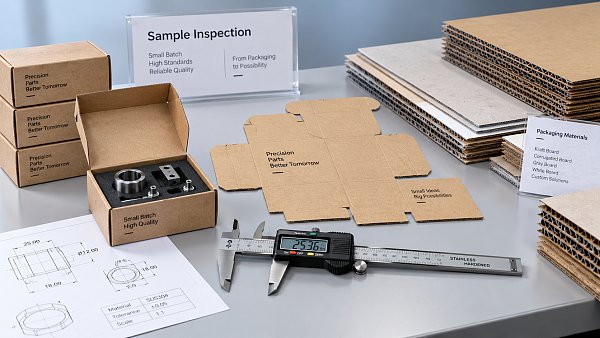
 2026.10.13How to choose a packaging manufacturer for small production runsChoose a packaging manufacturer for small production runs with confidence. Discover how to compare costs, verify samples, and secure quality packaging without excess inventory.
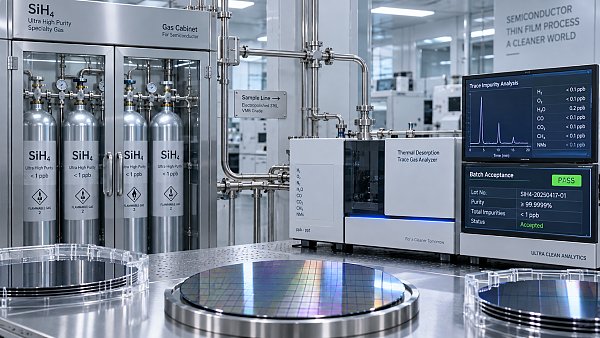
 2026.10.12Low-Impurity Silane Gas: Setting Acceptance Limits Beyond Total PurityEvaluate low impurity silane gas beyond total purity. Learn how to set contaminant limits, verify testing, and qualify suppliers for more reliable deposition.
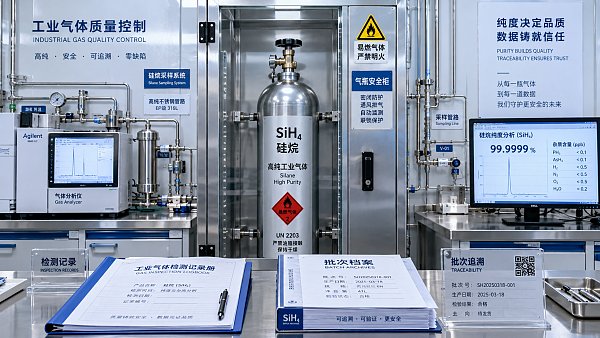
 2026.10.12SEMI-Compliant Silane Gas: Which Specifications and Test Records Should You Check?SEMI compliant silane gas: Discover the standards, impurity limits, test records, and cylinder traceability checks that support confident purchasing and safer release decisions.
 2026.10.12Ultra-Pure Silane Gas Price: Comparing Quotes Beyond Cost per CylinderCompare ultra-pure silane gas price beyond cylinder costs. Learn how purity, usable quantity, freight, and return terms shape true value—and make a smarter purchasing decision.
 2026.10.12Moisture-Controlled Silane Gas: Tracing Water Contamination in Delivery LinesKeep moisture controlled silane gas reliable. Learn how to validate readings, trace water contamination in delivery lines, and verify recovery with safety-focused diagnostic insights.
 2026.10.12What Does 99.99999% Silane Gas Mean? Understanding 7N Purity and Detection LimitsEvaluate 99.99999 silane gas with confidence. Discover what 7N purity means, how detection limits affect results, and which supplier data to check before qualification.
 2026.10.12Ultra-Pure Silane Gas for Thin Films: Matching Gas Grade to Film RequirementsChoose ultra-pure silane gas for thin films with confidence. Learn to match impurity limits, supplier evidence, and delivery conditions to film requirements while avoiding unnecessary costs.
 2026.10.12Ultra-Pure Silane Gas for PECVD: Linking Impurities to Film DefectsQualify ultra-pure silane gas for PECVD with confidence. Learn how impurities affect film defects and use gas analysis, delivery checks, and film testing to set reliable acceptance limits.
 2026.10.12Qualifying an Ultra-Pure Silane Gas Manufacturer: Batch Consistency and TraceabilityQualify an ultra-pure silane gas manufacturer with confidence. Learn how to verify batch consistency, analytical results, and cylinder traceability to reduce sourcing risks.
















FILTER_CORE
REF_NO: 0042
Editors' Picks
- 00
0000-00
India Hosts 61st CIML Meeting for First Time, Advances International Metrology Alignment - 00
0000-00
When should you call emergency medical services instead of driving? - 00
0000-00
Mycronic Wins $12–14 Million Photomask System Order from Asian Customer - 00
0000-00
Piezoelectric Actuator Selection: Balancing Stroke, Force, and Bandwidth