
Atomic Layer Deposition scaling problems from lab to line
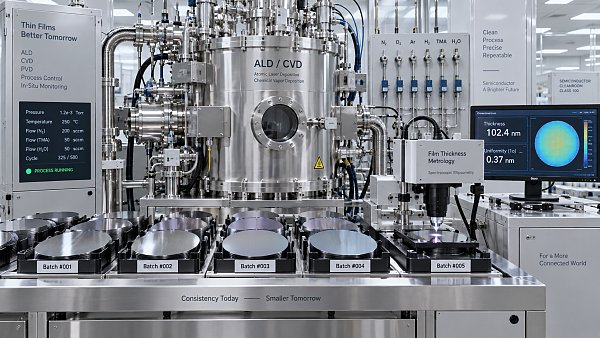
Scaling Atomic Layer Deposition from lab trials to production lines is where precision science meets operational reality. For information researchers evaluating thin-film manufacturing, the challenge lies not only in achieving uniformity and conformality, but also in translating process stability, precursor efficiency, and throughput into line-ready performance. This article explores the key scaling barriers, benchmarks, and decision factors shaping industrial ALD deployment.
Why does Atomic Layer Deposition become difficult when moving from lab to line?

In the laboratory, Atomic Layer Deposition is usually optimized on small substrates, limited batch counts, and tightly controlled process windows. A research reactor may run a few wafers or coupons per cycle, while a production tool must sustain repeatable output across tens to hundreds of parts per day, depending on geometry and takt-time targets. The scaling problem is not simply “more of the same.” It is a shift from proof of concept to statistical control.
For information researchers, the first practical question is whether the ALD process remains self-limiting under production conditions. Pulse and purge durations that work in a benchtop chamber can become insufficient in larger volumes, high-aspect-ratio parts, or denser batch loading. A 1–2 second precursor pulse in a lab setup may need a different gas delivery strategy in a manufacturing environment where flow conductance, dead volume, and loading pattern change the exposure profile.
The second challenge is throughput. ALD is valued for angstrom-level thickness control, but its cycle-based nature can constrain output. If a film requires 300–1,000 cycles, even small inefficiencies in purge timing or precursor use become commercially significant. The line-ready question therefore moves beyond film quality alone and into cost per coated part, chamber utilization, maintenance intervals, and integration with upstream and downstream handling.
A third issue is cross-functional alignment. Process engineers may focus on growth per cycle, while procurement teams need supplier resilience, precursor shelf-life, and spares availability. Quality teams may prioritize traceability and metrology repeatability. In real industrial deployment, Atomic Layer Deposition scaling succeeds only when process physics, equipment architecture, utilities, contamination control, and compliance requirements are evaluated together.
Three scale-up shifts that are often underestimated
- From single-run optimization to continuous operation: short pilot campaigns do not reveal drift patterns that appear after 48–72 hours of repeated cycling.
- From local uniformity to fleet consistency: one good chamber result is different from maintaining similar output across multiple tools or multiple lines.
- From material feasibility to industrial readiness: precursor delivery, exhaust treatment, and cleaning frequency can determine viability as much as film performance itself.
This is where G-UPE brings value for B2B research and procurement teams. Its benchmarking approach connects thin-film deposition data with adjacent industrial pillars such as ultra-high purity gases, fluid control, metrology, and nano-positioning. That multidisciplinary view is essential because ALD scale-up is rarely blocked by one parameter alone; it is usually limited by system interaction across 3–5 operational layers.
Which technical benchmarks matter most in production-scale Atomic Layer Deposition?
When moving Atomic Layer Deposition from research to production, decision-makers need a benchmark set that is both technically valid and commercially usable. Film thickness alone is not enough. At minimum, evaluation should cover 5 core dimensions: uniformity, conformality, growth stability, defectivity, and throughput. For many industrial users, a sixth dimension is precursor utilization, because waste directly affects operating cost and environmental handling.
Uniformity should be reviewed at wafer, batch, and chamber-history levels. A tool can deliver acceptable average thickness while still showing edge deviation, shadowing in complex fixtures, or run-to-run drift after maintenance. Conformality must be checked under relevant aspect ratios rather than ideal coupons only. In sectors such as semiconductors, medical components, and aerospace subassemblies, performance on real geometry matters more than a single best-case sample.
Growth stability is another critical metric. In a lab, growth per cycle can look stable over 50–100 cycles. In production, users should inspect whether the process remains consistent over full recipe length, multiple lots, and scheduled chamber uptime windows. Practical review often includes 3 stages: initial qualification, pilot repeatability, and sustained line observation over several maintenance intervals.
The following table summarizes the most relevant production-scale benchmarks for Atomic Layer Deposition and how information researchers can interpret them during supplier comparison.
For research teams building a shortlist, this benchmark set helps separate promising ALD chemistry from genuinely manufacturable Atomic Layer Deposition platforms. G-UPE’s value in this phase is not only in technical comparison, but in relating benchmark performance to supply-chain resilience, standards alignment, and process transfer risk.
How to read benchmark data without overestimating it
A common mistake is to treat a single qualification report as a production guarantee. Researchers should ask whether the data came from isolated runs, pilot lots, or sustained operation. They should also check whether the substrate type, thermal budget, and precursor purity match the intended use case. A result on flat silicon at one temperature window does not automatically translate to 3D metal parts, polymers, or medical geometries.
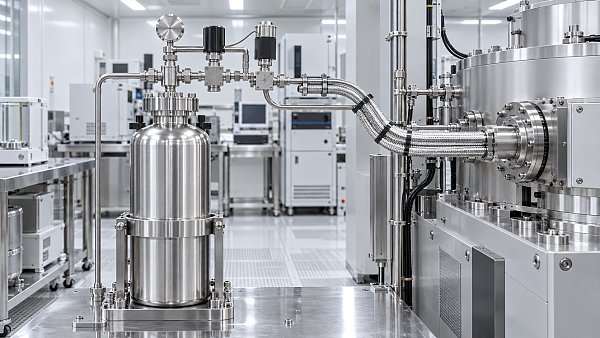
Another frequent issue is missing context on utilities and chamber condition. Atomic Layer Deposition can be highly sensitive to gas purity, moisture ingress, and line conditioning. That is why G-UPE’s cross-pillar visibility matters: precursor chemistry, gas handling, metrology validation, and chamber motion control should be reviewed as one industrial system rather than isolated procurement categories.
How should buyers compare ALD equipment, precursors, and line architecture?
For B2B evaluation, Atomic Layer Deposition scale-up should be reviewed as a stack of interdependent choices rather than a single equipment purchase. The main layers are reactor configuration, precursor delivery, thermal or plasma activation route, load pattern, and metrology strategy. In many sourcing discussions, buyers focus first on chamber cost. In practice, the larger business impact often comes from precursor logistics, chamber cleaning downtime, and qualification complexity.
Batch ALD and single-substrate ALD support different operating assumptions. Batch platforms can improve output for certain geometries and repetitive lots, while single-substrate tools may offer tighter integration in semiconductor lines where automation, recipe switching, and process isolation are priorities. Plasma-enhanced ALD may lower effective deposition temperature in some applications, but it can also add complexity in plasma uniformity and surface damage control.
Information researchers should also compare precursor behavior under line conditions. Vapor pressure, delivery temperature, container handling, and by-product management influence stable operation. A chemistry that looks efficient in a short trial may show poor container utilization or line fouling over a 2–4 week production campaign. That is why procurement review must include both process data and consumables behavior.
The table below provides a practical comparison framework for line-scale Atomic Layer Deposition decisions across equipment and process architecture.
This comparison framework is especially useful in diversified industries where ALD is deployed for barrier layers, dielectric films, biocompatible coatings, corrosion control, or surface functionalization. The correct choice depends less on one “best” machine type and more on the fit between geometry, throughput class, cleanliness demands, and validation burden.
A practical 4-step review path for information researchers
- Define the industrial target: substrate, feature geometry, thermal limit, target film function, and annual volume band.
- Screen process architecture: thermal or plasma route, batch or single-substrate approach, and expected cycle-time range.
- Verify supply chain and utilities: precursor sourcing, gas purity, exhaust treatment, and maintenance support window.
- Request line-scale evidence: repeatability records, metrology method, process transfer notes, and qualification workflow.
G-UPE supports this process by connecting technical benchmarking with commercial intelligence. For buyers facing export-control checks, multi-region sourcing, or strict approval chains, that combination reduces the risk of selecting an ALD route that is technically attractive but operationally fragile.
What standards, compliance, and implementation risks should be checked before scale-up?
Atomic Layer Deposition implementation often fails not because the film cannot be deposited, but because the deployment path overlooks compliance and operating discipline. In regulated or high-reliability sectors, users should align process documentation, materials traceability, and equipment controls with recognized frameworks such as ISO-related quality systems, SEMI-oriented semiconductor practices where applicable, and relevant IEEE-linked measurement expectations in instrumentation environments.
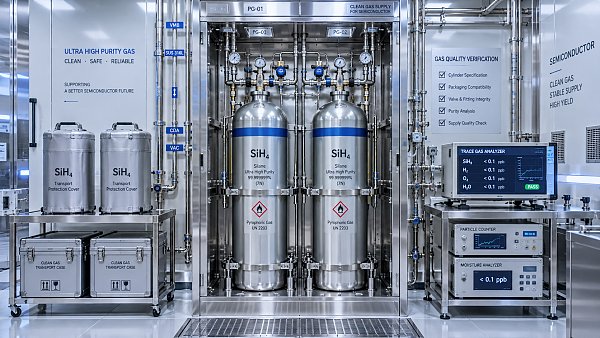
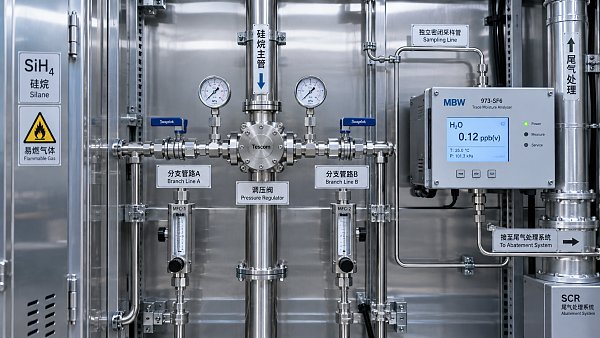
The risk profile expands during line transfer. Utilities must remain stable, precursor storage conditions must be maintained within supplier guidance, and contamination boundaries must be documented. Even a robust ALD recipe can degrade if the gas cabinet, heated lines, purge performance, or exhaust path are not properly matched. This is especially important when deployment spans multiple plants or regions with different environmental controls and compliance obligations.
For information researchers, a useful screening approach is to divide implementation risk into 4 groups: process risk, equipment risk, supply risk, and compliance risk. This prevents narrow evaluation. A process may meet target thickness but still fail procurement approval if precursor handling requires special infrastructure not available at the receiving site, or if validation records do not support customer audit expectations.
The table below outlines a practical compliance and risk-check matrix for production-scale Atomic Layer Deposition projects.
A disciplined implementation path typically follows 3 phases: feasibility, pilot transfer, and monitored ramp-up. Depending on line complexity, the transition from pilot approval to stable production can range from several weeks to multiple quarters. The key is not speed alone; it is preserving technical fidelity while reducing operational surprise. G-UPE’s role is especially relevant here because it combines benchmark interpretation with regulatory foresight and supply-side intelligence.
Common mistakes during line transfer
- Assuming lab purge times can be copied directly into production chambers without revalidation of chamber volume and load density.
- Treating precursor procurement as a commodity purchase rather than a process-integrated decision with purity and handling consequences.
- Underinvesting in metrology correlation during the first qualification cycles, which slows root-cause analysis later.
- Overlooking change control for valves, seals, heated lines, or gas source substitutions that appear minor but alter process stability.
For complex B2B procurement, these risks are often hidden until late-stage technical review. Early structured assessment saves time, especially when the ALD project intersects with customer-specific audit requirements, international logistics, or export-sensitive materials.
FAQ: what do information researchers ask most about Atomic Layer Deposition scale-up?
How do I know whether a lab ALD recipe is ready for production evaluation?
Look for evidence beyond one successful film result. At a minimum, ask for repeatability across multiple runs, real-substrate testing, and a preliminary view of cycle time under intended loading conditions. A production-ready candidate should show stable behavior across at least a pilot-style sequence, not just a single optimized experiment. You should also verify whether the precursor, gas handling, and metrology methods are available in the target plant environment.
What procurement points matter most when comparing ALD suppliers?
Focus on 5 areas: benchmark evidence, precursor supply continuity, maintenance model, standards alignment, and process transfer support. The cheapest acquisition path may become the most expensive if cleaning intervals are short, spare components are difficult to source, or qualification requires repeated rework. In Atomic Layer Deposition, total deployment cost is often shaped by uptime and reproducibility more than initial capital alone.
Is higher throughput always the right scale-up target?
Not necessarily. Throughput matters, but only if film quality, traceability, and chamber stability are preserved. In some industries, a moderate-output ALD line with predictable repeatability is more valuable than an aggressive setup that creates requalification burden or defect risk. The correct target depends on annual volume, part geometry, yield sensitivity, and downstream dependency.
How long does Atomic Layer Deposition scale-up usually take?
There is no universal timeline, but many projects move through 3 broad stages: technical feasibility, pilot transfer, and ramp-up monitoring. For relatively straightforward applications, early screening and pilot review may take several weeks. Complex regulated or multi-site projects can extend into longer qualification windows because metrology alignment, utility readiness, and documentation approval often take as much effort as recipe tuning.
What is the most overlooked risk in ALD industrialization?
A frequent blind spot is assuming that line architecture is secondary to chemistry. In reality, valve response, dead volume, line heating, gas purity, exhaust handling, and chamber cleaning routines can determine whether Atomic Layer Deposition behaves consistently at scale. That is why multidisciplinary review is essential. G-UPE’s cross-domain model is useful precisely because it integrates deposition data with fluid control, metrology, and purity-chain considerations.
Why work with G-UPE when evaluating Atomic Layer Deposition scale-up?
For information researchers, the challenge is rarely a lack of data. The real challenge is identifying which data is decision-grade. G-UPE is positioned for that task because it does not view Atomic Layer Deposition as an isolated coating process. It evaluates ALD within the broader industrial system that includes precursor quality, precision gas and fluid control, multi-sensory metrology, and ultra-precision handling infrastructure.
This matters when procurement teams need more than vendor claims. They need benchmark interpretation, standards-oriented context, and clarity on how a promising lab process translates into manufacturing risk, delivery planning, and audit readiness. G-UPE supports that need by bridging theoretical material science and line-level execution for sectors where sub-nanometer control, biocompatibility, or zero-defect expectations raise the cost of incomplete evaluation.
If you are assessing ALD scale-up, you can consult G-UPE on specific decision points such as precursor and gas-chain compatibility, reactor selection logic, metrology checkpoints, pilot-to-line transfer criteria, indicative implementation stages, and standards-related documentation priorities. This is particularly useful when you must compare multiple suppliers, support an internal sourcing brief, or prepare for technical-commercial review across regions.
Contact G-UPE if you need help with parameter confirmation, Atomic Layer Deposition process selection, expected delivery or qualification windows, custom line-fit evaluation, certification and compliance review, sample-support discussion, or quotation alignment for benchmarking studies. For B2B buyers working at the frontier of accuracy, better decisions begin with verified comparison and system-level understanding.
Recent Articles
 2026.10.20BASF Signs Letter of Intent with Taiwan Ministry to Expand Guanyin Semiconductor MaterialsBASF’s planned Guanyin semiconductor materials expansion targets sub-2nm manufacturing. Explore what its letter of intent with Taiwan’s Ministry of Economic Affairs could mean for chipmakers.
 2026.10.20How to estimate medical technology costs beyond the purchase priceEstimate medical technology cost beyond the purchase price. Uncover hidden expenses, compare lifecycle costs, and use this guide to make smarter procurement decisions.
 2026.10.1960 Minutes: Iran War Drives Global Helium Shortage, Threatening Semiconductor SupplyIran war-linked global helium shortage reportedly threatens semiconductor supply. Explore chipmaking risks and practical steps to verify inventories, shipments and supplier commitments.
 2026.10.19How to specify zinc coating weight for prepainted GI steel coilsSpecify zinc coating weight for prepainted gi steel coils with confidence. Learn how to define Z275, compare standards, and verify compliance to avoid costly purchasing mistakes.
 2026.10.18How linear motor stage settling time affects inspection throughputOptimize your linear motor stage for inspection systems: learn how settling time, vibration, and exposure timing affect throughput—and boost inspection output without sacrificing accuracy.
 2026.10.17Choosing a microfluidic probe manufacturer for stable flow confinementChoose a micro fluidic probe manufacturer with proven flow confinement. Compare geometry, flow control, validation, and repeatability to find the right fit for your application.
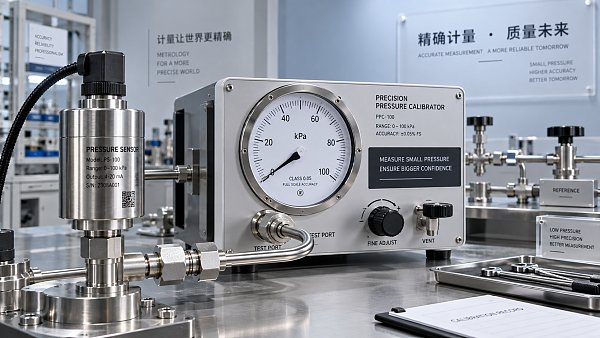
 2026.10.16What does measurement accuracy specified as % of full scale mean?Understand measurement specification accuracy as % of full scale. Learn to calculate error, compare sensor ranges, and choose the right instrument with confidence.
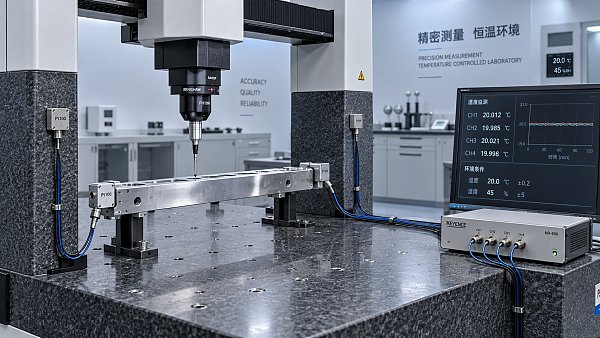
 2026.10.15How temperature affects high-accuracy dimensional analysis systemsDiscover how temperature affects high accuracy dimensional analysis systems, and learn practical ways to control thermal drift, improve compensation, and verify measurement accuracy.
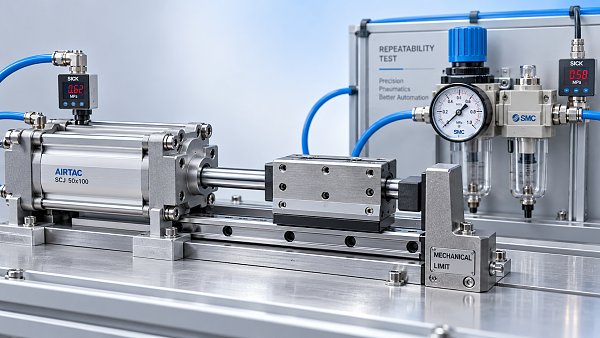
 2026.10.14How air pressure affects precision pneumatic actuator repeatabilityPrecision Pneumatic actuator repeatability depends on more than supply pressure. Discover how pressure, friction, and flow affect positioning—and how to improve consistency in your application.
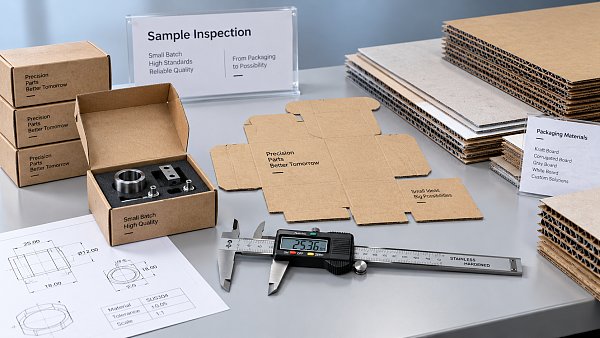
 2026.10.13How to choose a packaging manufacturer for small production runsChoose a packaging manufacturer for small production runs with confidence. Discover how to compare costs, verify samples, and secure quality packaging without excess inventory.
 2026.10.12Ultra-Pure Silane Gas Price: Comparing Quotes Beyond Cost per CylinderCompare ultra-pure silane gas price beyond cylinder costs. Learn how purity, usable quantity, freight, and return terms shape true value—and make a smarter purchasing decision.
 2026.10.12Moisture-Controlled Silane Gas: Tracing Water Contamination in Delivery LinesKeep moisture controlled silane gas reliable. Learn how to validate readings, trace water contamination in delivery lines, and verify recovery with safety-focused diagnostic insights.
 2026.10.12What Does 99.99999% Silane Gas Mean? Understanding 7N Purity and Detection LimitsEvaluate 99.99999 silane gas with confidence. Discover what 7N purity means, how detection limits affect results, and which supplier data to check before qualification.
 2026.10.12Ultra-Pure Silane Gas for Thin Films: Matching Gas Grade to Film RequirementsChoose ultra-pure silane gas for thin films with confidence. Learn to match impurity limits, supplier evidence, and delivery conditions to film requirements while avoiding unnecessary costs.
 2026.10.12Ultra-Pure Silane Gas for PECVD: Linking Impurities to Film DefectsQualify ultra-pure silane gas for PECVD with confidence. Learn how impurities affect film defects and use gas analysis, delivery checks, and film testing to set reliable acceptance limits.
 2026.10.12Qualifying an Ultra-Pure Silane Gas Manufacturer: Batch Consistency and TraceabilityQualify an ultra-pure silane gas manufacturer with confidence. Learn how to verify batch consistency, analytical results, and cylinder traceability to reduce sourcing risks.
 2026.10.12Choosing an Ultra-Pure Silane Gas Supplier: Lead Times, Delivery, and Backup SupplyChoose an ultra-pure silane gas supplier with reliable lead times, compliant delivery, and qualified backup supply. Learn what to verify to protect production and reduce supply risks.
 2026.10.12Ultra-Pure Chemicals in Latin America: What Shapes Regional Supply and Demand?Ultra-pure chemicals Latin America: explore demand drivers, qualified supply, and purity risks to uncover smarter sourcing and investment opportunities.
 2026.10.12Which ALD Precursor Specifications Matter for Supplier Qualification?Which ALD precursor specifications matter most for supplier qualification? Explore purity, impurities, delivery, stability, and lot consistency to qualify suppliers with confidence.
 2026.10.12How Should You Validate a Measurement System Before Factory Acceptance?How should I validate a measurement system before factory acceptance? Discover essential FAT checks, traceability, uncertainty, and decision rules to approve equipment with confidence.
 2026.10.12What Risks Should You Check Before Buying Cleanroom Micro-Robots?What risks should I check before buying micro-robots for cleanroom use? Explore contamination, precision, cleaning, and supplier risks to protect yield and buy with confidence.
 2026.10.12How Can You Verify a Thin-Film Deposition Supplier Meets SEMI Standards?How can I verify whether a thin-film deposition supplier meets SEMI requirements? Discover key standards, evidence checks, and acceptance tests to qualify suppliers with confidence.
 2026.10.12How Do You Compare ALD/CVD Suppliers for Process Consistency?How do I compare semiconductor manufacturing suppliers for process consistency? Discover how to assess ALD/CVD film quality, run-to-run stability, and drift controls to select with confidence.
 2026.10.12What Materials Data Is Needed to Qualify a New PVD Target Supplier?Which material science data is essential before qualifying a new supplier? Discover PVD target checks for purity, microstructure, density and bond integrity to qualify suppliers with confidence.
 2026.10.12What Should a Private-Label Photoresist Quality Agreement Include?Build a stronger private label manufacturing quality agreement for photoresist. Discover essential clauses for specifications, batch release, change control, and traceability.
 2026.10.12How Much Does an Optical Tweezers System Cost?Explore optical tweezers system price ranges, key cost drivers, and ownership expenses. Compare configurations and learn how to choose the right setup for your research budget.
 2026.10.12How to size commercial refrigerators for a restaurant kitchenDiscover how commercialrefrigerators should be sized for peak demand, smarter workflow, food safety, and reliable restaurant kitchen performance.
 2026.10.11How procurement planning reduces supply risk in Latin AmericaProcurement planning Latin America helps reduce supply risk with supplier qualification, import readiness, inventory controls, and contingency sourcing.
 2026.10.10How to build a supplier capability evaluation scorecard for critical partsSupplier capability evaluation scorecard: build a risk-based framework with gates, evidence, and weighted criteria to qualify critical-part suppliers with confidence.
 2026.10.09When do sub micron pneumatic actuators improve metrology repeatability?Sub micron pneumatic actuators for metrology improve repeatability by reducing friction, controlling contact force, and accelerating settling time. Discover when they deliver measurable inspection gains.
 2026.10.08How to assess measurement uncertainty from a precision metrology supplierPrecision metrology supplier guide: assess measurement uncertainty, traceability, environmental effects, calibration, and decision rules for reliable results.
 2026.10.07Metrology application notes for choosing CMM probe strategiesMetrology application notes for selecting CMM probe strategies, improving accuracy, access, repeatability, and confidence in complex feature inspection.
 2026.10.06What refresh rate do VR headsets need to reduce motion sicknessVR headsets need at least 90Hz to help reduce motion sickness. Discover why stable frame rates, low latency, and 120Hz support can deliver smoother, more comfortable VR experiences.
 2026.10.05What drives nano-indentation systems cost for a new lab?Nano-indentation systems cost: discover the real budget drivers for a new lab, from configuration and site readiness to software, calibration, and service.








FILTER_CORE
REF_NO: 0042
Editors' Picks
- 00
0000-00
BASF Signs Letter of Intent with Taiwan Ministry to Expand Guanyin Semiconductor Materials - 00
0000-00
How to estimate medical technology costs beyond the purchase price - 00
0000-00
60 Minutes: Iran War Drives Global Helium Shortage, Threatening Semiconductor Supply - 00
0000-00
How to specify zinc coating weight for prepainted GI steel coils