
Choosing a Laser Interferometer Manufacturer for Long-Range Precision
For project leaders responsible for long-range precision systems, selecting the right laser interferometer manufacturer is not just a sourcing task—it directly shapes measurement stability, integration risk, and lifecycle performance. This guide outlines the key technical, compliance, and supply-chain factors that matter when evaluating manufacturers for demanding aerospace, semiconductor, and ultra-precision engineering applications.
Why manufacturer selection matters in long-range precision projects
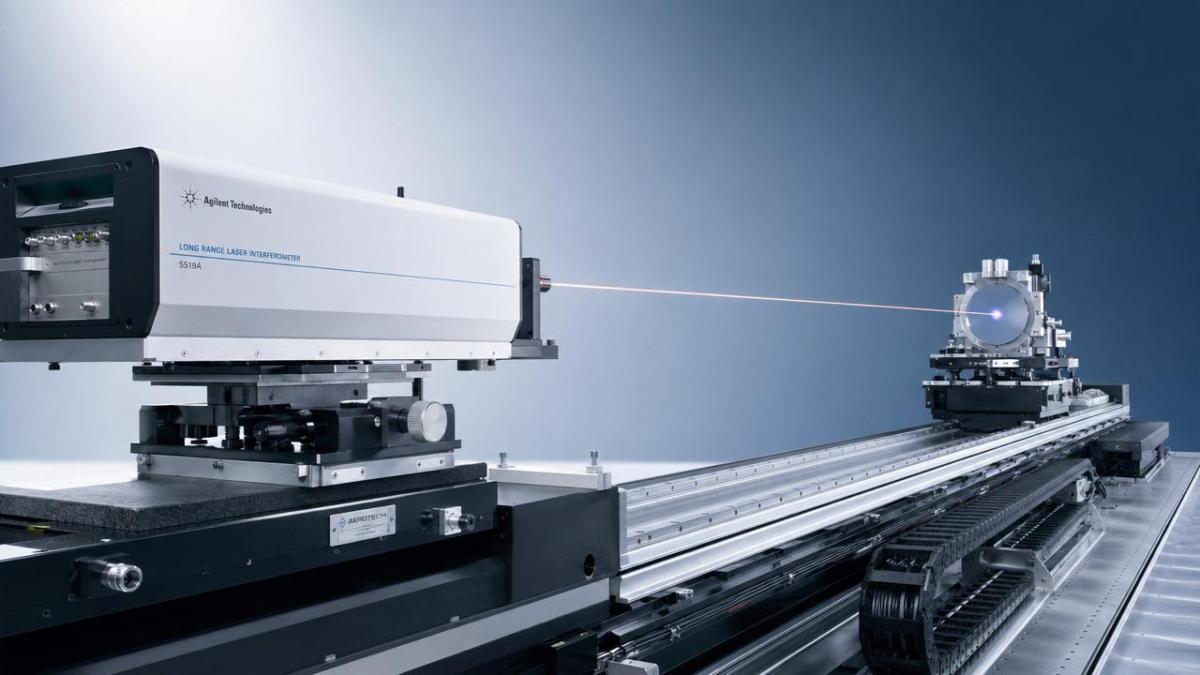
A laser interferometer manufacturer does more than supply an instrument. In long-travel metrology, motion control, and stage calibration projects, the manufacturer influences system architecture, environmental compensation strategy, software interoperability, and service continuity. For project managers, that means the purchase decision affects not only initial accuracy, but also installation speed, commissioning risk, and downstream maintenance cost.
This is especially true in cross-sector programs where one platform may serve semiconductor tooling, aerospace assembly verification, precision machining, optics alignment, or advanced research infrastructure. Long-range precision introduces problems that do not appear in short-range bench setups: beam path stability, refractive index compensation, thermal drift, mechanical alignment over distance, and data traceability across multiple subsystems.
From the G-UPE perspective, evaluation should never stop at a brochure specification. Buyers need verifiable engineering data, referenceable standards alignment, and a realistic view of how the laser interferometer manufacturer performs under actual production constraints. That includes export control awareness, calibration support, integration documentation, and responsiveness when a project schedule is under pressure.
- Long-range measurement errors accumulate quickly when environmental compensation is weak or poorly validated.
- A low-risk supplier should support both hardware and software integration, not just sensor shipment.
- Project success depends on calibration strategy, service response, spare parts planning, and document quality.
What should project leaders evaluate in a laser interferometer manufacturer?
When comparing suppliers, project teams often overemphasize nominal resolution while underestimating system-level variables. A capable laser interferometer manufacturer should demonstrate how its platform performs in the actual use case: long-axis machine verification, gantry positioning, coordinate metrology, wafer-stage calibration, or precision assembly alignment.
The table below helps structure procurement review around the factors that most directly affect technical risk, delivery confidence, and long-term operating value.
A disciplined review like this helps teams compare manufacturers on decision-grade criteria instead of marketing language. It also reduces the chance of selecting a platform that looks competitive on paper but becomes difficult to deploy at factory scale.
Questions procurement and engineering should ask together
- Can the laser interferometer manufacturer provide uncertainty data for the intended working distance, not only ideal laboratory conditions?
- What environmental sensors or compensation modules are required, and are they included in the project budget?
- How is alignment performed during installation, and what training is needed for local teams?
- Are software drivers documented well enough for integration into existing motion, SCADA, or quality systems?
Which technical parameters deserve the closest attention?
For long-range systems, the most useful supplier comparison is not a list of every parameter. It is a shortlist of parameters linked directly to your motion architecture, environmental exposure, and acceptance criteria. Project leaders should ask each laser interferometer manufacturer to map performance claims to a concrete operating scenario.
The following table summarizes common technical checkpoints and their relevance during supplier evaluation.
The practical lesson is simple: a laser interferometer manufacturer should be able to explain how these parameters interact. High resolution without environmental stability, or low latency without robust calibration, does not produce dependable long-range precision.
Application-specific parameter priorities
Different industries rank parameters differently. Semiconductor tools often prioritize thermal stability, clean integration, and traceable calibration. Aerospace fixtures may place greater emphasis on long-axis geometry verification in less controlled environments. Ultra-precision machining systems usually need strong vibration awareness, controller integration, and dependable service support during machine commissioning.
How to compare manufacturers for aerospace, semiconductor, and ultra-precision engineering
A useful comparison starts with the intended application environment. The same laser interferometer manufacturer may be strong for laboratory metrology but less suitable for production-floor deployment, or vice versa. G-UPE’s benchmarking approach is valuable here because it connects raw technical data with operating context, standards relevance, and supply-chain practicality.
Aerospace and large-structure alignment
Long-travel aerospace applications usually face larger thermal gradients, more variable floor vibration, and stricter documentation for quality audits. A suitable laser interferometer manufacturer should provide clear uncertainty statements, installation guidance for long beam paths, and service support for periodic verification.
Semiconductor and advanced electronics equipment
In semiconductor environments, contamination control, high repeatability, system interoperability, and strict calibration discipline are central. Project leaders should verify whether the manufacturer understands clean manufacturing conditions, integration into precision stages, and documentation expectations linked to advanced process tools.
Ultra-precision machining and nano-positioning platforms
These projects often combine interferometry with air bearings, motion controllers, vibration isolation, and thermal management. A laser interferometer manufacturer that can support multi-component alignment and data synchronization will usually reduce commissioning delays. This is where G-UPE’s cross-disciplinary view across metrology, fluid control, and nano-positioning becomes especially relevant.
- Use application-specific acceptance criteria instead of a generic supplier scorecard.
- Ask for examples of integration with similar stage lengths, motion architectures, or environmental conditions.
- Confirm whether local service teams can support installation and recalibration windows.
What compliance, traceability, and documentation should you request?
Compliance is often treated as a closing-stage procurement item, but for precision systems it should be part of technical evaluation from the beginning. The right laser interferometer manufacturer should provide transparent calibration documentation, traceability statements, and a clear explanation of applicable standards or test methods.
The table below outlines common documentation elements that help project leaders manage customer audits, internal qualification, and cross-border sourcing reviews.
For multinational projects, buyers should also review export restrictions, regional service coverage, and any import documentation that may affect lead times. G-UPE’s commercial intelligence approach is useful because technical suitability and supply-chain viability often need to be confirmed at the same time.
Common procurement mistakes when choosing a laser interferometer manufacturer
Mistake 1: Buying on resolution alone
Many teams assume the finest displayed increment equals the best system. In reality, long-range precision depends on uncertainty control, environmental compensation, beam alignment, and repeatable installation. Resolution is only one layer of the stack.
Mistake 2: Ignoring integration workload
A technically advanced interferometer can still burden the project if APIs are undocumented, signal interfaces are limited, or software tools are not compatible with the existing control environment. Project leaders should cost this integration effort early.
Mistake 3: Underestimating environmental control needs
In long-distance measurement, air conditions matter. Teams that skip compensation planning may blame the laser interferometer manufacturer for drift that actually comes from thermal gradients, airflow, or incomplete sensor deployment.
Mistake 4: Treating service support as optional
Calibration intervals, spare reflectors, replacement heads, and on-site alignment support all affect uptime. A lower purchase price can become expensive if recovery from failure takes weeks instead of days.
FAQ: practical questions from project managers
How do I shortlist a laser interferometer manufacturer for a long-travel project?
Start with the working distance, motion dynamics, environmental conditions, and required uncertainty. Then compare suppliers on calibration traceability, compensation strategy, software integration, installation documentation, and service reach. A good shortlist usually becomes clear once technical and operational criteria are scored together.
What delivery issues should be discussed before placing an order?
Ask about standard lead time, availability of environmental sensors, spare optics, calibration turnaround, and regional service availability. For large capital programs, also confirm whether any export review or special documentation could affect shipment timing.
Is a premium laser interferometer manufacturer always the better choice?
Not always. The right choice depends on your use case. Some projects need advanced closed-loop performance and deep integration support, while others need reliable periodic calibration tools with manageable cost. The best supplier is the one whose capability profile matches the real application, not the highest specification in isolation.
When should environmental compensation become mandatory?
For long beam paths, changing factory conditions, or tight uncertainty targets, compensation should be considered essential. Temperature, pressure, and humidity shifts can materially affect refractive index and measured position. If the project includes long-range precision, compensation planning belongs in the baseline design review.
Why work with G-UPE when evaluating a laser interferometer manufacturer?
G-UPE supports decision-makers who cannot afford to separate technical accuracy from procurement reality. Our strength is not limited to specification review. We connect metrology benchmarking with adjacent system factors such as nano-positioning compatibility, pneumatic stability, materials environment, standards alignment, and global sourcing constraints.
For project managers and engineering leaders, that means faster clarification of what matters most: parameter confirmation, supplier comparison, likely integration risks, calibration expectations, lifecycle support assumptions, and commercial readiness for international deployment. This approach is especially valuable when the laser interferometer manufacturer will become part of a broader ultra-precision platform rather than a standalone purchase.
- We help verify whether supplier claims align with the intended long-range application and standards context.
- We support structured selection across metrology, motion, and system-integration considerations.
- We provide decision support on delivery risk, documentation depth, and technical-commercial fit.
Contact us for a more precise supplier evaluation
If you are assessing a laser interferometer manufacturer for aerospace, semiconductor, advanced machining, or other long-range precision systems, G-UPE can help you move from generic comparison to actionable selection. You can consult us on parameter confirmation, supplier shortlisting, compensation requirements, integration questions, expected delivery cycles, calibration documentation, custom solution pathways, and quotation alignment with project scope.
Bring your travel range, environment profile, motion architecture, compliance needs, and target schedule. We will help structure the evaluation so your team can reduce sourcing uncertainty, control commissioning risk, and choose a manufacturer that fits the real performance demands of the project.
Recent Articles
 2026.09.13How to verify a lubricants exporter’s product quality before orderingLearn how to verify a lubricants exporter before ordering—from batch CoAs and lab tests to traceability, packaging, and export compliance. Reduce equipment and shipment risks.
 2026.09.12When does export control compliance training need to be refreshed?Export control compliance training: learn when annual and event-driven refreshers are needed to manage regulatory, product, access, and supply-chain risks.
 2026.09.11What makes a diaper bag backpack comfortable for all-day outings?Discover how a diaperbagsbackpack delivers all-day comfort with padded straps, breathable support, smart storage, and balanced capacity for stress-free outings.
 2026.09.10How nano-positioning stages enable sub-nanometer manufacturing precisionSub-nanometer manufacturing demands more than fine resolution. Discover how nano-positioning stages deliver stable, accurate motion through advanced feedback, control, and error management.
 2026.09.09How to validate biological implants for biocompatibility riskBiological implants validation: learn how to assess biocompatibility risk with ISO 10993, chemical characterization, and manufacturing controls.
 2026.09.08What to verify before selecting an XYZ translation stage OEM factoryXYZ translation stage OEM factory selection guide: verify volumetric accuracy, payload stiffness, traceable testing, controls, and acceptance criteria before ordering.
 2026.09.07How to match mining equipment to different extraction conditionsMining equipment selection made practical: match machines to rock, mine geometry, ground conditions, capacity, energy, and maintenance needs for safer, more productive extraction.
 2026.09.07Global photonics alignment market analysis: what is driving demand?Global photonics alignment market analysis: discover how semiconductor packaging, optical communications, sensing, and automation are driving demand for scalable, high-yield alignment solutions.
 2026.09.05When do Ultra-Precision Engineering consulting services add value?Ultra-Precision Engineering consulting services help buyers reduce qualification risk, validate real-world performance, and control lifecycle costs before committing to complex suppliers.
 2026.09.04How to choose a nano-indentation system for reliable hardness testingLearn how to choose a nano-indentation system for hardness testing with confidence. Compare calibration, load control, drift stability, test modes, data quality, and application fit for reliable results.
 2026.09.03When does a bridge CMM outperform a portable measuring arm?CMM systems: discover when a bridge CMM delivers superior repeatability, tighter uncertainty control, and dependable inspection results over a portable measuring arm.
 2026.09.02How does industrial innovation analysis guide technology choices?Industrial Innovation analysis helps manufacturers choose technologies with confidence by evaluating performance, integration, compliance, and lifecycle risks. Discover a smarter decision framework.
 2026.09.01How precise must micro-manipulation systems be for microassembly?Micro-manipulation systems for microassembly: learn how to match precision, repeatability, feedback, and error budgets to achieve reliable, high-yield assembly.
 2026.08.31What to verify before choosing a wafer probe station exporterWafer probe station exporter selection starts with verified performance, integration, export readiness, and lifecycle support. Learn what to check before you buy.
 2026.08.30When does pulse welding improve precision in a micro-welding workstation?Micro-welding workstation pulse welding improves precision by controlling heat, reducing variation, and protecting delicate assemblies. Discover when it delivers measurable results.
 2026.08.29When does machine learning improve defect detection in CMM inspection?Machine learning improves CMM defect detection when measurement data is stable, traceable, and actionable. Learn how to spot early drift, prioritize risk, and strengthen quality decisions.
 2026.08.28How to compare nano-fabrication tools in North America for probe-station workCompare nano-fabrication tools North America labs use for probe-station work—evaluate motion, optics, touchdown control, thermal stability, and service support.
 2026.08.27When does biomass energy make financial sense for industrial heat?Biomass energy can cut industrial heat costs when demand, fuel supply, logistics, and compliance align. Explore the key financial tests for a resilient investment.
 2026.08.26What to check before choosing an OEM PZT driver manufacturerPZT driver manufacturer OEM selection starts with application fit. Learn what to check on stability, load matching, compliance, and lifecycle support before you buy.
 2026.08.25What a battery management system must monitor to prevent cell failureBattery management system essentials: learn what to monitor at cell level—voltage, current, temperature, SOC, balancing, and deviation trends—to prevent cell failure and improve battery safety.
 2026.08.24How long do hybrid car parts last before replacement becomes likelyHybrid car parts do not all wear out at the same pace. Learn the warning signs, lifespan factors, and when replacement is truly likely before costs rise.
 2026.08.23How to tell if an exporters directory is reliable before you use itExporters directory reliability starts with transparency. Learn how to spot verified data, fresh listings, and red flags before trusting any platform for sourcing.
 2026.08.22How semiconductor encoder resolution affects positioning accuracySemiconductor encoder resolution directly shapes positioning accuracy in precision motion systems. Learn how to evaluate real performance, avoid spec traps, and choose the right solution.
 2026.08.21How to assess industrial integrity for manufacturing equipment before failure risks escalateIndustrial integrity for manufacturing equipment starts with spotting drift before breakdowns occur. Learn practical assessment steps to reduce risk, protect quality, and improve uptime.
 2026.08.20Common Faults in a Synthetic Leather Calendering Line and What to CheckSynthetic leather calendering line faults explained clearly: learn what to check for thickness variation, gloss loss, web wandering, embossing defects, and faster troubleshooting.
 2026.08.20When does regulatory foresight reporting reduce compliance riskRegulatory Foresight reporting helps reduce compliance risk before rule changes disrupt sourcing, shipping, validation, or customer acceptance. Learn when early insight prevents costly delays.
 2026.08.19When does glass wool insulation roll make sense over rigid boards?Glass wool insulation roll makes sense when fast cavity coverage, acoustic control, and easy handling matter more than load resistance. Learn when rolls outperform rigid boards.
 2026.08.18What to look for in a precision measurement supplier for tight-tolerance partsPrecision measurement supplier selection starts with data trust, not just equipment. Learn how to assess calibration, multi-sensor capability, environment, and reporting for tight-tolerance parts.
 2026.08.17How to tell when wiper blades need replacing instead of cleaningWiper blades acting up? Learn how to tell if a quick cleaning will restore clear visibility or if worn, cracked, or streaking wiper blades need replacing for safer driving.
 2026.08.16US Tightens Licensing for Certain Electronic Gas Exports to China From Aug. 15US Tightens Licensing for Certain Electronic Gas Exports to China From Aug. 15. Learn how the new rule impacts semiconductor supply chains, compliance planning, and cross-border shipment certainty.
 2026.08.16How much does a linear motor stage really cost?Linear motor stage price varies by precision, travel, payload, and support. Learn what really drives cost and how to compare quotes for the best value.
 2026.08.15US Safeguard Duties on Quartz Countertops Take Effect Aug. 15, Pressuring High-Purity Quartz SupplyUS safeguard duties on quartz countertops take effect Aug. 15, raising risks for high-purity quartz supply, export compliance, sourcing costs, and US delivery planning. Learn what suppliers must review now.
 2026.08.15What makes an independent think tank credible in policy debates?Independent think tank credibility in policy debates comes from transparent methods, strong expertise, and unbiased evidence. Discover what truly builds trust and influence.
 2026.08.14China Imposes Temporary Export Ban on Helium, Disrupting ALD/CVD and Electronic Gas Supply ChainsChina’s helium export ban could disrupt ALD/CVD and electronic gas supply chains. Learn how this urgent move may impact semiconductor equipment, metrology, and global procurement.



FILTER_CORE
REF_NO: 0042
Editors' Picks
- 00
0000-00
How to verify a lubricants exporter’s product quality before ordering - 00
0000-00
When does export control compliance training need to be refreshed? - 00
0000-00
What makes a diaper bag backpack comfortable for all-day outings? - 00
0000-00
How nano-positioning stages enable sub-nanometer manufacturing precision