
Hexapod Positioning System OEM Options: What Impacts Total Cost Most
For finance approvers evaluating a hexapod positioning system OEM, the biggest cost drivers are rarely limited to the purchase price. In most industrial projects, the total cost is driven more heavily by required precision, control and software integration, validation and calibration workload, downtime exposure, and supplier support capability than by the base hardware line item alone.
That means the lowest quote is often not the lowest-cost option over the life of the system. A lower upfront price can quickly be offset by expensive commissioning, application-specific engineering, recurring recalibration, production interruptions, or future redesigns if the platform is not well matched to the process.
For financial decision-makers, the practical question is not simply, “What does this hexapod cost?” It is, “Which OEM option delivers acceptable technical performance with the lowest total financial risk over the full operating lifecycle?” That is the lens this article uses.
What usually impacts total cost most in a hexapod positioning system OEM project
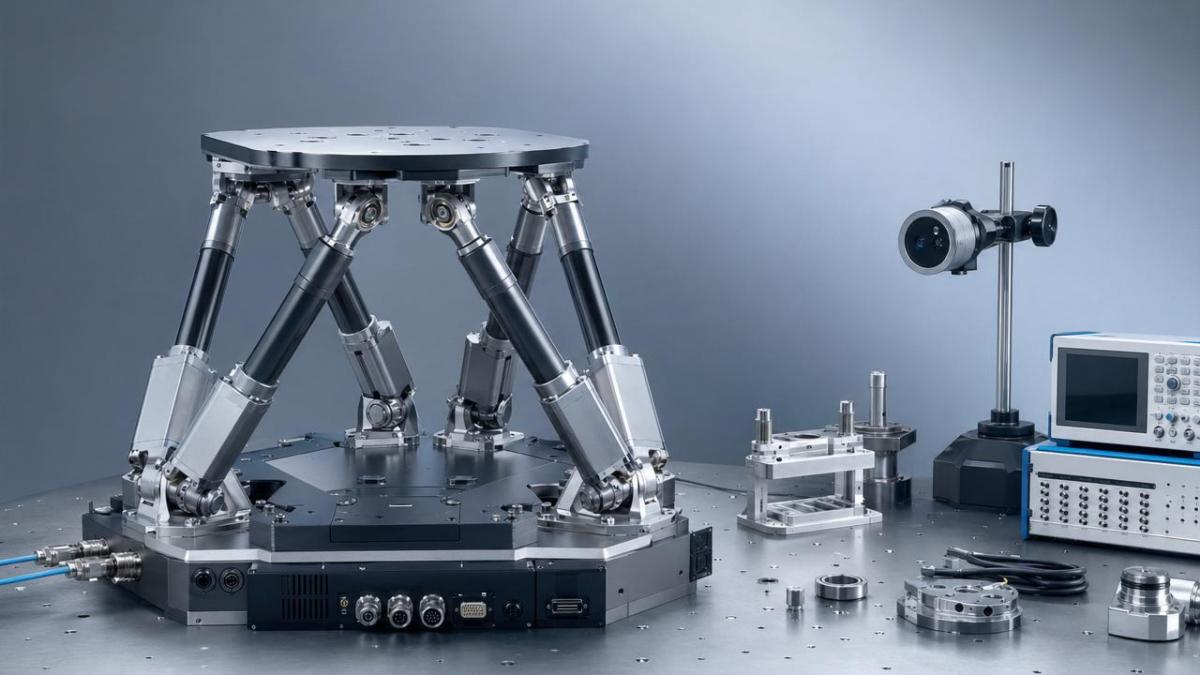
When buyers search for hexapod positioning system OEM options, their core intent is usually comparative and commercial. They want to understand how different suppliers, configurations, and customization paths affect budget, implementation risk, and long-term return. For finance approvers, the most useful answer is a ranked view of cost drivers rather than a generic technical overview.
In most cases, total cost is shaped by five factors more than anything else: performance specification level, customization and integration complexity, calibration and compliance burden, serviceability over time, and supplier execution risk. These factors influence not only capital expenditure, but also operating expense, internal labor consumption, and the probability of costly delays.
A hexapod system designed for laboratory alignment, for example, may appear similar to one intended for semiconductor packaging, optics assembly, metrology, or aerospace component positioning. Yet the cost structure can be dramatically different once payload stability, repeatability, thermal behavior, software interfaces, cleanroom compatibility, and acceptance testing are defined in detail.
That is why finance teams should ask procurement and engineering to move beyond headline specifications. The most expensive systems are not always overengineered; sometimes they are simply more completely engineered. By contrast, the most budget-friendly offers may leave major cost elements outside the proposal, where they later reappear as change orders or operational inefficiencies.
Why precision grade often drives more cost than the hardware platform itself
The first major cost driver is the required precision class. In a hexapod, moving from moderate accuracy to ultra-precision performance changes far more than the actuator price. It affects structural design, sensor architecture, control electronics, vibration behavior, thermal compensation, and factory calibration routines.
For finance approvers, this matters because a tighter specification does not create a linear cost increase. The step from micrometer-level positioning to sub-micrometer or nanometer-sensitive control often triggers a disproportionate rise in total system cost. Tolerances narrow, manufacturing yield may drop, and validation effort expands.
Three technical requirements are especially important. First is repeatability, because many production and metrology applications depend on returning to the same point consistently rather than merely reaching a nominal coordinate once. Second is load capacity under dynamic conditions, which can alter actuator sizing and frame rigidity. Third is motion behavior under real environmental conditions, including thermal drift and floor vibration.
From a budgeting standpoint, the key risk is paying for unnecessary precision. Many projects carry inherited specifications that are more aggressive than the process truly requires. If the engineering team cannot link the requested precision to measurable production outcomes, the business may be buying cost without buying value.
On the other hand, under-specifying precision can be even more expensive if it causes product rejects, unstable process windows, or future retrofits. The financially sound approach is to map each precision parameter directly to yield, throughput, or quality risk.
Customization and integration are where hidden costs often emerge
The second major cost driver is customization. A standard hexapod platform is usually only the starting point. Once the project requires custom payload adapters, specialized cable routing, software APIs, enclosure changes, safety features, vacuum or cleanroom compatibility, or synchronization with other motion systems, the economics shift.
For finance reviewers, integration costs deserve especially close attention because they are frequently fragmented across multiple budgets. Part may sit in the OEM quotation, part in internal engineering labor, part in controls integration, and part in external system integrator fees. A proposal can therefore look competitive while still creating a high total project cost.
Software integration is often underestimated. If the hexapod must communicate with machine vision, PLC architecture, metrology tools, robotics cells, or MES environments, compatibility is not just a convenience issue. It influences project timeline, debugging workload, cybersecurity review, and future maintainability.
Mechanical integration can be equally expensive. The center of gravity of the payload, mounting stiffness, cable drag forces, and installation footprint all affect real-world performance. If these details are not addressed early, the system may require redesign after commissioning, which is one of the most avoidable forms of capital waste.
Finance approvers should therefore ask a simple but revealing question: “What portion of the quoted solution is truly turnkey, and what work remains ours?” The answer often distinguishes a realistic offer from a deceptively low one.
Lifecycle calibration, validation, and compliance can outweigh initial savings
The third major cost driver is lifecycle assurance. In many advanced manufacturing and inspection environments, a hexapod is not judged only by whether it moves correctly on day one. It must remain traceable, stable, and auditable over time. That creates ongoing cost in calibration, preventive maintenance, documentation, and requalification.
If the system is used in regulated or highly quality-sensitive sectors, the burden can be substantial. Aerospace, photonics, semiconductor, medical manufacturing, and research institutions may all require formal acceptance testing, calibration certificates, uncertainty documentation, and periodic performance verification.
For finance teams, the implication is clear: a cheaper OEM package without a strong calibration framework may create recurring expense through third-party metrology services, additional internal validation labor, or longer downtime during recertification cycles.
It is also important to evaluate where calibration can be performed and how long it takes. Systems that require factory return for routine high-precision recalibration may create not only service fees but also lost production time and logistics costs. By contrast, OEMs that support field service, remote diagnostics, or modular replacement can reduce the total cost of ownership materially.
A practical evaluation metric is the annual cost of performance assurance. That includes calibration events, maintenance kits, technician travel, documentation updates, and process interruption. This figure is often more relevant to ROI than the initial hardware discount offered by one vendor over another.
Downtime risk is often the largest financial exposure in production environments
The fourth and often most underestimated cost driver is downtime. In a production or critical R&D setting, even a technically excellent hexapod can become financially unattractive if service response is slow, spare parts are scarce, or troubleshooting depends on one specialized engineer.
For financial approvers, downtime should be treated as a cost multiplier. The more revenue, throughput, or milestone dependency is tied to the system, the more heavily support quality should be weighted in supplier evaluation. A lower purchase price can be erased by a single prolonged outage.
This is especially true when the hexapod sits inside a larger automated cell. In such cases, one subsystem failure may idle cameras, robots, upstream handling equipment, operators, and scheduled test capacity. The cost is no longer isolated to the motion stage.
Ask suppliers for concrete service metrics: response time, spare parts lead time, regional support coverage, remote diagnostic capability, software backup procedures, and typical mean time to repair. If those answers are vague, the financial risk is usually real.
Another overlooked issue is obsolescence. Motion controllers, encoders, and software libraries may face component lifecycle constraints. A supplier that cannot provide a credible long-term support roadmap may turn a lower-cost purchase into a future unplanned reinvestment.
Supplier execution risk affects budget certainty as much as technical quality
The fifth major cost driver is supplier reliability. For a hexapod positioning system OEM project, cost control depends not only on engineering design but on how predictably the supplier executes. Schedule slips, documentation gaps, unclear change management, and weak application support all increase internal cost even if the delivered hardware eventually performs well.
Finance leaders should pay attention to execution maturity because it directly affects budget certainty. A supplier with stronger application engineering and clearer scope definition may present a higher quote but lower the risk of late-stage modifications, acceptance disputes, and post-installation support disputes.
Useful indicators include experience in similar applications, quality of pre-sales technical review, clarity of performance assumptions, acceptance test definition, export and compliance readiness, and willingness to document exclusions. Mature OEMs usually make scope boundaries visible. Immature ones often leave them ambiguous.
Commercial structure matters too. Payment milestones should align with verifiable deliverables such as design freeze, factory acceptance testing, site acceptance testing, and documentation completion. This reduces the chance that financial approval is committed before technical risk is reduced.
How finance approvers can compare OEM options more accurately
To make better decisions, finance teams should move from quote comparison to cost-model comparison. Instead of focusing on base system price alone, build a simple total-cost framework across a three- to five-year horizon. This reveals which offer is genuinely economical.
At minimum, the model should include six categories: initial system price, customization and integration cost, installation and commissioning cost, calibration and maintenance cost, downtime exposure, and upgrade or obsolescence risk. Internal engineering labor should also be monetized where possible rather than treated as “free.”
It is helpful to ask each OEM the same structured questions. What performance is guaranteed under actual payload and environmental conditions? What software and controls work is included? What recurring calibration is recommended? What spare parts are considered critical? What support is available locally? What assumptions underpin the quoted lead time?
Scenario analysis is also valuable. Compare a best-case, expected-case, and worst-case cost projection for each supplier. Some vendors look attractive only in the best-case scenario, while others deliver more stable economics across realistic operating conditions. Finance approval should generally favor cost predictability over optimistic pricing.
Finally, insist on a value-to-specification discussion. If engineering wants a premium option, they should explain which business metrics it protects or improves: yield, cycle time, product quality, customer compliance, or program risk. This converts technical preference into investment logic.
Where it makes sense to spend more—and where it usually does not
Not all premium features deliver equal financial value. It usually makes sense to spend more on repeatability, integration robustness, service accessibility, and traceable calibration if the system is tied to high-value production, inspection accuracy, or regulated output.
It also makes sense to invest in stronger supplier support when the hexapod is a bottleneck asset. In these cases, uptime protection often generates a better return than shaving a small percentage off procurement cost.
By contrast, finance approvers should challenge spending on specification margins that are not tied to a measurable operational benefit. Extreme travel range, overly aggressive precision tolerance, or advanced software capability that the application will never use can inflate both acquisition and support cost without raising ROI.
The best OEM choice is therefore not the most advanced system in absolute terms. It is the system whose technical envelope is tightly aligned with the process requirement and whose supplier can deliver that value with minimal execution risk.
Conclusion: the biggest cost is usually mismatch, not price
For most buyers evaluating a hexapod positioning system OEM, total cost is impacted most by specification level, integration complexity, calibration burden, downtime risk, and supplier execution quality. These factors usually matter more than the initial quote because they determine how much the system will actually cost to deploy, maintain, and rely on.
The clearest financial takeaway is simple: the cheapest proposal is often the most expensive if it creates hidden engineering work, unstable performance, or support gaps. Conversely, a higher upfront investment can be the lower-cost decision when it reduces validation effort, protects uptime, and avoids redesign.
For finance approvers, the right evaluation method is to compare OEMs on lifecycle economics and risk-adjusted value, not hardware price alone. When that discipline is applied, the true cost drivers become easier to see—and better purchasing decisions follow.
Taglist:
Recent Articles
 2026.09.13How to verify a lubricants exporter’s product quality before orderingLearn how to verify a lubricants exporter before ordering—from batch CoAs and lab tests to traceability, packaging, and export compliance. Reduce equipment and shipment risks.
 2026.09.12When does export control compliance training need to be refreshed?Export control compliance training: learn when annual and event-driven refreshers are needed to manage regulatory, product, access, and supply-chain risks.
 2026.09.11What makes a diaper bag backpack comfortable for all-day outings?Discover how a diaperbagsbackpack delivers all-day comfort with padded straps, breathable support, smart storage, and balanced capacity for stress-free outings.
 2026.09.10How nano-positioning stages enable sub-nanometer manufacturing precisionSub-nanometer manufacturing demands more than fine resolution. Discover how nano-positioning stages deliver stable, accurate motion through advanced feedback, control, and error management.
 2026.09.09How to validate biological implants for biocompatibility riskBiological implants validation: learn how to assess biocompatibility risk with ISO 10993, chemical characterization, and manufacturing controls.
 2026.09.08What to verify before selecting an XYZ translation stage OEM factoryXYZ translation stage OEM factory selection guide: verify volumetric accuracy, payload stiffness, traceable testing, controls, and acceptance criteria before ordering.
 2026.09.07How to match mining equipment to different extraction conditionsMining equipment selection made practical: match machines to rock, mine geometry, ground conditions, capacity, energy, and maintenance needs for safer, more productive extraction.
 2026.09.07Global photonics alignment market analysis: what is driving demand?Global photonics alignment market analysis: discover how semiconductor packaging, optical communications, sensing, and automation are driving demand for scalable, high-yield alignment solutions.
 2026.09.05When do Ultra-Precision Engineering consulting services add value?Ultra-Precision Engineering consulting services help buyers reduce qualification risk, validate real-world performance, and control lifecycle costs before committing to complex suppliers.
 2026.09.04How to choose a nano-indentation system for reliable hardness testingLearn how to choose a nano-indentation system for hardness testing with confidence. Compare calibration, load control, drift stability, test modes, data quality, and application fit for reliable results.
 2026.09.03When does a bridge CMM outperform a portable measuring arm?CMM systems: discover when a bridge CMM delivers superior repeatability, tighter uncertainty control, and dependable inspection results over a portable measuring arm.
 2026.09.02How does industrial innovation analysis guide technology choices?Industrial Innovation analysis helps manufacturers choose technologies with confidence by evaluating performance, integration, compliance, and lifecycle risks. Discover a smarter decision framework.
 2026.09.01How precise must micro-manipulation systems be for microassembly?Micro-manipulation systems for microassembly: learn how to match precision, repeatability, feedback, and error budgets to achieve reliable, high-yield assembly.
 2026.08.31What to verify before choosing a wafer probe station exporterWafer probe station exporter selection starts with verified performance, integration, export readiness, and lifecycle support. Learn what to check before you buy.
 2026.08.30When does pulse welding improve precision in a micro-welding workstation?Micro-welding workstation pulse welding improves precision by controlling heat, reducing variation, and protecting delicate assemblies. Discover when it delivers measurable results.
 2026.08.29When does machine learning improve defect detection in CMM inspection?Machine learning improves CMM defect detection when measurement data is stable, traceable, and actionable. Learn how to spot early drift, prioritize risk, and strengthen quality decisions.
 2026.08.28How to compare nano-fabrication tools in North America for probe-station workCompare nano-fabrication tools North America labs use for probe-station work—evaluate motion, optics, touchdown control, thermal stability, and service support.
 2026.08.27When does biomass energy make financial sense for industrial heat?Biomass energy can cut industrial heat costs when demand, fuel supply, logistics, and compliance align. Explore the key financial tests for a resilient investment.
 2026.08.26What to check before choosing an OEM PZT driver manufacturerPZT driver manufacturer OEM selection starts with application fit. Learn what to check on stability, load matching, compliance, and lifecycle support before you buy.
 2026.08.25What a battery management system must monitor to prevent cell failureBattery management system essentials: learn what to monitor at cell level—voltage, current, temperature, SOC, balancing, and deviation trends—to prevent cell failure and improve battery safety.
 2026.08.24How long do hybrid car parts last before replacement becomes likelyHybrid car parts do not all wear out at the same pace. Learn the warning signs, lifespan factors, and when replacement is truly likely before costs rise.
 2026.08.23How to tell if an exporters directory is reliable before you use itExporters directory reliability starts with transparency. Learn how to spot verified data, fresh listings, and red flags before trusting any platform for sourcing.
 2026.08.22How semiconductor encoder resolution affects positioning accuracySemiconductor encoder resolution directly shapes positioning accuracy in precision motion systems. Learn how to evaluate real performance, avoid spec traps, and choose the right solution.
 2026.08.21How to assess industrial integrity for manufacturing equipment before failure risks escalateIndustrial integrity for manufacturing equipment starts with spotting drift before breakdowns occur. Learn practical assessment steps to reduce risk, protect quality, and improve uptime.
 2026.08.20Common Faults in a Synthetic Leather Calendering Line and What to CheckSynthetic leather calendering line faults explained clearly: learn what to check for thickness variation, gloss loss, web wandering, embossing defects, and faster troubleshooting.
 2026.08.20When does regulatory foresight reporting reduce compliance riskRegulatory Foresight reporting helps reduce compliance risk before rule changes disrupt sourcing, shipping, validation, or customer acceptance. Learn when early insight prevents costly delays.
 2026.08.19When does glass wool insulation roll make sense over rigid boards?Glass wool insulation roll makes sense when fast cavity coverage, acoustic control, and easy handling matter more than load resistance. Learn when rolls outperform rigid boards.
 2026.08.18What to look for in a precision measurement supplier for tight-tolerance partsPrecision measurement supplier selection starts with data trust, not just equipment. Learn how to assess calibration, multi-sensor capability, environment, and reporting for tight-tolerance parts.
 2026.08.17How to tell when wiper blades need replacing instead of cleaningWiper blades acting up? Learn how to tell if a quick cleaning will restore clear visibility or if worn, cracked, or streaking wiper blades need replacing for safer driving.
 2026.08.16US Tightens Licensing for Certain Electronic Gas Exports to China From Aug. 15US Tightens Licensing for Certain Electronic Gas Exports to China From Aug. 15. Learn how the new rule impacts semiconductor supply chains, compliance planning, and cross-border shipment certainty.
 2026.08.16How much does a linear motor stage really cost?Linear motor stage price varies by precision, travel, payload, and support. Learn what really drives cost and how to compare quotes for the best value.
 2026.08.15US Safeguard Duties on Quartz Countertops Take Effect Aug. 15, Pressuring High-Purity Quartz SupplyUS safeguard duties on quartz countertops take effect Aug. 15, raising risks for high-purity quartz supply, export compliance, sourcing costs, and US delivery planning. Learn what suppliers must review now.
 2026.08.15What makes an independent think tank credible in policy debates?Independent think tank credibility in policy debates comes from transparent methods, strong expertise, and unbiased evidence. Discover what truly builds trust and influence.
 2026.08.14China Imposes Temporary Export Ban on Helium, Disrupting ALD/CVD and Electronic Gas Supply ChainsChina’s helium export ban could disrupt ALD/CVD and electronic gas supply chains. Learn how this urgent move may impact semiconductor equipment, metrology, and global procurement.



FILTER_CORE
REF_NO: 0042
Editors' Picks
- 00
0000-00
How to verify a lubricants exporter’s product quality before ordering - 00
0000-00
When does export control compliance training need to be refreshed? - 00
0000-00
What makes a diaper bag backpack comfortable for all-day outings? - 00
0000-00
How nano-positioning stages enable sub-nanometer manufacturing precision