
B2B Manufacturing Cost Risks That Delay Supplier Decisions
Why do supplier decisions stall even when the quoted price looks competitive?
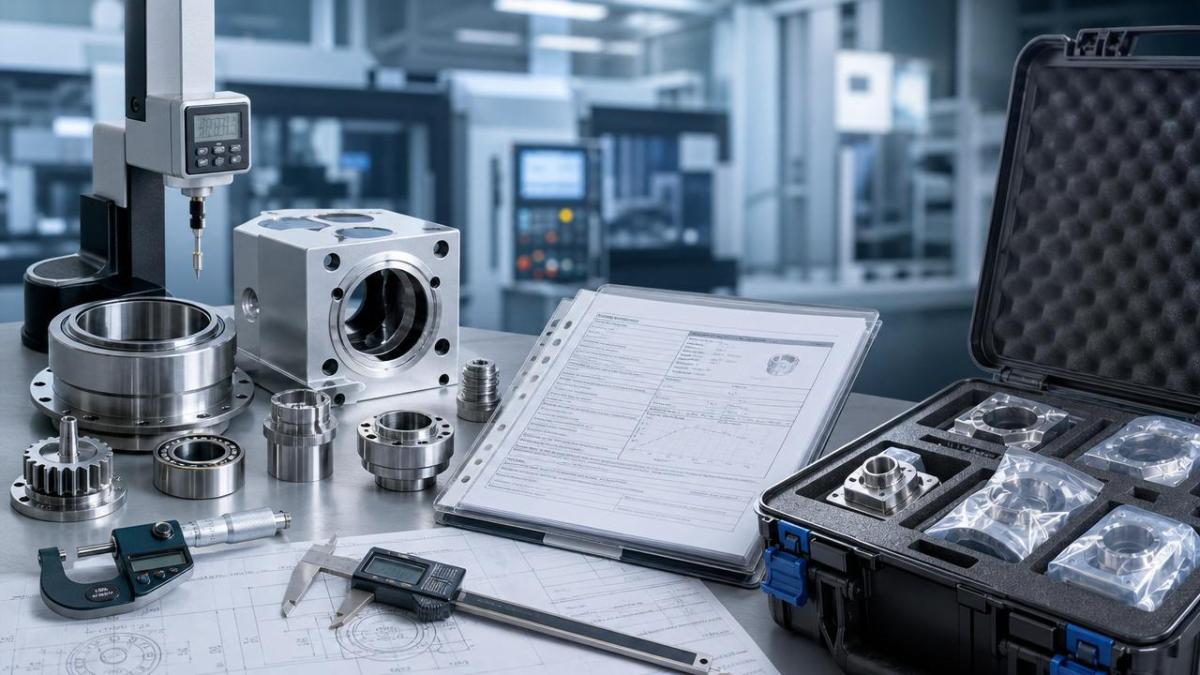
In B2B manufacturing, price rarely tells the full story.
Delays usually appear when hidden cost risks start to surface during technical review, qualification, or contract alignment.
A low initial quote can become expensive once quality drift, compliance gaps, unstable delivery windows, or unclear process capability enter the discussion.
That is especially true in B2B manufacturing linked to precision coatings, metrology, fluid control, electronic gases, and nano-positioning systems.
In these categories, a sourcing error does not stay inside purchasing.
It often spreads into scrap, validation delays, warranty exposure, export restrictions, and missed launch dates.
A more useful question is not, “Who is cheaper?”
It is, “Which supplier creates the lowest total decision risk over the operating life of the project?”
This is where structured intelligence matters.
Platforms such as G-UPE are relevant because they connect technical benchmarking, standards visibility, and commercial signals in one place.
For B2B manufacturing assessments, that combination helps separate acceptable pricing from durable supply reliability.
Which cost risks in B2B manufacturing are most likely to delay a supplier choice?
Some risks are obvious, such as tooling fees or logistics charges.
The more disruptive ones usually sit behind technical documentation and process consistency.
In actual sourcing reviews, four risk groups tend to slow decisions the most:
- Capability risk: the supplier can meet samples, but not repeatability at scale.
- Compliance risk: certificates exist, yet they do not fully match ISO, SEMI, IEEE, or end-market requirements.
- Lead-time risk: quoted schedules ignore upstream material volatility or specialized calibration bottlenecks.
- Change risk: process revisions, patent activity, or export control shifts alter future supply conditions.
Take ultra-high purity chemicals as one example.
A supplier may offer attractive pricing, yet impurity stability, cylinder traceability, and regulatory transport constraints can raise the true landed cost later.
The same pattern appears in CMM and multi-sensory metrology.
If measurement uncertainty is not controlled, production decisions become less reliable, and reinspection costs grow quietly.
So when supplier approval seems to move slowly, it is often a sign of rational caution, not indecision.
How can you tell whether a low quote hides higher downstream costs?
A practical way is to compare quote value against evidence depth.
If pricing is detailed but technical proof is thin, the quote may be underestimating downstream risk.
The table below helps screen common warning signs before a B2B manufacturing decision moves forward.
In many cases, the strongest quote is not the lowest one.
It is the quote supported by auditable data, stable assumptions, and a realistic path to scale.
That principle is central to high-precision B2B manufacturing, where minor variation can cause major downstream losses.
Where do technical uncertainty and compliance gaps create the biggest decision friction?
They matter most when performance claims are difficult to verify in normal commercial documents.
This happens often in advanced coatings, gas purity management, sub-micron motion systems, and multi-sensor inspection environments.
For example, a thin-film deposition supplier may present strong deposition rates.
Yet uniformity across substrates, contamination control, and chamber maintenance intervals may remain unclear.
That uncertainty affects more than process engineering.
It also influences maintenance budgets, yield confidence, and qualification timing.
Compliance gaps create similar friction.
A document set may look complete, but buyers still pause if testing methods, calibration intervals, or cross-border controls are not transparent.
In B2B manufacturing, delays often come from needing one more dataset, one more revision, or one more clarification.
That is why independent reference points matter.
G-UPE’s value is less about promotion and more about verification.
Its cross-sector benchmarking approach helps teams judge whether a claim is merely attractive or genuinely decision-ready.
What usually separates a fast supplier decision from a prolonged one?
The difference is usually preparation quality, not review speed.
When requirements are translated into measurable acceptance criteria early, B2B manufacturing decisions move faster.
When those criteria remain broad, every supplier discussion expands into interpretation.
A faster process often includes these checkpoints:
- Define critical tolerances, purity levels, or measurement thresholds before price comparison.
- Separate mandatory compliance items from negotiable commercial items.
- Request evidence for repeatability, not only prototype performance.
- Review sub-tier dependencies for gases, sensors, coatings inputs, and precision motion components.
- Track export control and patent signals when sourcing in technically sensitive categories.
This is especially useful in complex B2B manufacturing programs involving semiconductor tooling, medical components, or aerospace assemblies.
In such environments, commercial confidence comes from evidence discipline.
Without it, even strong suppliers can get stuck in extended review loops.
How should cost, timing, and risk be balanced before making the final call?
A balanced decision does not treat cost as a single number.
It treats cost as a combination of purchase price, qualification effort, process stability, and future change exposure.
One useful approach is to assign weight to three questions.
Can the supplier prove consistency?
Can the supply model withstand disruption?
Can the technical claim survive formal validation?
If any answer is uncertain, the apparent savings may be fragile.
In practical B2B manufacturing reviews, the best decision is often the one that reduces variance, not just invoice value.
That mindset is increasingly important in sectors where microscopic deviations create large financial consequences.
A careful final review should therefore combine technical benchmarks, compliance records, timeline realism, and commercial resilience.
If the decision still feels slow, that is the right moment to tighten the evidence framework rather than force a shortcut.
For the next step, build a short comparison sheet around hidden cost drivers, validation needs, and supply continuity assumptions.
That simple discipline makes B2B manufacturing supplier choices clearer, faster, and more defensible over time.
Recent Articles
 2026.09.13How to verify a lubricants exporter’s product quality before orderingLearn how to verify a lubricants exporter before ordering—from batch CoAs and lab tests to traceability, packaging, and export compliance. Reduce equipment and shipment risks.
 2026.09.12When does export control compliance training need to be refreshed?Export control compliance training: learn when annual and event-driven refreshers are needed to manage regulatory, product, access, and supply-chain risks.
 2026.09.11What makes a diaper bag backpack comfortable for all-day outings?Discover how a diaperbagsbackpack delivers all-day comfort with padded straps, breathable support, smart storage, and balanced capacity for stress-free outings.
 2026.09.10How nano-positioning stages enable sub-nanometer manufacturing precisionSub-nanometer manufacturing demands more than fine resolution. Discover how nano-positioning stages deliver stable, accurate motion through advanced feedback, control, and error management.
 2026.09.09How to validate biological implants for biocompatibility riskBiological implants validation: learn how to assess biocompatibility risk with ISO 10993, chemical characterization, and manufacturing controls.
 2026.09.08What to verify before selecting an XYZ translation stage OEM factoryXYZ translation stage OEM factory selection guide: verify volumetric accuracy, payload stiffness, traceable testing, controls, and acceptance criteria before ordering.
 2026.09.07How to match mining equipment to different extraction conditionsMining equipment selection made practical: match machines to rock, mine geometry, ground conditions, capacity, energy, and maintenance needs for safer, more productive extraction.
 2026.09.07Global photonics alignment market analysis: what is driving demand?Global photonics alignment market analysis: discover how semiconductor packaging, optical communications, sensing, and automation are driving demand for scalable, high-yield alignment solutions.
 2026.09.05When do Ultra-Precision Engineering consulting services add value?Ultra-Precision Engineering consulting services help buyers reduce qualification risk, validate real-world performance, and control lifecycle costs before committing to complex suppliers.
 2026.09.04How to choose a nano-indentation system for reliable hardness testingLearn how to choose a nano-indentation system for hardness testing with confidence. Compare calibration, load control, drift stability, test modes, data quality, and application fit for reliable results.
 2026.09.03When does a bridge CMM outperform a portable measuring arm?CMM systems: discover when a bridge CMM delivers superior repeatability, tighter uncertainty control, and dependable inspection results over a portable measuring arm.
 2026.09.02How does industrial innovation analysis guide technology choices?Industrial Innovation analysis helps manufacturers choose technologies with confidence by evaluating performance, integration, compliance, and lifecycle risks. Discover a smarter decision framework.
 2026.09.01How precise must micro-manipulation systems be for microassembly?Micro-manipulation systems for microassembly: learn how to match precision, repeatability, feedback, and error budgets to achieve reliable, high-yield assembly.
 2026.08.31What to verify before choosing a wafer probe station exporterWafer probe station exporter selection starts with verified performance, integration, export readiness, and lifecycle support. Learn what to check before you buy.
 2026.08.30When does pulse welding improve precision in a micro-welding workstation?Micro-welding workstation pulse welding improves precision by controlling heat, reducing variation, and protecting delicate assemblies. Discover when it delivers measurable results.
 2026.08.29When does machine learning improve defect detection in CMM inspection?Machine learning improves CMM defect detection when measurement data is stable, traceable, and actionable. Learn how to spot early drift, prioritize risk, and strengthen quality decisions.
 2026.08.28How to compare nano-fabrication tools in North America for probe-station workCompare nano-fabrication tools North America labs use for probe-station work—evaluate motion, optics, touchdown control, thermal stability, and service support.
 2026.08.27When does biomass energy make financial sense for industrial heat?Biomass energy can cut industrial heat costs when demand, fuel supply, logistics, and compliance align. Explore the key financial tests for a resilient investment.
 2026.08.26What to check before choosing an OEM PZT driver manufacturerPZT driver manufacturer OEM selection starts with application fit. Learn what to check on stability, load matching, compliance, and lifecycle support before you buy.
 2026.08.25What a battery management system must monitor to prevent cell failureBattery management system essentials: learn what to monitor at cell level—voltage, current, temperature, SOC, balancing, and deviation trends—to prevent cell failure and improve battery safety.
 2026.08.24How long do hybrid car parts last before replacement becomes likelyHybrid car parts do not all wear out at the same pace. Learn the warning signs, lifespan factors, and when replacement is truly likely before costs rise.
 2026.08.23How to tell if an exporters directory is reliable before you use itExporters directory reliability starts with transparency. Learn how to spot verified data, fresh listings, and red flags before trusting any platform for sourcing.
 2026.08.22How semiconductor encoder resolution affects positioning accuracySemiconductor encoder resolution directly shapes positioning accuracy in precision motion systems. Learn how to evaluate real performance, avoid spec traps, and choose the right solution.
 2026.08.21How to assess industrial integrity for manufacturing equipment before failure risks escalateIndustrial integrity for manufacturing equipment starts with spotting drift before breakdowns occur. Learn practical assessment steps to reduce risk, protect quality, and improve uptime.
 2026.08.20Common Faults in a Synthetic Leather Calendering Line and What to CheckSynthetic leather calendering line faults explained clearly: learn what to check for thickness variation, gloss loss, web wandering, embossing defects, and faster troubleshooting.
 2026.08.20When does regulatory foresight reporting reduce compliance riskRegulatory Foresight reporting helps reduce compliance risk before rule changes disrupt sourcing, shipping, validation, or customer acceptance. Learn when early insight prevents costly delays.
 2026.08.19When does glass wool insulation roll make sense over rigid boards?Glass wool insulation roll makes sense when fast cavity coverage, acoustic control, and easy handling matter more than load resistance. Learn when rolls outperform rigid boards.
 2026.08.18What to look for in a precision measurement supplier for tight-tolerance partsPrecision measurement supplier selection starts with data trust, not just equipment. Learn how to assess calibration, multi-sensor capability, environment, and reporting for tight-tolerance parts.
 2026.08.17How to tell when wiper blades need replacing instead of cleaningWiper blades acting up? Learn how to tell if a quick cleaning will restore clear visibility or if worn, cracked, or streaking wiper blades need replacing for safer driving.
 2026.08.16US Tightens Licensing for Certain Electronic Gas Exports to China From Aug. 15US Tightens Licensing for Certain Electronic Gas Exports to China From Aug. 15. Learn how the new rule impacts semiconductor supply chains, compliance planning, and cross-border shipment certainty.
 2026.08.16How much does a linear motor stage really cost?Linear motor stage price varies by precision, travel, payload, and support. Learn what really drives cost and how to compare quotes for the best value.
 2026.08.15US Safeguard Duties on Quartz Countertops Take Effect Aug. 15, Pressuring High-Purity Quartz SupplyUS safeguard duties on quartz countertops take effect Aug. 15, raising risks for high-purity quartz supply, export compliance, sourcing costs, and US delivery planning. Learn what suppliers must review now.
 2026.08.15What makes an independent think tank credible in policy debates?Independent think tank credibility in policy debates comes from transparent methods, strong expertise, and unbiased evidence. Discover what truly builds trust and influence.
 2026.08.14China Imposes Temporary Export Ban on Helium, Disrupting ALD/CVD and Electronic Gas Supply ChainsChina’s helium export ban could disrupt ALD/CVD and electronic gas supply chains. Learn how this urgent move may impact semiconductor equipment, metrology, and global procurement.



FILTER_CORE
REF_NO: 0042
Editors' Picks
- 00
0000-00
How to verify a lubricants exporter’s product quality before ordering - 00
0000-00
When does export control compliance training need to be refreshed? - 00
0000-00
What makes a diaper bag backpack comfortable for all-day outings? - 00
0000-00
How nano-positioning stages enable sub-nanometer manufacturing precision