
Industrial Innovation in Process Technology: Key Trends Shaping 2026
Industrial Innovation in Process Technology: Key Trends Shaping 2026
Industrial Innovation in process technology is moving out of the phase where broad automation claims were enough to win attention. In 2026, the sharper dividing line will be whether a manufacturer can prove repeatability under tighter tolerances, unstable supply conditions, and heavier compliance scrutiny. That shift is visible across semiconductor tooling, medical manufacturing, aerospace machining, electronics materials, and precision assembly. The common denominator is not simply speed. It is the ability to control variability at a level that procurement, engineering, and quality teams can actually audit.
This matters because several pressures are converging. Semiconductor processes continue to push finer nodes and more complex deposition steps. Aerospace and defense programs are operating under stricter traceability expectations. Medical components, especially customized implants and micro-scale devices, demand tighter process validation. At the same time, export controls, chemical handling rules, and documentation requirements are no longer side issues handled late in the sourcing cycle. They are beginning to shape supplier selection earlier, particularly for high-purity gases, advanced coatings, and metrology-dependent systems.
What has changed over the last two years is the way buyers interpret technical claims. A vendor saying a stage is “high precision” or a coating process is “uniform” carries less weight unless the claim is anchored to recognized standards, traceable calibration, contamination control practice, and process capability under production conditions. That is one reason benchmarking against ISO, SEMI, and IEEE frameworks is becoming more commercially relevant, not just technically elegant. It gives buyers a basis for comparing systems that often look similar in brochures but perform very differently once integrated into a live production line.
Precision Is Becoming a Supply Chain Requirement
One of the most important developments heading into 2026 is that ultra-precision is no longer confined to flagship applications. It is spreading into adjacent manufacturing steps because upstream and downstream variability now carries a higher penalty. A sub-micron positioning error in one module can force inspection burdens, scrap exposure, or rework costs elsewhere. That makes process technology a board-level concern in sectors that previously treated it as a specialized engineering issue.
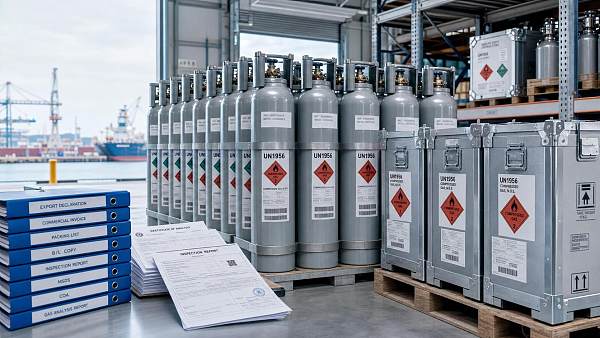
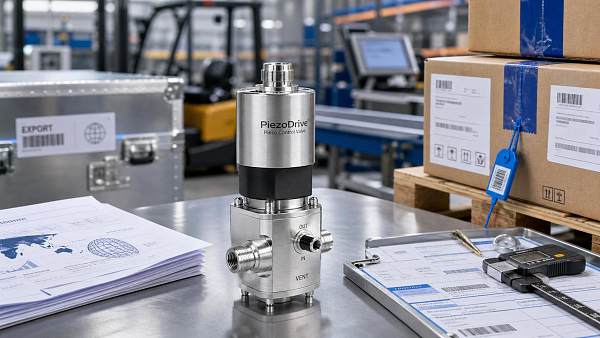
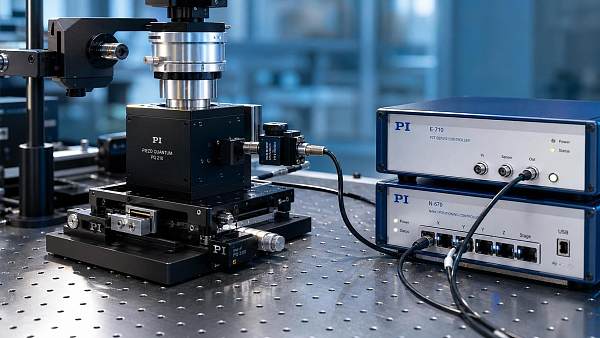
This is especially evident in five areas. Thin-film deposition is being judged less by nominal throughput and more by film consistency, precursor stability, and contamination behavior over longer operating windows. Pneumatic and fluid control systems are under pressure to deliver finer response control because advanced production lines cannot tolerate small fluctuations in dosing, pressure, or valve performance. Metrology is moving closer to the process itself, since post-process inspection alone is too slow and too expensive when tolerances narrow. Ultra-high purity chemicals and electronic gases are facing tighter scrutiny around impurity control, packaging integrity, and logistics resilience. Nano-positioning and micro-manipulation systems are becoming critical wherever alignment errors directly affect yield.
The underlying business signal is straightforward: manufacturers are paying more attention to what happens between specification and execution. That gap has always existed, but in 2026 it is becoming costlier. The result is a procurement environment that rewards verifiable process stability over impressive but weakly documented peak performance.

Metrology Is Shifting From Inspection Function to Process Governor
A second shift deserves close attention. Metrology is no longer just confirming whether a finished part passed. In advanced process environments, it is increasingly being used to govern the process itself. That sounds obvious in theory, but many industrial operations still separate production and measurement into different timing, teams, and decision loops. That model becomes fragile when tolerances tighten faster than staffing, training, or machine availability can keep up.
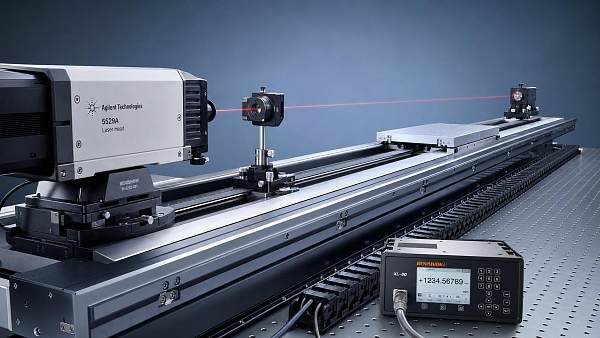
Multi-sensory metrology systems, coordinate measuring machines, interferometry-linked stages, and in-line inspection tools are being pulled earlier into production sequences. The practical reason is not only quality. It is asset efficiency. If deviations are discovered after several value-added steps, the cost of loss compounds quickly. More manufacturers now want measurement architectures that feed machine compensation, process correction, or batch release decisions in near real time.
There is also a softer but commercially important point: metrology data has become a trust instrument. In sectors with international sourcing and regulatory exposure, shared measurement language reduces friction between OEMs, integrators, and component suppliers. It can shorten technical review cycles, especially when each party is operating under different regional compliance assumptions. Companies that invest in metrology only as a quality department tool may find themselves slower to qualify, slower to troubleshoot, and slower to defend claims during audits or supplier reviews.
Purity, Traceability, and Export Control Are Now Coupled
Another trend that will shape Industrial Innovation in process technology is the fusion of materials management with geopolitical and regulatory risk. This is especially visible in ultra-high purity chemicals and electronic gases. Technical teams may focus on impurity thresholds, container compatibility, and process behavior. Procurement teams are increasingly adding another layer: origin transparency, route stability, licensing exposure, and substitution risk.
That change is not theoretical. Export control frameworks have become more active in advanced technology domains, and buyers in semiconductor, aerospace, and dual-use manufacturing are responding by asking sharper questions before purchase orders are issued. A supplier may meet technical requirements but still create unacceptable risk if documentation, licensing status, or transport resilience is weak. In practice, this pushes commercial due diligence closer to engineering qualification.
The implication for 2026 is that purity claims without traceability infrastructure will lose value. The stronger suppliers will be those able to demonstrate not only specification conformance but also chain-of-custody discipline, packaging control, lot-level transparency, and awareness of changing trade restrictions. For decision-makers, the lesson is simple: material excellence and compliance resilience are no longer separate evaluation categories.
Automation Is Getting More Surgical
There is still plenty of investment in automation, but the buying logic is changing. Large-scale automation programs are now being questioned more rigorously unless they can show direct impact on yield stability, contamination reduction, changeover precision, or labor exposure in hard-to-control environments. That is why micro-manipulation, nano-positioning, and fine fluid control systems are drawing attention. These are not glamorous categories, yet they often determine whether a process can be scaled without introducing hidden instability.
In other words, automation is becoming more surgical. Instead of replacing people broadly, manufacturers are targeting narrow precision bottlenecks that have disproportionate influence on defect rates or process drift. This is a more mature phase of investment. It also fits current capital discipline. Enterprises are less willing to fund transformation narratives that depend on long, uncertain payback periods. They are more willing to fund subsystem upgrades that can be validated against measurable quality or uptime improvements.
For suppliers, that raises the bar. Generic digitalization language will not be enough. Buyers want application-specific evidence: how a stage behaves under thermal variation, how a valve performs after repeated cycling, how a coating process holds uniformity across different substrates, how calibration intervals affect real maintenance cost. These are more demanding conversations, but they are also healthier ones.
What Decision-Makers Should Watch Closely
The strongest signals for 2026 are not headline announcements. They are smaller operational indicators that suggest where the market is genuinely moving:
These signals do not guarantee a uniform market direction. Adoption rates will differ by region, end-market, and capital intensity. But they are useful because they are observable. They also align with what many technical sourcing teams already report informally: higher documentation demands, tougher qualification reviews, and less patience for unsupported claims.
A Harder Market for Vague Suppliers, a Better One for Verifiable Specialists
By 2026, the market is likely to be less forgiving of ambiguity. That applies to process windows, maintenance assumptions, purity definitions, inspection logic, and sourcing resilience. Suppliers that sit at the intersection of technical depth and commercial transparency are better positioned than those offering broad capability statements without supporting discipline. This is particularly true in advanced coatings, fluid handling, high-purity materials, precision motion, and metrology-rich systems, where minor deviations can produce disproportionate downstream loss.
For enterprise decision-makers, the most practical response is not to chase every emerging technology label. It is to ask a stricter set of questions. Can a supplier show how performance is verified against recognized standards? How does the system behave outside ideal test conditions? What dependencies exist in the material or export chain? How quickly can deviations be detected and corrected? Which part of the process still depends on tacit operator knowledge rather than stable control logic?
Industrial Innovation in process technology will continue to be defined by new materials, tighter motion control, smarter inspection, and better automation. But the companies that gain ground in 2026 are likely to be those that treat accuracy as an operating model rather than a marketing phrase. The next useful signal to watch is not who claims the most advanced platform. It is who can keep precision, purity, and traceability intact when conditions become less predictable.
Recent Articles
 2026.07.25Industrial Innovation in Process Technology: Key Trends Shaping 2026Industrial Innovation in process technology in 2026 centers on precision, metrology, traceability, and smarter automation. Discover the trends helping manufacturers reduce risk and stay competitive.
 2026.07.24EU Draft Would Mandate Carbon Footprint Declarations for Electronic Specialty GasesEU draft would mandate carbon footprint declarations for electronic specialty gases, reshaping CBAM compliance, customs clearance, and supplier readiness. See what exporters and EU buyers must prepare now.
 2026.07.24How to Evaluate a Radiators Supplier for Quality, Lead Time, and CostRadiators supplier evaluation starts with quality, lead time, and total cost. Learn how to compare vendors with practical checks that reduce risk and improve sourcing decisions.
 2026.07.23US Tightens EAR Controls on ALD/CVD InputsUS Tightens EAR Controls on ALD/CVD Inputs: learn how new BIS export rules on precursors, SiH4, and NF3 impact semiconductor suppliers, skid exporters, and compliance planning.
 2026.07.23IEEE Nanometrology Standards: Key Compliance Points for Measurement AccuracyIEEE nanometrology standards define traceability, uncertainty, and method control for trusted measurement accuracy. Learn the key compliance points to reduce risk and compare data with confidence.
 2026.07.22EU Updates Electronic Gas Import and Transport RulesEU updates electronic gas import and transport rules with stricter UN classification, ADR labeling, and batch reporting. Learn what exporters, importers, and logistics teams must do now.
 2026.07.22How to Evaluate a Micro Injection System for Transfection AccuracyMicro injection system for transfection evaluation starts with accuracy, repeatability, and cell viability. Discover key metrics and supplier questions for smarter selection.
 2026.07.21U.S. Expands Export Controls on 37 Electronic Specialty GasesU.S. expands export controls on 37 electronic specialty gases, adding new BIS license rules and SEMI F57-0725 thresholds. See what SiH4, NF3, WF6, and BCl3 suppliers must do now.
 2026.07.21Common Process Issues in Artificial Leather Calendering and How to Address ThemArtificial leather calendering issues can cause thickness variation, streaks, wrinkles, and weak bonding. Learn the root causes and practical fixes to improve quality and reduce scrap.
 2026.07.21How to Evaluate a Nano-Indentation System Factory for Repeatability and SupportNano-indentation system factory evaluation starts with repeatability, calibration, and support. Learn how to compare suppliers, verify traceability, and choose with confidence.
 2026.07.20SEMI Tightens ALD/CVD Export RulesSEMI Tightens ALD/CVD Export Rules with stricter purity certification, clean assembly, and customs compliance requirements. See how OEMs, integrators, and buyers can avoid delays.
 2026.07.20How to Choose Temperature Controllers for Stable Process PerformanceTemperaturecontrollers selection starts with process needs. Learn how to compare control accuracy, sensor fit, outputs, and integration to improve stability, reduce drift, and protect product quality.
 2026.07.19US Adds 37 Chinese Chip Equipment Firms to Entity ListUS Adds 37 Chinese Chip Equipment Firms to Entity List: learn how the BIS move reshapes semiconductor sourcing, export compliance, and supply chain planning for global buyers.
 2026.07.19How to Evaluate Micro-Manipulation Technology for Medical DevicesMicro-Manipulation technology for medical devices: learn how to assess precision, cleanliness, integration, and compliance to reduce risk and choose a production-ready platform.
 2026.07.18EU Tightens REACH Limits for Electronic Specialty GasesEU Tightens REACH Limits for Electronic Specialty Gases: learn how the new 0.1 ppb rule impacts semiconductor imports, supplier verification, and compliance before 2027 enforcement.
 2026.07.18Intermodal Transport vs Trucking: Cost, Speed, and Risk FactorsIntermodal transport vs trucking: compare cost, speed, and risk factors to choose the right freight strategy, reduce shipping costs, and improve supply chain reliability.
 2026.07.17U.S. Adds 37 Chinese Firms to Export Control ListU.S. Adds 37 Chinese Firms to Export Control List: learn how the BIS Entity List update may affect sourcing, compliance screening, delivery timing, and precision manufacturing supply chains.
 2026.07.17How to Evaluate a Specialty Gases Supplier for Purity and Delivery ReliabilitySpecialty gases supplier evaluation starts with purity, packaging control, and delivery reliability. Learn the key checkpoints to reduce risk and choose a dependable partner.
 2026.07.16How to Evaluate Sub-Nanometer Manufacturing for Precision ComponentsSub-nanometer manufacturing for precision components explained: learn how to assess metrology, process stability, materials, and supplier risk for smarter sourcing.
 2026.07.15CBP Sets New HTS Code for Piezo ValvesCBP Sets New HTS Code for Piezo Valves: learn how the August 1 reclassification to HTS 8481.80.50 impacts imports, duty treatment, GSP eligibility, and compliance steps before July 31.
 2026.07.15Laser Interferometer Systems Alignment: Common Errors and FixesLaser interferometer systems alignment often fails due to beam offset, thermal drift, and weak mounts. Discover common errors, practical fixes, and proven steps to restore stable, accurate measurement.
 2026.07.15Ultra-Precision Manufacturing: Key Cost Drivers and Quality TradeoffsUltra-precision manufacturing cost drivers go far beyond unit price. Learn how materials, metrology, and supplier capability affect quality, risk, and total cost.
 2026.07.15When a Rapid Prototyping Company Speeds Up Product ValidationA rapid prototyping company speeds product validation by turning design concepts into testable parts fast, helping teams cut risk, avoid rework, and make smarter launch decisions.
 2026.07.15Piezo Quantum Stage Accuracy: What Really Limits Motion Performance?Piezo quantum stage accuracy depends on more than resolution. Learn how drift, feedback, control, and integration shape real motion performance before you buy.
 2026.07.15How to Choose a Hydraulic Press for Sheet Metal Without OverpayingHydraulic press for sheet metal buying guide: compare tonnage, repeatability, tooling fit, and lifecycle cost to avoid overpaying and choose a press that truly fits production.
 2026.07.14ArF Photoresist Chem Prices Jump 12% After Korean FireArF Photoresist Chem prices jump 12% after a Korean fire, with lead times stretching to 14–18 weeks. Learn what this means for semiconductor buyers, wafer fabs, and supply planning.
 2026.07.14Singapore Extends Traceability Rule to X-ray MetrologySingapore extends traceability rules to X-ray metrology from Sept 2026. Learn how IMDA import licensing, NIST/A*STAR calibration certificates, and compliance changes impact suppliers and buyers.
 2026.07.14CBP Sets New HTS Code for Nano-Positioning StagesCBP sets new HTS code 9031.90.85 for nano-positioning stages, cutting MFN duty from 4.2% to 0% while adding ISO 14224 clearance rules. See who is affected and what to do before August 1.
 2026.07.14SEMI F47-2026 Tightens ALD/CVD Skid ComplianceSEMI F47-2026 tightens ALD/CVD skid compliance with real-time MFC audit logging and remote calibration traceability. Learn what changes before Oct 1, 2026 for CE, UL, and KC readiness.
 2026.07.14Japan Tightens Etching Precursor Export ReviewsJapan Tightens Etching Precursor Export Reviews: learn how METI’s new controls on HF, ClF₃, and NF₃–N₂O may disrupt semiconductor supply chains, advanced foundries, and delivery planning.
 2026.07.14Glamping Units: Common Specification Mistakes That Raise Operating CostsGlamping units can look cost-effective upfront but drive higher long-term expenses. Discover the key specification mistakes that increase energy, maintenance, and downtime costs.
 2026.07.14PV Modules in 2026: Efficiency, Degradation, and ROI Benchmarks to WatchPV modules in 2026: compare efficiency, degradation, and ROI benchmarks to identify bankable solar assets, reduce long-term risk, and make smarter procurement decisions.
 2026.07.14Pesticides Selection Guide: Comparing Residual Effect, Crop Safety, and CompliancePesticides selection guide comparing residual effect, crop safety, and compliance. Learn how to reduce residue risk, protect crop quality, and support market access with smarter decisions.
 2026.07.14Accessory Design Basics: Key Factors That Affect Fit, Cost, and ManufacturabilityAccessory design shapes fit, cost, and manufacturability from the start. Learn the key factors that reduce risk, improve precision, and support smarter sourcing decisions.






























FILTER_CORE
REF_NO: 0042
Editors' Picks