How to Choose a Vacuum Compatible Nano-Stage
Choosing a vacuum compatible nano-stage requires more than matching travel range and resolution. For advanced engineering environments, the real question is long-term stability under vacuum, clean motion behavior, and integration risk.
In semiconductor inspection, optical metrology, life science instrumentation, and ultra-precision assembly, a vacuum compatible nano-stage often becomes a performance bottleneck or a reliability enabler.
Selection quality depends on verified data, not brochure claims. Material outgassing, cable routing, actuator physics, encoder design, thermal drift, and controller compatibility all affect final system accuracy.
Definition and Core Selection Scope
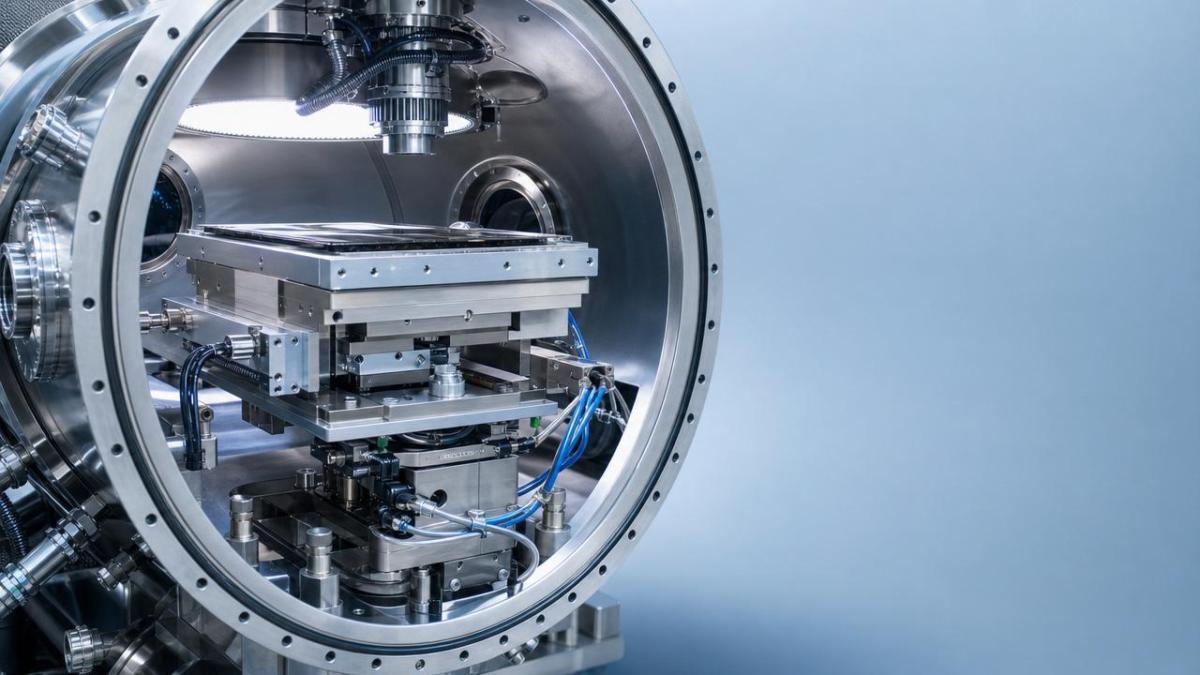
A vacuum compatible nano-stage is a precision motion platform designed to operate inside vacuum chambers while maintaining nanometer-scale positioning performance and low contamination behavior.
Unlike standard linear stages, it must resist virtual leaks, minimize particle generation, and tolerate thermal changes caused by reduced convective cooling.
The selection scope usually includes five technical layers:
- Vacuum level compatibility, from rough vacuum to UHV conditions
- Motion architecture, including piezo, flexure, or hybrid motorized designs
- Metrology system, such as capacitive sensors, strain gauges, or interferometer feedback
- Material and surface treatment suitability
- Controller, feedthrough, and chamber integration requirements
A practical evaluation starts with application constraints. Travel, load, speed, settling time, vacuum class, and contamination threshold should be defined together, not separately.
Industry Context and Current Technical Priorities
Demand for the vacuum compatible nano-stage is growing because more processes now require high accuracy inside controlled atmospheres.
Several industrial signals explain this trend:
Current attention is shifting from nominal resolution toward verified system behavior. Resolution alone does not guarantee usable positioning under actual vacuum conditions.
This is why engineering repositories and benchmarking frameworks often compare vacuum compatible nano-stage platforms against ISO, SEMI, and application-specific cleanliness expectations.
Performance Factors That Determine Real-World Value
The business value of a vacuum compatible nano-stage appears in lower integration risk, better process repeatability, and less unplanned chamber maintenance.
Vacuum stability and outgassing behavior
Outgassing can contaminate optics, wafers, sensors, and deposition surfaces. Adhesives, lubricants, cable jackets, and polymer parts should be reviewed carefully.
Ask for tested values, not generic statements. Total mass loss, collected volatile condensable materials, and bake-out compatibility can reveal hidden suitability gaps.
Motion accuracy under thermal stress
Vacuum changes heat dissipation. Motor coils, piezo stacks, and electronics can create local heating that shifts position or extends settling time.
A good vacuum compatible nano-stage should provide thermal data, drift curves, and stable performance across realistic duty cycles.
Repeatability versus resolution
Nanometer resolution sounds impressive, but repeatability and bidirectional accuracy are often more important for production and inspection tasks.
Evaluate whether the stage can return to the same coordinate after long cycles, load changes, and chamber pump-down transitions.
Vibration sensitivity and settling behavior
Flexure-based systems can deliver excellent smoothness, but they may have travel limits. Motorized designs offer range, yet may introduce more vibration.
Settling time matters when throughput is important. The best vacuum compatible nano-stage is not always the one with the smallest step size.
Typical Stage Types and Application Matching
Different architectures fit different process windows. Matching the vacuum compatible nano-stage to the actual use case prevents overspecification and hidden compromise.
For electron microscopy, magnetic compatibility and compact geometry may outweigh travel. For photonics, angular stability and cable-induced disturbance can dominate.
For vacuum deposition or analysis tools, contamination control often becomes the first filter before motion performance is even compared.
Practical Evaluation Criteria Before Final Selection
A structured review reduces surprises during commissioning. The following checkpoints help verify whether a vacuum compatible nano-stage fits the intended system.
- Define the vacuum regime clearly, including target pressure and bake-out expectations.
- Confirm all materials, finishes, lubricants, and cable components.
- Review accuracy data under load, temperature rise, and real mounting orientation.
- Check encoder or sensor suitability for vacuum and electromagnetic environment.
- Validate controller placement, feedthrough count, and cable heat generation.
- Assess service access, replacement difficulty, and chamber downtime consequences.
- Request test reports showing drift, repeatability, and outgassing evidence.
It is also useful to compare failure modes. Ask what happens after power loss, emergency stop, or repeated vacuum cycles.
If the vacuum compatible nano-stage must support regulated or audited processes, documentation quality becomes part of technical suitability.
Implementation Notes for Reliable System Integration
Successful integration depends on more than stage specification. Mounting stiffness, chamber base vibration, and metrology alignment often shape final results.
Three implementation notes deserve special attention:
- Keep cable forces low, because cable memory can distort nanoscale motion.
- Model thermal paths early, especially where motors or drivers add heat.
- Align sensor reference frames with the actual process coordinate system.
A vacuum compatible nano-stage should also be reviewed as part of the whole motion stack, including controller tuning, damping strategy, and chamber utilities.
When benchmarked properly, the right platform supports cleaner operation, faster validation, and more predictable precision over the system lifecycle.
Next-Step Framework for Data-Driven Selection
To choose a vacuum compatible nano-stage with confidence, build a short comparison matrix before requesting quotations.
Include vacuum range, travel, payload, repeatability, drift, sensor type, material set, outgassing evidence, integration complexity, and maintenance implications.
Then rank each option against the real process priority. In many cases, the most valuable vacuum compatible nano-stage is the one with the lowest system risk.
For technically demanding programs, independent benchmarking data and standards-based verification provide a stronger basis than nominal catalog performance alone.
A disciplined selection process turns the vacuum compatible nano-stage from a hidden uncertainty into a controlled precision asset.
Taglist:
Recent Articles
 2026.06.06Computex 2026 Sets New Calibration Baseline for AI FabsComputex 2026 sets a new baseline for AI fabs as the AI Factory Metrology Blueprint makes CMM Systems and Laser Interferometry mandatory, signaling urgent compliance upgrades for sub-2nm production.
 2026.06.06K-REACH STS Path Opens for Etching PrecursorsK-REACH STS Path opens a faster route for etching precursors like HF, ClF3, and NF3, cutting Korea import approval to 60 working days. See what exporters and buyers should act on now.
 2026.06.06Vietnam Sets IoT Rule for Imported ALD/CVD EquipmentVietnam Sets IoT Rule for Imported ALD/CVD Equipment: learn how the new VIIP and IoT compliance requirement from August 1, 2026 may affect exporters, buyers, and shipment planning.
 2026.06.06EU REACH Adds Three Electronic Gas SubstancesEU REACH adds three electronic gas substances—silane, phosphine, and TMA—triggering urgent SDS updates, impurity testing, and customs risks before the September 1, 2026 deadline.
 2026.06.06NHTSA Rule Raises U.S. Entry Requirements for Precision Flow Control PartsNHTSA Rule raises U.S. entry requirements for precision flow control parts, including Piezo Valves and Mass Flow Controllers. Learn DRCA impacts on compliance, Tier-1 sourcing, and delivery timing.
 2026.06.06Living Room Decor Trends 2026: Styles That Last Beyond the HypeLiving room decor trends for 2026 focus on lasting style, warm neutrals, layered texture, and smart quality choices to create a beautiful space that works for real life.
 2026.06.06ISO9001 Certification Services: What Affects Cost and Scope?ISO9001certificationservices explained: learn what drives cost, scope, audit effort, and hidden fees, so you can compare providers wisely and choose certification that truly fits your business.
 2026.06.06Frozen Food Supply Risks: How to Reduce Cold Chain LossesFrozen food supply risks often start with small cold chain failures. Learn how to reduce losses, improve monitoring, and protect product quality with smarter controls.
 2026.06.06Medical Device Standards Explained for Faster Product ApprovalMedical device standards explained clearly: learn which ISO and IEC requirements affect approval speed, reduce review delays, and build stronger submissions from day one.
 2026.06.06MDR Compliance Checklist: Key Gaps That Delay EU Market AccessMDR compliance starts long before CE marking. Discover the checklist gaps in clinical evidence, risk, QMS, and technical files that delay EU market access—and how to fix them faster.
 2026.06.05MIIT 6G Pilot Puts ALD and PVD Materials in FocusMIIT 6G pilot puts ALD and PVD materials in focus, highlighting AlN, ScAlN, Sc, Ta, and Zr targets. See how 2027 verification standards could reshape 6G supply chains.
 2026.06.05Micro-Robot Fluid Platform Enters Industrial ValidationMicro-robot fluid platform enters industrial validation with first-batch orders for eVTOL and intelligent driving tests, signaling new procurement, compliance, and supplier qualification opportunities.
 2026.06.05Computex 2026 Opens as AI-Ready ALD/CVD Skids Gain MomentumComputex 2026 spotlights AI-ready ALD/CVD Skids with faster delivery, remote tuning, and digital twin support—see how fabs and buyers can adapt qualification and procurement.
 2026.06.05China Customs Cuts Electronic Gas Clearance to Under 4 HoursChina customs speeds electronic gas clearance to under 4 hours for SiH4, PH3, BF3 and NF3. Discover how faster imports can improve semiconductor supply chain certainty.
 2026.06.05Relay Modules: Common Selection Mistakes That Cause Field FailuresRelaymodules often fail from wrong load matching, inrush neglect, or poor environmental fit. Learn the most common selection mistakes and how to prevent costly field downtime.
 2026.06.05Industrial Buyers Directory for Construction: How to Vet Suppliers FastIndustrial buyers directory for construction: learn how to vet suppliers fast with practical checks for capability, compliance, quality, and delivery risk.
 2026.06.05How to Compare Skincare Packaging for Barrier Performance and CostSkincarepackaging comparison starts with barrier performance, not looks. Learn how to evaluate OTR, WVTR, structure, and hidden costs to choose smarter, lower-risk packaging.
 2026.06.05Medical Device LFP Battery Safety Checklist Before Product Approvallfp battery safety for medical devices: use this approval checklist to verify thermal stability, charging protection, compliance, and traceable test data before launch.
 2026.06.05LFP Battery Safety for Medical Devices: Key Failure Risks in 2026lfp battery safety for medical devices in 2026: uncover key failure risks, verification gaps, and practical testing priorities to improve compliance, reliability, and patient safety.
 2026.06.04Shenzhen Eyewear Expo Signals AR Module Buying ShiftShenzhen Eyewear Expo Signals AR Module Buying Shift as AR eyewear micro-actuation systems draw bulk interest. Discover what this means for specs, procurement, and Q3-Q4 2026 delivery readiness.
 2026.06.04China Opens Fast-Track Clearance for Ultra-Pure Electronic GasesChina opens fast-track clearance for ultra-pure electronic gases, slashing customs time from 72 hours to 4. Learn how this pilot could reshape semiconductor supply reliability.
 2026.06.04EU Nano REACH Guide Takes Effect for Optical CoatingsEU Nano REACH Guide takes effect for optical coatings: learn the 2026 compliance deadline, nanoform registration risks, customs impact, and key actions exporters must take.
 2026.06.04Computex 2026 Opens as AI Factory Push Reshapes ALD/CVD Skids DeliveryComputex 2026 signals how AI Factory trends may reshape ALD/CVD skids delivery, modular sourcing, and 8-week OEM execution for wafer fabs and MEMS buyers.
 2026.06.04BIS Adds Export Controls on TaCl₅, NbF₅, and HfI₄BIS export controls now cover TaCl₅, NbF₅, and HfI₄. Learn how the EAR99 license rule for China could impact PVD target supply chains, contracts, customs filings, and shipment timing.
![]() 2026.06.04Custom Hip Hop Jewelry Quality Checks Before Orderingcustomhiphopjewelry buying guide: learn how to check metal quality, stone security, plating, and clasps before ordering so you can avoid costly mistakes and choose pieces with confidence.
2026.06.04Custom Hip Hop Jewelry Quality Checks Before Orderingcustomhiphopjewelry buying guide: learn how to check metal quality, stone security, plating, and clasps before ordering so you can avoid costly mistakes and choose pieces with confidence.![]() 2026.06.04Electronics Buyers Directory: How to Vet SuppliersIndustrial buyers directory for electronics: learn how to vet suppliers with proof-based checks on quality, compliance, and delivery resilience to reduce risk and choose reliable partners.
2026.06.04Electronics Buyers Directory: How to Vet SuppliersIndustrial buyers directory for electronics: learn how to vet suppliers with proof-based checks on quality, compliance, and delivery resilience to reduce risk and choose reliable partners.![]() 2026.06.04Healthcare Procurement Cost Traps in 2026 ContractsHealthcare procurement in 2026 faces hidden contract costs from compliance, supply volatility, and quality clauses. Learn where budgets leak and how smarter benchmarking protects margins.
2026.06.04Healthcare Procurement Cost Traps in 2026 ContractsHealthcare procurement in 2026 faces hidden contract costs from compliance, supply volatility, and quality clauses. Learn where budgets leak and how smarter benchmarking protects margins.![]() 2026.06.04How to Verify Health Monitors Accuracy at HomeHealth monitors accuracy starts with the right home test. Learn simple ways to compare readings, spot errors, and trust your device with more confidence.
2026.06.04How to Verify Health Monitors Accuracy at HomeHealth monitors accuracy starts with the right home test. Learn simple ways to compare readings, spot errors, and trust your device with more confidence.![]() 2026.06.04Cold Chain Logistics Risks in 2026 Drug ShippingCold chain logistics risks in 2026 drug shipping: learn where failures happen, how to reduce excursions, and how to protect compliance, product value, and patient delivery.
2026.06.04Cold Chain Logistics Risks in 2026 Drug ShippingCold chain logistics risks in 2026 drug shipping: learn where failures happen, how to reduce excursions, and how to protect compliance, product value, and patient delivery. 2026.06.03Unitree IPO Review Spurs Robot Supply Chain OrdersUnitree IPO review accelerates robot supply chain demand, with Micro-Robots modules, Piezo Valves and 6N gas bottlenecks reshaping overseas orders.
 2026.06.03Huawei Cloud’s Tao Law Resets Metrology BenchmarksHuawei Cloud’s Tao Law may redefine metrology benchmarks, pushing Laser Interferometry and Nano-Positioning toward dynamic accuracy standards.
 2026.06.03Computex 2026: NVIDIA Unveils Rubin-Vera AI FactoryComputex 2026 NVIDIA Rubin-Vera AI Factory highlights new ALD/CVD Skid demands, from ±0.1% MFC stability to sub-10 ms control, revealing key supply chain opportunities.
 2026.06.03BIS Adds Controls on PVD Precursor ExportsBIS adds controls on PVD precursor exports, affecting TaCl5, NbF5 and HfI4 supply chains. Learn compliance risks, sourcing impacts and practical next steps.
 2026.06.03Sumitomo Electric Raises Epoxy Prices, Sets 6N BarSumitomo Electric raises epoxy resin prices by 15% and sets 6N filler purity, reshaping semiconductor packaging costs, compliance checks, and supply chain decisions.