
Cold Chain Logistics Risks in 2026 Drug Shipping
In 2026, cold chain logistics will shape drug shipping reliability, regulatory exposure, and commercial continuity across global healthcare networks. As more therapies become temperature-sensitive, the margin for shipping error keeps shrinking.
Cold chain logistics now sits at the intersection of packaging science, route design, quality data, and cross-border compliance. A single excursion can trigger product loss, delayed treatment, investigation costs, and reputational damage.
For organizations operating in complex supply chains, understanding the main risk points in cold chain logistics is essential. The challenge is no longer only keeping products cold. It is proving control, response, and traceability.
What makes cold chain logistics riskier in 2026 drug shipping?
Several forces are increasing pressure on cold chain logistics in 2026. First, biologics, cell-based products, vaccines, and specialty medicines require tighter thermal tolerances than many legacy pharmaceuticals.
Second, global shipping networks remain exposed to airport congestion, customs delays, extreme weather, labor instability, and route volatility. Each disruption extends dwell time and raises excursion probability.
Third, regulators increasingly expect end-to-end evidence. It is not enough to claim compliance. Cold chain logistics programs must show documented qualification, monitoring integrity, deviation handling, and auditable records.
Fourth, cyber-physical fragmentation remains common. Packaging data, carrier milestones, logger records, and warehouse events often sit in different systems. That weakens visibility during time-critical exceptions.
These changes make cold chain logistics a strategic risk domain rather than a background transport function. Drug shipping resilience now depends on both engineering control and information accuracy.
Key pressure points
- Narrower acceptable temperature ranges
- Longer border and handoff delays
- More frequent lane disruptions
- Higher documentation expectations
- Disconnected tracking and quality systems
Where do the biggest cold chain logistics failures usually happen?
The most damaging failures rarely begin with one dramatic event. They usually emerge through accumulation across packaging, handling, timing, and data interpretation.
Packaging mismatch is a frequent source of risk. A shipper qualified for one season, lane, or duration may underperform when actual airport dwell time exceeds the validation window.
Handoffs are another weak point. Every transfer between warehouse, truck, airline, broker, and local distributor creates exposure. If accountability is vague, cold chain logistics control degrades quickly.
Sensor placement also matters. Temperature monitors can produce misleading confidence if they are poorly located, improperly configured, or not synchronized with shipment events.
Customs and documentation errors are often underestimated. A product may remain thermally stable for hours, then become noncompliant because the delay exceeded validated transit assumptions.
Last-mile delivery remains especially fragile. Urban congestion, delivery rescheduling, and inadequate receiving conditions can break an otherwise well-managed cold chain logistics plan.
Common failure zones in drug shipping
- Incorrect thermal packaging selection
- Extended airport or customs dwell time
- Poor chain-of-custody discipline
- Incomplete or delayed exception alerts
- Receiver unprepared for controlled delivery
How should cold chain logistics be evaluated before choosing routes or partners?
Effective evaluation starts with lane-level reality, not carrier claims alone. Drug shipping profiles vary by product sensitivity, shipment duration, geography, and local infrastructure maturity.
A robust cold chain logistics review should examine packaging qualification, excursion history, contingency design, logger strategy, customs capability, and deviation response timing.
The quality of evidence matters. Historical lane performance, validated thermal profiles, and root-cause records reveal much more than marketing documents or generic compliance statements.
Cross-functional review is important in 2026. Shipping, quality, regulatory, and digital tracking assumptions must align. Otherwise, decision-makers inherit hidden risks from system gaps.
Evaluation checklist for cold chain logistics
What role do data, automation, and engineering controls play in reducing risk?
Cold chain logistics performance increasingly depends on how physical systems and digital evidence work together. Packaging alone cannot compensate for poor visibility or delayed response.
Real-time telemetry helps teams detect route deviations, thermal drift, and prolonged dwell time earlier. That can enable intervention before a product becomes unusable.
However, more sensors do not automatically create better control. Data quality, calibration discipline, battery reliability, and alert thresholds must be engineered carefully.
This is where technical benchmarking becomes valuable. Organizations with complex shipping portfolios benefit from standards-based evaluation of sensors, enclosures, monitoring workflows, and validation methods.
Within broader industrial ecosystems, groups such as G-UPE highlight a useful principle. Precision engineering, measurement integrity, and documented control improve decision quality across sensitive operations.
For cold chain logistics, that means using verifiable data rather than assumptions. It also means aligning shipping design with metrology-style discipline: measured performance, traceability, and reproducible process control.
Practical control measures
- Use lane-specific thermal qualification, not generic packaging claims
- Set escalation triggers for dwell time and route deviation
- Validate logger accuracy and placement before rollout
- Integrate shipment milestones with quality review workflows
- Review excursion trends quarterly by product and route
Which misconceptions still weaken cold chain logistics decisions?
One common misconception is that passive packaging alone guarantees security. In reality, even strong packaging can fail if lane duration, exposure profile, or handling sequence changes.
Another mistake is treating all temperature-sensitive drugs the same. Different molecules have different stability curves, freeze sensitivity, and excursion tolerances. Cold chain logistics design must reflect those differences.
Some teams overvalue average transit time. The real issue is tail risk. Rare but severe delays often create the greatest loss in drug shipping.
A further misconception is that visibility equals control. Tracking platforms can show location and temperature, yet still fail if nobody owns rapid response decisions.
Finally, low incident counts may create false confidence. If excursion reporting is inconsistent, a cold chain logistics program may look healthy while hidden failures continue.
FAQ quick-reference table
How can organizations strengthen cold chain logistics readiness now?
Start with a lane-by-lane risk map. Identify where product sensitivity, customs complexity, infrastructure weakness, and disruption frequency overlap.
Then compare current packaging duration, monitoring depth, and response capability against those conditions. Weak points usually appear in exception ownership and route contingency planning.
Next, tighten evidence quality. Standardize logger configuration, event timestamps, and release review criteria. Consistent records improve both investigations and future route decisions.
It is also wise to test disruption scenarios before they happen. Simulate customs delay, airport offload, sensor failure, and receiving-site unavailability. These exercises reveal practical gaps quickly.
In 2026, strong cold chain logistics will depend on measurable control, not optimism. Drug shipping programs that combine engineering rigor, clear accountability, and validated data will be more resilient.
The next practical step is simple: review critical lanes, verify thermal assumptions, and strengthen exception workflows before disruption exposes hidden weaknesses. That is how cold chain logistics becomes a competitive safeguard.
Taglist:
Recent Articles
 2026.10.27India Hosts 61st CIML Meeting for First Time, Advances International Metrology AlignmentIndia hosts the 61st CIML meeting, highlighting OIML-CS status and legal metrology reforms. Explore what international alignment could mean for instrument certification and equipment trade.
 2026.10.27When should you call emergency medical services instead of driving?When should you call emergency medical services instead of driving? Learn the critical warning signs, why an ambulance can be safer, and what to do while help arrives.
 2026.10.26Mycronic Wins $12–14 Million Photomask System Order from Asian CustomerMycronic secures a $12–14 million photomask system order from an existing Asian customer. Explore the writing and measurement systems and their planned 2027 deliveries.
 2026.10.26Piezoelectric Actuator Selection: Balancing Stroke, Force, and BandwidthSelect the right piezoelectric actuator by balancing loaded stroke, force, and bandwidth. Explore key design checks to improve precision and avoid costly sizing mistakes.
 2026.10.26Layer Deposition Equipment: ALD vs. CVD for High-Aspect-Ratio FeaturesCompare layer deposition equipment for high-aspect-ratio features. Explore ALD vs. CVD conformality, throughput, and costs to choose the right system with confidence.
 2026.10.26Checking repeatability in bulk orders of encoder-feedback nano stagesCompare encoder feedback nano-positioning stage wholesale offers using repeatability tests, lot acceptance criteria, and traceable reports. Learn how to reduce risk and buy with confidence.
 2026.10.25Sidea Semiconductor Granted Patent for Probe Card Alignment CalibrationSidea Semiconductor's probe card alignment calibration patent aims for precise, low-cost automation without a calibration target. Explore its potential for semiconductor testing.
 2026.10.25How to assess long-term drift in a high-stability laser interferometerAssess long-term drift in a high stability laser interferometer with reliable reference tests, environmental tracking, and clear acceptance limits. Learn how to validate lasting measurement accuracy.
 2026.10.24SIA Submits Comments to EPA on Draft Trans-DCE Risk AssessmentSIA backs EPA’s draft Trans-DCE risk assessment for semiconductor manufacturing. Explore what its comments could mean for continued lawful use, supply stability, and production planning.
 2026.10.24How to size plastic extrusion machines for your target outputSize plasticextrusionmachines for your target output with practical throughput calculations, resin checks, and line-capacity tips. Avoid costly sizing mistakes and choose with confidence.
 2026.10.23Leadmicro Showcases Full ALD, CVD and PVD Lineup at Bay Area Semiconductor ExpoExplore Leadmicro’s ALD, CVD and PVD lineup at the Bay Area Semiconductor Expo, including magnetron sputtering solutions and key checks for smarter equipment procurement.
 2026.10.23How much does closed-loop control add to the price of PZT drivers?Understand PZT drivers price increases for closed-loop control. Compare sensors, electronics, and installation costs to make a smarter purchasing decision.
 2026.10.22Leadmicro Adds PVD Products, Expanding ALD, CVD and PVD CoverageLeadmicro expands ALD, CVD and PVD coverage with new iMagtron PVD products and a ruthenium ALD process. Explore what these advances mean for thin-film deposition and equipment buyers.
 2026.10.22What limits commercial adoption of micro-robotics in Latin America?Micro-robotics Latin America: What limits commercial adoption? Explore costs, integration hurdles, and service gaps—and learn how to reduce investment risks.
 2026.10.21NTT, Furukawa Electric and Partners Launch Photonics Mass-Production R&DExplore NTT and Furukawa Electric's photonics mass-production R&D with partners, targeting scalable chip manufacturing for energy-efficient AI computing and higher-bandwidth data centers.
 2026.10.21What ultra-precision engineering case studies reveal about thermal driftExplore ultra-precision engineering project cases to uncover hidden thermal drift, assess compensation, and learn what evidence to request before choosing a precision system.
 2026.10.20BASF Signs Letter of Intent with Taiwan Ministry to Expand Guanyin Semiconductor MaterialsBASF’s planned Guanyin semiconductor materials expansion targets sub-2nm manufacturing. Explore what its letter of intent with Taiwan’s Ministry of Economic Affairs could mean for chipmakers.
 2026.10.20How to estimate medical technology costs beyond the purchase priceEstimate medical technology cost beyond the purchase price. Uncover hidden expenses, compare lifecycle costs, and use this guide to make smarter procurement decisions.
 2026.10.1960 Minutes: Iran War Drives Global Helium Shortage, Threatening Semiconductor SupplyIran war-linked global helium shortage reportedly threatens semiconductor supply. Explore chipmaking risks and practical steps to verify inventories, shipments and supplier commitments.
 2026.10.19How to specify zinc coating weight for prepainted GI steel coilsSpecify zinc coating weight for prepainted gi steel coils with confidence. Learn how to define Z275, compare standards, and verify compliance to avoid costly purchasing mistakes.
 2026.10.18How linear motor stage settling time affects inspection throughputOptimize your linear motor stage for inspection systems: learn how settling time, vibration, and exposure timing affect throughput—and boost inspection output without sacrificing accuracy.
 2026.10.17Choosing a microfluidic probe manufacturer for stable flow confinementChoose a micro fluidic probe manufacturer with proven flow confinement. Compare geometry, flow control, validation, and repeatability to find the right fit for your application.
 2026.10.16What does measurement accuracy specified as % of full scale mean?Understand measurement specification accuracy as % of full scale. Learn to calculate error, compare sensor ranges, and choose the right instrument with confidence.
 2026.10.15How temperature affects high-accuracy dimensional analysis systemsDiscover how temperature affects high accuracy dimensional analysis systems, and learn practical ways to control thermal drift, improve compensation, and verify measurement accuracy.
 2026.10.14How air pressure affects precision pneumatic actuator repeatabilityPrecision Pneumatic actuator repeatability depends on more than supply pressure. Discover how pressure, friction, and flow affect positioning—and how to improve consistency in your application.
 2026.10.13How to choose a packaging manufacturer for small production runsChoose a packaging manufacturer for small production runs with confidence. Discover how to compare costs, verify samples, and secure quality packaging without excess inventory.
 2026.10.12Low-Impurity Silane Gas: Setting Acceptance Limits Beyond Total PurityEvaluate low impurity silane gas beyond total purity. Learn how to set contaminant limits, verify testing, and qualify suppliers for more reliable deposition.
 2026.10.12SEMI-Compliant Silane Gas: Which Specifications and Test Records Should You Check?SEMI compliant silane gas: Discover the standards, impurity limits, test records, and cylinder traceability checks that support confident purchasing and safer release decisions.
 2026.10.12Ultra-Pure Silane Gas Price: Comparing Quotes Beyond Cost per CylinderCompare ultra-pure silane gas price beyond cylinder costs. Learn how purity, usable quantity, freight, and return terms shape true value—and make a smarter purchasing decision.
 2026.10.12Moisture-Controlled Silane Gas: Tracing Water Contamination in Delivery LinesKeep moisture controlled silane gas reliable. Learn how to validate readings, trace water contamination in delivery lines, and verify recovery with safety-focused diagnostic insights.
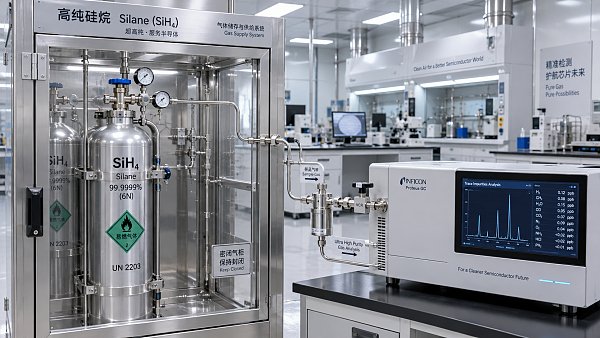
 2026.10.12What Does 99.99999% Silane Gas Mean? Understanding 7N Purity and Detection LimitsEvaluate 99.99999 silane gas with confidence. Discover what 7N purity means, how detection limits affect results, and which supplier data to check before qualification.
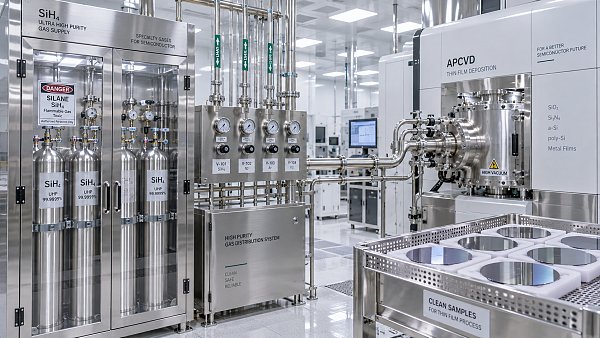
 2026.10.12Ultra-Pure Silane Gas for Thin Films: Matching Gas Grade to Film RequirementsChoose ultra-pure silane gas for thin films with confidence. Learn to match impurity limits, supplier evidence, and delivery conditions to film requirements while avoiding unnecessary costs.
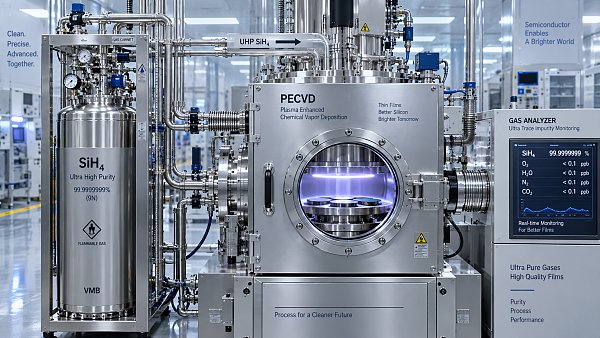
 2026.10.12Ultra-Pure Silane Gas for PECVD: Linking Impurities to Film DefectsQualify ultra-pure silane gas for PECVD with confidence. Learn how impurities affect film defects and use gas analysis, delivery checks, and film testing to set reliable acceptance limits.
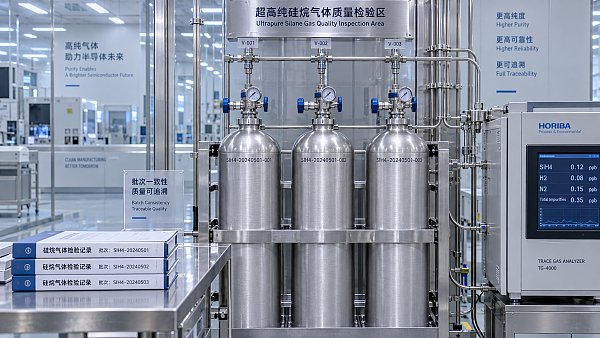
 2026.10.12Qualifying an Ultra-Pure Silane Gas Manufacturer: Batch Consistency and TraceabilityQualify an ultra-pure silane gas manufacturer with confidence. Learn how to verify batch consistency, analytical results, and cylinder traceability to reduce sourcing risks.






FILTER_CORE
REF_NO: 0042
Editors' Picks
- 00
0000-00
India Hosts 61st CIML Meeting for First Time, Advances International Metrology Alignment - 00
0000-00
When should you call emergency medical services instead of driving? - 00
0000-00
Mycronic Wins $12–14 Million Photomask System Order from Asian Customer - 00
0000-00
Piezoelectric Actuator Selection: Balancing Stroke, Force, and Bandwidth