Germany Reinforces Transatlantic Ties, Opening CE+UKCA Dual-Certification Window for CMM Systems
On May 2, 2026, German Chancellor Friedrich Merz reaffirmed Germany’s commitment to a ‘reliable transatlantic partnership’, citing close and trust-based coordination with the U.S. on Iran-related matters. This political signal has stabilized EU–U.S. expectations for technical alignment, prompting certification bodies such as TÜV Rheinland to accelerate integration of CE and UKCA conformity assessment processes. As a result, coordinate measuring machine (CMM) systems compliant with both ISO 10360-2:2023 and BS EN ISO 10360-2:2023 now qualify for simultaneous CE and UKCA certification via a single test cycle — reducing total certification lead time to 12 working days. This development is particularly relevant for precision engineering, industrial metrology, and export-oriented manufacturing sectors operating across EU and UK markets.
Event Overview
On May 2, 2026, German Chancellor Friedrich Merz publicly reiterated support for a stable and reliable transatlantic partnership, emphasizing sustained coordination with the United States — specifically referencing mutual trust in managing developments related to Iran. In response, certification service providers including TÜV Rheinland have advanced operational integration of CE and UKCA conformity assessment procedures. As confirmed, CMM systems meeting both ISO 10360-2:2023 (EU harmonized standard) and BS EN ISO 10360-2:2023 (UK designated standard) are now eligible for dual-certification issuance following one integrated test. The end-to-end certification timeline has been reduced to 12 working days.
Industries Affected
Export-Oriented Manufacturing Firms
These firms face direct regulatory overhead when placing CMM systems into both EU and UK markets. Previously, separate testing and documentation were required for CE and UKCA marking, increasing cost, time, and administrative burden. With the new dual-certification pathway, manufacturers exporting CMMs can reduce parallel conformity assessments — but only if their products already meet both ISO 10360-2:2023 and its UK-aligned counterpart.
Precision Metrology Equipment Suppliers
Suppliers of CMM subsystems (e.g., probe systems, motion controllers, or software calibration modules) may see downstream demand shifts. Integrators increasingly prioritize components pre-validated against dual standards. While not directly certified themselves, suppliers whose designs align with ISO 10360-2:2023 may gain competitive advantage during system-level validation.
Certification and Compliance Service Providers
Third-party certification bodies and notified bodies are adjusting internal workflows to accommodate combined CE/UKCA test protocols. TÜV Rheinland’s acceleration reflects broader industry movement toward harmonized test planning — though formal recognition of dual-certification validity remains subject to national market surveillance authorities in each jurisdiction.
Industrial Automation Integrators
Integrators embedding CMMs into automated inspection cells or production lines must verify that delivered systems carry valid, jurisdictionally appropriate markings. The availability of dual-certified units simplifies compliance verification for cross-border deployments — especially where end users operate facilities in both EU and UK territories.
What Enterprises and Practitioners Should Monitor and Do Now
Track official updates from UK’s Department for Business and Trade (DBT) and EU Commission’s New Legislative Framework (NLF) guidance
The current dual-certification process is operationally enabled by certification bodies, but neither the UK nor EU has issued binding regulatory revisions formally endorsing ‘one test, two marks’ as a statutory pathway. Enterprises should monitor whether DBT or the European Commission publishes updated guidance clarifying acceptance criteria for shared test reports.
Verify product design alignment with both ISO 10360-2:2023 and BS EN ISO 10360-2:2023 prior to initiating certification
Although technically identical in scope, minor editorial differences exist between the two standards’ normative references and annex structures. Manufacturers must confirm full alignment — not just nominal compliance — to avoid retesting or conditional certification outcomes.
Distinguish between policy signaling and operational readiness
Chancellor Merz’s statement signals political continuity in transatlantic technical cooperation, but it does not constitute a regulatory change. The accelerated dual-certification offering stems from private-sector certification body initiatives, not new legislation. Enterprises should treat this as an emerging service option — not a mandated or universally available framework.
Review existing certification timelines and supplier agreements for upcoming CMM deliveries
Firms with scheduled CMM exports to both EU and UK markets in Q3–Q4 2026 should assess whether shifting to a dual-certification workflow could compress delivery schedules or reduce third-party costs. Internal procurement and quality teams should update checklists to include dual-standard validation as a pre-submission requirement.
Editorial Perspective / Industry Observation
Observably, this development is best understood as an early-stage procedural adaptation — not a formal regulatory convergence. While CE and UKCA remain legally distinct conformity marks under separate legal regimes, the practical alignment of test requirements for specific standards (here, ISO 10360-2:2023) enables efficiency gains at the implementation level. Analysis shows that such alignment tends to emerge first in high-precision, low-volume equipment categories where test complexity and cost incentivize harmonization — rather than in mass-market consumer goods. From an industry perspective, this is less a sign of imminent UK–EU regulatory reunification and more evidence of pragmatic convergence where technical infrastructure permits. Continued monitoring is warranted, particularly for any extension of dual-certification to other metrology-related standards (e.g., ISO 10360-5 or ISO 15530 series).
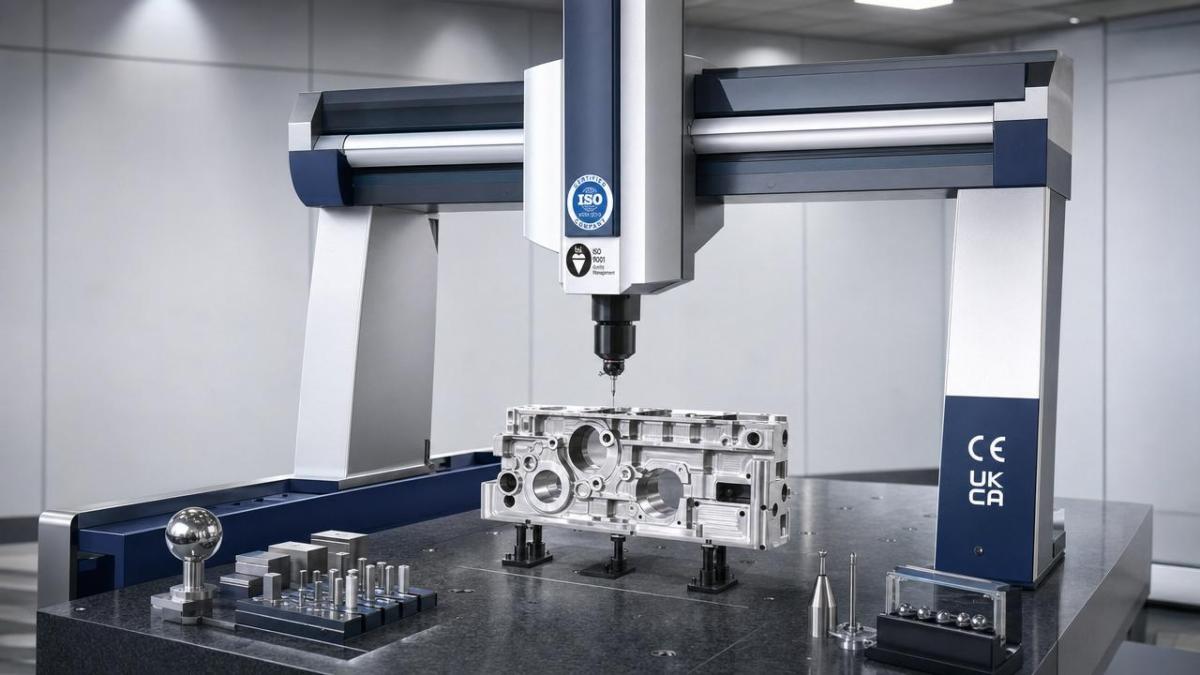
In summary, the May 2, 2026 statement by Chancellor Merz has catalyzed a tangible, near-term efficiency improvement for CMM exporters targeting both EU and UK markets — but only for those whose products already conform to the latest revision of ISO 10360-2. It represents a procedural opportunity, not a structural shift in regulatory authority or market access rules. Enterprises should treat it as a time-bound operational window requiring precise technical alignment and careful documentation — not a broad strategic inflection point.
Source: Public remarks by German Chancellor Friedrich Merz (May 2, 2026); official announcements from TÜV Rheinland regarding CE/UKCA dual-certification services for metrology equipment; ISO and BSI published standards documentation (ISO 10360-2:2023; BS EN ISO 10360-2:2023).
Parts requiring ongoing observation: Formal endorsement status from UK DBT and EU Commission; potential expansion to additional ISO 10360 subparts or related metrology standards.
Taglist:
Recent Articles
 2026.06.06Computex 2026 Sets New Calibration Baseline for AI FabsComputex 2026 sets a new baseline for AI fabs as the AI Factory Metrology Blueprint makes CMM Systems and Laser Interferometry mandatory, signaling urgent compliance upgrades for sub-2nm production.
 2026.06.06K-REACH STS Path Opens for Etching PrecursorsK-REACH STS Path opens a faster route for etching precursors like HF, ClF3, and NF3, cutting Korea import approval to 60 working days. See what exporters and buyers should act on now.
 2026.06.06Vietnam Sets IoT Rule for Imported ALD/CVD EquipmentVietnam Sets IoT Rule for Imported ALD/CVD Equipment: learn how the new VIIP and IoT compliance requirement from August 1, 2026 may affect exporters, buyers, and shipment planning.
 2026.06.06EU REACH Adds Three Electronic Gas SubstancesEU REACH adds three electronic gas substances—silane, phosphine, and TMA—triggering urgent SDS updates, impurity testing, and customs risks before the September 1, 2026 deadline.
 2026.06.06NHTSA Rule Raises U.S. Entry Requirements for Precision Flow Control PartsNHTSA Rule raises U.S. entry requirements for precision flow control parts, including Piezo Valves and Mass Flow Controllers. Learn DRCA impacts on compliance, Tier-1 sourcing, and delivery timing.
 2026.06.06Living Room Decor Trends 2026: Styles That Last Beyond the HypeLiving room decor trends for 2026 focus on lasting style, warm neutrals, layered texture, and smart quality choices to create a beautiful space that works for real life.
 2026.06.06ISO9001 Certification Services: What Affects Cost and Scope?ISO9001certificationservices explained: learn what drives cost, scope, audit effort, and hidden fees, so you can compare providers wisely and choose certification that truly fits your business.
 2026.06.06Frozen Food Supply Risks: How to Reduce Cold Chain LossesFrozen food supply risks often start with small cold chain failures. Learn how to reduce losses, improve monitoring, and protect product quality with smarter controls.
 2026.06.06Medical Device Standards Explained for Faster Product ApprovalMedical device standards explained clearly: learn which ISO and IEC requirements affect approval speed, reduce review delays, and build stronger submissions from day one.
 2026.06.06MDR Compliance Checklist: Key Gaps That Delay EU Market AccessMDR compliance starts long before CE marking. Discover the checklist gaps in clinical evidence, risk, QMS, and technical files that delay EU market access—and how to fix them faster.
 2026.06.05MIIT 6G Pilot Puts ALD and PVD Materials in FocusMIIT 6G pilot puts ALD and PVD materials in focus, highlighting AlN, ScAlN, Sc, Ta, and Zr targets. See how 2027 verification standards could reshape 6G supply chains.
 2026.06.05Micro-Robot Fluid Platform Enters Industrial ValidationMicro-robot fluid platform enters industrial validation with first-batch orders for eVTOL and intelligent driving tests, signaling new procurement, compliance, and supplier qualification opportunities.
 2026.06.05Computex 2026 Opens as AI-Ready ALD/CVD Skids Gain MomentumComputex 2026 spotlights AI-ready ALD/CVD Skids with faster delivery, remote tuning, and digital twin support—see how fabs and buyers can adapt qualification and procurement.
 2026.06.05China Customs Cuts Electronic Gas Clearance to Under 4 HoursChina customs speeds electronic gas clearance to under 4 hours for SiH4, PH3, BF3 and NF3. Discover how faster imports can improve semiconductor supply chain certainty.
 2026.06.05Relay Modules: Common Selection Mistakes That Cause Field FailuresRelaymodules often fail from wrong load matching, inrush neglect, or poor environmental fit. Learn the most common selection mistakes and how to prevent costly field downtime.
 2026.06.05Industrial Buyers Directory for Construction: How to Vet Suppliers FastIndustrial buyers directory for construction: learn how to vet suppliers fast with practical checks for capability, compliance, quality, and delivery risk.
 2026.06.05How to Compare Skincare Packaging for Barrier Performance and CostSkincarepackaging comparison starts with barrier performance, not looks. Learn how to evaluate OTR, WVTR, structure, and hidden costs to choose smarter, lower-risk packaging.
 2026.06.05Medical Device LFP Battery Safety Checklist Before Product Approvallfp battery safety for medical devices: use this approval checklist to verify thermal stability, charging protection, compliance, and traceable test data before launch.
 2026.06.05LFP Battery Safety for Medical Devices: Key Failure Risks in 2026lfp battery safety for medical devices in 2026: uncover key failure risks, verification gaps, and practical testing priorities to improve compliance, reliability, and patient safety.
 2026.06.04Shenzhen Eyewear Expo Signals AR Module Buying ShiftShenzhen Eyewear Expo Signals AR Module Buying Shift as AR eyewear micro-actuation systems draw bulk interest. Discover what this means for specs, procurement, and Q3-Q4 2026 delivery readiness.
 2026.06.04China Opens Fast-Track Clearance for Ultra-Pure Electronic GasesChina opens fast-track clearance for ultra-pure electronic gases, slashing customs time from 72 hours to 4. Learn how this pilot could reshape semiconductor supply reliability.
 2026.06.04EU Nano REACH Guide Takes Effect for Optical CoatingsEU Nano REACH Guide takes effect for optical coatings: learn the 2026 compliance deadline, nanoform registration risks, customs impact, and key actions exporters must take.
 2026.06.04Computex 2026 Opens as AI Factory Push Reshapes ALD/CVD Skids DeliveryComputex 2026 signals how AI Factory trends may reshape ALD/CVD skids delivery, modular sourcing, and 8-week OEM execution for wafer fabs and MEMS buyers.
 2026.06.04BIS Adds Export Controls on TaCl₅, NbF₅, and HfI₄BIS export controls now cover TaCl₅, NbF₅, and HfI₄. Learn how the EAR99 license rule for China could impact PVD target supply chains, contracts, customs filings, and shipment timing.
![]() 2026.06.04Custom Hip Hop Jewelry Quality Checks Before Orderingcustomhiphopjewelry buying guide: learn how to check metal quality, stone security, plating, and clasps before ordering so you can avoid costly mistakes and choose pieces with confidence.
2026.06.04Custom Hip Hop Jewelry Quality Checks Before Orderingcustomhiphopjewelry buying guide: learn how to check metal quality, stone security, plating, and clasps before ordering so you can avoid costly mistakes and choose pieces with confidence.![]() 2026.06.04Electronics Buyers Directory: How to Vet SuppliersIndustrial buyers directory for electronics: learn how to vet suppliers with proof-based checks on quality, compliance, and delivery resilience to reduce risk and choose reliable partners.
2026.06.04Electronics Buyers Directory: How to Vet SuppliersIndustrial buyers directory for electronics: learn how to vet suppliers with proof-based checks on quality, compliance, and delivery resilience to reduce risk and choose reliable partners.![]() 2026.06.04Healthcare Procurement Cost Traps in 2026 ContractsHealthcare procurement in 2026 faces hidden contract costs from compliance, supply volatility, and quality clauses. Learn where budgets leak and how smarter benchmarking protects margins.
2026.06.04Healthcare Procurement Cost Traps in 2026 ContractsHealthcare procurement in 2026 faces hidden contract costs from compliance, supply volatility, and quality clauses. Learn where budgets leak and how smarter benchmarking protects margins.![]() 2026.06.04How to Verify Health Monitors Accuracy at HomeHealth monitors accuracy starts with the right home test. Learn simple ways to compare readings, spot errors, and trust your device with more confidence.
2026.06.04How to Verify Health Monitors Accuracy at HomeHealth monitors accuracy starts with the right home test. Learn simple ways to compare readings, spot errors, and trust your device with more confidence.![]() 2026.06.04Cold Chain Logistics Risks in 2026 Drug ShippingCold chain logistics risks in 2026 drug shipping: learn where failures happen, how to reduce excursions, and how to protect compliance, product value, and patient delivery.
2026.06.04Cold Chain Logistics Risks in 2026 Drug ShippingCold chain logistics risks in 2026 drug shipping: learn where failures happen, how to reduce excursions, and how to protect compliance, product value, and patient delivery. 2026.06.03Unitree IPO Review Spurs Robot Supply Chain OrdersUnitree IPO review accelerates robot supply chain demand, with Micro-Robots modules, Piezo Valves and 6N gas bottlenecks reshaping overseas orders.
 2026.06.03Huawei Cloud’s Tao Law Resets Metrology BenchmarksHuawei Cloud’s Tao Law may redefine metrology benchmarks, pushing Laser Interferometry and Nano-Positioning toward dynamic accuracy standards.
 2026.06.03Computex 2026: NVIDIA Unveils Rubin-Vera AI FactoryComputex 2026 NVIDIA Rubin-Vera AI Factory highlights new ALD/CVD Skid demands, from ±0.1% MFC stability to sub-10 ms control, revealing key supply chain opportunities.
 2026.06.03BIS Adds Controls on PVD Precursor ExportsBIS adds controls on PVD precursor exports, affecting TaCl5, NbF5 and HfI4 supply chains. Learn compliance risks, sourcing impacts and practical next steps.
 2026.06.03Sumitomo Electric Raises Epoxy Prices, Sets 6N BarSumitomo Electric raises epoxy resin prices by 15% and sets 6N filler purity, reshaping semiconductor packaging costs, compliance checks, and supply chain decisions.