
Nano-Indentation Hardness Accuracy: Common Data Errors and Fixes
For after-sales maintenance teams, nano-indentation hardness accuracy is not just a laboratory concern.
It affects calibration decisions, fault isolation, warranty judgment, and confidence in reported material performance.
When hardness data is wrong, root-cause analysis can drift toward false conclusions.
That creates rework, repeat visits, customer disputes, and avoidable compliance risk.
This guide explains the most common data errors behind poor nano-indentation hardness accuracy and the practical fixes that restore reliable results.
Why structured verification improves nano-indentation hardness accuracy
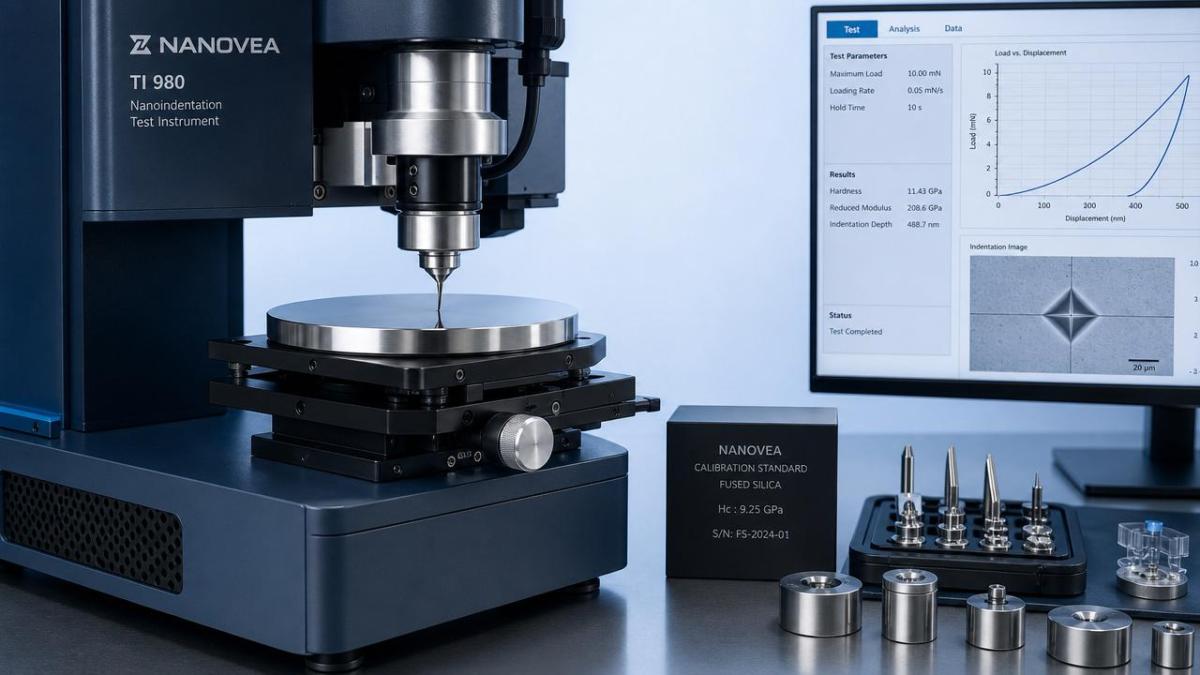
Nano-indentation hardness accuracy depends on a chain of small conditions working correctly together.
Surface state, indenter condition, frame compliance, thermal drift, load function, and analysis settings all influence the final hardness value.
A checklist approach reduces guesswork.
It helps separate sample-related variation from instrument-related variation before unnecessary adjustments are made.
In cross-industry environments, from thin films to implants and aerospace coatings, disciplined verification supports traceable nano-indentation hardness accuracy.
Core checks for common data errors and fixes
- Confirm the surface is flat, clean, and damage-free, because roughness, contamination, or polishing artifacts can distort contact area and reduce nano-indentation hardness accuracy.
- Verify indentation depth matches sample structure, since shallow tests can exaggerate noise while deep tests can introduce substrate effects and false hardness values.
- Inspect the indenter tip for wear, rounding, or contamination, because tip defects directly alter projected area and weaken nano-indentation hardness accuracy.
- Recheck area function calibration using certified reference materials, especially after heavy use, transport, or service work on the instrument head.
- Measure frame compliance again if stiffness trends look unusual, because machine deformation can shift displacement data and bias hardness calculations.
- Control thermal drift before and after testing, since temperature instability causes displacement creep that can quietly damage nano-indentation hardness accuracy.
- Review loading, hold, and unloading rates, because aggressive methods can trigger viscoelastic effects, pile-up errors, or unstable contact detection.
- Check zero-point and contact-point settings carefully, because incorrect surface detection often creates the largest hidden displacement error in practical testing.
- Use the correct analysis model for the material type, since metals, polymers, ceramics, and layered films respond differently during indentation.
- Compare replicate indents across multiple positions, because spatial scatter often reveals coating nonuniformity, vibration, or stage instability before averages hide it.
- Exclude indents near edges, pores, scratches, and previous impressions, because local defects can produce misleading hardness readings and false maintenance conclusions.
- Document software version, fitting parameters, and operator changes, because analysis drift can occur even when the hardware appears stable.
How to diagnose errors by source
Sample preparation problems
Poor polishing is one of the most frequent causes of weak nano-indentation hardness accuracy.
Scratches and embedded debris interfere with true surface detection and local contact mechanics.
Use microscopy before testing.
If the finish varies across the test zone, repeat preparation rather than forcing interpretation from unstable data.
Instrument calibration and hardware drift
When hardness shifts across many materials at once, calibration issues become more likely.
Typical signs include abnormal modulus trends, depth offsets, or increasing scatter after relocation or service.
Run a reference block or certified standard.
If deviation persists, inspect tip condition, compliance values, vibration isolation, and thermal stability in sequence.
Method and software setting errors
Some nano-indentation hardness accuracy problems begin after hardware is already working correctly.
The cause may be a changed loading profile, a new fitting routine, or an unsuitable Poisson ratio value.
Always verify method templates after software updates.
A small parameter change can shift hardness outputs enough to trigger false maintenance alarms.
Application notes across different industrial cases
Thin films and coatings
For ALD, PVD, or hard coatings, nano-indentation hardness accuracy is strongly affected by substrate influence.
Keep indentation depth appropriately limited relative to film thickness, then compare multiple loads to confirm stability.
If hardness rises or falls sharply with depth, review pile-up, sink-in, and interface effects before accepting the result.
Biomaterials and polymer-rich systems
Soft or time-dependent materials require careful hold segments and drift control.
Fast unloading can hide creep behavior and damage nano-indentation hardness accuracy.
Use longer stabilization periods and confirm environmental control, especially when hydration or temperature changes alter local response.
Metals, aerospace parts, and precision components
In hardened alloys and engineered surfaces, residual stress and microstructural gradients often drive data scatter.
Map several regions instead of relying on one location.
That helps distinguish true material variation from poor nano-indentation hardness accuracy caused by setup inconsistency.
Often-missed issues that create hidden risk
Vibration and acoustic disturbance
Low-force measurements are sensitive to nearby motion, pumps, doors, and bench resonance.
If scatter appears periodic, isolate the source before changing calibration constants.
Humidity and temperature variation
Environmental drift can change both sample behavior and instrument response.
Stable room control is essential for repeatable nano-indentation hardness accuracy, especially during long test sequences.
Misleading averages
A clean average may hide bad data clusters.
Review raw load-displacement curves, outliers, and location maps before releasing a hardness conclusion.
Practical execution steps for reliable results
- Start each session with a reference verification, then log drift, compliance, tip status, and environmental conditions in one controlled record.
- Use a fixed preparation and cleaning routine for similar materials so nano-indentation hardness accuracy can be compared across service events.
- Set acceptance bands for hardness, modulus, and scatter, then trigger deeper troubleshooting only when trends exceed those predefined limits.
- Keep archived raw curves and analysis settings, because historical comparison is often the fastest route to identifying hidden process drift.
Quick FAQ on nano-indentation hardness accuracy
What is the most common cause of poor nano-indentation hardness accuracy?
Surface preparation errors are very common, followed closely by tip calibration problems and thermal drift.
How often should area function and compliance be checked?
Check after transport, service, unusual scatter, or any reference standard deviation outside normal control limits.
Can software settings alone change hardness results?
Yes. Contact detection, fitting range, and material assumptions can significantly affect nano-indentation hardness accuracy.
Summary and next actions
Reliable nano-indentation hardness accuracy comes from disciplined verification, not from a single calibration step.
The most effective approach is to review surface quality, instrument condition, method settings, and raw curve behavior in a fixed order.
For technical benchmarking environments such as G-UPE, this structured process supports traceable decisions across coatings, metrology, fluid systems, high-purity materials, and nano-positioning applications.
As a next step, build a one-page verification routine using the checks above, then validate it against a stable reference sample before field deployment.
Recent Articles
 2026.09.25Which ISO standards apply to precision-engineered medical devices?ISO standards for precision engineering medical devices: explore ISO 13485, ISO 14971, metrology, biocompatibility, sterilization, and packaging requirements.
 2026.09.24How to choose athletic clothing that stays comfortable in humid weatherAthletic clothing for humid weather: learn how to choose breathable fabrics, low-chafe fits, and quick-drying layers for more comfortable workouts.
 2026.09.23How sheet metal welding choices affect dimensional accuracySheet metal welding choices shape dimensional accuracy. Explore heat input, joint design, fixturing, and inspection strategies to reduce distortion and improve repeatability.
 2026.09.22How specification preparation prevents flow-control errors in process systemsSpecification preparation for process systems prevents flow-control errors by defining operating ranges, pressure budgets, accuracy, materials, and control requirements before equipment selection.
 2026.09.21How to assess a German mass flow controller supplier for cleanroom useIndustrial & Manufacturing equipment supplier in Germany: assess cleanroom MFC partners for gas compatibility, leak integrity, calibration traceability, and lifecycle service.
 2026.09.20How to assess aerospace component manufacturing services for tight tolerancesAerospace component manufacturing services: learn how to verify tight-tolerance capability through metrology, process control, special-process oversight, and traceability.
 2026.09.19When does polycarbonate roofing need UV protection on both sides?Polycarbonateroofing: learn when dual-sided UV protection prevents yellowing, installation errors, and reflected-light damage in demanding roof designs.
 2026.09.18When high precision coordinate measuring machines justify tighter tolerancesHigh precision coordinate measuring machines justify tighter tolerances when uncertainty, process capability, and traceability protect critical performance. Explore smarter decisions.
 2026.09.17How can retailers verify safety before buying Montessori toys wholesale?Montessoritoyswholesale safety guide: verify SKU-specific tests, labels, traceability and market compliance before ordering.
 2026.09.16How to assess surgical instruments for reliable sterilizationAssess surgical instruments for reliable sterilization with practical guidance on cleanability, material compatibility, inspection, and validated reprocessing.
 2026.09.15How material science for food ingredients improves shelf stabilityMaterial Science for food ingredients reveals how moisture control, encapsulation, oxidation management, and smart packaging extend shelf life and protect quality.
 2026.09.14What purity specification do laboratory gases need for trace analysis?Ultra-high purity gases for laboratory use: learn how to specify, verify, and control critical impurities for reliable trace analysis and lower backgrounds.
 2026.09.13How to verify a lubricants exporter’s product quality before orderingLearn how to verify a lubricants exporter before ordering—from batch CoAs and lab tests to traceability, packaging, and export compliance. Reduce equipment and shipment risks.
 2026.09.12When does export control compliance training need to be refreshed?Export control compliance training: learn when annual and event-driven refreshers are needed to manage regulatory, product, access, and supply-chain risks.
 2026.09.11What makes a diaper bag backpack comfortable for all-day outings?Discover how a diaperbagsbackpack delivers all-day comfort with padded straps, breathable support, smart storage, and balanced capacity for stress-free outings.
 2026.09.10How nano-positioning stages enable sub-nanometer manufacturing precisionSub-nanometer manufacturing demands more than fine resolution. Discover how nano-positioning stages deliver stable, accurate motion through advanced feedback, control, and error management.
 2026.09.09How to validate biological implants for biocompatibility riskBiological implants validation: learn how to assess biocompatibility risk with ISO 10993, chemical characterization, and manufacturing controls.
 2026.09.08What to verify before selecting an XYZ translation stage OEM factoryXYZ translation stage OEM factory selection guide: verify volumetric accuracy, payload stiffness, traceable testing, controls, and acceptance criteria before ordering.
 2026.09.07How to match mining equipment to different extraction conditionsMining equipment selection made practical: match machines to rock, mine geometry, ground conditions, capacity, energy, and maintenance needs for safer, more productive extraction.
 2026.09.07Global photonics alignment market analysis: what is driving demand?Global photonics alignment market analysis: discover how semiconductor packaging, optical communications, sensing, and automation are driving demand for scalable, high-yield alignment solutions.
 2026.09.05When do Ultra-Precision Engineering consulting services add value?Ultra-Precision Engineering consulting services help buyers reduce qualification risk, validate real-world performance, and control lifecycle costs before committing to complex suppliers.
 2026.09.04How to choose a nano-indentation system for reliable hardness testingLearn how to choose a nano-indentation system for hardness testing with confidence. Compare calibration, load control, drift stability, test modes, data quality, and application fit for reliable results.
 2026.09.03When does a bridge CMM outperform a portable measuring arm?CMM systems: discover when a bridge CMM delivers superior repeatability, tighter uncertainty control, and dependable inspection results over a portable measuring arm.
 2026.09.02How does industrial innovation analysis guide technology choices?Industrial Innovation analysis helps manufacturers choose technologies with confidence by evaluating performance, integration, compliance, and lifecycle risks. Discover a smarter decision framework.
 2026.09.01How precise must micro-manipulation systems be for microassembly?Micro-manipulation systems for microassembly: learn how to match precision, repeatability, feedback, and error budgets to achieve reliable, high-yield assembly.
 2026.08.31What to verify before choosing a wafer probe station exporterWafer probe station exporter selection starts with verified performance, integration, export readiness, and lifecycle support. Learn what to check before you buy.
 2026.08.30When does pulse welding improve precision in a micro-welding workstation?Micro-welding workstation pulse welding improves precision by controlling heat, reducing variation, and protecting delicate assemblies. Discover when it delivers measurable results.
 2026.08.29When does machine learning improve defect detection in CMM inspection?Machine learning improves CMM defect detection when measurement data is stable, traceable, and actionable. Learn how to spot early drift, prioritize risk, and strengthen quality decisions.
 2026.08.28How to compare nano-fabrication tools in North America for probe-station workCompare nano-fabrication tools North America labs use for probe-station work—evaluate motion, optics, touchdown control, thermal stability, and service support.
 2026.08.27When does biomass energy make financial sense for industrial heat?Biomass energy can cut industrial heat costs when demand, fuel supply, logistics, and compliance align. Explore the key financial tests for a resilient investment.
 2026.08.26What to check before choosing an OEM PZT driver manufacturerPZT driver manufacturer OEM selection starts with application fit. Learn what to check on stability, load matching, compliance, and lifecycle support before you buy.
 2026.08.25What a battery management system must monitor to prevent cell failureBattery management system essentials: learn what to monitor at cell level—voltage, current, temperature, SOC, balancing, and deviation trends—to prevent cell failure and improve battery safety.
 2026.08.24How long do hybrid car parts last before replacement becomes likelyHybrid car parts do not all wear out at the same pace. Learn the warning signs, lifespan factors, and when replacement is truly likely before costs rise.
 2026.08.23How to tell if an exporters directory is reliable before you use itExporters directory reliability starts with transparency. Learn how to spot verified data, fresh listings, and red flags before trusting any platform for sourcing.













FILTER_CORE
REF_NO: 0042
Editors' Picks
- 00
0000-00
Which ISO standards apply to precision-engineered medical devices? - 00
0000-00
How to choose athletic clothing that stays comfortable in humid weather - 00
0000-00
How sheet metal welding choices affect dimensional accuracy - 00
0000-00
How specification preparation prevents flow-control errors in process systems