
Micro-Welding Workstation OEM: Compare Lead Time, Risk, and Custom Scope
Choosing a micro-welding workstation OEM is rarely just a price decision. For procurement teams, the real variables are lead time reliability, project risk, and how far customization can go without disrupting compliance, validation, or delivery. This guide compares those three factors in practical terms, helping buyers identify OEM partners that align technical precision with sourcing confidence.
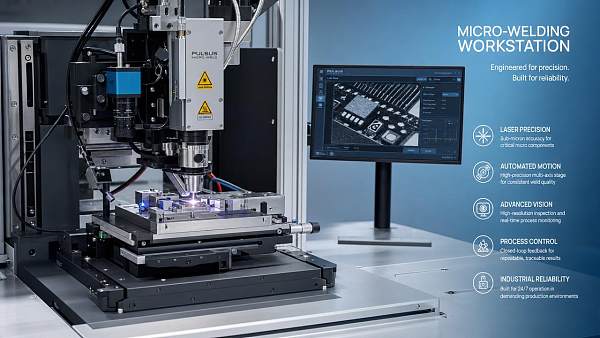
In high-precision manufacturing, a micro-welding workstation often sits at the intersection of automation, metrology, process repeatability, and regulatory control. Buyers in electronics, medical device assembly, aerospace subcomponents, and advanced instrumentation usually face the same question: should they source a standard platform with minor options, or engage a micro-welding workstation OEM for deeper customization?
The answer depends on three procurement realities. First, quoted lead time may differ sharply from actual shipment readiness. Second, engineering changes can introduce validation, supply chain, and service risk. Third, custom scope can create strategic value only when it is clearly bounded by technical feasibility, documentation discipline, and long-term maintainability.
Why procurement teams evaluate micro-welding workstation OEMs differently

A micro-welding workstation OEM is not simply a machine builder. In many sourcing projects, the OEM is also a fixture designer, motion integrator, controls partner, process documentation source, and after-sales support provider. That broader role affects total project exposure over 12 to 36 months, not just the purchase order value.
For procurement, the core evaluation framework usually includes 4 dimensions: delivery realism, technical risk, customization depth, and lifecycle support. In highly regulated sectors, a fifth dimension appears as documentation quality, including FAT records, calibration references, change logs, and traceability of critical subassemblies.
Where lead time pressure becomes expensive
A quoted 6-week build may look competitive, but workstation projects often rely on 3 to 5 external dependency layers. These can include laser source availability, vision module lead times, custom tooling manufacture, PLC programming, and validation fixture completion. If one dependency slips by 10 to 14 days, the full schedule can move by 3 to 4 weeks.
This matters most when the workstation is tied to NPI launches, pilot lines, or dual-site transfer plans. A late micro-welding workstation OEM delivery can delay process qualification, operator training, and line balancing. In many factories, that means a missed output ramp during the first 30 to 60 days after installation.
Why risk assessment must go beyond price and spec sheets
Price comparisons often hide uneven risk ownership. One OEM may include process trial support, while another limits scope to machine assembly only. One may validate motion repeatability to a defined tolerance window, such as ±5 µm to ±20 µm depending on application, while another leaves process capability confirmation to the buyer.
For G-UPE-aligned buyers, this distinction is critical. Precision procurement depends on verifiable engineering data, standards alignment, and predictable execution. An OEM that cannot clearly map components, interfaces, and acceptance criteria introduces hidden costs during installation, rework, and future audits.
Common procurement warning signs
- Quoted lead times without a bill-of-material critical path
- Custom promises that are not backed by interface drawings or revision control
- Undefined FAT or SAT acceptance thresholds
- Limited spare parts strategy for the first 12 months
- Single-source dependence for optics, welding heads, or motion controllers
Lead time comparison: what buyers should verify before issuing a PO
Lead time in a micro-welding workstation OEM project should be analyzed in stages rather than as one number. A realistic procurement review separates pre-engineering, mechanical fabrication, controls integration, process testing, and shipment release. In practice, total project duration often falls into a 7 to 20 week range depending on standardization level and custom content.
The table below shows a practical comparison framework procurement teams can use during RFQ review. It helps distinguish between standard platform delivery, configured delivery, and full custom execution.
The key takeaway is that shorter quoted lead time is only meaningful when milestones are defined. Procurement should ask for at least 5 schedule gates: design freeze, long-lead component release, assembly complete, FAT complete, and shipment readiness. Without those checkpoints, schedule promises remain difficult to audit.
How to separate nominal lead time from reliable lead time
Reliable lead time is the date range an OEM can consistently achieve under realistic sourcing conditions. Buyers should request three specific details: current supplier dependency map, average engineering review cycle, and standard response time for design changes. A 2-day ECO response is very different from a 7-day review queue when timelines are tight.
It is also worth asking whether the OEM pre-buffers critical modules. If laser heads, stages, shielding components, or machine vision parts are purchased only after PO release, the risk of variance rises materially. In many projects, just 2 long-lead items account for more than 40% of schedule uncertainty.
Checklist for RFQ and vendor clarification
- Request a milestone-based schedule, not a single promised date.
- Confirm which components are standard, configured, or engineered from scratch.
- Ask whether software, vision, and welding recipes are included in the base timeline.
- Define FAT inputs, sample quantity, and pass criteria before order release.
- Verify spare parts availability for the first 6 to 12 months.
Risk comparison: technical, supply chain, and compliance exposure
Every micro-welding workstation OEM project carries risk, but the distribution of risk differs by industry and application. In electronics, process stability and thermal control may dominate. In medical manufacturing, traceability and validation records can become the gating issue. In aerospace-related assembly, repeatability, material compatibility, and operator-proofing are often prioritized.
A disciplined procurement team should classify risk into at least 3 buckets: technical risk, sourcing risk, and compliance risk. This structure supports faster vendor comparison and prevents engineering concerns from being buried inside commercial negotiation.
Risk matrix for OEM selection
The following matrix can help buyers evaluate a micro-welding workstation OEM in a practical way during technical-commercial review meetings.
For many buyers, compliance risk is underestimated until late in the project. A workstation can be mechanically complete yet still unusable if operating instructions, software revision records, calibration references, or validation support packages are incomplete. That issue is especially serious when installation must align with ISO, SEMI, IEEE, or internal quality system requirements.
Questions that reveal real execution maturity
Strong OEMs usually answer risk questions with process structure rather than marketing language. Procurement should listen for concrete details such as ECN control, sample-run methodology, gauge correlation, alarm hierarchy, and service escalation timing. A support commitment of 24 to 48 hours for remote response is materially different from undefined “best effort” support.
Another useful test is to ask how the OEM handles post-FAT change requests. If any scope shift forces a full design restart, the project is inherently fragile. More mature suppliers can identify which changes affect software only, which affect fixture tooling, and which require a new validation sequence.
Procurement-friendly risk controls
- Freeze functional requirements before mechanical release.
- Use a 3-level document set: technical specification, acceptance plan, spare parts list.
- Separate mandatory compliance items from optional enhancements.
- Define a controlled process for revision changes after FAT.
- Link payment milestones to deliverables, not only calendar dates.
Custom scope: how far a micro-welding workstation OEM should go
Customization is valuable when it improves process capability, ergonomics, throughput, or traceability. It becomes risky when buyers request deep changes without defining the operational reason. A capable micro-welding workstation OEM should help procurement distinguish between high-value customization and low-value complexity.
In many projects, custom scope falls into 4 practical layers: fixturing, motion and positioning, sensing and inspection, and controls or data integration. Each layer affects cost, validation effort, and lead time differently. A custom fixture may add 1 to 2 weeks, while a new closed-loop vision architecture could add 4 to 6 weeks plus software testing.
High-value vs high-risk customization
The most effective customizations are usually those closest to the application itself. These include part-specific nests, shielding gas routing, programmable weld parameter recipes, and recipe lockout by part number. Such features often improve repeatability and reduce operator error without forcing a complete platform redesign.
Higher-risk customizations include proprietary software logic without validation boundaries, unusual enclosure geometry, heavily modified motion systems, or one-off interfaces that complicate future maintenance. If a custom request cannot be supported by documented spare parts and service procedures for at least 3 to 5 years, procurement should review it carefully.
A practical scope review model
Before approving a customized micro-welding workstation OEM proposal, buyers can use a 4-question filter:
- Does the change improve measurable output, such as cycle time, yield, or alignment accuracy?
- Can the OEM document the change with drawings, software revisions, and acceptance criteria?
- Does the customization add single-source dependency or unusual service burden?
- Will the modified system remain supportable across future product revisions?
If the answer to the first two questions is yes and the last two are controlled, the custom scope is usually justified. If not, a configured standard platform may be the better choice, especially for first-phase deployment or pilot volume below 5,000 units per month.
Typical customization areas buyers should define early
- Part size range, fixture exchange time, and operator access envelope
- Required alignment accuracy, vision resolution, and positioning repeatability
- Data capture needs such as weld energy, timestamps, barcode linkage, or pass/fail logs
- Safety interlock requirements and local electrical compliance expectations
- Maintenance intervals for consumables, optics cleaning, and preventive service
How G-UPE-style buyers can build a stronger OEM selection process
Organizations operating at the frontier of accuracy need a sourcing process that combines technical benchmarking with commercial discipline. For that reason, a micro-welding workstation OEM should not be selected only through quote comparison. The better approach is a structured review that aligns engineering feasibility, standards awareness, and sourcing resilience.
A practical selection process often runs through 5 steps over 3 to 8 weeks: requirement capture, RFQ issue, technical clarification, trial or FAT planning, and contract finalization. This sequence reduces ambiguity early, when changes are cheaper and less disruptive.
Recommended procurement workflow
- Define process-critical requirements, including tolerance, part material, and expected throughput.
- Separate must-have specifications from preferred options before sending the RFQ.
- Ask each micro-welding workstation OEM to map lead time by milestone and dependency.
- Review risk controls for documentation, spare parts, and post-installation support.
- Finalize acceptance criteria before PO release and before any engineering starts.
What a stronger supplier response should include
A strong OEM response usually includes a scope matrix, exclusions list, preliminary layout, timeline assumptions, and a clear line between standard and custom content. Buyers should also look for preventive service recommendations, suggested spare inventory, and realistic training plans for operators and maintenance technicians.
This is where multidisciplinary intelligence becomes useful. Engineering-centered procurement benefits from comparing machine architecture, metrology readiness, fluid or shielding gas control, and component purity where relevant. Cross-functional visibility often reveals whether an OEM can support precision manufacturing beyond the initial machine build.
Final decision criteria for procurement teams
The best micro-welding workstation OEM is rarely the one with the lowest headline quote. More often, it is the supplier that can prove schedule realism, manage change without confusion, and customize only where measurable process value exists. For procurement teams, that means balancing 3 outcomes: on-time delivery, controlled risk, and fit-for-purpose engineering scope.
When buyers evaluate OEMs using milestone-based lead times, documented risk controls, and disciplined customization boundaries, sourcing decisions become easier to defend internally. They also become more durable over the full equipment lifecycle, from FAT through ramp-up and service support.
If you are reviewing a micro-welding workstation OEM for a high-precision application, now is the right time to formalize requirements, compare vendors on execution quality, and validate where customization truly adds value. Contact us to discuss your application, request a tailored evaluation framework, or explore more precision-focused sourcing solutions.
Recent Articles
 2026.05.21Fiber Optic Alignment System: Common Setup Errors That Delay ThroughputFiber optic alignment system setup errors can quietly cut throughput. Discover the most common causes of drift, unstable coupling, and rework, plus practical fixes to restore speed and repeatability.
 2026.05.21Piezo Actuator Hysteresis Data: How Much Drift Is Acceptable in Practice?Piezo actuator hysteresis data explained: learn how much drift is acceptable in practice, when it affects precision, and how to reduce risk with smarter control choices.
 2026.05.21Laser Interferometer Measurement Range: Choosing the Right Span for MetrologyLaser interferometer measurement range affects accuracy, stability, and integration. Learn how to choose the right span for reliable metrology, stronger benchmarking, and better calibration results.
 2026.05.21Nano-Fabrication Tools Wholesale: Cost Drivers That Change Quote QualityNano-fabrication tools wholesale pricing varies for reasons beyond unit cost. Discover the key cost drivers behind quote quality, supplier reliability, and lower long-term risk.
 2026.05.21Hexapod Payload and Stiffness Metrics: How to Balance Load and StabilityHexapod payload and stiffness metrics explained: learn how to balance load capacity, rigidity, and motion stability for precise, reliable performance in advanced automation and metrology.
 2026.05.212026 Nano-Positioning Resolution Benchmarks: What Numbers MatterExplore 2026 nano-positioning resolution (nm) benchmarks that truly matter—drift, repeatability, settling, bandwidth, and stability—to compare systems with confidence and reduce integration risk.
 2026.05.21XYZ Stage Travel Repeatability: Spec Limits That Affect Inspection Yieldxyz stage travel repeatability directly impacts inspection yield. Learn which spec limits matter most for motion, load, and thermal conditions to reduce false rejects.
 2026.05.21Capacitive Sensor Non-Linearity Data: When Does It Break Accuracy?Capacitive sensor non-linearity data explained: learn when curve error breaks accuracy, how to compare systems, and how to reduce measurement risk in precision applications.
 2026.05.21Cleanroom Manual Manipulator OEM: What Impacts Operator Precision Most?Cleanroom manual manipulator OEM insights: discover what most affects operator precision, from balance and drag to ergonomics and visibility, to reduce errors and improve cleanroom performance.
 2026.05.21Robotic Cell Micro-Assembly OEM: Key Tolerance Checks Before ScalingRobotic cell micro-assembly OEM success depends on proven tolerance checks. Learn the key scale-up validations that protect yield, traceability, and production stability.
 2026.05.21Global Clean Energy Generation Surpasses Coal; Laser Interferometry Demand Rises for Green Hydrogen ElectrolyzersLaser interferometry demand surges as global clean energy overtakes coal—key for EU green hydrogen electrolyzer certification & precision QA.
 2026.05.21SpaceX Files IPO; Demand Rises for Piezo Valves & Nano-Positioning StagesPiezo valves & nano-positioning stages surge in demand as SpaceX files IPO—NASA-compliant suppliers gain strategic advantage in aerospace supply chains.
 2026.05.21Hong Kong Q1 GDP Up 5.9%; CMM Systems Transit Efficiency RisesCMM Systems transit efficiency surges as Hong Kong Q1 GDP rises 5.9% — faster clearance, bonded warehousing & CEPA advantages boost precision metrology exports.
 2026.05.21Iran Plans Strait of Hormuz Toll, Disrupting Probe Stations Exports to Middle EastIran's Hormuz toll plan disrupts Probe Stations exports to Middle East—learn how dual-use compliance, calibration certs & Incoterms shifts impact your GCC shipments.
 2026.05.21WTO Cuts 2026 Global Trade Growth to 1.9%; MFC Export Pricing Pressure RisesMFC export pricing pressure rises as WTO cuts 2026 global trade growth to 1.9%. Discover strategic responses for exporters, suppliers & service providers.
 2026.05.21UK-China Export Control Working Group Holds Second Meeting in LondonUK-China Export Control Working Group focuses on etching precursors & photoresist chemicals — critical for semiconductor exports. Act now to meet UKCA/REACH self-assessment deadline.
 2026.05.21UA Breaks New Ground in 3D Imaging for Reflective/Non-Reflective ObjectsUA's new 3D imaging breakthrough enables millisecond-scale capture of reflective & non-reflective objects—key for semiconductor, aerospace, and metrology suppliers seeking NIST-traceable, multimodal inspection readiness.
 2026.05.21Australia Develops Novel Anhydrous Proton-Conducting Ultrathin FilmAustralia's novel anhydrous proton-conducting ultrathin film drives demand for ultra-high-purity hydrogen (≥99.9999%) and sub-ppb impurity monitoring—key for PEMFCs, electronics-grade gas, and global OEM compliance.
 2026.05.21NVIDIA Q1 Data Center Revenue Surges to $7.52B, Accelerating ALD/CVD Skids DemandALD/CVD skids demand surges as NVIDIA Q1 data center revenue hits $7.52B — urgent insights for semiconductor equipment integrators, fab procurement, and Chinese skid suppliers.
 2026.05.21South Korea Extends Fuel Tax Cut to July 31, 2026South Korea extends fuel tax cut to July 31, 2026 — vital relief for precision actuator exporters, logistics firms & ASEAN/Middle East supply chains. Act now.
 2026.05.20Optical Tweezers Factory Trends to Watch in 2026Optical tweezers factory trends to watch in 2026: explore automation, calibration, integration, and supply resilience to identify reliable, future-ready manufacturing partners.
 2026.05.20Nano-Indentation System Factory Evaluation TipsNano-indentation system factory evaluation tips for enterprise buyers: compare metrology, calibration, software, service, and total cost to reduce risk and choose a reliable supplier.
 2026.05.20PZT Driver Manufacturer OEM: Reliability QuestionsPZT driver manufacturer OEM selection starts with reliability, not just specs. Learn the key questions, test points, and risk checks for precision, medical, and harsh-use systems.
 2026.05.20High Precision Goniometer Wholesale ComparisonHigh precision goniometer wholesale comparison guide: evaluate accuracy, repeatability, supplier stability, and total value to choose reliable partners for precision motion sourcing.
 2026.05.20Vibration Isolation Table Wholesale Buying RisksVibration isolation table wholesale buying risks can undermine precision, compliance, and delivery. Learn how to verify suppliers, performance, and batch reliability before bulk orders.
 2026.05.20Micro-Injection System Factory: What to CompareMicro-injection system factory comparison starts with precision, material compatibility, metrology, and compliance—not price alone. Learn how to reduce sourcing risk and choose the right partner.
 2026.05.20Micro-Fluidic Probe Factory Selection GuideMicro-fluidic probe factory selection starts with the right checklist. Learn how to compare quality, flow performance, cleanliness, and scalability to choose a reliable supplier.
 2026.05.20Micro-Welding Workstation OEM Cost FactorsMicro-welding workstation OEM cost factors explained for finance buyers: compare precision, tooling, compliance, automation, and lifecycle ROI to make smarter, lower-risk investment decisions.
 2026.05.20XYZ Translation Stage OEM: Key Accuracy ChecksXYZ translation stage OEM selection starts with the right accuracy checks. Learn how to verify repeatability, drift, straightness, and traceable calibration for real-world precision performance.
 2026.05.20How to Choose a Vacuum Compatible Nano-StageVacuum compatible nano-stage selection starts with verified vacuum stability, low outgassing, and drift control. Learn how to compare stage types, reduce integration risk, and choose with confidence.
 2026.05.2071% Rural Water Supply Scaled Up; Laser Interferometry Calibration Demand RisesLaser Interferometry calibration demand surges as 71% of China’s rural population gains access to large-scale water supply—key for flow meters, pressure sensors & ISO/IEC 17025 compliance.
 2026.05.20State Council Approves Urban Renewal '15th Five-Year' Plan, Boosting Demand for X-ray Metrology in Building Material QAX-ray metrology surges as China's State Council approves Urban Renewal '15th Five-Year' Plan—key for building material QA in Southeast Asia & Middle East.
 2026.05.20MIIT Advances Smart CNC Assembly Lines, CMM Delivery Cut by 20%MIIT advances smart CNC assembly lines—CMM delivery cut by 20%. Discover how digital twin tech and error flow modeling boost speed, precision & global competitiveness.
 2026.05.20Tmall Health Launches 'Supplements Safety Alliance' with Purity Watch Extension to Electronic GasesTmall Health's Supplements Safety Alliance extends Purity Watch to electronic gases—boosting ASEAN CSDR compliance for nitrogen, argon & medical device exporters. Learn how.























FILTER_CORE
REF_NO: 0042
Editors' Picks
- 00
0000-00
Fiber Optic Alignment System: Common Setup Errors That Delay Throughput - 00
0000-00
Piezo Actuator Hysteresis Data: How Much Drift Is Acceptable in Practice? - 00
0000-00
Laser Interferometer Measurement Range: Choosing the Right Span for Metrology - 00
0000-00
Nano-Fabrication Tools Wholesale: Cost Drivers That Change Quote Quality