
2026 Hainan (Sanya) AI Tech Conference Opens
On May 19, 2026, the 2026 Hainan (Sanya) Artificial Intelligence Technology Conference opened in Sanya, marking a pivotal moment for China’s precision motion control sector. The event signals growing institutional emphasis on AI-integrated hardware innovation—particularly at micro- and nanoscales—amid intensifying global competition in semiconductor equipment, advanced manufacturing, and scientific instrumentation.
Event Overview
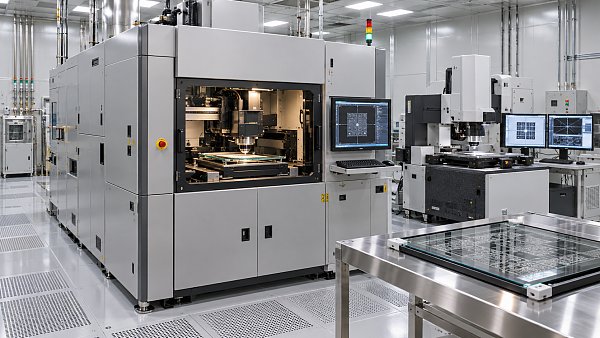
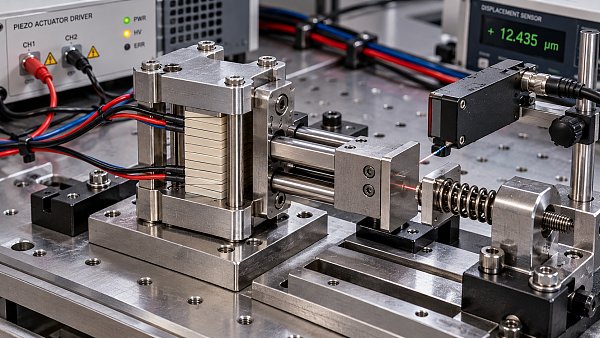
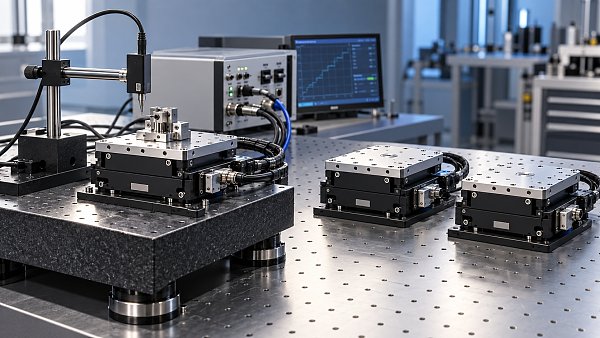
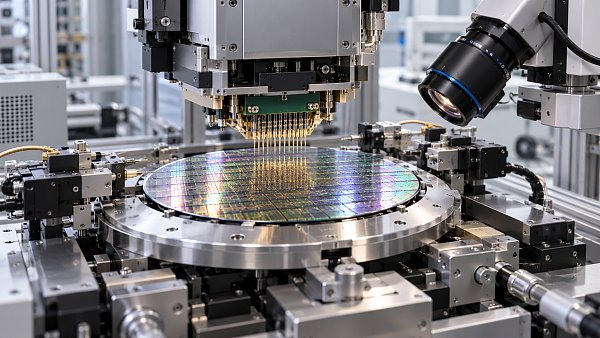
The 2026 Hainan (Sanya) Artificial Intelligence Technology Conference commenced on May 19, 2026. Its main forum featured a dedicated sub-track titled ‘AI for Precision Motion’, where domestic breakthroughs in AI-driven micro-actuators and nano-positioning stages were publicly demonstrated. Specifically, real-world test results showed repeatable positioning accuracy of ±0.12 µm for domestically developed micro-actuators deployed in dynamic compensation for semiconductor probe stations, and sub-nanometer trajectory prediction capability for nano-positioning stages. These results were presented as verified performance data—not projections or lab-only benchmarks.

Industries Affected
Direct Export-Oriented Enterprises
Export-focused manufacturers of high-precision motion systems face immediate implications. The demonstrated performance metrics provide tangible technical evidence to support market entry into mid-tier semiconductor equipment suppliers and academic research labs in Southeast Asia, Europe, and North America—where cost-sensitive buyers increasingly weigh functional parity over brand legacy. However, export compliance (e.g., EAR controls on AI-enabled dual-use hardware) and third-party validation requirements remain unchanged; the data alone does not override existing licensing or certification pathways.
Raw Material Procurement Firms
Firms sourcing piezoelectric ceramics, ultra-low-noise analog ICs, or single-crystal sapphire substrates may observe subtle shifts in demand profiles. The emphasis on AI-integrated closed-loop control implies higher specification thresholds—for instance, tighter tolerances on sensor noise floor and thermal drift in position feedback components. While volume increases are not yet evident, procurement strategies should begin monitoring design win patterns in AI-augmented motion modules, especially those tied to domestic R&D subsidies.
Contract Manufacturing & OEM Producers
OEMs producing motion subsystems for probe cards, wafer inspection tools, or atomic force microscopy (AFM) platforms now have a reference-grade benchmark for AI-coordinated actuation. The ±0.12 µm repeatability figure sets a new de facto threshold for qualification in applications requiring real-time error compensation. Manufacturers must assess whether their current calibration workflows, firmware update pipelines, and thermal management designs can accommodate similar AI inference latency and edge compute integration—without relying on external GPUs or cloud dependency.
Supply Chain Service Providers
Logistics, customs brokerage, and technical documentation service providers supporting precision motion exports will need updated classification guidance. AI-enabled micro-actuators with embedded inference engines (e.g., on-device trajectory prediction) may fall under emerging regulatory categories in key markets—notably EU’s AI Act Annex III for high-risk AI systems applied to industrial machinery. Documentation must now explicitly distinguish between ‘AI-assisted’ (human-in-the-loop) and ‘AI-autonomous’ (closed-loop predictive) functionality to avoid misclassification during customs clearance or CE conformity assessment.
Key Considerations and Recommended Actions
Evaluate Technical Narrative Alignment
Enterprises marketing precision motion products should audit whether their current technical storytelling emphasizes reliability and serviceability—or whether it aligns with the newly validated narrative of AI-native adaptability. Where applicable, integrating traceable performance claims (e.g., ‘validated to ±0.12 µm under dynamic probe station load’) into datasheets and white papers strengthens credibility with engineering buyers.
Review Edge Compute Readiness
Manufacturers deploying AI-enhanced motion control must verify whether their existing hardware platforms support deterministic low-latency inference (<50 µs), real-time OS compatibility, and secure model update mechanisms. The Sanya demonstration used on-chip neural accelerators—not external servers—highlighting that edge deployment is now operationally viable, not merely conceptual.
Monitor Certification Pathway Developments
Standards bodies—including ISO/TC 184/SC 5 (Industrial automation systems) and IEC/TC 65 (Industrial-process measurement and control)—are expected to initiate working groups on AI-integrated motion system validation protocols within Q3 2026. Early engagement with national standardization institutes (e.g., SAC/TC 159 in China) will help shape test methodologies before formal adoption.
Editorial Perspective / Industry Observation
Observably, this event is less about announcing a new product category and more about consolidating a credible technical foundation for China’s value proposition in high-end motion control. Analysis shows the focus on measurable, application-specific outcomes—rather than raw AI model specs—reflects a maturing industry mindset: one shifting from algorithmic novelty to system-level robustness. From an industry perspective, the real significance lies not in beating prior benchmarks, but in demonstrating reproducible integration across sensing, actuation, and AI inference under real semiconductor fab conditions. That shift in emphasis better positions domestic suppliers to compete on implementation depth—not just price.
Conclusion
This milestone does not signal an immediate disruption of incumbent motion control supply chains. Rather, it marks a calibrated inflection point: where AI ceases to be a feature tagline and becomes a verifiable enabler of precision under operational stress. For global stakeholders, the rational interpretation is not ‘China has overtaken incumbents’, but ‘China now offers a technically grounded alternative path—one validated in contextually relevant use cases.’ Continued progress will hinge less on theoretical accuracy and more on certification velocity, field reliability, and interoperability with established equipment ecosystems.
Source Attribution
Official conference proceedings, Ministry of Industry and Information Technology (MIIT) press release (May 19, 2026); technical validation reports published by the National Metrology Institute of China (NIM), Beijing, dated May 18, 2026. Note: Long-term adoption trends, export license approvals for AI-integrated motion modules, and international standards alignment remain subject to ongoing observation.
Taglist:
Recent Articles
 2026.10.27India Hosts 61st CIML Meeting for First Time, Advances International Metrology AlignmentIndia hosts the 61st CIML meeting, highlighting OIML-CS status and legal metrology reforms. Explore what international alignment could mean for instrument certification and equipment trade.
 2026.10.27When should you call emergency medical services instead of driving?When should you call emergency medical services instead of driving? Learn the critical warning signs, why an ambulance can be safer, and what to do while help arrives.
 2026.10.26Mycronic Wins $12–14 Million Photomask System Order from Asian CustomerMycronic secures a $12–14 million photomask system order from an existing Asian customer. Explore the writing and measurement systems and their planned 2027 deliveries.
 2026.10.26Piezoelectric Actuator Selection: Balancing Stroke, Force, and BandwidthSelect the right piezoelectric actuator by balancing loaded stroke, force, and bandwidth. Explore key design checks to improve precision and avoid costly sizing mistakes.
 2026.10.26Layer Deposition Equipment: ALD vs. CVD for High-Aspect-Ratio FeaturesCompare layer deposition equipment for high-aspect-ratio features. Explore ALD vs. CVD conformality, throughput, and costs to choose the right system with confidence.
 2026.10.26Checking repeatability in bulk orders of encoder-feedback nano stagesCompare encoder feedback nano-positioning stage wholesale offers using repeatability tests, lot acceptance criteria, and traceable reports. Learn how to reduce risk and buy with confidence.
 2026.10.25Sidea Semiconductor Granted Patent for Probe Card Alignment CalibrationSidea Semiconductor's probe card alignment calibration patent aims for precise, low-cost automation without a calibration target. Explore its potential for semiconductor testing.
 2026.10.25How to assess long-term drift in a high-stability laser interferometerAssess long-term drift in a high stability laser interferometer with reliable reference tests, environmental tracking, and clear acceptance limits. Learn how to validate lasting measurement accuracy.
 2026.10.24SIA Submits Comments to EPA on Draft Trans-DCE Risk AssessmentSIA backs EPA’s draft Trans-DCE risk assessment for semiconductor manufacturing. Explore what its comments could mean for continued lawful use, supply stability, and production planning.
 2026.10.24How to size plastic extrusion machines for your target outputSize plasticextrusionmachines for your target output with practical throughput calculations, resin checks, and line-capacity tips. Avoid costly sizing mistakes and choose with confidence.
 2026.10.23Leadmicro Showcases Full ALD, CVD and PVD Lineup at Bay Area Semiconductor ExpoExplore Leadmicro’s ALD, CVD and PVD lineup at the Bay Area Semiconductor Expo, including magnetron sputtering solutions and key checks for smarter equipment procurement.
 2026.10.23How much does closed-loop control add to the price of PZT drivers?Understand PZT drivers price increases for closed-loop control. Compare sensors, electronics, and installation costs to make a smarter purchasing decision.
 2026.10.22Leadmicro Adds PVD Products, Expanding ALD, CVD and PVD CoverageLeadmicro expands ALD, CVD and PVD coverage with new iMagtron PVD products and a ruthenium ALD process. Explore what these advances mean for thin-film deposition and equipment buyers.
 2026.10.22What limits commercial adoption of micro-robotics in Latin America?Micro-robotics Latin America: What limits commercial adoption? Explore costs, integration hurdles, and service gaps—and learn how to reduce investment risks.
 2026.10.21NTT, Furukawa Electric and Partners Launch Photonics Mass-Production R&DExplore NTT and Furukawa Electric's photonics mass-production R&D with partners, targeting scalable chip manufacturing for energy-efficient AI computing and higher-bandwidth data centers.
 2026.10.21What ultra-precision engineering case studies reveal about thermal driftExplore ultra-precision engineering project cases to uncover hidden thermal drift, assess compensation, and learn what evidence to request before choosing a precision system.
 2026.10.20BASF Signs Letter of Intent with Taiwan Ministry to Expand Guanyin Semiconductor MaterialsBASF’s planned Guanyin semiconductor materials expansion targets sub-2nm manufacturing. Explore what its letter of intent with Taiwan’s Ministry of Economic Affairs could mean for chipmakers.
 2026.10.20How to estimate medical technology costs beyond the purchase priceEstimate medical technology cost beyond the purchase price. Uncover hidden expenses, compare lifecycle costs, and use this guide to make smarter procurement decisions.
 2026.10.1960 Minutes: Iran War Drives Global Helium Shortage, Threatening Semiconductor SupplyIran war-linked global helium shortage reportedly threatens semiconductor supply. Explore chipmaking risks and practical steps to verify inventories, shipments and supplier commitments.
 2026.10.19How to specify zinc coating weight for prepainted GI steel coilsSpecify zinc coating weight for prepainted gi steel coils with confidence. Learn how to define Z275, compare standards, and verify compliance to avoid costly purchasing mistakes.
 2026.10.18How linear motor stage settling time affects inspection throughputOptimize your linear motor stage for inspection systems: learn how settling time, vibration, and exposure timing affect throughput—and boost inspection output without sacrificing accuracy.
 2026.10.17Choosing a microfluidic probe manufacturer for stable flow confinementChoose a micro fluidic probe manufacturer with proven flow confinement. Compare geometry, flow control, validation, and repeatability to find the right fit for your application.
 2026.10.16What does measurement accuracy specified as % of full scale mean?Understand measurement specification accuracy as % of full scale. Learn to calculate error, compare sensor ranges, and choose the right instrument with confidence.
 2026.10.15How temperature affects high-accuracy dimensional analysis systemsDiscover how temperature affects high accuracy dimensional analysis systems, and learn practical ways to control thermal drift, improve compensation, and verify measurement accuracy.
 2026.10.14How air pressure affects precision pneumatic actuator repeatabilityPrecision Pneumatic actuator repeatability depends on more than supply pressure. Discover how pressure, friction, and flow affect positioning—and how to improve consistency in your application.
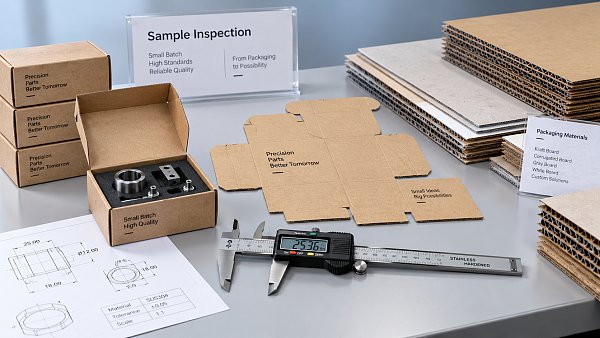
 2026.10.13How to choose a packaging manufacturer for small production runsChoose a packaging manufacturer for small production runs with confidence. Discover how to compare costs, verify samples, and secure quality packaging without excess inventory.
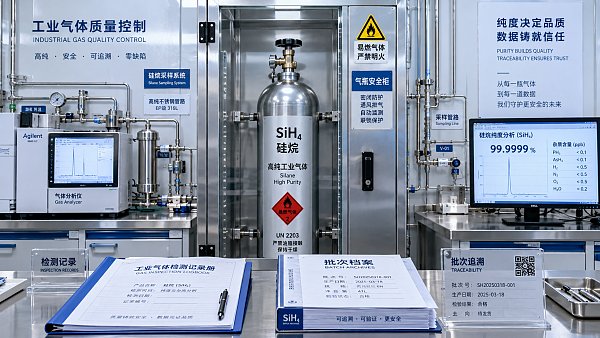
 2026.10.12Low-Impurity Silane Gas: Setting Acceptance Limits Beyond Total PurityEvaluate low impurity silane gas beyond total purity. Learn how to set contaminant limits, verify testing, and qualify suppliers for more reliable deposition.
 2026.10.12SEMI-Compliant Silane Gas: Which Specifications and Test Records Should You Check?SEMI compliant silane gas: Discover the standards, impurity limits, test records, and cylinder traceability checks that support confident purchasing and safer release decisions.
 2026.10.12Ultra-Pure Silane Gas Price: Comparing Quotes Beyond Cost per CylinderCompare ultra-pure silane gas price beyond cylinder costs. Learn how purity, usable quantity, freight, and return terms shape true value—and make a smarter purchasing decision.
 2026.10.12Moisture-Controlled Silane Gas: Tracing Water Contamination in Delivery LinesKeep moisture controlled silane gas reliable. Learn how to validate readings, trace water contamination in delivery lines, and verify recovery with safety-focused diagnostic insights.
 2026.10.12What Does 99.99999% Silane Gas Mean? Understanding 7N Purity and Detection LimitsEvaluate 99.99999 silane gas with confidence. Discover what 7N purity means, how detection limits affect results, and which supplier data to check before qualification.
 2026.10.12Ultra-Pure Silane Gas for Thin Films: Matching Gas Grade to Film RequirementsChoose ultra-pure silane gas for thin films with confidence. Learn to match impurity limits, supplier evidence, and delivery conditions to film requirements while avoiding unnecessary costs.
 2026.10.12Ultra-Pure Silane Gas for PECVD: Linking Impurities to Film DefectsQualify ultra-pure silane gas for PECVD with confidence. Learn how impurities affect film defects and use gas analysis, delivery checks, and film testing to set reliable acceptance limits.
 2026.10.12Qualifying an Ultra-Pure Silane Gas Manufacturer: Batch Consistency and TraceabilityQualify an ultra-pure silane gas manufacturer with confidence. Learn how to verify batch consistency, analytical results, and cylinder traceability to reduce sourcing risks.




















FILTER_CORE
REF_NO: 0042
Editors' Picks
- 00
0000-00
India Hosts 61st CIML Meeting for First Time, Advances International Metrology Alignment - 00
0000-00
When should you call emergency medical services instead of driving? - 00
0000-00
Mycronic Wins $12–14 Million Photomask System Order from Asian Customer - 00
0000-00
Piezoelectric Actuator Selection: Balancing Stroke, Force, and Bandwidth