How to Evaluate a Cleanroom Manual Manipulators Supplier
Choosing a cleanroom manual manipulators supplier involves more than comparing unit cost, shipping dates, or catalog breadth. In controlled environments, every material surface, joint, seal, and motion path can affect contamination risk, operator control, and process stability.
That is why supplier evaluation has become a technical sourcing exercise. In semiconductor handling, sterile life science work, precision assembly, and aerospace subcomponent preparation, a weak fit can create hidden losses long after installation.
A reliable review process should connect mechanical performance with compliance evidence, service capability, and lifecycle discipline. For organizations operating near the frontier of accuracy, this is the difference between acceptable hardware and dependable process infrastructure.
Why Supplier Selection Matters in Cleanroom Motion Systems

Manual manipulators are often used where human intervention must remain precise without compromising a controlled space. They may support sample transfer, inspection, fine positioning, tool loading, or handling of delicate parts.
The supplier therefore influences more than equipment availability. The supplier affects particulate behavior, ergonomic repeatability, maintenance demands, and the quality of documentation available for audits or validation files.
This is especially relevant in sectors observed by Global Ultra-Precision Engineering, where micro-manipulation, nano-positioning, metrology, and ultra-high-purity process environments intersect. A manipulator that performs well on paper may still fail in a real cleanroom workflow.
What a Cleanroom Manual Manipulators Supplier Is Really Providing
A cleanroom manual manipulators supplier is not simply selling an arm, stage, or handling fixture. The actual deliverable is controlled manual motion under strict environmental and operational limits.
That includes material compatibility, low-outgassing performance, smooth kinematics, robust sealing strategy, and predictable service support. It also includes the supplier’s ability to explain where the system should and should not be used.
In practice, evaluation should cover three layers at once: the product itself, the quality system behind it, and the supplier’s understanding of cleanroom application risk.
Technical Fit Should Come Before Commercial Comparison
Many sourcing mistakes begin when price comparisons happen before the motion requirement is fully defined. A cleanroom manual manipulators supplier should first be assessed against the operating envelope and contamination limits of the task.
Motion and load characteristics
Check travel range, axis arrangement, backlash behavior, stiffness, reach, hand force, and positioning repeatability. Manual systems can appear simple, but unstable mechanics quickly show up in operator fatigue and inconsistent placement.
Material and surface strategy
Ask which metals, coatings, polymers, lubricants, and fastener treatments are used. Surfaces should be easy to clean, resistant to shedding, and appropriate for the cleaning agents used in the intended facility.
Cleanroom suitability evidence
A capable cleanroom manual manipulators supplier should provide test data, material declarations, or application records tied to ISO cleanroom expectations. Marketing claims are not enough when environmental control is part of process qualification.
Questions That Expose Supplier Depth
The strongest suppliers answer detailed questions clearly and without excessive sales language. Weak suppliers often speak broadly about quality but struggle when asked for engineering specifics.
- Which cleanroom classes or comparable use cases has the manipulator supported?
- What wear points generate particles over time, and how are they controlled?
- Are lubrication choices documented for contamination-sensitive environments?
- Can components be disassembled for cleaning without losing alignment?
- What are the recommended maintenance intervals under real use conditions?
- How are replacement parts managed across product revisions?
- What quality certifications and traceability controls support the build process?
These questions help distinguish a catalog vendor from a cleanroom manual manipulators supplier with genuine application knowledge.
Compliance, Documentation, and Traceability
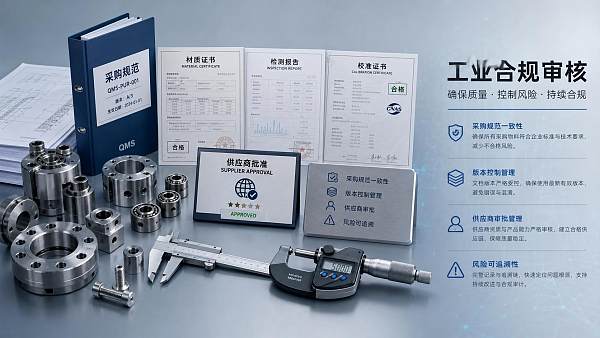
In regulated or audit-heavy industries, missing documents can delay approval even when the hardware is acceptable. Documentation should be treated as part of the product, not an afterthought.
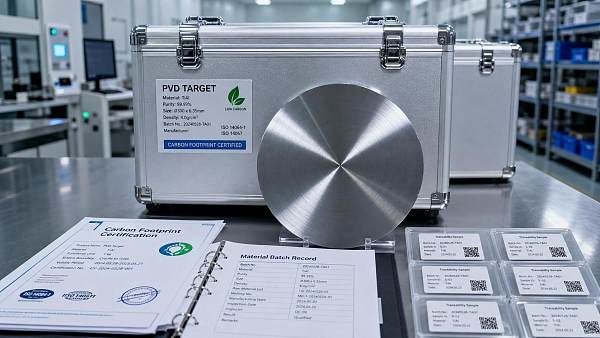
Useful evidence may include material certificates, cleaning guidance, assembly records, change control practices, dimensional reports, and any available contamination-related test results. For some programs, packaging validation also matters.
This aligns with the G-UPE approach to benchmarking: decisions improve when technical claims are traceable to standards, records, and repeatable data rather than broad commercial positioning.
A simple evaluation snapshot
Where Application Context Changes the Decision
Not every cleanroom manual manipulators supplier is equally suited to every environment. The right choice depends heavily on how the manipulator is used and what failure would mean in that setting.
Semiconductor and electronics
Here, particle generation, electrostatic behavior, and compatibility with ultra-clean process areas are central. Even minor motion instability can affect alignment-sensitive handling or inspection tasks.
Medical and life science production
Cleaning validation, smooth surfaces, and documented material choices carry extra weight. A cleanroom manual manipulators supplier should understand how sanitary requirements differ from standard industrial handling needs.
Aerospace and high-reliability assembly
Repeatable manual positioning, long service life, and traceable build records often matter more than a low initial purchase price. Small deviations can become expensive during downstream verification.
Commercial Signals That Deserve Attention
Once technical fit is established, the commercial side becomes easier to interpret. A strong cleanroom manual manipulators supplier usually shows consistency across quoting, engineering communication, and post-sale support planning.
- Lead times are specific and tied to component availability.
- Revision history is controlled and visible.
- Technical contacts can discuss failure modes directly.
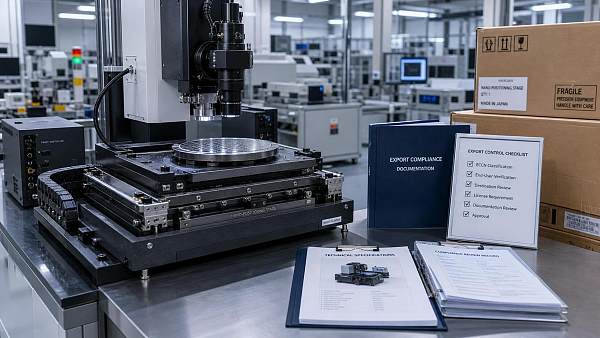
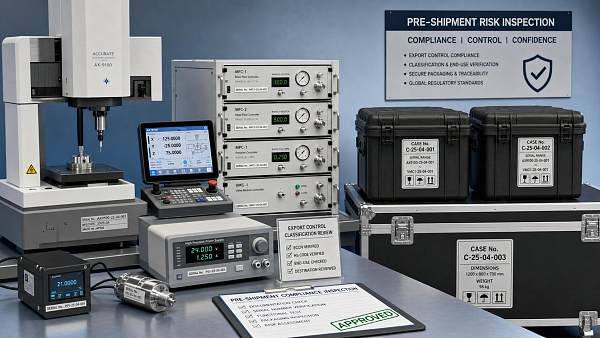
- Export control or regional compliance limits are disclosed early.
- Service parts and field support are defined before purchase.
Patent activity, market focus, and installation references can also be useful. G-UPE-style commercial intelligence is valuable here because sourcing risk often comes from market behavior, not only from engineering design.
A Practical Way to Compare Shortlisted Suppliers
A structured scorecard helps keep the decision grounded. It also prevents a polished proposal from outweighing missing evidence.
Rate each cleanroom manual manipulators supplier across contamination control, motion performance, documentation quality, maintainability, customization capability, lead time credibility, and lifecycle support.
Where possible, ask for a sample review, reference installation, or engineering discussion tied to the intended application. The goal is not to collect the most paper. The goal is to reduce uncertainty before equipment enters a controlled workflow.
What to Do Next
A useful next step is to define the use case in operational terms: environment class, handled item, travel path, force limits, cleaning routine, and documentation expectations. That brief becomes the foundation for a meaningful supplier comparison.
From there, review each cleanroom manual manipulators supplier against evidence rather than claims. In high-accuracy environments, the best sourcing decision usually comes from disciplined matching, not fast selection.
When evaluation criteria reflect both engineering reality and commercial resilience, supplier choice becomes clearer, and the resulting system is more likely to support stable performance over time.
Recent Articles
 2026.07.11Singapore Tightens MFC Import Licensing for Chip ToolsSingapore tightens MFC import licensing for chip tools, requiring traceability and SEMI F102-0726 proof. See what semiconductor importers must do now to avoid delays.
 2026.07.11EU Customs Tightens Pre-Entry Rules for Etching PrecursorsEU customs tightens pre-entry rules for etching precursors: learn the new 72-hour filing requirement, Rotterdam delay risks, and how importers can avoid surcharges and supply chain disruption.
 2026.07.11SEMI Sets F93-0726 Benchmark for Nano StagesSEMI F93-0726 sets a new benchmark for nano-positioning stages, defining dynamic repeatability for sub-10 nm systems. Learn how it may reshape 2026 equipment tenders and supplier readiness.
 2026.07.11Japan Tightens CMM Import Calibration RulesJapan Tightens CMM Import Calibration Rules: learn how METI’s new JIS B 7440-2:2026 and traceability requirements impact CMM exporters, compliance planning, delivery schedules, and Japan market access.
 2026.07.11FDA Tightens Purity Watch for Electronic GasesFDA Tightens Purity Watch for Electronic Gases: learn how new dual-certification rules for SiH4, NF3, and B2H6 may affect imports, compliance, and sourcing timelines.
 2026.07.11Choosing a Custom Piezoelectric Actuator Factory for Precision MotionCustom piezoelectric actuator factory selection affects precision, stability, and lifecycle cost. Learn how to compare technical depth, validation, quality control, and supply reliability.
 2026.07.11Biomedical Engineering Trends Shaping Device DevelopmentBiomedical engineering is reshaping device development through precision, personalization, and faster validation. Discover the trends driving scalable innovation and regulatory-ready performance.
 2026.07.11Middle East Export Control Compliance Risks and SolutionsExport control compliance Middle East: uncover hidden dual-use, routing, and documentation risks, and learn practical solutions to protect shipments, partners, and growth.
 2026.07.11CE Precision Manufacturing Standards: Key Compliance ChecksPrecision manufacturing standards CE: discover the key compliance checks that protect safety, ensure traceability, and speed market access for advanced production systems.
 2026.07.11How to Evaluate a Cleanroom Manual Manipulators SupplierCleanroom manual manipulators supplier selection starts with technical fit. Learn how to compare compliance, contamination control, service, and lifecycle support before you buy.
 2026.07.10METI Sets Emergency Quota for Photoresist ImportsMETI Sets Emergency Quota for Photoresist Imports: learn how Japan’s 1,200-ton cap and JIS Z 3100:2025 priority could reshape sourcing, compliance, and East Asia supply planning.
 2026.07.10EU Adds NF₃ and ClF₃ Etching Gases to REACH RulesEU Adds NF₃ and ClF₃ Etching Gases to REACH Rules: learn how the new ECHA registration and carbon footprint requirements may affect GaN/SiC supply, compliance, and delivery into Europe.
 2026.07.10SEMI Publishes ISO/SEMI F82-0726 for ALD/CVD SkidsSEMI publishes ISO/SEMI F82-0726 for ALD/CVD skids, setting global benchmarks for gas cleanliness, thermal uniformity, and modular interfaces. See why TSMC and Intel’s 2027 tender rules make this a must-read.
 2026.07.10South Korea Tightens Flow Logic Rules for Fab Gas SystemsSouth Korea tightens Flow Logic rules for fab gas systems, requiring real-time KATS uploads. Learn how this impacts Samsung and SK Hynix supply chain access, integration, and vendor readiness.
 2026.07.10US Updates Piezo Valve HTS Code From July 10US Updates Piezo Valve HTS Code From July 10: learn how the new 8481.90.55 rule affects customs clearance, compliance documents, and North American market access.
 2026.07.10Vacuum Compatible Stages Manufacturer Checklist for Precision and Integration FitVacuum compatible stages manufacturer checklist for precision, low outgassing, and fast integration. Compare fit, controls, thermal stability, and validation points before sourcing.
 2026.07.10Hotel Amenities Kits Cost Breakdown: What Affects Margin and Reorder Stabilityhotelamenitieskits cost breakdown: discover what really impacts margin, landed cost, and reorder stability. Learn how packaging, formula, compliance, and logistics affect long-term value.
 2026.07.10Solar Cables Selection Guide for Voltage Drop, Heat, and Outdoor LifespanSolarcables selection guide covering voltage drop, heat, compliance, and outdoor lifespan. Learn how to choose durable, efficient solar cables for long-term PV performance.
 2026.07.10How to Use Quality Assurance Measurement for Manufacturing to Reduce Defect DriftQuality assurance measurement for manufacturing helps detect defect drift early, reduce scrap, improve process control, and protect yield with practical metrics and response steps.
 2026.07.10Procurement Specification Compliance: Key Risks That Delay Supplier ApprovalProcurement specification compliance issues often delay supplier approval. Discover the top risks, hidden costs, and practical checks to speed qualification with confidence.
 2026.07.09Germany Fast-Tracks CMM Certification Under ISO/IEC 17025:2025Germany Fast-Tracks CMM Certification under ISO/IEC 17025:2025: learn how DAkkS cuts approval time from 14 weeks to 5 and what it means for metrology compliance, traceability, and buyers.
 2026.07.09Singapore Tightens Import Rules for Electronic GasesSingapore Tightens Import Rules for Electronic Gases: learn how Singapore’s new real-time purity verification rule may delay customs clearance and impact ASEAN supply chains.
 2026.07.09MFC Prices Jump as Helium-3 Is ReallocatedMFC prices jump as helium-3 is reallocated, driving longer lead times for high-accuracy models. See how this shift could impact semiconductor sourcing, delivery planning, and supplier decisions.
 2026.07.09Japan Tightens PVD Target Import CertificationJapan tightens PVD target import certification for GaN power electronics, requiring carbon footprint declarations and full traceability logs. See who is affected and how to prepare.
 2026.07.09EU Tightens Controls on Nano-Positioning StagesEU Tightens Controls on Nano-Positioning Stages: learn how the new EU dual-use export control rule impacts compliance, license assessments, shipments to China and Russia, and delivery planning.
 2026.07.09Export Control Compliance for Laboratory Equipment: Key Risk Checks Before ShipmentExport control compliance laboratory equipment checks can prevent costly shipment delays. Learn the key pre-shipment risks, screening steps, and documentation points before export.
 2026.07.09How an Exporters Directory Helps Vet New Overseas Partners FasterExporters directory insights help you vet overseas partners faster, compare compliance signals, and build a stronger shortlist with less risk and smarter sourcing decisions.
 2026.07.09Metrology Solutions for Semiconductor Fabs: Comparing Accuracy and ThroughputMetrology solutions for semiconductor fabs compared through the lens of accuracy and throughput. Discover how to improve yield, speed inline control, and choose tools that fit real fab demands.
 2026.07.09Food Ingredients Labeling Mistakes That Delay Product LaunchesFood ingredients labeling mistakes can delay launches, approvals, and distribution. Learn the hidden risks, common errors, and practical checks that keep products compliant and market-ready.
 2026.07.09How to Choose a Content Management System Without Costly ReplatformingContent management system selection is more than software choice. Learn how to evaluate architecture, integrations, governance, and vendor risk to avoid costly replatforming.
 2026.07.08Singapore e-Cert Tightens Gas Import ComplianceSingapore e-Cert tightens gas import compliance with real-time purity API checks on Jurong Island. Learn what importers and distributors must fix now to avoid customs delays.
 2026.07.08MFC Prices Jump 18% as Helium Shortage TightensMFC prices jump 18% as helium shortage tightens, pushing lead times beyond 26 weeks. See how semiconductor buyers, integrators, and suppliers can respond now.
 2026.07.08South Korea Tightens Piezo Valve Import Rules for EUV ToolsSouth Korea tightens piezo valve import rules for EUV tools, raising customs and compliance risks. Learn what exporters, distributors, and buyers must do now.
 2026.07.08US Tightens Export Rules on ALD/CVD SkidsUS Tightens Export Rules on ALD/CVD Skids: learn how the BIS update impacts semiconductor equipment exports, licensing, end-user checks, and shipment planning for China, Russia, and Belarus.