US Updates Piezo Valve HTS Code From July 10
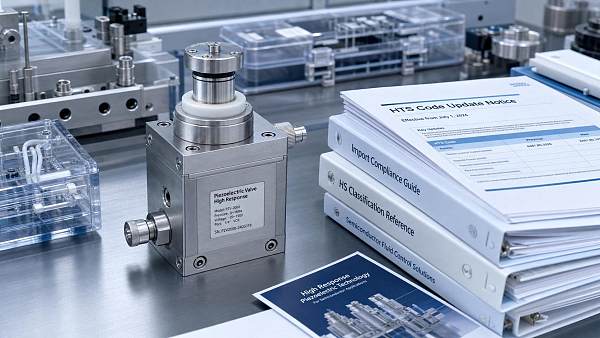
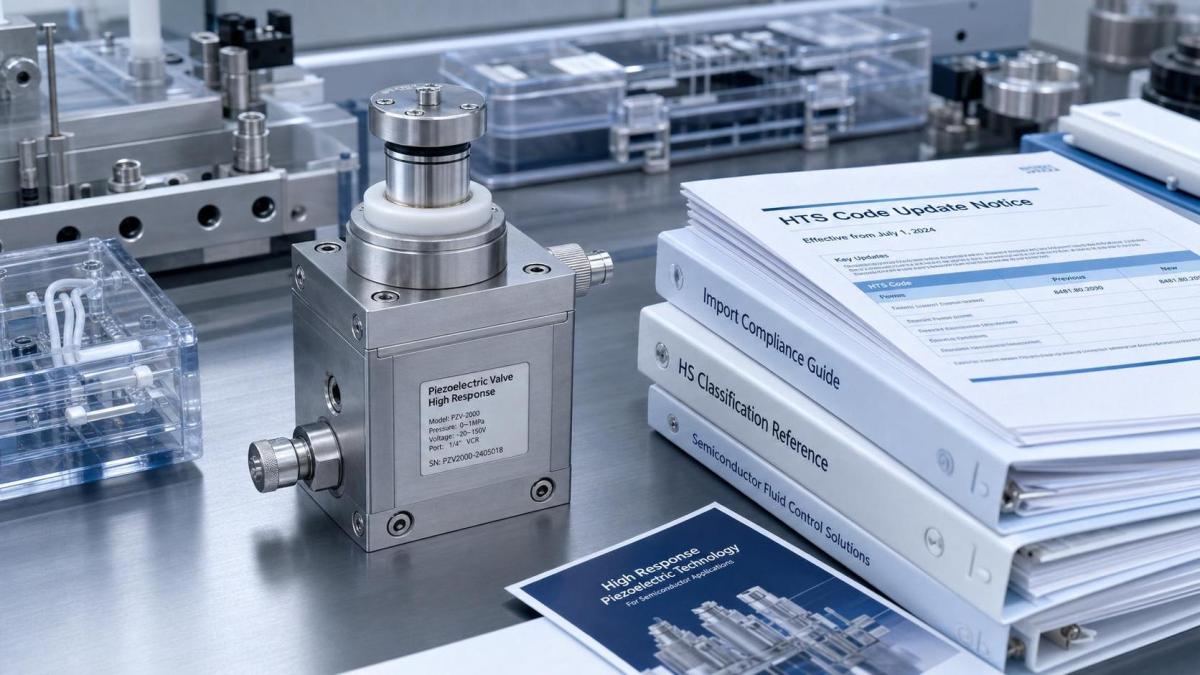
Effective July 10, 2026, U.S. Customs and Border Protection (CBP) put a revised HTS classification rule into force for piezo valves, separating them from the broader category of general industrial valves and adding subheading 8481.90.55. For importers, distributors, and equipment suppliers serving North America, the change is worth close attention because it adds document requirements tied to dynamic response accuracy and media compatibility, with likely implications for customs timing, compliance workload, and market access in medical microfluidics and semiconductor ALD-related supply chains.
What the rule change specifically covers
According to the information provided, CBP made the updated HTS coding rule effective on July 10, 2026. Under the change, piezo valves are listed separately rather than remaining within a general industrial valve category. A new subheading, 8481.90.55, has been added for this purpose.
The same information states that importers are required to provide documentation showing dynamic response accuracy of no more than 50 microseconds and certification relating to media compatibility. The change directly affects customs clearance timing and compliance costs for North American distributors, and it is described as creating a pre-entry threshold particularly for suppliers supporting medical microfluidics and semiconductor ALD equipment.
Where the pressure is likely to appear first
Import and distribution operations may face a documentation bottleneck
From an industry perspective, the most immediate effect is likely to fall on companies handling customs entry and channel distribution in North America. The reason is straightforward: the rule change does not only alter classification, it also ties entry to supporting technical and certification materials. In practice, the business impact is most likely to appear in filing preparation, document consistency, and clearance timing.
What deserves closer attention is whether existing product files are already organized around the newly required proof points. Companies that previously relied on broader valve classification workflows may need to review whether their customs documentation is still sufficient under the separate piezo valve subheading.
Medical microfluidics suppliers may see compliance move earlier in the sales cycle
Analysis shows that suppliers serving medical microfluidics applications may be affected not only at import stage but earlier in customer qualification and shipment planning. If entry now depends on demonstrating response performance and media compatibility, those technical attributes become part of the access condition rather than a downstream paperwork issue alone.
The practical point to watch is the link between product specification files, certification readiness, and delivery scheduling. Even where demand remains unchanged, the sequencing of approval, shipment, and customs handling may become more sensitive.
Semiconductor ALD-related suppliers may need tighter coordination across teams
For suppliers connected to semiconductor ALD equipment, the impact may center on cross-functional coordination. Observably, when a component is singled out in tariff classification and paired with technical documentation requirements, responsibility no longer sits only with trade compliance teams. Product, quality, sales support, and logistics functions may all need aligned records for the same item.
The key business concern here is not simply the existence of a new code, but whether the supplier can present a consistent compliance package without delaying delivery commitments to downstream customers.
What companies should monitor now
Watch for any further official wording or implementation detail
Analysis shows that the effective date and core documentation requirements are already clear from the information provided, but companies should still pay attention to any subsequent official clarification on how the new subheading is interpreted in practice. The difference between a rule on paper and its treatment in live customs handling often matters for operational planning.
Review whether technical files match entry requirements
Businesses dealing in piezo valves should focus on whether their current files can substantiate dynamic response accuracy at or below 50 microseconds and provide media compatibility certification in a form usable for import procedures. This is a practical checkpoint for both direct importers and upstream suppliers supporting them.
Reassess lead-time assumptions in North American deliveries
Because the information provided explicitly points to effects on customs timing and compliance cost, companies should look closely at delivery schedules that depend on smooth North American clearance. The main issue is not to assume disruption as a certainty, but to recognize that document preparation may become a more visible factor in shipment timing.
Align supplier communication with customer-facing commitments
What deserves closer attention is the communication chain between component suppliers, distributors, and end customers. Where market access is influenced by certification readiness, gaps between supplier-provided documentation and customer delivery expectations can become more consequential. This is especially relevant for businesses serving applications already described in the provided information as more exposed to the rule change.
Why this looks like more than a coding adjustment
Observably, this update can be read as more than a narrow customs classification edit. By separating piezo valves from a broader industrial category and linking import treatment to performance and compatibility documents, the rule signals a more product-specific compliance approach. That does not by itself prove a wider regulatory shift beyond the information provided, but it does suggest that affected companies should treat classification, technical substantiation, and shipment execution as more tightly connected than before.
It is more appropriate to understand this as an actionable near-term compliance change with possible longer-term signaling value. The immediate effect is operational; the broader significance still requires continued observation.
How the market should read this update
On the facts provided, the July 10, 2026 change matters because it introduces a distinct HTS path for piezo valves and adds supporting document expectations that can influence access to the North American market. The direct business relevance is clearest for distributors, importers, and suppliers tied to medical microfluidics and semiconductor ALD equipment.
From a neutral industry reading, this is best understood neither as a routine clerical change nor as a basis for sweeping conclusions. It is a concrete compliance development with immediate operational implications, and one that deserves follow-up attention as implementation practice becomes clearer.
Basis for this article and what still needs verification
This article is based on the user-provided news title, event date, and event summary regarding the CBP HTS code update for piezo valves effective July 10, 2026. For this type of development, relevant source categories would typically include official customs notices, company statements, industry association updates, authoritative trade media reporting, and standards-related documents.
No specific official source link was provided in the input, so the precise official publication path remains to be verified on an ongoing basis. Areas that still warrant continued monitoring include any further official clarification of the subheading, how documentation requirements are applied in practice, and whether affected supply-chain participants adjust qualification and delivery processes in response.
Taglist:
Recent Articles
 2026.07.10METI Sets Emergency Quota for Photoresist ImportsMETI Sets Emergency Quota for Photoresist Imports: learn how Japan’s 1,200-ton cap and JIS Z 3100:2025 priority could reshape sourcing, compliance, and East Asia supply planning.
 2026.07.10EU Adds NF₃ and ClF₃ Etching Gases to REACH RulesEU Adds NF₃ and ClF₃ Etching Gases to REACH Rules: learn how the new ECHA registration and carbon footprint requirements may affect GaN/SiC supply, compliance, and delivery into Europe.
 2026.07.10SEMI Publishes ISO/SEMI F82-0726 for ALD/CVD SkidsSEMI publishes ISO/SEMI F82-0726 for ALD/CVD skids, setting global benchmarks for gas cleanliness, thermal uniformity, and modular interfaces. See why TSMC and Intel’s 2027 tender rules make this a must-read.
 2026.07.10South Korea Tightens Flow Logic Rules for Fab Gas SystemsSouth Korea tightens Flow Logic rules for fab gas systems, requiring real-time KATS uploads. Learn how this impacts Samsung and SK Hynix supply chain access, integration, and vendor readiness.
 2026.07.10US Updates Piezo Valve HTS Code From July 10US Updates Piezo Valve HTS Code From July 10: learn how the new 8481.90.55 rule affects customs clearance, compliance documents, and North American market access.
 2026.07.10Vacuum Compatible Stages Manufacturer Checklist for Precision and Integration FitVacuum compatible stages manufacturer checklist for precision, low outgassing, and fast integration. Compare fit, controls, thermal stability, and validation points before sourcing.
 2026.07.10Hotel Amenities Kits Cost Breakdown: What Affects Margin and Reorder Stabilityhotelamenitieskits cost breakdown: discover what really impacts margin, landed cost, and reorder stability. Learn how packaging, formula, compliance, and logistics affect long-term value.
 2026.07.10Solar Cables Selection Guide for Voltage Drop, Heat, and Outdoor LifespanSolarcables selection guide covering voltage drop, heat, compliance, and outdoor lifespan. Learn how to choose durable, efficient solar cables for long-term PV performance.
 2026.07.10How to Use Quality Assurance Measurement for Manufacturing to Reduce Defect DriftQuality assurance measurement for manufacturing helps detect defect drift early, reduce scrap, improve process control, and protect yield with practical metrics and response steps.
 2026.07.10Procurement Specification Compliance: Key Risks That Delay Supplier ApprovalProcurement specification compliance issues often delay supplier approval. Discover the top risks, hidden costs, and practical checks to speed qualification with confidence.
 2026.07.09Germany Fast-Tracks CMM Certification Under ISO/IEC 17025:2025Germany Fast-Tracks CMM Certification under ISO/IEC 17025:2025: learn how DAkkS cuts approval time from 14 weeks to 5 and what it means for metrology compliance, traceability, and buyers.
 2026.07.09Singapore Tightens Import Rules for Electronic GasesSingapore Tightens Import Rules for Electronic Gases: learn how Singapore’s new real-time purity verification rule may delay customs clearance and impact ASEAN supply chains.
 2026.07.09MFC Prices Jump as Helium-3 Is ReallocatedMFC prices jump as helium-3 is reallocated, driving longer lead times for high-accuracy models. See how this shift could impact semiconductor sourcing, delivery planning, and supplier decisions.
 2026.07.09Japan Tightens PVD Target Import CertificationJapan tightens PVD target import certification for GaN power electronics, requiring carbon footprint declarations and full traceability logs. See who is affected and how to prepare.
 2026.07.09EU Tightens Controls on Nano-Positioning StagesEU Tightens Controls on Nano-Positioning Stages: learn how the new EU dual-use export control rule impacts compliance, license assessments, shipments to China and Russia, and delivery planning.
 2026.07.09Export Control Compliance for Laboratory Equipment: Key Risk Checks Before ShipmentExport control compliance laboratory equipment checks can prevent costly shipment delays. Learn the key pre-shipment risks, screening steps, and documentation points before export.
 2026.07.09How an Exporters Directory Helps Vet New Overseas Partners FasterExporters directory insights help you vet overseas partners faster, compare compliance signals, and build a stronger shortlist with less risk and smarter sourcing decisions.
 2026.07.09Metrology Solutions for Semiconductor Fabs: Comparing Accuracy and ThroughputMetrology solutions for semiconductor fabs compared through the lens of accuracy and throughput. Discover how to improve yield, speed inline control, and choose tools that fit real fab demands.
 2026.07.09Food Ingredients Labeling Mistakes That Delay Product LaunchesFood ingredients labeling mistakes can delay launches, approvals, and distribution. Learn the hidden risks, common errors, and practical checks that keep products compliant and market-ready.
 2026.07.09How to Choose a Content Management System Without Costly ReplatformingContent management system selection is more than software choice. Learn how to evaluate architecture, integrations, governance, and vendor risk to avoid costly replatforming.
 2026.07.08Singapore e-Cert Tightens Gas Import ComplianceSingapore e-Cert tightens gas import compliance with real-time purity API checks on Jurong Island. Learn what importers and distributors must fix now to avoid customs delays.
 2026.07.08MFC Prices Jump 18% as Helium Shortage TightensMFC prices jump 18% as helium shortage tightens, pushing lead times beyond 26 weeks. See how semiconductor buyers, integrators, and suppliers can respond now.
 2026.07.08South Korea Tightens Piezo Valve Import Rules for EUV ToolsSouth Korea tightens piezo valve import rules for EUV tools, raising customs and compliance risks. Learn what exporters, distributors, and buyers must do now.
 2026.07.08US Tightens Export Rules on ALD/CVD SkidsUS Tightens Export Rules on ALD/CVD Skids: learn how the BIS update impacts semiconductor equipment exports, licensing, end-user checks, and shipment planning for China, Russia, and Belarus.
 2026.07.08Logistics Consulting Gaps That Slow Expansion Across Multi-Site Operationslogisticsconsulting reveals the hidden gaps slowing multi-site expansion—align planning, compliance, and technical readiness to reduce delays, control risk, and scale with confidence.
 2026.07.08Nano-Positioning Accuracy Limits: What Defines Technical Supremacy TodayTechnical supremacy in nano-positioning accuracy starts with stable, repeatable performance under heat, vibration, and load—see what truly separates lab claims from production-grade precision.
 2026.07.08Metrology for Dimensional Control: When CMM Systems Are the Better FitMetrology for dimensional control: learn when CMM systems are the better fit for traceable, repeatable inspection, tighter tolerance control, and lower manufacturing risk.
 2026.07.08Supplier Benchmarking Metrics That Reveal Total Cost, Not Just Unit PriceSupplier benchmarking goes beyond unit price to uncover total cost drivers like quality, delivery, compliance, and process risk. Learn which metrics help procurement cut hidden losses.
 2026.07.08Industrial Integrity for Chemical Plants: Key Risks to Assess Before UpgradesIndustrial integrity for chemical plants starts with the risks hidden in upgrades. Discover how to assess materials, controls, containment, and compliance before costly failures occur.
![]() 2026.07.07Singapore e-Cert Rule Tightens Electronic Gas ClearanceSingapore e-Cert rule tightens electronic gas clearance in Singapore: learn how real-time COA API validation, Purity Watch compliance, and inspection delays impact importers and suppliers.
2026.07.07Singapore e-Cert Rule Tightens Electronic Gas ClearanceSingapore e-Cert rule tightens electronic gas clearance in Singapore: learn how real-time COA API validation, Purity Watch compliance, and inspection delays impact importers and suppliers.![]() 2026.07.07Japan Tightens Import Rules for Photoresist ChemJapan Tightens Import Rules for Photoresist Chem: learn how MHLW’s new AI-validated purity report requirement and 72-hour quarantine risk could impact suppliers, importers, and delivery timelines.
2026.07.07Japan Tightens Import Rules for Photoresist ChemJapan Tightens Import Rules for Photoresist Chem: learn how MHLW’s new AI-validated purity report requirement and 72-hour quarantine risk could impact suppliers, importers, and delivery timelines.![]() 2026.07.07Nano-Positioning Stage Prices Jump 12% in JulyNano-Positioning Stage prices jumped 12.3% in July as sub-5nm demand tightened supply. Discover lead-time risks, EUV impact, and what buyers should monitor now.
2026.07.07Nano-Positioning Stage Prices Jump 12% in JulyNano-Positioning Stage prices jumped 12.3% in July as sub-5nm demand tightened supply. Discover lead-time risks, EUV impact, and what buyers should monitor now.![]() 2026.07.07EU Tightens REACH Rules for PFAS Etching PrecursorsEtching Precursors face new EU REACH PFAS rules from October 2026. Learn the threshold, SCIP filing duties, detention risks, and how importers and suppliers can prepare now.
2026.07.07EU Tightens REACH Rules for PFAS Etching PrecursorsEtching Precursors face new EU REACH PFAS rules from October 2026. Learn the threshold, SCIP filing duties, detention risks, and how importers and suppliers can prepare now.![]() 2026.07.07Product Selection Support for Ingredients: Reducing Costly Fit MistakesProduct selection support for ingredients helps teams avoid costly fit mistakes by validating performance, compliance, purity, and supply risk before procurement decisions impact production.
2026.07.07Product Selection Support for Ingredients: Reducing Costly Fit MistakesProduct selection support for ingredients helps teams avoid costly fit mistakes by validating performance, compliance, purity, and supply risk before procurement decisions impact production.