
Orthopedic Implants: Key Material and Safety Standards
Orthopedic implants sit at the intersection of clinical performance, materials engineering, and regulatory control. A device that restores motion or stabilizes bone must also prove biocompatibility, mechanical reliability, surface consistency, and full traceability. That is why orthopedic implants are judged not only by design outcomes, but by how closely materials, processes, inspection methods, and safety standards align across the supply chain.
This matters far beyond hospitals. In a broader industrial context, orthopedic implants reflect the same precision culture seen in aerospace, semiconductor, and ultra-clean manufacturing. For organizations that rely on verified engineering data, the challenge is not simply choosing a metal or polymer. It is building a repeatable quality framework that reduces risk before a device ever reaches the operating room.
Why material and safety standards carry so much weight
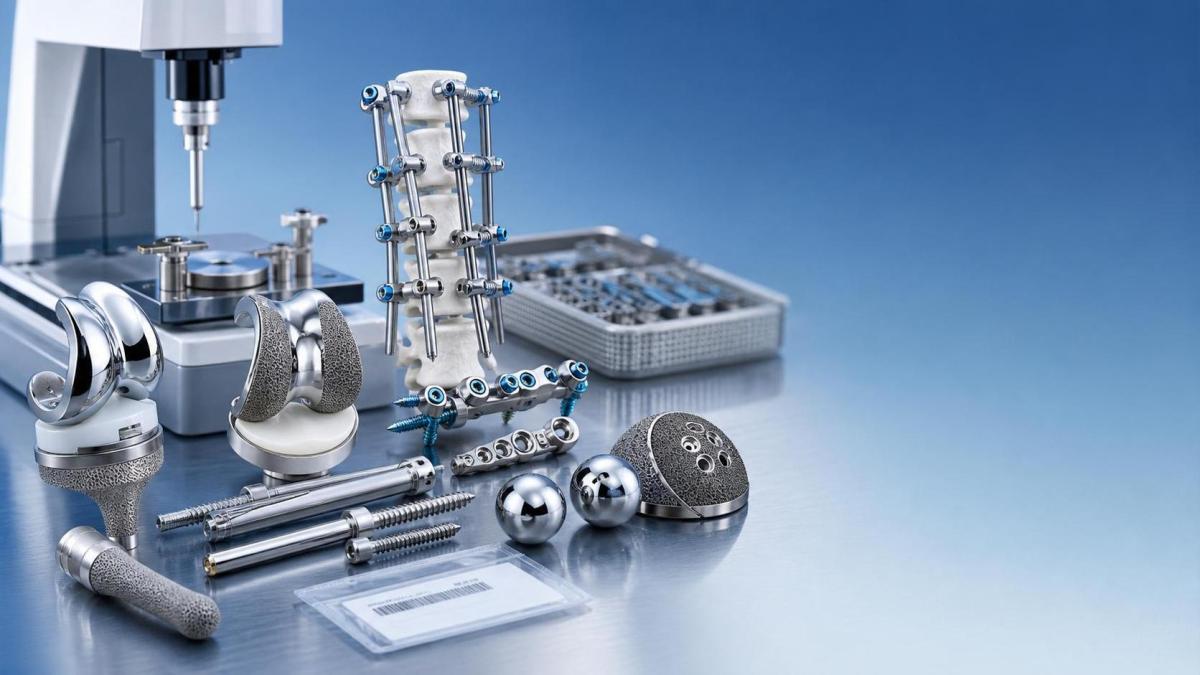
Orthopedic implants remain in the body for years, and often for decades. Small deviations in chemistry, cleanliness, fatigue strength, or surface finish can lead to corrosion, wear debris, loosening, infection risk, or revision surgery.
The key issue is that implant safety is cumulative. A component may pass dimensional inspection, yet still fail if its coating adhesion, contamination control, or sterilization compatibility is weak.
From an industry perspective, orthopedic implants also involve cross-border suppliers, outsourced finishing, and strict documentation demands. That makes standards essential as a common language between design, production, validation, and post-market monitoring.
Where current scrutiny is increasing
More attention is now placed on particulate contamination, additive manufacturing controls, coating durability, and lot-level traceability. Regulators and large buyers increasingly expect evidence, not assumptions.
This is where a benchmarking mindset becomes useful. G-UPE’s focus on verifiable engineering data and regulatory foresight mirrors what implant programs now require: measurable process capability, validated material integrity, and inspection systems that can stand up to audit.
Core materials used in orthopedic implants
Most orthopedic implants rely on a limited group of proven materials. Each offers a different balance of strength, corrosion resistance, wear behavior, imaging compatibility, and biological response.
The best material is rarely the strongest on paper. For orthopedic implants, the better question is whether the chosen material remains stable under the intended loading profile, sterilization route, and body environment.
Surface engineering is often the hidden variable
Many failures do not start in the bulk material. They begin at the surface. Roughness, coating thickness, residual contamination, and oxide behavior all affect osseointegration and long-term wear.
That is why thin-film deposition, coating benchmarks, and high-resolution metrology have growing relevance. In practice, orthopedic implants benefit from the same precision discipline applied in other high-specification sectors.
The standards landscape behind orthopedic implants
No single standard defines implant safety. Orthopedic implants are evaluated through a layered framework that covers materials, biological response, manufacturing quality, risk management, and labeling traceability.
Standards that usually shape compliance decisions
- ISO 13485 for quality management systems in medical device production.
- ISO 14971 for identifying, evaluating, and controlling device-related risks.
- ISO 10993 series for biocompatibility and biological evaluation.
- Material-specific ISO and ASTM standards for alloy composition and testing.
- Sterilization standards such as ISO 11135 or ISO 11137, depending on method.
- UDI and regional traceability rules tied to EU MDR, FDA, and other frameworks.
These standards work together. A compliant implant program links raw material certificates, process validation, biological assessment, and finished-device release into one controlled record set.
Why traceability deserves equal attention
Traceability is not just a recall tool. It is the backbone of root-cause analysis. When orthopedic implants show field issues, investigators need to connect the event to heat number, tooling, coating batch, cleaning chemistry, and inspection history.
Without that chain, even a minor deviation becomes difficult to contain. With it, corrective action becomes faster, narrower, and more defensible.
What good control looks like in actual operations
In day-to-day business, orthopedic implants should be reviewed as a sequence of risk gates rather than a single final inspection event. Problems caught late are costly, and some cannot be fully corrected after finishing or sterilization.
Practical checkpoints across the manufacturing flow
- Verify incoming material certificates against specification, heat lot, and test history.
- Control machining-induced stress, burrs, and microcracks on critical geometries.
- Validate cleaning and passivation to prevent hidden contamination.
- Measure surface roughness and coating quality using calibrated metrology.
- Review packaging integrity and sterilization compatibility before release.
- Maintain lot-level records that support rapid deviation review.
This is where broader industrial methods become valuable. Multi-sensory metrology, ultra-high purity process materials, and precision handling systems are not abstract technologies. They directly support safer orthopedic implants by reducing variability.
Common risk areas that deserve earlier review
Some risk signals appear long before clinical complaints. They often surface as small process shifts, unusual inspection trends, or supplier changes that seem acceptable in isolation.
Usually, the earlier these signals are recognized, the lower the long-term safety and compliance burden becomes.
A practical way to evaluate orthopedic implants going forward
A useful review framework starts with three linked questions. Is the material standard appropriate for the intended implant function? Is the manufacturing route capable of preserving that material’s intended behavior? Can the evidence package prove both points under audit?
For orthopedic implants, that means looking beyond datasheets. It means comparing supplier discipline, metrology depth, cleanliness controls, coating capability, and regulatory readiness as one integrated picture.
Organizations that already use high-precision benchmarking in other sectors often have an advantage here. The same culture of measurable accuracy, documented process control, and standards alignment translates well into implant safety oversight.
The next step is usually straightforward: map current implant materials and process controls against applicable ISO requirements, identify weak traceability links, and review whether inspection data is truly sufficient for risk-based decisions. That approach creates a stronger basis for comparing suppliers, tightening controls, and improving confidence in orthopedic implants before problems emerge in the field.
Recent Articles
 2026.09.25Which ISO standards apply to precision-engineered medical devices?ISO standards for precision engineering medical devices: explore ISO 13485, ISO 14971, metrology, biocompatibility, sterilization, and packaging requirements.
 2026.09.24How to choose athletic clothing that stays comfortable in humid weatherAthletic clothing for humid weather: learn how to choose breathable fabrics, low-chafe fits, and quick-drying layers for more comfortable workouts.
 2026.09.23How sheet metal welding choices affect dimensional accuracySheet metal welding choices shape dimensional accuracy. Explore heat input, joint design, fixturing, and inspection strategies to reduce distortion and improve repeatability.
 2026.09.22How specification preparation prevents flow-control errors in process systemsSpecification preparation for process systems prevents flow-control errors by defining operating ranges, pressure budgets, accuracy, materials, and control requirements before equipment selection.
 2026.09.21How to assess a German mass flow controller supplier for cleanroom useIndustrial & Manufacturing equipment supplier in Germany: assess cleanroom MFC partners for gas compatibility, leak integrity, calibration traceability, and lifecycle service.
 2026.09.20How to assess aerospace component manufacturing services for tight tolerancesAerospace component manufacturing services: learn how to verify tight-tolerance capability through metrology, process control, special-process oversight, and traceability.
 2026.09.19When does polycarbonate roofing need UV protection on both sides?Polycarbonateroofing: learn when dual-sided UV protection prevents yellowing, installation errors, and reflected-light damage in demanding roof designs.
 2026.09.18When high precision coordinate measuring machines justify tighter tolerancesHigh precision coordinate measuring machines justify tighter tolerances when uncertainty, process capability, and traceability protect critical performance. Explore smarter decisions.
 2026.09.17How can retailers verify safety before buying Montessori toys wholesale?Montessoritoyswholesale safety guide: verify SKU-specific tests, labels, traceability and market compliance before ordering.
 2026.09.16How to assess surgical instruments for reliable sterilizationAssess surgical instruments for reliable sterilization with practical guidance on cleanability, material compatibility, inspection, and validated reprocessing.
 2026.09.15How material science for food ingredients improves shelf stabilityMaterial Science for food ingredients reveals how moisture control, encapsulation, oxidation management, and smart packaging extend shelf life and protect quality.
 2026.09.14What purity specification do laboratory gases need for trace analysis?Ultra-high purity gases for laboratory use: learn how to specify, verify, and control critical impurities for reliable trace analysis and lower backgrounds.
 2026.09.13How to verify a lubricants exporter’s product quality before orderingLearn how to verify a lubricants exporter before ordering—from batch CoAs and lab tests to traceability, packaging, and export compliance. Reduce equipment and shipment risks.
 2026.09.12When does export control compliance training need to be refreshed?Export control compliance training: learn when annual and event-driven refreshers are needed to manage regulatory, product, access, and supply-chain risks.
 2026.09.11What makes a diaper bag backpack comfortable for all-day outings?Discover how a diaperbagsbackpack delivers all-day comfort with padded straps, breathable support, smart storage, and balanced capacity for stress-free outings.
 2026.09.10How nano-positioning stages enable sub-nanometer manufacturing precisionSub-nanometer manufacturing demands more than fine resolution. Discover how nano-positioning stages deliver stable, accurate motion through advanced feedback, control, and error management.
 2026.09.09How to validate biological implants for biocompatibility riskBiological implants validation: learn how to assess biocompatibility risk with ISO 10993, chemical characterization, and manufacturing controls.
 2026.09.08What to verify before selecting an XYZ translation stage OEM factoryXYZ translation stage OEM factory selection guide: verify volumetric accuracy, payload stiffness, traceable testing, controls, and acceptance criteria before ordering.
 2026.09.07How to match mining equipment to different extraction conditionsMining equipment selection made practical: match machines to rock, mine geometry, ground conditions, capacity, energy, and maintenance needs for safer, more productive extraction.
 2026.09.07Global photonics alignment market analysis: what is driving demand?Global photonics alignment market analysis: discover how semiconductor packaging, optical communications, sensing, and automation are driving demand for scalable, high-yield alignment solutions.
 2026.09.05When do Ultra-Precision Engineering consulting services add value?Ultra-Precision Engineering consulting services help buyers reduce qualification risk, validate real-world performance, and control lifecycle costs before committing to complex suppliers.
 2026.09.04How to choose a nano-indentation system for reliable hardness testingLearn how to choose a nano-indentation system for hardness testing with confidence. Compare calibration, load control, drift stability, test modes, data quality, and application fit for reliable results.
 2026.09.03When does a bridge CMM outperform a portable measuring arm?CMM systems: discover when a bridge CMM delivers superior repeatability, tighter uncertainty control, and dependable inspection results over a portable measuring arm.
 2026.09.02How does industrial innovation analysis guide technology choices?Industrial Innovation analysis helps manufacturers choose technologies with confidence by evaluating performance, integration, compliance, and lifecycle risks. Discover a smarter decision framework.
 2026.09.01How precise must micro-manipulation systems be for microassembly?Micro-manipulation systems for microassembly: learn how to match precision, repeatability, feedback, and error budgets to achieve reliable, high-yield assembly.
 2026.08.31What to verify before choosing a wafer probe station exporterWafer probe station exporter selection starts with verified performance, integration, export readiness, and lifecycle support. Learn what to check before you buy.
 2026.08.30When does pulse welding improve precision in a micro-welding workstation?Micro-welding workstation pulse welding improves precision by controlling heat, reducing variation, and protecting delicate assemblies. Discover when it delivers measurable results.
 2026.08.29When does machine learning improve defect detection in CMM inspection?Machine learning improves CMM defect detection when measurement data is stable, traceable, and actionable. Learn how to spot early drift, prioritize risk, and strengthen quality decisions.
 2026.08.28How to compare nano-fabrication tools in North America for probe-station workCompare nano-fabrication tools North America labs use for probe-station work—evaluate motion, optics, touchdown control, thermal stability, and service support.
 2026.08.27When does biomass energy make financial sense for industrial heat?Biomass energy can cut industrial heat costs when demand, fuel supply, logistics, and compliance align. Explore the key financial tests for a resilient investment.
 2026.08.26What to check before choosing an OEM PZT driver manufacturerPZT driver manufacturer OEM selection starts with application fit. Learn what to check on stability, load matching, compliance, and lifecycle support before you buy.
 2026.08.25What a battery management system must monitor to prevent cell failureBattery management system essentials: learn what to monitor at cell level—voltage, current, temperature, SOC, balancing, and deviation trends—to prevent cell failure and improve battery safety.
 2026.08.24How long do hybrid car parts last before replacement becomes likelyHybrid car parts do not all wear out at the same pace. Learn the warning signs, lifespan factors, and when replacement is truly likely before costs rise.
 2026.08.23How to tell if an exporters directory is reliable before you use itExporters directory reliability starts with transparency. Learn how to spot verified data, fresh listings, and red flags before trusting any platform for sourcing.















FILTER_CORE
REF_NO: 0042
Editors' Picks
- 00
0000-00
Which ISO standards apply to precision-engineered medical devices? - 00
0000-00
How to choose athletic clothing that stays comfortable in humid weather - 00
0000-00
How sheet metal welding choices affect dimensional accuracy - 00
0000-00
How specification preparation prevents flow-control errors in process systems