Baby Play Mats: Safety and Material Guide
Choosing the right play surface is one of the first safety decisions parents make as their baby begins to roll, crawl, and explore.
This guide to babyplaymats explains what to look for in materials, cushioning, non-toxic certifications, cleanability, and everyday durability.
Whether you need a mat for tummy time, early learning, or safer floor play, material choices directly affect comfort and risk.
Start With Safety: What Parents Should Check First
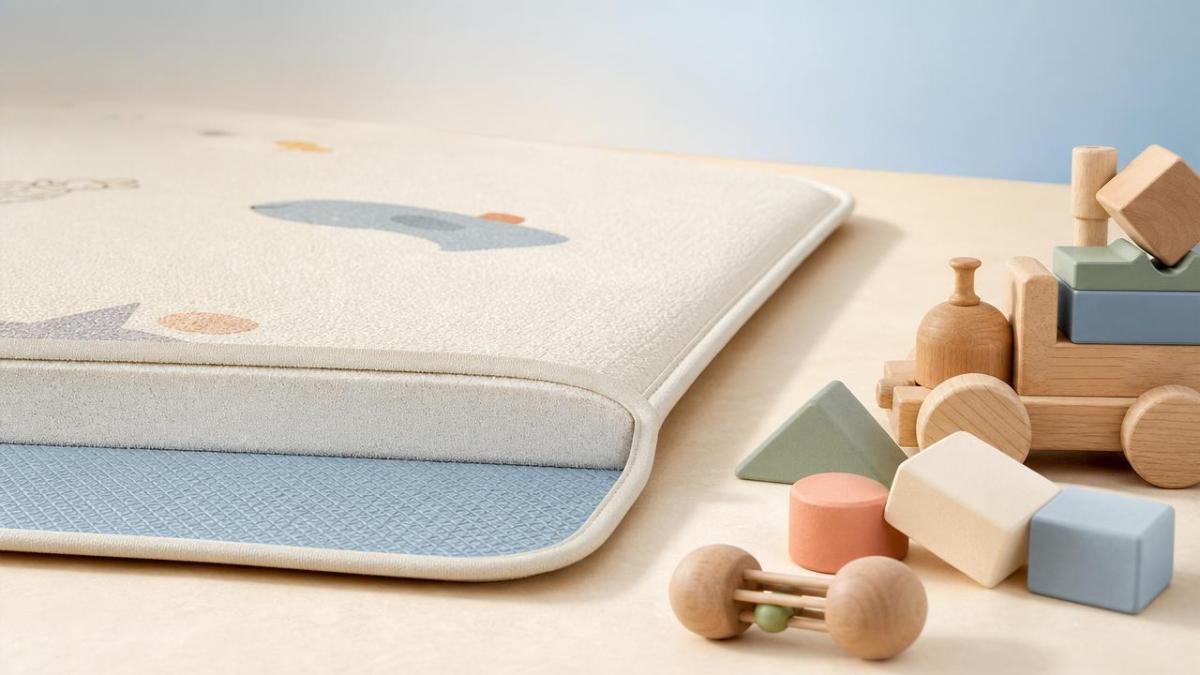
The safest baby play mat is not simply the thickest or softest one. It is stable, non-toxic, cleanable, and age-appropriate.
For most families, the best choice balances cushioning against firmness. Babies need protection from hard floors without sinking into unstable padding.
A good mat should reduce bumps during rolling and crawling, while still allowing babies to push up, pivot, and practice movement.
Parents should also check whether the mat lies flat. Curled edges, slippery bottoms, and loose puzzle pieces can create avoidable hazards.
If your baby is mouthing everything, prioritize verified material safety over decorative prints, extra thickness, or trendy folding designs.
Which Baby Play Mat Material Is Best?
There is no single perfect material for every home. The right option depends on flooring, cleaning habits, climate, and baby’s age.
Foam mats are popular because they are lightweight, cushioned, and affordable. They work well on tile, hardwood, and other hard surfaces.
However, parents should avoid unknown foam formulas. Look for mats clearly labeled free from formamide, BPA, phthalates, lead, and heavy metals.
EVA foam is common in many babyplaymats. It can be practical, but quality and testing matter more than the material name alone.
XPE foam is often used in foldable mats. It is usually lightweight, water-resistant, and supportive for crawling and early standing practice.
TPU surface layers can improve wipeability and softness. Still, parents should confirm that coatings do not peel, crack, or release odors.
Cotton mats feel natural and breathable. They are suitable for supervised tummy time, but usually provide less impact protection on hard floors.
Natural rubber offers grip and resilience, though it may be heavier, more expensive, and unsuitable for households with latex sensitivity concerns.
Fabric-filled mats can be cozy, but they must be washable. Trapped milk, saliva, dust, and crumbs can quickly become hygiene problems.
Non-Toxic Claims: What Labels Actually Matter?
Many play mats advertise “non-toxic,” but the phrase alone is not enough. Parents should look for specific tests and standards.
Useful safety references include CPSIA compliance in the United States and EN71 toy safety testing in the European market.
For foam products, check whether the brand mentions testing for formamide, phthalates, BPA, lead, cadmium, and other restricted substances.
OEKO-TEX certification is valuable for textile mats because it addresses harmful substances in fabrics, threads, dyes, and surface treatments.
GREENGUARD Gold certification can be helpful for indoor air quality, especially if the mat will stay in a nursery or playroom.
A strong product page should provide test reports, standard names, or certification numbers. Vague promises without documentation deserve caution.
Smell is another practical clue. A strong chemical odor after airing may indicate poor material quality or inadequate manufacturing control.
New mats should be unpacked and ventilated before use. If irritation, headaches, or persistent odor occur, stop using the product.
How Thick Should a Baby Play Mat Be?
Thickness matters, but more is not always better. A very soft mat can make movement practice harder for babies learning coordination.
For newborn tummy time, a moderately padded surface is enough when an adult is nearby and the floor is already carpeted.
For rolling and crawling on hardwood or tile, many families prefer mats around 0.4 to 0.8 inches thick.
For early standing and cruising, choose cushioning that absorbs small falls while remaining firm enough to support balance and foot placement.
If a mat feels like a pillow, it may not be ideal for active movement. Babies need a stable base.
Also consider edge design. Beveled or flat edges reduce tripping risks when babies crawl on and off the play area.
Parents using walkers, push toys, or learning tables should confirm that the mat does not slide, bunch, or separate under movement.
Size, Shape, and Room Fit
A mat should be large enough for real movement, not just a decorative square under toys. Babies rarely stay centered.
For tummy time only, a smaller mat may work. For crawling practice, choose enough space for rolling, turning, and reaching.
Large one-piece mats reduce gaps and seams. They are easier to wipe and less likely to trap food or dust.
Puzzle mats are flexible for unusual room shapes, but small pieces may loosen. Avoid tiny detachable borders around mouthing babies.
Foldable mats are convenient for apartments and shared spaces. Check whether folding grooves collect dirt or weaken after repeated use.
Before buying, measure the room and leave walking paths clear. A mat that blocks doors or furniture may become frustrating.
Neutral colors can blend into living spaces, while high-contrast patterns may interest babies. Safety and cleanability should still come first.
Cleaning and Hygiene: The Daily Reality
Parents often choose a mat based on softness, then discover cleaning is the bigger daily issue. Babies drool, spit up, and snack.
Water-resistant foam or coated mats are easiest for quick cleanups. A damp cloth and mild soap usually handle everyday messes.
Avoid harsh disinfectants unless the manufacturer allows them. Strong cleaners can damage surfaces and leave residues babies may touch or lick.
Fabric mats should be machine washable or have removable covers. If washing is complicated, the mat may not stay hygienic.
Drying matters as much as washing. Damp fabric, seams, and folds can encourage odor, mildew, or bacterial growth over time.
For households with pets, choose smooth surfaces that release hair easily. Textured mats may grip fur, crumbs, and dust.
Set a simple routine: wipe after spills, deep clean weekly, and inspect seams, cracks, and peeling areas during cleaning.
Durability and Everyday Use
A baby play mat must survive more than baby play. It may face furniture legs, pet claws, toys, and adult footsteps.
Durable mats resist compression marks and surface tearing. Thin printed layers may look beautiful but can peel after heavy use.
If the mat will stay in one place, heavier options may be better. They tend to shift less during active crawling.
If you need portability, lighter foldable mats are practical. Just confirm hinges, folds, and surface layers remain intact over time.
Sunlight can fade prints and weaken some materials. Avoid placing foam mats in direct sun for long periods.
Water resistance is important, but waterproof does not mean indestructible. Liquid trapped under mats can damage flooring and create odor.
Check the underside occasionally. Dust, moisture, and floor cleaner residue can build up where parents rarely look.
Common Red Flags When Buying Babyplaymats
Be cautious with products that list no material details. Parents should know whether the mat is EVA, XPE, cotton, rubber, or mixed.
Another warning sign is a strong claim without testing evidence. “Safe for babies” should be supported by recognizable standards or reports.
Extremely cheap mats may save money upfront but often compromise thickness, odor control, surface durability, or chemical testing transparency.
Loose parts are a concern for younger babies. Small decorative pieces, detachable trims, or peeling film can become choking hazards.
Overly slippery surfaces are also problematic. Babies need traction for crawling, kneeling, and early standing attempts.
Very busy prints can hide crumbs, damage, and stains. Simpler designs often make daily inspection and cleaning easier.
If reviews repeatedly mention odor, peeling, staining, or poor customer service, treat those patterns as useful safety information.
Matching the Mat to Your Baby’s Stage
For newborns, the mat mainly supports supervised tummy time. Focus on comfort, cleanliness, and a surface that is not too soft.
For rolling babies, choose a larger area with reliable cushioning. They may suddenly move farther than parents expect.
For crawlers, traction becomes critical. A slippery mat can make movement frustrating and may encourage awkward posture.
For babies pulling to stand, firmness and stability matter. Avoid mats that slide when pressure is applied near furniture.
For toddlers, durability becomes more important. Building blocks, ride-on toys, and snack time can quickly test surface quality.
Families with multiple children may need a larger, tougher mat. Older siblings often use the same space for energetic play.
Practical Buying Checklist
Before choosing a mat, identify your floor type. Tile and hardwood usually require more cushioning than carpeted rooms.
Next, confirm material disclosure. A trustworthy product should clearly describe its foam, fabric, rubber, coating, and any surface layer.
Review safety testing. Look for CPSIA, EN71, OEKO-TEX, GREENGUARD Gold, or specific restricted-substance test information where relevant.
Check thickness and firmness together. Press the mat with your hand and see whether it rebounds without feeling unstable.
Look for a non-slip base, flat edges, and minimal gaps. These details affect daily safety more than many decorative features.
Consider how you will clean it at 10 p.m. after a spill. Convenience often determines whether hygiene routines last.
Finally, compare warranties and reviews. Reliable brands are usually more transparent about materials, care instructions, and replacement support.
Final Thoughts: Choose Safety You Can Maintain
The best baby play mat is safe in daily use, not just attractive in photos. Materials, testing, and cleaning all matter.
For many families, a firm, cushioned, low-odor, easy-wipe mat with verified safety testing is the most practical choice.
Cotton may suit supervised cozy play, foam may suit crawling spaces, and rubber may suit grip-focused households with specific needs.
Whatever material you choose, inspect the mat regularly. Replace it if it cracks, peels, smells strongly, or no longer lies flat.
Good babyplaymats support exploration while reducing avoidable risks. A thoughtful choice gives babies freedom and gives parents everyday confidence.