
SEMI Launches Global Probe Stations Calibration Mutual Recognition Program
On May 2, 2026, the Semiconductor Equipment and Materials International (SEMI) announced the launch of its Probe Stations Global Calibration Mutual Recognition Program. This initiative directly impacts semiconductor equipment manufacturers, calibration service providers, and global test-and-measurement supply chain stakeholders — particularly those engaged in probe station production, export, or validation across North America, Europe, and Asia-Pacific markets. It marks a structural shift in how metrological traceability for critical wafer-level test equipment is recognized internationally.
Event Overview
On May 2, 2026, SEMI officially launched the ‘Probe Stations Global Calibration Mutual Recognition Program’. The program designates three China-based Coordinate Measuring Machine (CMM) laboratories — one each in Shanghai, Shenzhen, and Suzhou — as inaugural participants. All three labs hold CNAS accreditation to ISO/IEC 17025. They are authorized to perform factory calibration and periodic re-calibration of probe stations for global use. Under this arrangement, probe stations calibrated at these labs qualify for acceptance across international markets without requiring redundant calibration by end-market accredited labs.
Impact on Specific Industry Segments
Probe Station Manufacturers (OEMs)
Manufacturers — especially those based in China producing probe stations for export — face reduced compliance friction when entering regulated markets such as the U.S., EU, and Japan. Previously, overseas customers often required duplicate calibration by local ISO/IEC 17025-accredited labs, causing delays, added cost, and potential downtime during re-validation. With mutual recognition now in place, OEMs can streamline delivery timelines and improve contractual certainty around metrological compliance.
Semiconductor Test & Measurement Service Providers
Third-party test labs and metrology service firms that support fabless companies or OSATs must reassess their calibration sourcing strategy. If they previously relied on non-recognized domestic labs or outsourced calibration to overseas facilities, they may now consider leveraging the newly designated Chinese CMM labs — provided their internal quality systems accept cross-border calibration reports under SEMI’s mutual recognition framework. This could lower operational overhead but requires verification of report interoperability with customer audit requirements.
Global Equipment Importers & End-User Fabs
Fabrication facilities purchasing probe stations from Chinese suppliers will experience shorter qualification cycles. However, they remain responsible for confirming that the calibration reports issued by the designated labs meet their internal metrology management system (MMS) criteria — including uncertainty budgets, environmental conditions, and traceability chains. The mutual recognition does not automatically waive internal technical review; it reduces the need for re-execution of calibration.
What Relevant Enterprises or Practitioners Should Focus On
Monitor official SEMI documentation and scope updates
The initial program rollout names only three labs and covers probe stations specifically. Observably, SEMI has not yet published detailed technical criteria (e.g., measurement ranges, uncertainty thresholds, or test point definitions) governing acceptance. Stakeholders should track SEMI’s official communications for any expansion to additional lab types, equipment categories, or geographic regions.
Verify calibration report content against end-market regulatory expectations
Even with mutual recognition, reports must contain specific elements to be accepted — such as stated measurement uncertainty, reference standards used, environmental monitoring records, and CNAS accreditation number linkage. Companies should cross-check current report templates from the designated labs against requirements in IEC 61513, ISO/IEC 17025:2017 Clause 7.8, or regional fab QA checklists before deployment.
Distinguish between policy signal and operational readiness
Analysis shows this program reflects growing institutional alignment between CNAS and international metrology frameworks — but does not imply immediate harmonization of all calibration practices. Some end users may retain internal validation steps pending formal adoption into their internal SOPs. Early adopters should treat the program as an enabler, not a substitute, for documented risk assessment of calibration data integrity.
Prepare internal metrology coordination protocols
Manufacturers and fabs should update internal calibration management procedures to explicitly reference SEMI’s mutual recognition status. This includes revising procurement specifications, updating supplier evaluation forms, and training QA/QC staff on interpreting CNAS-accredited reports from the designated labs. Preemptive alignment helps avoid post-delivery disputes over metrological acceptability.
Editorial Perspective / Industry Observation
Observably, this initiative functions primarily as a trust-building mechanism rather than a fully implemented technical harmonization standard. It signals increasing confidence in China’s metrology infrastructure within high-precision semiconductor equipment domains — but remains limited in scope (three labs, one equipment type, no defined uncertainty limits). From an industry perspective, it is better understood as a procedural milestone than a de facto regulatory change. Its long-term significance depends on whether SEMI expands the program to include other equipment classes (e.g., wafer probers, bond testers) and whether major end users formally embed the recognition into their qualification handbooks. Continued observation is warranted on both technical implementation fidelity and uptake velocity among Tier-1 semiconductor equipment buyers.
This development underscores a broader trend: metrological equivalence is becoming a strategic component of semiconductor supply chain resilience. For stakeholders, the current priority is not broad speculation about ‘global standardization’, but precise, actionable alignment with the narrow, verified scope SEMI has established — beginning with probe station calibration at the three named CNAS-accredited CMM labs.
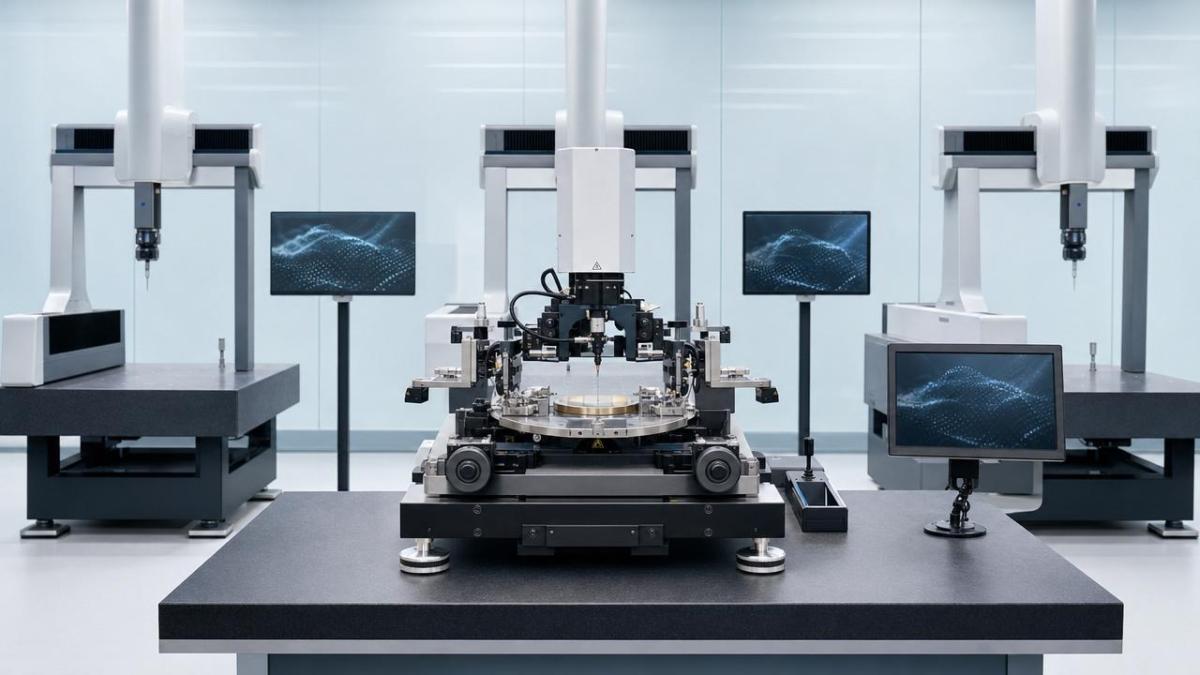
Source: Official announcement by Semiconductor Equipment and Materials International (SEMI), dated May 2, 2026. No further technical annexes, scope documents, or participant lists have been publicly released as of the announcement date. Ongoing developments — including potential expansion to additional laboratories or equipment categories — remain subject to future SEMI communication.
Taglist:
Recent Articles
 2026.09.19When does polycarbonate roofing need UV protection on both sides?Polycarbonateroofing: learn when dual-sided UV protection prevents yellowing, installation errors, and reflected-light damage in demanding roof designs.
 2026.09.18When high precision coordinate measuring machines justify tighter tolerancesHigh precision coordinate measuring machines justify tighter tolerances when uncertainty, process capability, and traceability protect critical performance. Explore smarter decisions.
 2026.09.17How can retailers verify safety before buying Montessori toys wholesale?Montessoritoyswholesale safety guide: verify SKU-specific tests, labels, traceability and market compliance before ordering.
 2026.09.16How to assess surgical instruments for reliable sterilizationAssess surgical instruments for reliable sterilization with practical guidance on cleanability, material compatibility, inspection, and validated reprocessing.
 2026.09.15How material science for food ingredients improves shelf stabilityMaterial Science for food ingredients reveals how moisture control, encapsulation, oxidation management, and smart packaging extend shelf life and protect quality.
 2026.09.14What purity specification do laboratory gases need for trace analysis?Ultra-high purity gases for laboratory use: learn how to specify, verify, and control critical impurities for reliable trace analysis and lower backgrounds.
 2026.09.13How to verify a lubricants exporter’s product quality before orderingLearn how to verify a lubricants exporter before ordering—from batch CoAs and lab tests to traceability, packaging, and export compliance. Reduce equipment and shipment risks.
 2026.09.12When does export control compliance training need to be refreshed?Export control compliance training: learn when annual and event-driven refreshers are needed to manage regulatory, product, access, and supply-chain risks.
 2026.09.11What makes a diaper bag backpack comfortable for all-day outings?Discover how a diaperbagsbackpack delivers all-day comfort with padded straps, breathable support, smart storage, and balanced capacity for stress-free outings.
 2026.09.10How nano-positioning stages enable sub-nanometer manufacturing precisionSub-nanometer manufacturing demands more than fine resolution. Discover how nano-positioning stages deliver stable, accurate motion through advanced feedback, control, and error management.
 2026.09.09How to validate biological implants for biocompatibility riskBiological implants validation: learn how to assess biocompatibility risk with ISO 10993, chemical characterization, and manufacturing controls.
 2026.09.08What to verify before selecting an XYZ translation stage OEM factoryXYZ translation stage OEM factory selection guide: verify volumetric accuracy, payload stiffness, traceable testing, controls, and acceptance criteria before ordering.
 2026.09.07How to match mining equipment to different extraction conditionsMining equipment selection made practical: match machines to rock, mine geometry, ground conditions, capacity, energy, and maintenance needs for safer, more productive extraction.
 2026.09.07Global photonics alignment market analysis: what is driving demand?Global photonics alignment market analysis: discover how semiconductor packaging, optical communications, sensing, and automation are driving demand for scalable, high-yield alignment solutions.
 2026.09.05When do Ultra-Precision Engineering consulting services add value?Ultra-Precision Engineering consulting services help buyers reduce qualification risk, validate real-world performance, and control lifecycle costs before committing to complex suppliers.
 2026.09.04How to choose a nano-indentation system for reliable hardness testingLearn how to choose a nano-indentation system for hardness testing with confidence. Compare calibration, load control, drift stability, test modes, data quality, and application fit for reliable results.
 2026.09.03When does a bridge CMM outperform a portable measuring arm?CMM systems: discover when a bridge CMM delivers superior repeatability, tighter uncertainty control, and dependable inspection results over a portable measuring arm.
 2026.09.02How does industrial innovation analysis guide technology choices?Industrial Innovation analysis helps manufacturers choose technologies with confidence by evaluating performance, integration, compliance, and lifecycle risks. Discover a smarter decision framework.
 2026.09.01How precise must micro-manipulation systems be for microassembly?Micro-manipulation systems for microassembly: learn how to match precision, repeatability, feedback, and error budgets to achieve reliable, high-yield assembly.
 2026.08.31What to verify before choosing a wafer probe station exporterWafer probe station exporter selection starts with verified performance, integration, export readiness, and lifecycle support. Learn what to check before you buy.
 2026.08.30When does pulse welding improve precision in a micro-welding workstation?Micro-welding workstation pulse welding improves precision by controlling heat, reducing variation, and protecting delicate assemblies. Discover when it delivers measurable results.
 2026.08.29When does machine learning improve defect detection in CMM inspection?Machine learning improves CMM defect detection when measurement data is stable, traceable, and actionable. Learn how to spot early drift, prioritize risk, and strengthen quality decisions.
 2026.08.28How to compare nano-fabrication tools in North America for probe-station workCompare nano-fabrication tools North America labs use for probe-station work—evaluate motion, optics, touchdown control, thermal stability, and service support.
 2026.08.27When does biomass energy make financial sense for industrial heat?Biomass energy can cut industrial heat costs when demand, fuel supply, logistics, and compliance align. Explore the key financial tests for a resilient investment.
 2026.08.26What to check before choosing an OEM PZT driver manufacturerPZT driver manufacturer OEM selection starts with application fit. Learn what to check on stability, load matching, compliance, and lifecycle support before you buy.
 2026.08.25What a battery management system must monitor to prevent cell failureBattery management system essentials: learn what to monitor at cell level—voltage, current, temperature, SOC, balancing, and deviation trends—to prevent cell failure and improve battery safety.
 2026.08.24How long do hybrid car parts last before replacement becomes likelyHybrid car parts do not all wear out at the same pace. Learn the warning signs, lifespan factors, and when replacement is truly likely before costs rise.
 2026.08.23How to tell if an exporters directory is reliable before you use itExporters directory reliability starts with transparency. Learn how to spot verified data, fresh listings, and red flags before trusting any platform for sourcing.
 2026.08.22How semiconductor encoder resolution affects positioning accuracySemiconductor encoder resolution directly shapes positioning accuracy in precision motion systems. Learn how to evaluate real performance, avoid spec traps, and choose the right solution.
 2026.08.21How to assess industrial integrity for manufacturing equipment before failure risks escalateIndustrial integrity for manufacturing equipment starts with spotting drift before breakdowns occur. Learn practical assessment steps to reduce risk, protect quality, and improve uptime.
 2026.08.20Common Faults in a Synthetic Leather Calendering Line and What to CheckSynthetic leather calendering line faults explained clearly: learn what to check for thickness variation, gloss loss, web wandering, embossing defects, and faster troubleshooting.
 2026.08.20When does regulatory foresight reporting reduce compliance riskRegulatory Foresight reporting helps reduce compliance risk before rule changes disrupt sourcing, shipping, validation, or customer acceptance. Learn when early insight prevents costly delays.
 2026.08.19When does glass wool insulation roll make sense over rigid boards?Glass wool insulation roll makes sense when fast cavity coverage, acoustic control, and easy handling matter more than load resistance. Learn when rolls outperform rigid boards.
 2026.08.18What to look for in a precision measurement supplier for tight-tolerance partsPrecision measurement supplier selection starts with data trust, not just equipment. Learn how to assess calibration, multi-sensor capability, environment, and reporting for tight-tolerance parts.








FILTER_CORE
REF_NO: 0042
Editors' Picks
- 00
0000-00
When does polycarbonate roofing need UV protection on both sides? - 00
0000-00
When high precision coordinate measuring machines justify tighter tolerances - 00
0000-00
How can retailers verify safety before buying Montessori toys wholesale? - 00
0000-00
How to assess surgical instruments for reliable sterilization