
KFDA Adds Dynamic Biocompatibility Test for Micro-Robots
On July 1, 2026, South Korea's MFDS/KFDA updated its review guidance for intelligent minimally invasive surgical robots, adding a new registration expectation for Micro-Robots. The change centers on dynamic cyclic biocompatibility testing under ISO 10993-18:2025, including long-term material degradation data for Flow Logic microfluidic channels in simulated body-fluid conditions. This is worth close attention for device developers, component suppliers, testing providers, registration teams, and procurement functions because it affects not only technical documentation, but also compliance preparation, supporting test evidence, and delivery planning tied to market entry.

What the updated guidance now requires
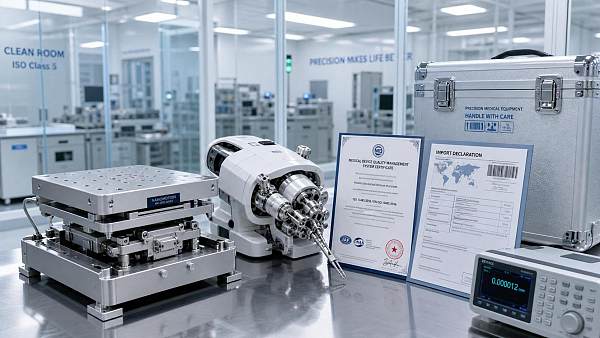
The confirmed change is that MFDS/KFDA updated the Review Guidelines for Intelligent Minimally Invasive Surgical Robots on July 1, 2026. Under the updated guidance, all Micro-Robots applying for medical device registration must submit a dynamic cyclic biocompatibility test report based on ISO 10993-18:2025. The required submission must cover long-term material degradation data for Flow Logic microfluidic channels under simulated body-fluid conditions.
Where the practical pressure is likely to appear
For developers preparing registration dossiers
Analysis shows that the immediate impact is likely to fall on registration preparation and technical file readiness. Where a Micro-Robot product includes Flow Logic microfluidic channels, applicants will need to align their submission materials with the newly stated testing expectation. What deserves closer attention is whether existing biocompatibility materials and supporting reports are sufficient for the revised review pathway, or whether additional testing documentation will be needed before filing.
For materials, components, and manufacturing partners
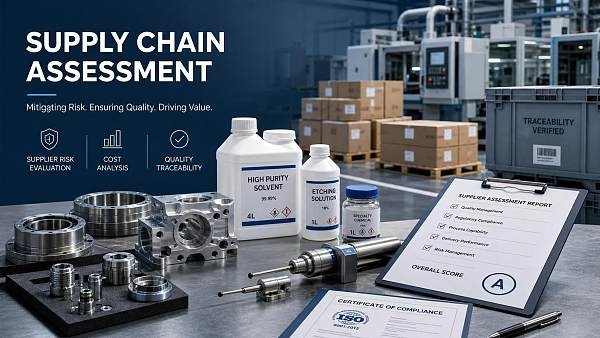
From an industry perspective, suppliers involved in materials selection, component fabrication, and processing for Micro-Robots may face closer scrutiny from customers seeking evidence that supports long-term degradation assessment in simulated body-fluid environments. The effect may appear in procurement specifications, technical document requests, and supplier qualification reviews, especially where product teams need upstream data to support registration submissions.
For testing and compliance service providers
Observably, laboratories and compliance support firms connected to Micro-Robot registration work may see demand shift toward reports framed around ISO 10993-18:2025 and dynamic cyclic testing conditions. The business implication is less about a broad market conclusion and more about documentation fit: applicants may need testing partners whose methods and reporting structure can support the updated review expectation stated by MFDS/KFDA.
For procurement and delivery planning
For procurement teams and downstream buyers, the rule change may matter because registration timing can influence sourcing and delivery schedules. Analysis shows that if supporting test materials are incomplete or need updating, product launch, purchase confirmation, or cross-border supply arrangements could face timeline pressure. At this stage, the confirmed fact is the guidance update itself; the operational effect on delivery cycles should still be treated as a compliance-related risk to monitor, not as an established outcome.
What companies should review now
Check whether current files match the new submission expectation
Companies preparing Micro-Robot registrations should review whether their current technical documentation already addresses dynamic cyclic biocompatibility testing under ISO 10993-18:2025. Particular attention should be paid to whether the dossier includes material degradation evidence for Flow Logic microfluidic channels in simulated body-fluid conditions, because that point is explicitly reflected in the updated guidance.
Reassess supplier documentation and test support
What deserves closer attention is the interface between regulatory filing and upstream supplier records. If key material or component information sits with external vendors, companies may need to verify whether those vendors can provide documentation that supports the required testing narrative and long-term degradation assessment. This is not yet proof of a changed commercial outcome, but it is a practical checkpoint for reducing filing friction.
Watch for changes in review language and market-facing documents
Because the input does not provide detailed implementation language beyond the updated guidance requirement, companies should treat this as an area for continued review. Relevant follow-up items may include official explanatory wording, review practice, certification-related document requests, and any changes in technical specification sheets or tender materials that begin to reflect the new testing expectation.
Build extra margin into submission and delivery schedules
Observably, where a registration plan depends on test completion, translation of technical evidence, or coordination across design, compliance, and procurement teams, schedule assumptions may need to be revisited. That does not mean delays are certain; it means the new requirement should be incorporated into planning as a live compliance variable.
How this change is best understood at this stage
Analysis shows that this update is better understood as a concrete regulatory signal rather than a general policy discussion. The requirement is tied to registration submissions and identifies both a testing basis, ISO 10993-18:2025, and a technical focus, namely long-term degradation data for Flow Logic microfluidic channels under simulated body-fluid conditions. At the same time, it is still too early to treat broader market effects, review timing changes, or procurement consequences as settled facts. Those points remain matters for observation as implementation practice becomes clearer.
A narrower rule change with wider workflow consequences
From an industry perspective, the significance of this development lies in how a specific testing requirement can extend into registration strategy, supplier coordination, procurement documentation, and delivery planning. The confirmed fact is limited but clear: MFDS/KFDA has updated its guidance and added a defined submission expectation for Micro-Robot registration. It is more appropriate to understand this as an already landed compliance change with downstream execution questions that still require monitoring.
Basis of this article and points still to verify
This article is generated from the user-provided news title, event date, and event summary. For developments of this kind, source types typically relevant to verification include official regulatory notices, publications by supervisory authorities, standards organization documents, industry association updates, trade or customs-related notices where applicable, and reporting by established professional media. A specific official source link was not provided in the input, so that point still requires follow-up verification. Further observation is also needed on implementation details, review interpretation, certification practice, tender-document changes, industry feedback, and how companies adapt their submission and supply arrangements in response.
Taglist:
Recent Articles
 2026.07.03Paper Products Market Trends in 2026: Cost, Demand, and Material ShiftsPaper products market trends in 2026 reveal shifting demand, volatile costs, and material changes across packaging, hygiene, and industry. Explore key risks and opportunities now.
 2026.07.03Specification Preparation for Bioprocessing: Common Gaps to Fix EarlySpecification preparation for bioprocessing often fails on vague assumptions, weak acceptance criteria, and supplier gaps. Learn what to define early to reduce rework, delays, and compliance risk.
 2026.07.03Atomic Layer Deposition Reactor: Key Specs That Affect Film QualityAtomic Layer Deposition reactor specs directly shape film quality. Learn how temperature, precursor dosing, purge control, and chamber design impact uniformity, defects, and process reliability.
 2026.07.03Semi Automatic Wafer Probe Stations vs Manual: Which Fits Better?Semi automatic wafer probe stations vs manual systems: discover which delivers better repeatability, throughput, and data confidence for your wafer testing needs.
 2026.07.03Wafer Probe Stations Price: What Changes Total Cost in 2026?Wafer probe stations price in 2026 depends on accuracy, thermal range, software, service, and total ownership cost. Discover what really changes budgets before you buy.
 2026.07.02KFDA Adds Dynamic Biocompatibility Test for Micro-RobotsKFDA adds dynamic biocompatibility test for Micro-Robots under ISO 10993-18:2025. Learn how the new rule impacts registration, suppliers, compliance, and launch planning.
 2026.07.02METI Fast-Tracks Nano-Positioning Stages for Medtech and Chip ToolsNano-Positioning Stages face a new METI fast-track: 48-hour import review for medtech and chip tools, driven by ISO 10360-2 and laser interferometry proof. See what suppliers and buyers must prepare.
 2026.07.02EU Rule 2026/1187 Takes Effect for Gas TraceabilityEU Rule 2026/1187 takes effect for gas traceability, requiring Purity Watch digital identity for electronic gases like SiH4, NF3 and WF6. Learn the customs, logistics and compliance impact now.
 2026.07.02SEMI Report Flags 26-Week Lead Time for ALD/CVD SkidsSEMI report flags a 26-week lead time for ALD/CVD skids, citing high-purity gas volatility and Flow Logic certification delays. See how China pressure and Southeast Asia assembly shifts may impact sourcing.
 2026.07.02BIS Adds Micro-Actuator Controls, Flags 17 China MakersBIS adds micro-actuator controls and flags 17 China makers, reshaping compliance, customs timing, and sourcing risk. Learn what overseas buyers should check now.
 2026.07.02Multi Axis Stage Market in 2026: Growth Signals, Pricing Pressure, and Demand ShiftsMulti axis stage market outlook for 2026: explore growth signals, pricing pressure, and demand shifts across precision automation, semiconductors, metrology, and high-value applications.
 2026.07.02How to Read Nano-Stage Settled Time Metrics Data for Motion PerformanceNano-stage settled time metrics data explained clearly: learn how to read traces, spot overshoot, verify stability, and make smarter motion performance decisions.
 2026.07.02What Procurement Intelligence Services Reveal About Supplier Risk and CostProcurement Intelligence services reveal hidden supplier risk, true cost drivers, and compliance gaps—helping buyers cut surprises, protect margins, and choose stronger sourcing partners.
 2026.07.02Capacitive Sensor for Positioning in Europe: Key Accuracy Checks Before SelectionCapacitive sensor for positioning Europe buyers: learn the 5 key accuracy checks—linearity, repeatability, thermal drift, EMC, and calibration traceability—before you select.
 2026.07.02How to Evaluate a PZT Drivers Distributor for Stable Supply and SupportPZT drivers distributor evaluation guide: learn how to compare supply stability, technical support, compliance, and after-sales service to reduce risk and choose with confidence.
 2026.07.01MFDS Raises Entry Test Bar for In-Body Micro-RobotsMFDS Raises Entry Test Bar for In-Body Micro-Robots: learn how South Korea’s new dynamic biocompatibility rule may impact submissions, suppliers, testing plans, and market-entry timing.
 2026.07.01METI Opens Fast-Track Imports for Nano-Positioning StagesMETI fast-tracks imports for Nano-Positioning Stages with zero tariffs and 48-hour review. See how ISO 13485 and ±5 nm proof can speed medical device supply chains.
 2026.07.01EU Mandates Digital Traceability for Electronic Specialty GasesEU Mandates Digital Traceability for Electronic Specialty Gases: learn how Regulation (EU) 2026/1187, EU-Trace labels, and customs rules will reshape compliance, supply chains, and market access.
 2026.07.01SEMI China Q2 Report: ALD/CVD Skids Lead Times Top 24 WeeksSEMI China Q2 Report shows ALD/CVD skids lead times topping 24 weeks as vacuum chamber and valve constraints deepen. See what it means for chipmakers, suppliers, and sourcing strategy.
 2026.07.01BIS Expands Export Controls to 12 Micro-Actuator CategoriesBIS Expands Export Controls to 12 Micro-Actuator Categories, reshaping export compliance, ECCN classification, licensing and delivery planning for suppliers targeting the U.S. and allied markets.
 2026.07.01ESS Trends in Semiconductor Reliability for 2026ESS trends in semiconductor reliability for 2026: discover how smarter screening, traceability, and process-linked data reduce defect risk, strengthen compliance, and protect long-cycle production.
 2026.07.01Choosing an Ultra-Precision Engineering SupplierUltra-precision engineering supplier selection starts with verified process control, compliance, and lifecycle support. Learn how to compare suppliers, reduce risk, and choose with confidence.
 2026.07.01Vibration Isolation Table Load Rating: What Matters MostVibration isolation table load rating affects stability, repeatability, and service life. Learn what really matters for precise setups and choose the right table with confidence.
 2026.07.01How to Verify an ISO Certified Factory Before OrderingISO certified factory verification starts beyond the certificate. Learn how to check scope, records, traceability, and real process control before ordering with confidence.
 2026.07.01Solution Comparison Guide for Precision Motion SystemsSolution comparison guide for precision motion systems: compare accuracy, repeatability, integration risk, and lifecycle cost to choose the right platform with confidence.
 2026.06.30VDE Adds Broad-Band EMC Test for Piezo ValvesVDE Adds Broad-Band EMC Test for Piezo Valves: learn how the new VDE-AR-E 2612-2 and IEC 61000-4-20 rule affects design, certification, exports, and market access before October 2026.
 2026.06.30Japan Opens Fast-Track Imports for Medical Micro-RobotsJapan opens fast-track imports for medical micro-robots with zero tariffs and 5-day certification. Learn how METI’s move can cut sourcing costs, speed compliance, and improve time to market.
 2026.06.30EU Draft Rule Would Require Purity Watch for Electronic GasesEU draft rule would require Purity Watch for electronic gases like SiH4, NF3, and WF6 by Jan 2027. See who is affected, key ISO Class 1 demands, and how to prepare early.
 2026.06.30SEMI: CMM System Lead Time Extends to 22 WeeksSEMI reports CMM System lead time has extended to 22 weeks, signaling tighter acceptance schedules in Asia-Pacific OEM assembly. See what it means for automotive electronics and advanced packaging now.
 2026.06.30BIS Expands Export Controls to 37 ALD/CVD Skid ItemsBIS Expands Export Controls to 37 ALD/CVD Skid Items, reshaping ECCN 3B001 compliance for China-bound exports. Learn the licensing impact, risks, and next steps for OEMs and integrators.
 2026.06.30VR in Training: Where It Works Best and Where It Falls ShortVR training works best for safety-critical tasks, equipment familiarization, and rare high-impact scenarios. Learn where VR delivers ROI, where it falls short, and how to apply it effectively.
 2026.06.30How to Compare Wellness Products by Claims, Safety, and CostWellness products can be hard to judge. Learn how to compare claims, safety, and real cost to choose smarter, lower-risk options that truly fit your needs and budget.
 2026.06.30XYZ Translation Stages: Accuracy vs Speed in Motion ControlXYZ translation stages shape the balance between accuracy and speed in motion control. Learn what impacts settling time, repeatability, and system fit across precision applications.
 2026.06.30Next-Gen Wireless Charging: What Limits Efficiency in Real UseNext-gen wireless charging: discover what really limits efficiency in real use, from alignment and heat to materials and control electronics, and how to choose a platform that performs reliably.























FILTER_CORE
REF_NO: 0042
Editors' Picks
- 00
0000-00
Paper Products Market Trends in 2026: Cost, Demand, and Material Shifts - 00
0000-00
Specification Preparation for Bioprocessing: Common Gaps to Fix Early - 00
0000-00
Atomic Layer Deposition Reactor: Key Specs That Affect Film Quality - 00
0000-00
Semi Automatic Wafer Probe Stations vs Manual: Which Fits Better?