
SEMICON China 2026 Adds Ultra-Precision Metrology Zone
On May 3, 2026, SEMI announced the launch of the first dedicated Ultra-Precision Metrology Zone at SEMICON China 2026 in Shanghai — a development with direct implications for semiconductor equipment suppliers, precision manufacturing service providers, and metrology-focused OEMs operating in Greater China and APAC.
Event Overview
On May 3, 2026, SEMI officially confirmed that the 2026 SEMICON China exhibition will feature a newly established Ultra-Precision Metrology Zone. This zone will showcase three core technology categories: Coordinate Measuring Machine (CMM) Systems, X-ray Metrology tools, and Laser Interferometry instruments. Confirmed exhibitors include Carl Zeiss (Germany), Mitutoyo (Japan), and six leading Chinese metrology equipment manufacturers. The zone has been designated as a priority technical assessment stop by TSMC and SK hynix for their 2026 supply chain evaluations.
Industries Affected by This Development
Direct Equipment Trading Companies
Companies engaged in cross-border distribution or regional resale of CMM, X-ray metrology, or laser interferometry systems may face intensified demand scrutiny around local calibration compliance, after-sales service capacity, and integration readiness with fab-level data infrastructure. The explicit inclusion of this zone in TSMC and SK hynix’s annual supply chain review signals heightened evaluation rigor—not just on device specs, but on localized support capability.
Component & Subsystem Suppliers
Suppliers of high-stability optical stages, vacuum-compatible X-ray detectors, or temperature-controlled granite bases may see upstream demand shifts. Since the zone emphasizes ‘ultra-precision’—not general-purpose metrology—the performance thresholds (e.g., sub-10 nm repeatability, thermal drift
Contract Manufacturing & Foundry Support Service Providers
Firms offering wafer-level metrology services, mask inspection, or process control validation must now assess whether their internal measurement traceability aligns with the standards highlighted in this zone. Participation or attendance does not imply endorsement—but omission may be interpreted as capability gap during joint technical audits with IDMs or foundries.
Supply Chain Integration & Localization Partners
Organizations supporting localization of foreign metrology platforms—including software adaptation (e.g., SECS/GEM compatibility), metrology algorithm certification (e.g., ISO 15530-3), or joint verification with Chinese national metrology institutes—may experience increased engagement requests. The emphasis on ‘local adaptation’ suggests procurement criteria now weigh domestic regulatory alignment and NMI collaboration more heavily than before.
What Relevant Companies or Professionals Should Focus On Now
Monitor official updates from SEMI China and participating OEMs on zone-specific technical requirements
The initial announcement confirms scope and participants—but detailed technical evaluation protocols, sample test plans, or interoperability expectations (e.g., data format standards for metrology tool-to-MES integration) have not yet been published. These documents will define actionable compliance thresholds.
Assess current product positioning against the three core metrology modalities highlighted
CMM, X-ray, and laser interferometry represent distinct physical principles and use cases. Firms should determine whether their offerings map directly to one modality—or risk being categorized as ‘adjacent but non-core’. For example, optical profilometers or AFM-based tools are not included in this zone’s stated focus.
Distinguish between signal and execution: supplier assessments are scheduled, but no procurement commitments are disclosed
TSMC and SK hynix listing the zone as a ‘priority technical assessment stop’ reflects intent to evaluate—not guaranteed volume or timeline. Companies should treat this as a formalized qualification opportunity, not an immediate tender window.
Prepare documentation aligned with fab-grade validation practices
This includes traceable uncertainty budgets per ISO/IEC 17025, environmental stability test reports (e.g., vibration isolation performance under cleanroom conditions), and evidence of integration with industry-standard automation frameworks (e.g., GEM300). Pre-submission of such materials may accelerate technical review cycles.
Editorial Perspective / Industry Observation
Observably, this initiative is less about expanding exhibition floor space—and more about institutionalizing metrology as a strategic bottleneck in advanced node manufacturing. The selection of three physically distinct measurement modalities—each addressing different layers of the process stack (e.g., overlay, thickness, stage positioning)—suggests growing recognition that dimensional control is no longer a single-tool problem. Analysis shows the zone functions as a curated interface: it aggregates vendor capability signals for fabs while simultaneously exposing localization gaps to equipment makers. It is currently best understood as a structured signal—not a market shift—but one that reveals where technical due diligence is now concentrated. Continued attention is warranted because metrology qualification timelines often precede lithography or etch tool adoption by 12–18 months in 3nm-class ramp planning.
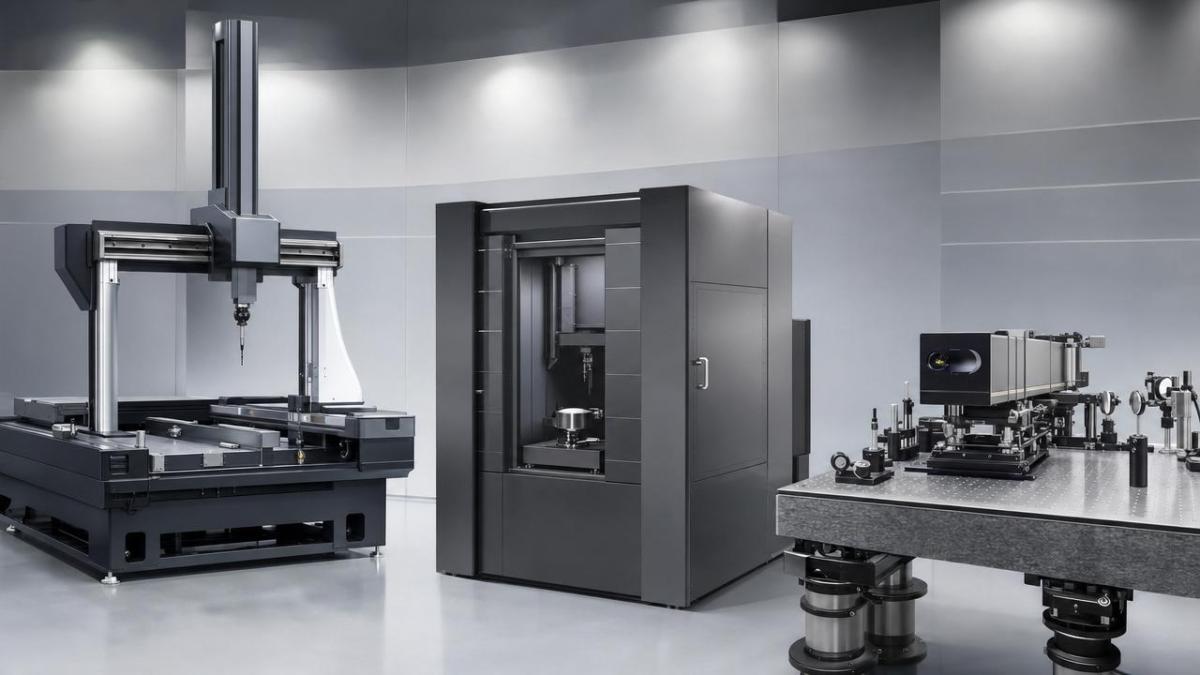
In summary, the introduction of the Ultra-Precision Metrology Zone at SEMICON China 2026 marks a formal elevation of dimensional measurement infrastructure within the semiconductor supply chain evaluation framework. It does not indicate immediate procurement acceleration—but it does clarify the technical and operational criteria now embedded in major foundry and IDM sourcing roadmaps. For stakeholders, this is best interpreted not as a sales event, but as a calibration point: a visible marker of where metrology capability must meet fab-grade readiness standards.
Source: Official announcement by SEMI, dated May 3, 2026. No further technical specifications, participation criteria, or evaluation rubrics have been publicly released as of the announcement date. Ongoing monitoring of SEMI China communications and participant disclosures is recommended.
Taglist:
Recent Articles
 2026.09.16How to assess surgical instruments for reliable sterilizationAssess surgical instruments for reliable sterilization with practical guidance on cleanability, material compatibility, inspection, and validated reprocessing.
 2026.09.15How material science for food ingredients improves shelf stabilityMaterial Science for food ingredients reveals how moisture control, encapsulation, oxidation management, and smart packaging extend shelf life and protect quality.
 2026.09.14What purity specification do laboratory gases need for trace analysis?Ultra-high purity gases for laboratory use: learn how to specify, verify, and control critical impurities for reliable trace analysis and lower backgrounds.
 2026.09.13How to verify a lubricants exporter’s product quality before orderingLearn how to verify a lubricants exporter before ordering—from batch CoAs and lab tests to traceability, packaging, and export compliance. Reduce equipment and shipment risks.
 2026.09.12When does export control compliance training need to be refreshed?Export control compliance training: learn when annual and event-driven refreshers are needed to manage regulatory, product, access, and supply-chain risks.
 2026.09.11What makes a diaper bag backpack comfortable for all-day outings?Discover how a diaperbagsbackpack delivers all-day comfort with padded straps, breathable support, smart storage, and balanced capacity for stress-free outings.
 2026.09.10How nano-positioning stages enable sub-nanometer manufacturing precisionSub-nanometer manufacturing demands more than fine resolution. Discover how nano-positioning stages deliver stable, accurate motion through advanced feedback, control, and error management.
 2026.09.09How to validate biological implants for biocompatibility riskBiological implants validation: learn how to assess biocompatibility risk with ISO 10993, chemical characterization, and manufacturing controls.
 2026.09.08What to verify before selecting an XYZ translation stage OEM factoryXYZ translation stage OEM factory selection guide: verify volumetric accuracy, payload stiffness, traceable testing, controls, and acceptance criteria before ordering.
 2026.09.07How to match mining equipment to different extraction conditionsMining equipment selection made practical: match machines to rock, mine geometry, ground conditions, capacity, energy, and maintenance needs for safer, more productive extraction.
 2026.09.07Global photonics alignment market analysis: what is driving demand?Global photonics alignment market analysis: discover how semiconductor packaging, optical communications, sensing, and automation are driving demand for scalable, high-yield alignment solutions.
 2026.09.05When do Ultra-Precision Engineering consulting services add value?Ultra-Precision Engineering consulting services help buyers reduce qualification risk, validate real-world performance, and control lifecycle costs before committing to complex suppliers.
 2026.09.04How to choose a nano-indentation system for reliable hardness testingLearn how to choose a nano-indentation system for hardness testing with confidence. Compare calibration, load control, drift stability, test modes, data quality, and application fit for reliable results.
 2026.09.03When does a bridge CMM outperform a portable measuring arm?CMM systems: discover when a bridge CMM delivers superior repeatability, tighter uncertainty control, and dependable inspection results over a portable measuring arm.
 2026.09.02How does industrial innovation analysis guide technology choices?Industrial Innovation analysis helps manufacturers choose technologies with confidence by evaluating performance, integration, compliance, and lifecycle risks. Discover a smarter decision framework.
 2026.09.01How precise must micro-manipulation systems be for microassembly?Micro-manipulation systems for microassembly: learn how to match precision, repeatability, feedback, and error budgets to achieve reliable, high-yield assembly.
 2026.08.31What to verify before choosing a wafer probe station exporterWafer probe station exporter selection starts with verified performance, integration, export readiness, and lifecycle support. Learn what to check before you buy.
 2026.08.30When does pulse welding improve precision in a micro-welding workstation?Micro-welding workstation pulse welding improves precision by controlling heat, reducing variation, and protecting delicate assemblies. Discover when it delivers measurable results.
 2026.08.29When does machine learning improve defect detection in CMM inspection?Machine learning improves CMM defect detection when measurement data is stable, traceable, and actionable. Learn how to spot early drift, prioritize risk, and strengthen quality decisions.
 2026.08.28How to compare nano-fabrication tools in North America for probe-station workCompare nano-fabrication tools North America labs use for probe-station work—evaluate motion, optics, touchdown control, thermal stability, and service support.
 2026.08.27When does biomass energy make financial sense for industrial heat?Biomass energy can cut industrial heat costs when demand, fuel supply, logistics, and compliance align. Explore the key financial tests for a resilient investment.
 2026.08.26What to check before choosing an OEM PZT driver manufacturerPZT driver manufacturer OEM selection starts with application fit. Learn what to check on stability, load matching, compliance, and lifecycle support before you buy.
 2026.08.25What a battery management system must monitor to prevent cell failureBattery management system essentials: learn what to monitor at cell level—voltage, current, temperature, SOC, balancing, and deviation trends—to prevent cell failure and improve battery safety.
 2026.08.24How long do hybrid car parts last before replacement becomes likelyHybrid car parts do not all wear out at the same pace. Learn the warning signs, lifespan factors, and when replacement is truly likely before costs rise.
 2026.08.23How to tell if an exporters directory is reliable before you use itExporters directory reliability starts with transparency. Learn how to spot verified data, fresh listings, and red flags before trusting any platform for sourcing.
 2026.08.22How semiconductor encoder resolution affects positioning accuracySemiconductor encoder resolution directly shapes positioning accuracy in precision motion systems. Learn how to evaluate real performance, avoid spec traps, and choose the right solution.
 2026.08.21How to assess industrial integrity for manufacturing equipment before failure risks escalateIndustrial integrity for manufacturing equipment starts with spotting drift before breakdowns occur. Learn practical assessment steps to reduce risk, protect quality, and improve uptime.
 2026.08.20Common Faults in a Synthetic Leather Calendering Line and What to CheckSynthetic leather calendering line faults explained clearly: learn what to check for thickness variation, gloss loss, web wandering, embossing defects, and faster troubleshooting.
 2026.08.20When does regulatory foresight reporting reduce compliance riskRegulatory Foresight reporting helps reduce compliance risk before rule changes disrupt sourcing, shipping, validation, or customer acceptance. Learn when early insight prevents costly delays.
 2026.08.19When does glass wool insulation roll make sense over rigid boards?Glass wool insulation roll makes sense when fast cavity coverage, acoustic control, and easy handling matter more than load resistance. Learn when rolls outperform rigid boards.
 2026.08.18What to look for in a precision measurement supplier for tight-tolerance partsPrecision measurement supplier selection starts with data trust, not just equipment. Learn how to assess calibration, multi-sensor capability, environment, and reporting for tight-tolerance parts.
 2026.08.17How to tell when wiper blades need replacing instead of cleaningWiper blades acting up? Learn how to tell if a quick cleaning will restore clear visibility or if worn, cracked, or streaking wiper blades need replacing for safer driving.
 2026.08.16US Tightens Licensing for Certain Electronic Gas Exports to China From Aug. 15US Tightens Licensing for Certain Electronic Gas Exports to China From Aug. 15. Learn how the new rule impacts semiconductor supply chains, compliance planning, and cross-border shipment certainty.
 2026.08.16How much does a linear motor stage really cost?Linear motor stage price varies by precision, travel, payload, and support. Learn what really drives cost and how to compare quotes for the best value.






FILTER_CORE
REF_NO: 0042
Editors' Picks
- 00
0000-00
How to assess surgical instruments for reliable sterilization - 00
0000-00
How material science for food ingredients improves shelf stability - 00
0000-00
What purity specification do laboratory gases need for trace analysis? - 00
0000-00
How to verify a lubricants exporter’s product quality before ordering