
SEMICON China 2026 Adds Ultra-Precision Metrology Zone in Shanghai
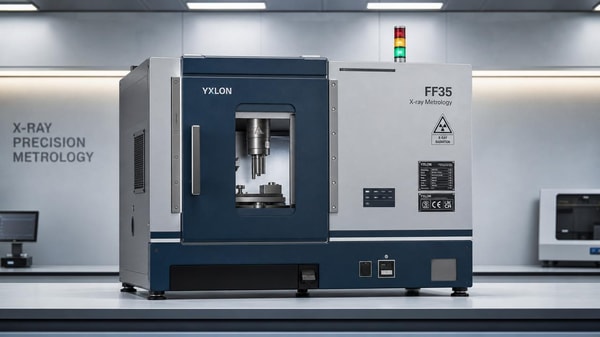
On May 2, 2026, SEMI announced the launch of an Ultra-Precision Metrology Zone at SEMICON China 2026, scheduled for October 21–23 in Shanghai. This new dedicated zone focuses on coordinate measuring machines (CMM), X-ray metrology, and laser interferometry systems — three core technologies enabling sub-micron and nanoscale measurement accuracy. The initiative is relevant to semiconductor manufacturing, advanced packaging, photonics, precision optics, aerospace components, and high-end medical device production — sectors where dimensional fidelity directly impacts yield, reliability, and compliance.
Event Overview
On May 2, 2026, SEMI officially confirmed that the 2026 edition of SEMICON China — to be held in Shanghai from October 21 to 23 — will feature its first-ever Ultra-Precision Metrology Zone. The zone will showcase equipment and solutions centered on CMM Systems, X-ray Metrology, and Laser Interferometry. It will host exhibitors from the global top 20 metrology equipment manufacturers and leading Chinese precision manufacturing solution providers. Six international calibration institutions — including Germany’s Physikalisch-Technische Bundesanstalt (PTB) and China’s China National Accreditation Service for Conformity Assessment (CNAS) — have jointly endorsed the technical credibility of the zone.
Impact on Specific Industry Segments
Advanced Semiconductor Equipment Manufacturers
These firms supply tools used in front-end wafer fabrication and advanced packaging. As process nodes shrink below 3 nm and 3D stacking increases, in-line and post-process metrology demands grow sharply. The new zone signals rising industry emphasis on traceable, high-resolution measurement capability — a prerequisite for qualifying next-generation lithography, etch, and deposition tools. Impact manifests in tighter integration requirements between metrology modules and process tools, as well as increased scrutiny on measurement uncertainty budgets.
Precision Component Suppliers (e.g., Optics, Wafer Chucks, Stage Systems)
Suppliers producing ultra-stable mechanical platforms, optical mounts, or ceramic substrates face stricter incoming inspection protocols when delivering to chipmakers or equipment OEMs. The zone highlights growing reliance on laser interferometry and CMM-based verification for thermal drift compensation and geometric error mapping. Affected companies may need to align internal QA workflows with ISO/IEC 17025-accredited practices — especially if supplying to clients requiring PTB- or CNAS-traceable calibration data.
Calibration & Metrology Service Providers
Third-party labs offering on-site or off-site calibration for CMMs, interferometers, or X-ray CT systems stand to gain visibility and demand traction. The joint endorsement by six international calibration bodies indicates formal recognition of standardized performance benchmarks across geographies. However, service providers must verify whether their scope of accreditation covers the specific measurement ranges and uncertainty levels emphasized in the zone — e.g., sub-100 nm length measurements or angular deviations under 0.1 arcsec.
What Relevant Enterprises or Practitioners Should Monitor and Do Now
Track official exhibitor list and technical seminar schedule
The final exhibitor roster and associated technical sessions — expected to be published by SEMI in Q3 2026 — will clarify which specific CMM models, X-ray CT configurations, and interferometer architectures are prioritized. Companies evaluating metrology upgrades should cross-reference these with their own process control roadmaps and qualification timelines.
Review current calibration traceability documentation against PTB/CNAS alignment signals
The inclusion of PTB and CNAS among endorsing bodies suggests increasing convergence in national metrology infrastructure expectations. Firms maintaining internal calibration labs should audit whether their uncertainty statements, reference standards, and environmental controls meet evolving inter-laboratory comparability criteria — particularly for measurements affecting critical dimensions (CD) or overlay error (OVL).
Distinguish between exhibition signaling and near-term procurement impact
While the zone reflects strategic industry direction, actual capital expenditure cycles for metrology tools remain tied to fab expansion plans and technology node transitions. Observably, most large-scale purchases occur 6–12 months after tool qualification — not at exhibition announcement. Therefore, procurement teams should treat the zone as an intelligence-gathering opportunity rather than an immediate trigger for budget reallocation.
Prepare for potential alignment with emerging industry metrology guidelines
SEMI has historically used major exhibitions to preview upcoming standards initiatives. Analysis shows that dedicated zones often precede formal working group formation — for example, the 2022 AI in Manufacturing Zone preceded SEMI’s AI/ML standardization roadmap. Stakeholders should monitor SEMI’s Global Standards Program updates following the event for possible new activity around uncertainty reporting formats or multi-sensor fusion protocols.
Editorial Perspective / Industry Observation
This announcement is best understood as a coordinated signal, not an operational milestone. It reflects consensus among equipment vendors, end-users, and metrology authorities that ultra-precision measurement is shifting from a supporting function to a foundational enabler — especially for heterogeneous integration and atomic-layer processes. Observably, the timing coincides with increasing regulatory attention on measurement traceability in export-controlled semiconductor technologies. However, the zone itself does not constitute a new standard, regulation, or funding mechanism. Its value lies in concentrating technical dialogue, benchmarking expectations, and surfacing interoperability gaps — all of which require sustained follow-up beyond the exhibition dates.
From an industry standpoint, this development underscores that metrology is no longer siloed within quality departments. It is becoming embedded in design-for-manufacturability (DFM), process integration, and even IP licensing frameworks — particularly where dimensional stability defines functional performance.
Current more appropriate interpretation is: a coordinated readiness indicator for next-generation process control infrastructure, rather than evidence of immediate market acceleration or regulatory enforcement.

Conclusion
The introduction of the Ultra-Precision Metrology Zone at SEMICON China 2026 marks a formal institutional acknowledgment of metrology’s expanding role in advanced semiconductor manufacturing and adjacent high-precision industries. It does not represent a policy change or commercial product launch, but rather consolidates technical priorities across equipment suppliers, end-users, and calibration authorities. For stakeholders, the primary value lies in early insight into measurement capability expectations — not in immediate procurement or compliance mandates. A measured, evidence-based approach — anchored in actual tool qualification cycles and calibration infrastructure readiness — remains the most appropriate response.
Source Disclosure
Primary source: SEMI official announcement dated May 2, 2026.
Note: Exhibitor list, technical seminar details, and any related SEMI standards activity remain pending official release and are subject to ongoing observation.
Recent Articles
 2026.05.03Cleanroom Manual Manipulator OEM: Key Tradeoffs Between Cost, Reach, and ControlCleanroom manual manipulator OEM selection affects cost, reach, and control. Learn how to compare suppliers, reduce contamination risk, and improve ROI with smarter procurement decisions.
 2026.05.03Fiber Optic Alignment System Choices for Stable Coupling in Compact AssembliesFiber optic alignment system choices for compact assemblies: learn how to improve stable coupling, reduce insertion loss, and compare options for reliable, scalable production.
 2026.05.03Piezo Actuator Hysteresis Data: How Much Error Is Acceptable in Real Motion ControlPiezo actuator hysteresis data explained for real motion control: learn what error is acceptable, how to judge drift, and when recalibration or replacement protects uptime and precision.
 2026.05.03Laser Interferometer Measurement Range Limits That Can Distort Your Accuracy PlanLaser interferometer measurement range limits can quietly distort calibration, alignment, and motion verification. Learn the hidden risks, key range factors, and how to protect accuracy plans.
 2026.05.03What to Check Before Sourcing Nano-Fabrication Tools WholesaleNano-fabrication tools wholesale: learn what to verify before buying, from stability and metrology fit to compliance and traceability, to reduce risk and choose reliable suppliers.
 2026.05.03Hexapod Payload and Stiffness Metrics: Where Load Capacity Starts to Affect AccuracyHexapod payload and stiffness metrics reveal when load capacity begins to reduce accuracy. Learn how stiffness, dynamics, and offset mass impact precision, ROI, and smarter hexapod selection.
 Benchmarks: A Practical Baseline Before You Spec a Stage") 2026.05.03Nano-Positioning Resolution (nm) Benchmarks: A Practical Baseline Before You Spec a StageNano-positioning resolution (nm) benchmarks explained for buyers: compare real-world stage performance, spot weak specs faster, and avoid overpaying before you choose a precision motion system.
2026.05.03Nano-Positioning Resolution (nm) Benchmarks: A Practical Baseline Before You Spec a StageNano-positioning resolution (nm) benchmarks explained for buyers: compare real-world stage performance, spot weak specs faster, and avoid overpaying before you choose a precision motion system. 2026.05.03XYZ Stage Travel Repeatability Explained for High-Accuracy Motion Setupxyz stage travel repeatability explained clearly for high-accuracy motion setups. Learn what affects consistency, how to test real-world performance, and how to reduce drift and costly positioning errors.
 2026.05.03Capacitive Sensor Non-Linearity Data: What Actually Matters in Performance ReviewCapacitive sensor non-linearity data explained for real-world performance review—learn how to compare suppliers, assess error budgets, and choose sensors with confidence.
 2026.05.03How to Compare Robotic Cell Micro-Assembly OEM Options for Precision ProductionRobotic cell micro-assembly OEM selection starts with the right criteria. Compare precision, integration, compliance, and lifecycle support to reduce risk and choose a scalable OEM partner.
 2026.05.03SEMICON China 2026 Adds Ultra-Precision Metrology Zone in ShanghaiUltra-Precision Metrology Zone debuts at SEMICON China 2026 in Shanghai — discover cutting-edge CMM, X-ray & laser interferometry solutions for semiconductors, photonics & aerospace.
 2026.05.03China Customs Launches Purity Watch for Electronic Special GasesChina Customs' Purity Watch for electronic special gases delivers instant HS code, compliance & RCEP origin insights—boost accuracy and speed at 42 ports.
 2026.05.03ASML & SMIC Release ALD Gas Management White PaperALD gas management: ASML & SMIC’s new white paper highlights SEMI F63-2026 standard and Purity Watch’s global ALD ecosystem role—key for gas suppliers, tool integrators & fabs.
 2026.05.03SEMI China Reports ALD/CVD Skids Delivery Shifts: China at 11.2 Weeks, North America PrioritizedALD/CVD skids delivery shifts revealed: China at 11.2 weeks, North America prioritized under new EAR rules—key insights for semiconductor supply chains.
 2026.05.03KATS Tightens KC Certification for Micro-Robots in KoreaKC certification for micro-robots in Korea now mandates ISO 13849-1 PLd compliance—urgent action required for medical & lab robotics manufacturers, importers, and suppliers before Nov 30, 2026.
") 2026.05.03VDE Tightens EMC Standards for X-ray Metrology Devices (2026)VDE tightens EMC standards for X-ray metrology devices in 2026—learn how VDE-AR-E 2612-1:2026 impacts exporters, OEMs & labs, and what to do now.
2026.05.03VDE Tightens EMC Standards for X-ray Metrology Devices (2026)VDE tightens EMC standards for X-ray metrology devices in 2026—learn how VDE-AR-E 2612-1:2026 impacts exporters, OEMs & labs, and what to do now. 2026.05.03PSA Launches Nano-Positioning Stage Dedicated Channel in SingaporePSA launches Singapore’s Ultra-Precision Stage Dedicated Channel — accelerating nano-positioning stage & CMM platform clearance to just 1.8 days. Boost supply chain resilience now.
 2026.05.03Japan METI Releases First Piezo Valve Import White ListJapan METI's first Piezo Valve Import White List boosts export efficiency for certified Chinese manufacturers — discover eligibility, benefits & urgent compliance steps.
 2026.05.03EU Launches CE Fast Track for Optical Coating Medical DevicesEU CE fast track for optical coating medical devices is live—Chinese manufacturers must now meet ISO 13485:2025 and EN ISO 10993-18 interface leachables requirements to stay on the EU procurement white list.
 2026.05.03US BIS Adds 3 ALD Precursors to Export ControlsUS BIS adds TDMASn, TBTDEN & DEZn ALD precursors to export controls—key for semiconductor, chemical & advanced materials firms. Act now.
 Supplier Review: What Signals Reliable After-Sales Support") 2026.05.02Atomic Force Microscope (AFM) Supplier Review: What Signals Reliable After-Sales SupportAtomic force microscope (AFM) supplier review for maintenance teams: learn how to spot reliable after-sales support, faster recovery, spare-parts readiness, and long-term uptime protection.
2026.05.02Atomic Force Microscope (AFM) Supplier Review: What Signals Reliable After-Sales SupportAtomic force microscope (AFM) supplier review for maintenance teams: learn how to spot reliable after-sales support, faster recovery, spare-parts readiness, and long-term uptime protection. 2026.05.02Micro-Welding Workstation OEM: Common Integration Mistakes to Avoid EarlyMicro-welding workstation OEM selection can make or break production. Learn the most common early integration mistakes to avoid delays, precision loss, and compliance risk.
 2026.05.02Optical Tweezers Factory Selection Guide for Application-Specific PerformanceOptical tweezers factory selection guide: compare application-specific performance, calibration, customization, and quality control to choose a reliable partner with confidence.
 2026.05.02PZT Driver Manufacturer OEM Options: What Affects Integration and Lead TimePZT driver manufacturer OEM selection affects integration, compliance, and lead time. Learn what buyers should compare to reduce risk, speed sourcing, and choose the right partner.
 2026.05.02High Precision Goniometer Wholesale: How to Judge Repeatability Before OrderingHigh precision goniometer wholesale buyers: learn how to judge repeatability before ordering with scenario-based checks, supplier proof points, and risk-reducing evaluation tips.
 2026.05.02Vibration Isolation Table Wholesale: Cost Traps That Affect Long-Term ValueVibration isolation table wholesale buyers: uncover hidden lifetime cost traps, from installation and compliance to downtime and replacement, and choose offers that protect ROI.
 2026.05.02What to Compare Before Selecting a Micro-Injection System FactoryMicro-injection system factory selection starts with precision, compliance, and lifecycle support. Compare capabilities, validation, and customization to reduce risk and choose a reliable partner.
 2026.05.02Vacuum Compatible Nano-Stage: Key Specs That Matter in Real Lab UseVacuum compatible nano-stage buying guide: discover the real specs that matter in labs, from drift and repeatability to outgassing, thermal control, and stable positioning.
 2026.05.02Micro-Fluidic Probe Factory Checklist for Process Fit and Delivery ReliabilityMicro-fluidic probe factory checklist for buyers: evaluate process fit, quality control, and delivery reliability to reduce sourcing risk and choose a dependable long-term supplier.
 2026.05.02How to Choose an XYZ Translation Stage OEM for Stable Motion Accuracyxyz translation stage oem selection starts with the right checklist. Learn how to evaluate motion accuracy, rigidity, thermal drift, and OEM consistency for reliable system performance.
 2026.05.02ASML, TSMC & SMIC Release 2026 ALD Gas Management White PaperALD gas management breakthrough: ASML, TSMC & SMIC’s 2026 white paper integrates Chinese Purity Watch suppliers into global SEMI F63-2026 ultra-high-purity standards — act now to align.
 2026.05.02SEMICON China 2026 Adds Ultra-Precision Metrology Zone in ShanghaiUltra-Precision Metrology Zone debuts at SEMICON China 2026 in Shanghai — discover ISO/IEC 17025:2025-compliant solutions for sub-5nm semiconductor manufacturing.
 2026.05.02SEMI China Reports 11.2-Week ALD/CVD Skids Lead Time for Chinese LeadersALD/CVD skids lead time drops to 11.2 weeks for top Chinese suppliers — now shortest globally. Key insight for semiconductor equipment procurement, fab integration & supply chain strategy.
 2026.05.02China Customs Launches Purity Watch for Electronic Special GasesChina Customs' Purity Watch for electronic special gases boosts HS code accuracy to 99.8% — streamline silane, ammonia & BCl₃ exports now.























FILTER_CORE
REF_NO: 0042
Editors' Picks
- 00
0000-00
Cleanroom Manual Manipulator OEM: Key Tradeoffs Between Cost, Reach, and Control - 00
0000-00
Fiber Optic Alignment System Choices for Stable Coupling in Compact Assemblies - 00
0000-00
Piezo Actuator Hysteresis Data: How Much Error Is Acceptable in Real Motion Control - 00
0000-00
Laser Interferometer Measurement Range Limits That Can Distort Your Accuracy Plan