
Impact of Sub-nm Lithography on Stages: Tolerance Challenges
As semiconductor nodes move below one nanometer, the impact of sub-nm lithography on stages becomes a defining engineering issue. Motion systems now influence overlay, linewidth control, defect escape, and tool uptime.
This shift affects semiconductor platforms, metrology integration, thermal architecture, and qualification logic across the broader advanced manufacturing landscape. Tolerance decisions once treated as secondary now shape process capability at the system level.
The impact of sub-nm lithography on stages is therefore not only a motion-control topic. It is a cross-disciplinary question involving materials, vibration isolation, sensor fusion, contamination control, and lifecycle verification.
What does the impact of sub-nm lithography on stages really mean?

At larger nodes, minor stage errors could sometimes be absorbed by process windows. In sub-nm lithography, that safety margin shrinks sharply. Nanometer-scale drift can translate into measurable overlay loss.
A stage is not only a moving platform. It is a precision structure coordinating acceleration, settling, straightness, yaw, pitch, and roll under real thermal and dynamic loads.
The impact of sub-nm lithography on stages appears in three linked domains:
- Positioning accuracy during exposure and alignment
- Thermal stability across long production cycles
- Dynamic repeatability under high-speed scanning conditions
In practical terms, engineers must evaluate not just nominal accuracy, but error behavior over time. Repeatable error may be compensated. Unstable error often destroys confidence in compensation models.
Why do tolerance challenges increase so sharply below one nanometer?
The answer starts with scale. As critical dimensions shrink, every source of mechanical uncertainty consumes a larger share of the allowable process budget.
The impact of sub-nm lithography on stages becomes severe because tolerances interact. A tiny thermal gradient can alter guide geometry. A small guide distortion can shift encoder interpretation. That shift can affect overlay.
Key contributors include:
- Structural expansion from motors, bearings, and ambient drift
- Servo lag during high jerk and rapid directional changes
- Floor vibration coupling into the positioning loop
- Airflow disturbances inside clean enclosures
- Sensor noise, interpolation error, and alignment offset
Sub-nm lithography also tightens sensitivity to Abbe error. If the measurement axis and process axis are separated, even small angular deviations create amplified positional deviation at the working point.
This is why laser interferometers, multi-axis encoders, and advanced structural compensation are increasingly combined. One sensor alone rarely captures the whole motion truth anymore.
Which stage design factors matter most in sub-nm environments?
The impact of sub-nm lithography on stages is strongest when stage architecture was optimized only for speed or only for static accuracy. Sub-nm applications demand balanced design.
1. Structural material selection
Low thermal expansion materials reduce drift, but stiffness, machinability, damping, and contamination compatibility also matter. Material choice must match dynamic duty, not just catalog values.
2. Drive technology and force uniformity
Linear motors offer speed, but they also introduce heat. Voice coil and air-bearing solutions may improve smoothness in some axes. Force ripple must be examined with motion profiles, not isolated specifications.
3. Bearing and guidance strategy
Air bearings can provide frictionless motion and cleaner repeatability. Yet pressure stability, gas purity, and external disturbance sensitivity become critical. Mechanical guidance may be robust but can add wear effects.
4. Metrology loop placement
A short, direct measurement loop reduces hidden errors. The impact of sub-nm lithography on stages often exposes designs where encoders monitor one location while process-critical motion occurs elsewhere.
5. Thermal management
Thermal symmetry matters as much as absolute cooling capacity. Uneven heat extraction can bend structures subtly, then corrupt otherwise excellent control loops.
How should motion performance be verified and compared?
Comparing brochure values is not enough. The impact of sub-nm lithography on stages is visible only when verification reflects real operating conditions and realistic disturbance patterns.
Useful evaluation questions include:
- Is accuracy reported bidirectional or unidirectional?
- Are settling times measured after full production accelerations?
- Was thermal drift tested over hours or only minutes?
- Were payload, cable forces, and vacuum or cleanroom effects included?
- Does the metrology system comply with recognized calibration practice?
A stronger benchmark combines static straightness, dynamic following error, spectral vibration data, and long-duration drift records. This gives a better picture than peak accuracy alone.
What mistakes create hidden risk when selecting or upgrading stages?
One frequent mistake is treating sub-nm suitability as a single specification line. The impact of sub-nm lithography on stages emerges from system behavior, not one advertised number.
Another error is underestimating integration effects. Cable drag, gas lines, metrology frame mounting, and environmental isolation often degrade performance after installation.
Watch for these warning signs:
- Only room-temperature static data is provided.
- No error budget links the stage to process outcomes.
- Compensation models are undocumented or difficult to validate.
- Maintenance intervals are unclear for bearings, sensors, or cooling circuits.
- No alignment plan exists for metrology recalibration after transport or service.
In multi-industry environments, these risks affect more than lithography tools. Similar tolerance logic now appears in micro-manipulation, CMM systems, optical packaging, and advanced biomedical fabrication.
How do cost, implementation time, and lifecycle planning change?
The impact of sub-nm lithography on stages increases upfront engineering effort. However, the larger cost often appears later, when hidden drift or vibration problems trigger yield loss and repeated recalibration.
Implementation planning should include:
- Environmental readiness checks for temperature, floor vibration, and airflow
- Factory acceptance testing aligned with process-relevant metrics
- Site acceptance mapping after final installation
- Periodic metrology traceability reviews against ISO, SEMI, or IEEE practices
- Spare strategy for sensors, controllers, and contamination-sensitive components
Longer qualification cycles are normal in this range. They should not be seen as delay alone. They are the main defense against unstable process capability in ultra-precision operations.
In summary, the impact of sub-nm lithography on stages is a system-level tolerance challenge. It combines mechanics, metrology, control, thermals, and verification discipline into one performance question.
The most reliable path is to evaluate stages through real error budgets, realistic operating conditions, and long-duration evidence. That approach improves confidence before costly integration decisions are locked in.
For organizations tracking ultra-precision benchmarks, the next step is clear: compare stage architecture, metrology loop design, and thermal behavior against application-specific tolerance targets before qualification begins.
Recent Articles
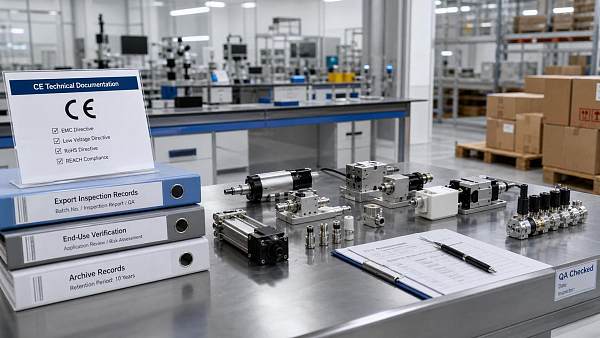
 2026.06.20EU Flags Micro-Actuators and Piezo Valves in Export ChecksEU export checks now spotlight Micro-Actuators and Piezo Valves. Learn how the new dual-use guidance affects end-user reviews, record retention, and shipment readiness.
 2026.06.20Sumitomo Electric EMC Price Rise Pressures ALD/CVD SubstratesSumitomo Electric EMC price rise pressures ALD/CVD substrates as 10–20% cost hikes ripple through packaging and optical supply chains. See Q3 impact, compliance risks, and procurement actions.
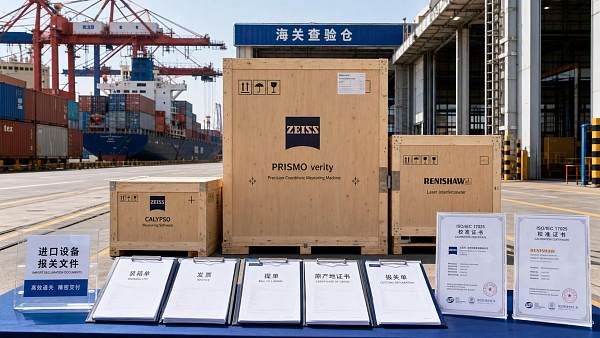
 2026.06.20Shanghai Port Opens Fast Track for Precision EquipmentShanghai Port opens a fast track for precision equipment, cutting eligible customs clearance time by 40%. Learn what importers must prepare to speed delivery and stay compliant.
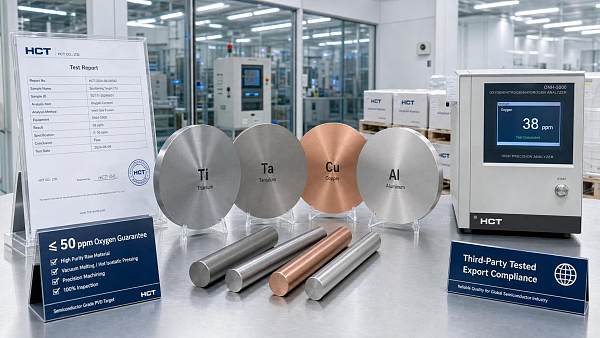
 2026.06.20Japan Tightens PVD Target Oxygen Limit to 50 ppmJapan tightens PVD target oxygen limit to 50 ppm under JIS C 8901:2026. Learn how the new ISO/IEC 17025 report rule affects Ti, Ta, Cu, and Al exports to Japan.
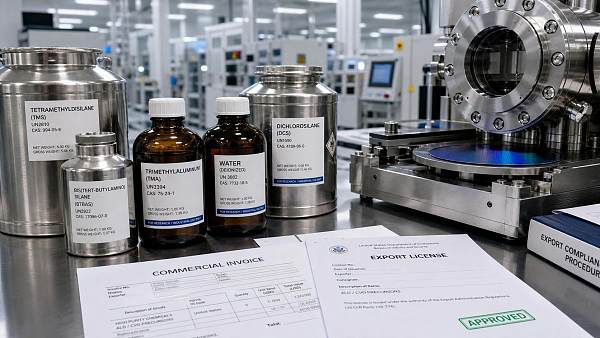
 2026.06.20BIS Curbs Three ALD/CVD Precursors for ExportBIS Curbs Three ALD/CVD Precursors for Export: learn how the new BIS rule affects TiCl4 derivatives, Ta(NEt2)5, and hafnium compounds, with key compliance and shipment risks for China-focused suppliers.
 2026.06.20Wafer Probe Station Wholesale: Key Specs and Support Terms to CompareWafer probe station wholesale buyers should compare accuracy, thermal stability, software integration, warranty, and service terms to reduce risk and secure better long-term value.
 2026.06.20Laboratory Freezer Supplier Checklist: Certifications, Lead Times, and Service RiskLaboratory freezer supplier checklist: compare certifications, real lead times, and service risk to avoid costly delays, compliance gaps, and weak after-sales support.
 2026.06.20Portable Camping Stoves: Fuel Options, Boil Time, and Safety Trade-Offsportablecampingstoves guide: compare fuel types, real-world boil time, wind performance, and safety trade-offs to choose the most reliable stove for every trip.
 2026.06.20Fashion Retail Trends in 2026: What Matters for Store Growth and MarginsFashion retail in 2026 is about more than sales growth. Explore the trends shaping store margins, inventory precision, and omnichannel efficiency for smarter, more profitable decisions.
 2026.06.20How to Choose Hydraulic Oil Seals for Pressure, Heat, and Fluid CompatibilityHydraulicoilseals selection made simple: learn how to match seals for pressure, heat, and fluid compatibility to reduce leaks, extend service life, and improve hydraulic system reliability.
 2026.06.19BIS Adds Three ALD/CVD Precursors to EAR ControlsBIS adds TMA, DEZ and cyclic silazane ALD/CVD precursors to EAR controls. Learn what the new China export license rule means for skid makers, chemical traders and supply chains.
 2026.06.19Japan Tightens JIS C 8901 Oxygen Limit to 50ppmJapan Tightens JIS C 8901 Oxygen Limit to 50ppm: learn how the new 50ppm rule reshapes sputtering target compliance, supplier access, and PVD export readiness.
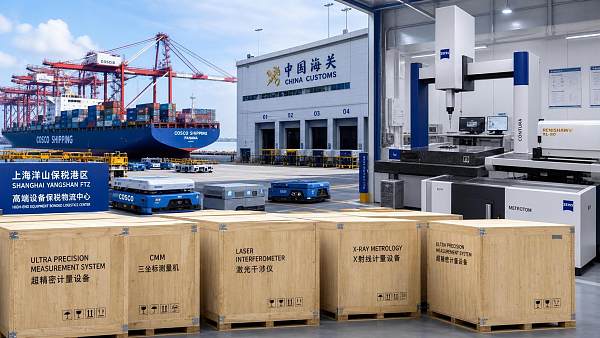
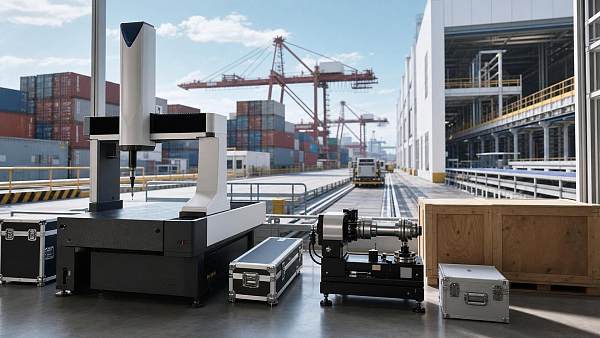
 2026.06.19Shanghai Opens Fast-Track for Precision Metrology ImportsShanghai opens a fast-track for precision metrology imports, covering CMM Systems, X-ray Metrology, and Laser Interferometry. See how faster customs clearance can improve delivery planning.
 2026.06.19EU AI Act Delay Reshapes Timing for High-Risk SystemsEU AI Act delay shifts the timeline for high-risk systems to 2 Dec 2027, reshaping compliance, market entry, and delivery planning for AI-enabled equipment in the EU.
 2026.06.19FCC Rule Restricts Non-MRA Lab CertificationsFCC Rule Restricts Non-MRA Lab Certifications: learn how the new FCC certification limits affect exporters, importers, testing routes, compliance costs, and U.S.-bound shipments.
 2026.06.19Ringlock Scaffolding System Wholesale: Cost, Load, and Delivery FactorsRinglock scaffolding system wholesale guide: compare real cost, load capacity, compatibility, and delivery timelines to avoid hidden risks and choose a safer, more reliable supplier.
 2026.06.19Fire Extinguishers: Common Sizing Mistakes That Raise Safety RiskFireextinguishers sizing mistakes can slow response, increase contamination risk, and weaken coverage. Learn how to match size, agent, and placement to real hazards.
 2026.06.19Welding Equipment Selection: MIG, TIG, or Stick for Daily Jobs?Welding equipment selection made practical: compare MIG, TIG, and Stick for daily jobs, improve weld quality, control costs, and choose the right process with confidence.
 2026.06.19How to Choose Interactive Baby Toys by Age, Safety, and Play Valueinteractivebabytoys made simple: learn how to choose the right options by age, safety, and play value to find durable, engaging toys your child will truly enjoy.
 2026.06.19Ultra-High Purity Gases: Key Specs That Affect Process StabilityUltra-high purity gases directly impact process stability, yield, and uptime. Explore the key specs, contamination risks, and supplier checks that help protect precision manufacturing performance.
 2026.06.18Shanghai Port Opens Fast Track for Precision ImportsShanghai Port opens a fast track for precision imports, cutting customs clearance from 5.2 to 3.1 days for CMM, laser interferometry, and X-ray metrology equipment. See what it means for buyers and suppliers.
 2026.06.18Japan Tightens PVD Target Oxygen Limit Under JIS C 8901Japan Tightens PVD Target Oxygen Limit Under JIS C 8901: learn how the new 50 ppm rule and XRF+GDMS checks reshape market access, supplier qualification, and export readiness.
 2026.06.18BIS Adds ALD/CVD Precursors to EAR Control ListBIS Adds ALD/CVD Precursors to EAR Control List: learn how the new BIS rule affects China exports, licensing, semiconductor sourcing, and supply chain compliance.
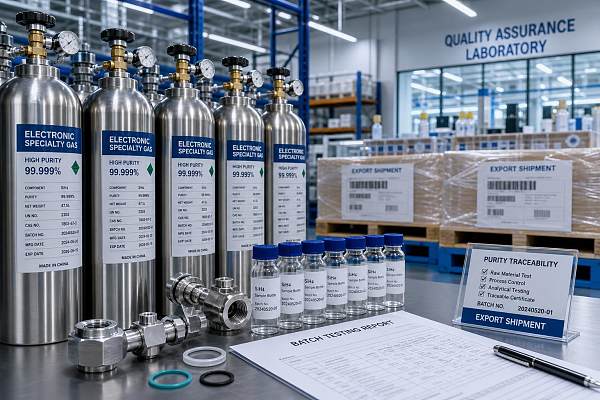
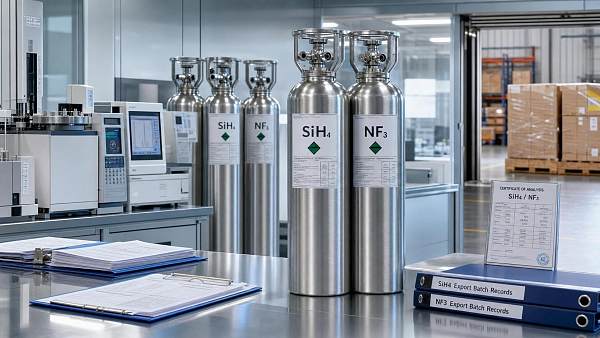
 2026.06.18China Requires Purity Traceability for E-Gas ExportsChina requires purity traceability for e-gas exports, covering SiH₄, NF₃, WF₆, and BCl₃. Learn the new CNAS lab declaration rule, customs clearance risks, and key compliance steps now.
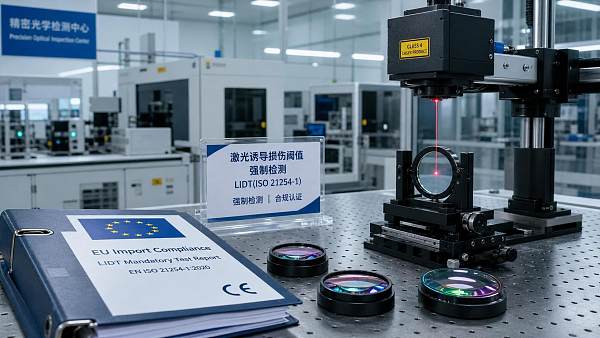
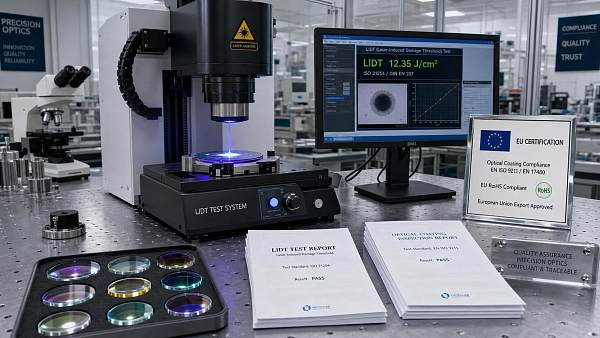
 2026.06.18EU EN 17558:2026 Makes LIDT Testing MandatoryEU EN 17558:2026 makes LIDT testing mandatory for optical coating products entering the EU. Learn who is affected, the Aug 1, 2026 customs deadline, and how to stay compliant.
 2026.06.18Glass Bottles Wholesale: How to Balance Price, Quality, and Lead Timeglassbottleswholesale made smarter: learn how to balance price, quality, and lead time, avoid hidden sourcing costs, and choose suppliers with confidence.
 2026.06.18Biological Implants Process Validation: Key Risk Control StepsBiological implants manufacturing process validation explained: learn the key risk control steps for traceability, equipment readiness, supplier control, and ongoing monitoring.
 2026.06.18HACCP Plan Basics: Critical Control Points and Common MistakesHACCP plan basics explained: learn how to identify true critical control points, avoid common mistakes, and build a practical, audit-ready food safety system.
 2026.06.18Sheet Masks OEM: Key Cost and MOQ Factors to ComparesheetmasksOEM cost and MOQ comparison guide: learn how to evaluate hidden fees, packaging, compliance, and lead times to choose a lower-risk, higher-value OEM partner.
 2026.06.18How to Choose Refractory Bricks for High-Heat Furnacesrefractorybricks selection for high-heat furnaces starts with temperature, atmosphere, and load. Learn how to compare brick types, reduce downtime, and improve lining life.
 2026.06.17China Moves to Launch WAICO Ahead of 2026 WAIC in ShanghaiChina moves to launch WAICO ahead of 2026 WAIC in Shanghai, signaling new opportunities in AI governance, precision manufacturing, and ultra-precision hardware sourcing. Explore what global buyers should watch now.
 2026.06.17China Tightens Export Traceability for SiH4 and NF3China Tightens Export Traceability for SiH4 and NF3: learn how the 2026 CNAS lab declaration rule impacts exporters, buyers, and compliance teams across key global markets.
 2026.06.17EU Updates EN 17558:2026 With Mandatory LIDT TestsEU updates EN 17558:2026 with mandatory LIDT tests for optical coatings. Learn how the new CE marking rule impacts EU exports, compliance timelines, and market access.
 2026.06.17Shanghai Port Pilots Fast-Track for Precision Metrology ImportsShanghai Port pilots a fast-track for precision metrology imports, cutting clearance by 40% for qualifying CMM Systems and Laser Interferometry equipment. See who benefits and what to prepare.



















FILTER_CORE
REF_NO: 0042