
Telemedicine Systems: Key Features That Affect Daily Use
For clinicians, care coordinators, and daily operators, telemedicine systems are only valuable when they make virtual care faster, clearer, and more reliable.
Beyond video calls, daily performance depends on workflow integration, patient data access, device connectivity, security controls, usability, and system uptime.
This guide explains which features affect real-world use, how to compare platforms, and where hidden operational friction often appears.
What Do Telemedicine Systems Need to Do Beyond Video Visits?
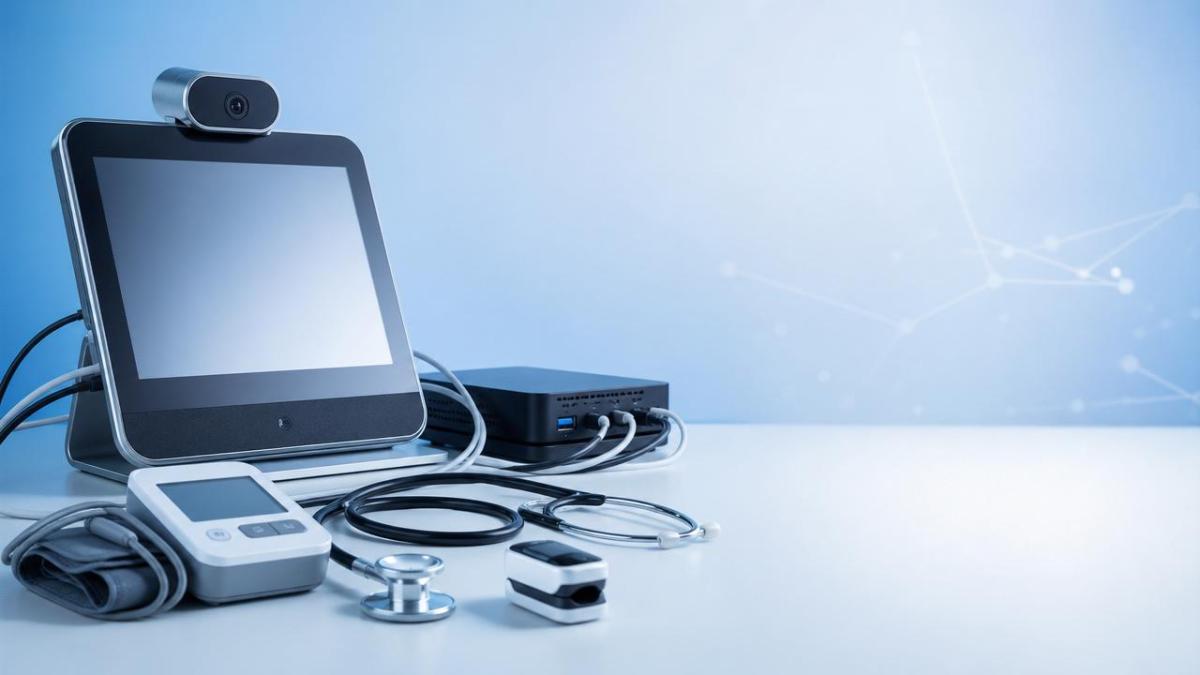
Telemedicine systems are not simply video meeting tools with medical branding.
A practical platform must support scheduling, identity verification, clinical documentation, remote monitoring, consent, billing, and follow-up communication.
The main difference is accountability.
Every interaction may involve protected data, clinical decisions, regulatory records, and time-sensitive care coordination.
Reliable telemedicine systems keep these functions connected instead of forcing users to switch between disconnected applications.
Daily use improves when the virtual care process follows a clear sequence.
- Appointment confirmation and patient instructions arrive automatically.
- Check-in captures consent, symptoms, and device readiness.
- The consultation opens with relevant records already available.
- Clinical notes, prescriptions, orders, and billing steps remain traceable.
- Follow-up tasks are assigned without manual duplication.
This workflow focus matters across healthcare, industrial medicine, corporate health programs, insurance services, and remote field operations.
In technical environments, telemedicine systems may also receive data from diagnostic devices, wearables, or calibrated measurement equipment.
That makes data integrity, timestamp accuracy, and audit trails essential for dependable decisions.
Which Workflow Features Affect Daily Use Most?
The most useful telemedicine systems reduce repetitive steps before, during, and after a consultation.
A weak workflow creates delays even when video quality is acceptable.
The first feature to examine is scheduling integration.
If appointments, reminders, cancellations, and waitlists are handled separately, staff time increases quickly.
Strong telemedicine systems synchronize calendars, intake forms, queue status, and appointment types in one operational view.
The second feature is documentation support.
Templates should fit common service lines without forcing rigid note structures.
Useful platforms allow structured fields, free-text notes, attachments, coding prompts, and review checkpoints.
The third feature is task routing.
After a virtual visit, referrals, lab orders, prescriptions, device instructions, and follow-up calls need ownership.
Telemedicine systems should make pending tasks visible before they become service failures.
Practical workflow questions to ask
- Can a visit be completed without copying data into another system?
- Are pre-visit forms linked to the encounter record?
- Can urgent cases be escalated during a virtual queue?
- Are no-shows, late arrivals, and failed connections tracked?
- Can administrators review bottlenecks by location, service, or visit type?
These questions reveal whether telemedicine systems support care delivery or merely host remote conversations.
How Important Is Data Access and System Integration?
Data access is one of the strongest predictors of successful daily use.
During a remote consultation, incomplete information can slow decisions or increase follow-up work.
Effective telemedicine systems connect with electronic health records, scheduling platforms, pharmacy tools, laboratory systems, payment workflows, and analytics dashboards.
Integration quality matters more than the number of advertised interfaces.
A reliable connection should update records accurately, preserve context, and avoid duplicate patient profiles.
Interoperability standards such as HL7, FHIR, DICOM, and secure API frameworks often influence long-term scalability.
For remote monitoring, telemedicine systems may collect readings from blood pressure devices, glucose meters, pulse oximeters, ECG patches, or specialized sensors.
In high-accuracy settings, device calibration status and data provenance become important.
This connects closely with technical benchmarking principles used in precision-driven industries.
Measurements are only useful when origin, method, timestamp, and acceptable tolerance are clear.
Integration signals that deserve attention
- Bidirectional data exchange, not one-way export only.
- Patient matching controls that reduce duplicate records.
- Error logs that explain failed transfers clearly.
- Device data labels showing source and collection time.
- Role-based access to sensitive documents and results.
When telemedicine systems integrate cleanly, remote care feels like a normal extension of existing operations.
When integration is poor, every visit creates hidden administrative debt.
What Security and Compliance Controls Should Be Reviewed?
Security cannot be treated as a background feature.
Telemedicine systems process identity details, medical histories, images, prescriptions, payment data, and sometimes live diagnostic feeds.
A platform should provide encryption in transit, encryption at rest, access controls, audit logs, and secure session management.
Multi-factor authentication is valuable for administrative users and high-risk workflows.
Role-based permissions should match actual responsibilities.
Excessive access creates avoidable exposure, while overly restrictive settings slow care delivery.
Telemedicine systems should also support consent management.
Consent records need to show what was accepted, when it was accepted, and which service was covered.
Compliance expectations vary by region and service type.
Relevant frameworks may include HIPAA, GDPR, SOC 2, ISO 27001, local health privacy rules, and medical device cybersecurity guidance.
Data residency should be checked when virtual care crosses borders.
Export restrictions and technology transfer rules may also matter for specialized diagnostic tools or controlled technical data.
Common security mistakes
- Using shared accounts for convenience.
- Allowing recordings without clear governance.
- Ignoring mobile device management.
- Overlooking third-party plug-ins and analytics scripts.
- Failing to test incident response procedures.
Secure telemedicine systems balance protection, traceability, and ease of authorized access.
How Do Usability and Reliability Change Adoption?
Usability determines whether telemedicine systems become routine tools or occasional backup options.
A platform can be technically advanced but frustrating in daily practice.
The patient interface should be simple, browser-friendly, and accessible on common devices.
Clear instructions, language options, captioning, and low-bandwidth modes improve completion rates.
The professional interface should reduce clicks.
Important buttons should be visible, records should load quickly, and alerts should be meaningful.
Too many pop-ups or mandatory fields can create fatigue.
Reliability is equally important.
Telemedicine systems should publish uptime performance, support redundancy, and recover quickly from connection failures.
Video quality matters, but stability matters more.
Dropped sessions, audio lag, and login failures damage trust.
Useful platforms provide fallback options, such as secure messaging or phone escalation.
Adoption indicators to monitor
- Average check-in completion time.
- Failed session rate by device type.
- Support tickets per 100 visits.
- No-show change after reminder automation.
- Post-visit task completion time.
These metrics show whether telemedicine systems are improving operations or adding new friction.
How Should Telemedicine Systems Be Compared Before Selection?
A structured comparison should combine technical, clinical, financial, and operational evidence.
Feature lists alone rarely predict real-world performance.
A useful evaluation begins with common visit scenarios.
Examples include urgent triage, chronic condition follow-up, post-discharge check-ins, behavioral health sessions, and remote occupational health reviews.
Each scenario should be tested from scheduling to final documentation.
Implementation effort also deserves attention.
Telemedicine systems may require interface development, staff training, template configuration, device onboarding, data migration, and security review.
Costs should include licensing, implementation, support, integrations, analytics, storage, messaging, and optional remote monitoring modules.
A lower subscription price can become expensive if manual work remains high.
Pilot testing should include peak traffic, low-bandwidth connections, mobile access, and common support problems.
The best telemedicine systems prove value under realistic conditions, not only in controlled demonstrations.
What Are the Biggest Risks and Misunderstandings?
One common misunderstanding is assuming virtual care becomes efficient automatically.
Without workflow design, telemedicine systems can move inefficiency from physical spaces into digital channels.
Another risk is choosing based only on video quality.
Video is important, but daily success depends on records, tasks, alerts, consent, device data, and reporting.
A third risk is underestimating change management.
Training should cover normal visits, exceptions, failed connections, privacy rules, and escalation paths.
Telemedicine systems also need governance.
Policies should define visit eligibility, documentation expectations, recording rules, device responsibilities, and response times.
Analytics can prevent gradual performance decline.
Review utilization, completion rates, access issues, clinical follow-up gaps, and satisfaction trends regularly.
FAQ summary for quick decisions
Telemedicine systems should be evaluated as operational infrastructure, not isolated communication software.
The strongest platforms combine usable interfaces, dependable connectivity, secure data handling, integrated workflows, and measurable performance.
A practical next step is to map three common visit journeys and test each platform against them.
Document required integrations, security obligations, device data needs, support expectations, and reporting goals before final selection.
With structured testing, telemedicine systems can support faster access, clearer coordination, and more consistent remote care delivery.
Taglist:
Recent Articles
 2026.10.27India Hosts 61st CIML Meeting for First Time, Advances International Metrology AlignmentIndia hosts the 61st CIML meeting, highlighting OIML-CS status and legal metrology reforms. Explore what international alignment could mean for instrument certification and equipment trade.
 2026.10.27When should you call emergency medical services instead of driving?When should you call emergency medical services instead of driving? Learn the critical warning signs, why an ambulance can be safer, and what to do while help arrives.
 2026.10.26Mycronic Wins $12–14 Million Photomask System Order from Asian CustomerMycronic secures a $12–14 million photomask system order from an existing Asian customer. Explore the writing and measurement systems and their planned 2027 deliveries.
 2026.10.26Piezoelectric Actuator Selection: Balancing Stroke, Force, and BandwidthSelect the right piezoelectric actuator by balancing loaded stroke, force, and bandwidth. Explore key design checks to improve precision and avoid costly sizing mistakes.
 2026.10.26Layer Deposition Equipment: ALD vs. CVD for High-Aspect-Ratio FeaturesCompare layer deposition equipment for high-aspect-ratio features. Explore ALD vs. CVD conformality, throughput, and costs to choose the right system with confidence.
 2026.10.26Checking repeatability in bulk orders of encoder-feedback nano stagesCompare encoder feedback nano-positioning stage wholesale offers using repeatability tests, lot acceptance criteria, and traceable reports. Learn how to reduce risk and buy with confidence.
 2026.10.25Sidea Semiconductor Granted Patent for Probe Card Alignment CalibrationSidea Semiconductor's probe card alignment calibration patent aims for precise, low-cost automation without a calibration target. Explore its potential for semiconductor testing.
 2026.10.25How to assess long-term drift in a high-stability laser interferometerAssess long-term drift in a high stability laser interferometer with reliable reference tests, environmental tracking, and clear acceptance limits. Learn how to validate lasting measurement accuracy.
 2026.10.24SIA Submits Comments to EPA on Draft Trans-DCE Risk AssessmentSIA backs EPA’s draft Trans-DCE risk assessment for semiconductor manufacturing. Explore what its comments could mean for continued lawful use, supply stability, and production planning.
 2026.10.24How to size plastic extrusion machines for your target outputSize plasticextrusionmachines for your target output with practical throughput calculations, resin checks, and line-capacity tips. Avoid costly sizing mistakes and choose with confidence.
 2026.10.23Leadmicro Showcases Full ALD, CVD and PVD Lineup at Bay Area Semiconductor ExpoExplore Leadmicro’s ALD, CVD and PVD lineup at the Bay Area Semiconductor Expo, including magnetron sputtering solutions and key checks for smarter equipment procurement.
 2026.10.23How much does closed-loop control add to the price of PZT drivers?Understand PZT drivers price increases for closed-loop control. Compare sensors, electronics, and installation costs to make a smarter purchasing decision.
 2026.10.22Leadmicro Adds PVD Products, Expanding ALD, CVD and PVD CoverageLeadmicro expands ALD, CVD and PVD coverage with new iMagtron PVD products and a ruthenium ALD process. Explore what these advances mean for thin-film deposition and equipment buyers.
 2026.10.22What limits commercial adoption of micro-robotics in Latin America?Micro-robotics Latin America: What limits commercial adoption? Explore costs, integration hurdles, and service gaps—and learn how to reduce investment risks.
 2026.10.21NTT, Furukawa Electric and Partners Launch Photonics Mass-Production R&DExplore NTT and Furukawa Electric's photonics mass-production R&D with partners, targeting scalable chip manufacturing for energy-efficient AI computing and higher-bandwidth data centers.
 2026.10.21What ultra-precision engineering case studies reveal about thermal driftExplore ultra-precision engineering project cases to uncover hidden thermal drift, assess compensation, and learn what evidence to request before choosing a precision system.
 2026.10.20BASF Signs Letter of Intent with Taiwan Ministry to Expand Guanyin Semiconductor MaterialsBASF’s planned Guanyin semiconductor materials expansion targets sub-2nm manufacturing. Explore what its letter of intent with Taiwan’s Ministry of Economic Affairs could mean for chipmakers.
 2026.10.20How to estimate medical technology costs beyond the purchase priceEstimate medical technology cost beyond the purchase price. Uncover hidden expenses, compare lifecycle costs, and use this guide to make smarter procurement decisions.
 2026.10.1960 Minutes: Iran War Drives Global Helium Shortage, Threatening Semiconductor SupplyIran war-linked global helium shortage reportedly threatens semiconductor supply. Explore chipmaking risks and practical steps to verify inventories, shipments and supplier commitments.
 2026.10.19How to specify zinc coating weight for prepainted GI steel coilsSpecify zinc coating weight for prepainted gi steel coils with confidence. Learn how to define Z275, compare standards, and verify compliance to avoid costly purchasing mistakes.
 2026.10.18How linear motor stage settling time affects inspection throughputOptimize your linear motor stage for inspection systems: learn how settling time, vibration, and exposure timing affect throughput—and boost inspection output without sacrificing accuracy.
 2026.10.17Choosing a microfluidic probe manufacturer for stable flow confinementChoose a micro fluidic probe manufacturer with proven flow confinement. Compare geometry, flow control, validation, and repeatability to find the right fit for your application.
 2026.10.16What does measurement accuracy specified as % of full scale mean?Understand measurement specification accuracy as % of full scale. Learn to calculate error, compare sensor ranges, and choose the right instrument with confidence.
 2026.10.15How temperature affects high-accuracy dimensional analysis systemsDiscover how temperature affects high accuracy dimensional analysis systems, and learn practical ways to control thermal drift, improve compensation, and verify measurement accuracy.
 2026.10.14How air pressure affects precision pneumatic actuator repeatabilityPrecision Pneumatic actuator repeatability depends on more than supply pressure. Discover how pressure, friction, and flow affect positioning—and how to improve consistency in your application.
 2026.10.13How to choose a packaging manufacturer for small production runsChoose a packaging manufacturer for small production runs with confidence. Discover how to compare costs, verify samples, and secure quality packaging without excess inventory.
 2026.10.12Low-Impurity Silane Gas: Setting Acceptance Limits Beyond Total PurityEvaluate low impurity silane gas beyond total purity. Learn how to set contaminant limits, verify testing, and qualify suppliers for more reliable deposition.
 2026.10.12SEMI-Compliant Silane Gas: Which Specifications and Test Records Should You Check?SEMI compliant silane gas: Discover the standards, impurity limits, test records, and cylinder traceability checks that support confident purchasing and safer release decisions.
 2026.10.12Ultra-Pure Silane Gas Price: Comparing Quotes Beyond Cost per CylinderCompare ultra-pure silane gas price beyond cylinder costs. Learn how purity, usable quantity, freight, and return terms shape true value—and make a smarter purchasing decision.
 2026.10.12Moisture-Controlled Silane Gas: Tracing Water Contamination in Delivery LinesKeep moisture controlled silane gas reliable. Learn how to validate readings, trace water contamination in delivery lines, and verify recovery with safety-focused diagnostic insights.
 2026.10.12What Does 99.99999% Silane Gas Mean? Understanding 7N Purity and Detection LimitsEvaluate 99.99999 silane gas with confidence. Discover what 7N purity means, how detection limits affect results, and which supplier data to check before qualification.
 2026.10.12Ultra-Pure Silane Gas for Thin Films: Matching Gas Grade to Film RequirementsChoose ultra-pure silane gas for thin films with confidence. Learn to match impurity limits, supplier evidence, and delivery conditions to film requirements while avoiding unnecessary costs.
 2026.10.12Ultra-Pure Silane Gas for PECVD: Linking Impurities to Film DefectsQualify ultra-pure silane gas for PECVD with confidence. Learn how impurities affect film defects and use gas analysis, delivery checks, and film testing to set reliable acceptance limits.
 2026.10.12Qualifying an Ultra-Pure Silane Gas Manufacturer: Batch Consistency and TraceabilityQualify an ultra-pure silane gas manufacturer with confidence. Learn how to verify batch consistency, analytical results, and cylinder traceability to reduce sourcing risks.














FILTER_CORE
REF_NO: 0042
Editors' Picks
- 00
0000-00
India Hosts 61st CIML Meeting for First Time, Advances International Metrology Alignment - 00
0000-00
When should you call emergency medical services instead of driving? - 00
0000-00
Mycronic Wins $12–14 Million Photomask System Order from Asian Customer - 00
0000-00
Piezoelectric Actuator Selection: Balancing Stroke, Force, and Bandwidth