
Saudi Arabia Updates Washer Energy/Water Efficiency Standards
Saudi Arabia’s Standardization Organization (SASO) issued a revised national standard for household washing machines on May 1, 2026 — triggering immediate ripple effects across global appliance supply chains, particularly for Chinese component suppliers and export-oriented OEMs. The update mandates new technical requirements for energy and water efficiency labeling, with unprecedented emphasis on embedded metrological accuracy — shifting compliance from passive labeling to active, certified measurement capability.
Event Overview
In May 2026, SASO published the updated Household Washing Machine Energy and Water Efficiency Labeling Standard (SASO 2663:2026). The standard enters into force on a phased basis, with full mandatory application scheduled for January 1, 2027. It requires all imported washing machines to integrate an Accuracy Hub–class multi-parameter metering module capable of real-time, traceable measurement of water flow rate, drum rotational speed, and power consumption. Each module must undergo type testing at SASO-recognized laboratories prior to product registration.
Industries Affected
Direct Trading Enterprises
Exporters and brand owners shipping washing machines to Saudi Arabia face tightened pre-market clearance. Under SASO 2663:2026, customs entry now hinges not only on product-level certification but also on documented verification of the integrated metering module’s conformity — including its firmware version, calibration certificate, and test report traceability. This adds lead time, documentation overhead, and potential rejection risk if module certification is incomplete or misaligned with the final assembled unit.
Raw Material Procurement Enterprises
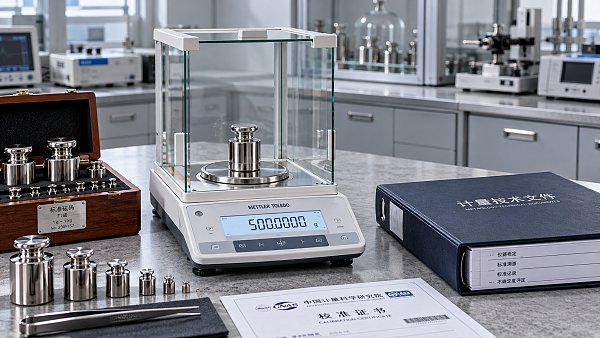
Suppliers sourcing flow sensors, Hall-effect speed encoders, and precision current shunts — especially those targeting Tier-2/Tier-3 module integrators — are seeing rising demand for components with metrological-grade stability (e.g., ±0.5% full-scale accuracy over temperature range −10°C to +60°C). However, procurement teams report limited visibility into SASO’s acceptance criteria for individual sensor performance thresholds, creating uncertainty in material qualification timelines.
Manufacturing Enterprises
OEMs and ODMs producing washers for export must redesign control board layouts and firmware architecture to accommodate the Accuracy Hub module interface, data logging protocols, and anti-tampering safeguards required by SASO 2663:2026. Unlike previous labeling standards, this revision imposes hardware-level integration constraints — meaning retrofitting legacy platforms is often technically infeasible. Manufacturers without in-house metrology validation capacity now rely more heavily on third-party module partners — increasing dependency and supply chain complexity.
Supply Chain Service Providers
Testing laboratories, certification bodies, and regulatory consultants accredited for SASO programs are experiencing surging demand for SASO 2663:2026-specific type testing and technical gap assessments. Notably, few labs outside Saudi Arabia currently hold SASO recognition for Accuracy Hub module evaluation — prompting some Chinese service providers to pursue joint-venture arrangements with Riyadh-based partners. Meanwhile, logistics firms report increased requests for certified cold-chain transport of calibration reference devices used during module verification.
Key Focus Areas and Recommended Actions
Verify Module Certification Pathway Early
Chinese metering module suppliers should confirm whether their existing SASO accreditation covers the 2026 revision’s expanded scope — especially the requirement for combined flow/speed/energy metrology under dynamic load conditions. If not, initiate application for SASO 2663:2026专项认证 (specialized certification) immediately, as laboratory slot availability is already constrained.
Align Firmware and Data Output Protocols
Manufacturers must ensure firmware versions deployed on production units comply with SASO’s specified data structure (e.g., ISO/IEC 11801–compliant timestamped logs, signed checksums), as non-standard outputs may invalidate test reports even if hardware meets accuracy specs.
Review Contractual Liability Clauses
Trading enterprises should revisit supplier agreements to clarify responsibility for module recalibration, firmware updates, and retesting following design changes — given SASO’s explicit stipulation that any hardware or software modification triggers re-submission of type test evidence.
Editorial Perspective / Industry Observation
Observably, SASO 2663:2026 represents less a simple label update and more a strategic pivot toward embedded metrological sovereignty — positioning Saudi Arabia to collect high-resolution usage data for future policy modeling (e.g., tiered water pricing, peak-load demand forecasting). Analysis shows this approach mirrors trends seen in the EU’s Ecodesign for Sustainable Products Regulation (ESPR), though SASO’s implementation is notably faster-paced and hardware-centric. From an industry standpoint, the requirement for Accuracy Hub–level integration is better understood as a de facto entry barrier for low-cost, non-integrated metering solutions — effectively consolidating market share among suppliers with metrology R&D infrastructure.
Conclusion
This regulatory shift underscores a broader global transition: energy and water efficiency standards are evolving from static, post-hoc declarations into dynamic, embedded verification systems. For exporters and component makers alike, responsiveness to such shifts is no longer about compliance alone — it is increasingly about co-developing measurement-ready architectures with trusted metrology partners. A measured, system-level response — rather than piecemeal adaptation — will define competitive advantage in regulated markets moving forward.
Source Attribution
Official source: Saudi Standards, Metrology and Quality Organization (SASO), SASO 2663:2026 – Household Washing Machines – Energy and Water Efficiency Labelling Requirements, published May 2026. [Status: Official Gazette No. 4821; Effective date for new applications: July 1, 2026; Full enforcement: January 1, 2027.]
Additional reference: SASO Technical Circular TC-2026-07 (issued April 12, 2026), clarifying module firmware update notification procedures.
Note: SASO has indicated plans to extend similar Accuracy Hub requirements to dishwashers and clothes dryers by Q4 2027 — subject to ongoing stakeholder consultation.
Taglist:
Recent Articles
 2026.10.27India Hosts 61st CIML Meeting for First Time, Advances International Metrology AlignmentIndia hosts the 61st CIML meeting, highlighting OIML-CS status and legal metrology reforms. Explore what international alignment could mean for instrument certification and equipment trade.
 2026.10.27When should you call emergency medical services instead of driving?When should you call emergency medical services instead of driving? Learn the critical warning signs, why an ambulance can be safer, and what to do while help arrives.
 2026.10.26Mycronic Wins $12–14 Million Photomask System Order from Asian CustomerMycronic secures a $12–14 million photomask system order from an existing Asian customer. Explore the writing and measurement systems and their planned 2027 deliveries.
 2026.10.26Piezoelectric Actuator Selection: Balancing Stroke, Force, and BandwidthSelect the right piezoelectric actuator by balancing loaded stroke, force, and bandwidth. Explore key design checks to improve precision and avoid costly sizing mistakes.
 2026.10.26Layer Deposition Equipment: ALD vs. CVD for High-Aspect-Ratio FeaturesCompare layer deposition equipment for high-aspect-ratio features. Explore ALD vs. CVD conformality, throughput, and costs to choose the right system with confidence.
 2026.10.26Checking repeatability in bulk orders of encoder-feedback nano stagesCompare encoder feedback nano-positioning stage wholesale offers using repeatability tests, lot acceptance criteria, and traceable reports. Learn how to reduce risk and buy with confidence.
 2026.10.25Sidea Semiconductor Granted Patent for Probe Card Alignment CalibrationSidea Semiconductor's probe card alignment calibration patent aims for precise, low-cost automation without a calibration target. Explore its potential for semiconductor testing.
 2026.10.25How to assess long-term drift in a high-stability laser interferometerAssess long-term drift in a high stability laser interferometer with reliable reference tests, environmental tracking, and clear acceptance limits. Learn how to validate lasting measurement accuracy.
 2026.10.24SIA Submits Comments to EPA on Draft Trans-DCE Risk AssessmentSIA backs EPA’s draft Trans-DCE risk assessment for semiconductor manufacturing. Explore what its comments could mean for continued lawful use, supply stability, and production planning.
 2026.10.24How to size plastic extrusion machines for your target outputSize plasticextrusionmachines for your target output with practical throughput calculations, resin checks, and line-capacity tips. Avoid costly sizing mistakes and choose with confidence.
 2026.10.23Leadmicro Showcases Full ALD, CVD and PVD Lineup at Bay Area Semiconductor ExpoExplore Leadmicro’s ALD, CVD and PVD lineup at the Bay Area Semiconductor Expo, including magnetron sputtering solutions and key checks for smarter equipment procurement.
 2026.10.23How much does closed-loop control add to the price of PZT drivers?Understand PZT drivers price increases for closed-loop control. Compare sensors, electronics, and installation costs to make a smarter purchasing decision.
 2026.10.22Leadmicro Adds PVD Products, Expanding ALD, CVD and PVD CoverageLeadmicro expands ALD, CVD and PVD coverage with new iMagtron PVD products and a ruthenium ALD process. Explore what these advances mean for thin-film deposition and equipment buyers.
 2026.10.22What limits commercial adoption of micro-robotics in Latin America?Micro-robotics Latin America: What limits commercial adoption? Explore costs, integration hurdles, and service gaps—and learn how to reduce investment risks.
 2026.10.21NTT, Furukawa Electric and Partners Launch Photonics Mass-Production R&DExplore NTT and Furukawa Electric's photonics mass-production R&D with partners, targeting scalable chip manufacturing for energy-efficient AI computing and higher-bandwidth data centers.
 2026.10.21What ultra-precision engineering case studies reveal about thermal driftExplore ultra-precision engineering project cases to uncover hidden thermal drift, assess compensation, and learn what evidence to request before choosing a precision system.
 2026.10.20BASF Signs Letter of Intent with Taiwan Ministry to Expand Guanyin Semiconductor MaterialsBASF’s planned Guanyin semiconductor materials expansion targets sub-2nm manufacturing. Explore what its letter of intent with Taiwan’s Ministry of Economic Affairs could mean for chipmakers.
 2026.10.20How to estimate medical technology costs beyond the purchase priceEstimate medical technology cost beyond the purchase price. Uncover hidden expenses, compare lifecycle costs, and use this guide to make smarter procurement decisions.
 2026.10.1960 Minutes: Iran War Drives Global Helium Shortage, Threatening Semiconductor SupplyIran war-linked global helium shortage reportedly threatens semiconductor supply. Explore chipmaking risks and practical steps to verify inventories, shipments and supplier commitments.
 2026.10.19How to specify zinc coating weight for prepainted GI steel coilsSpecify zinc coating weight for prepainted gi steel coils with confidence. Learn how to define Z275, compare standards, and verify compliance to avoid costly purchasing mistakes.
 2026.10.18How linear motor stage settling time affects inspection throughputOptimize your linear motor stage for inspection systems: learn how settling time, vibration, and exposure timing affect throughput—and boost inspection output without sacrificing accuracy.
 2026.10.17Choosing a microfluidic probe manufacturer for stable flow confinementChoose a micro fluidic probe manufacturer with proven flow confinement. Compare geometry, flow control, validation, and repeatability to find the right fit for your application.
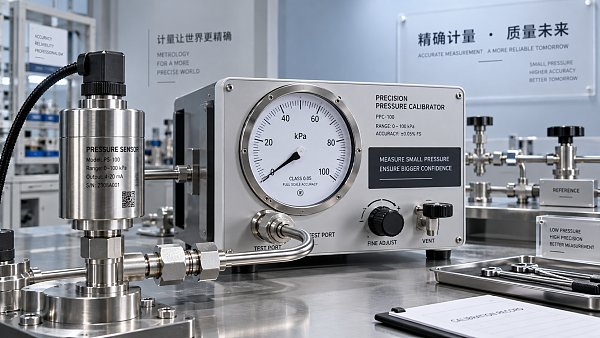
 2026.10.16What does measurement accuracy specified as % of full scale mean?Understand measurement specification accuracy as % of full scale. Learn to calculate error, compare sensor ranges, and choose the right instrument with confidence.
 2026.10.15How temperature affects high-accuracy dimensional analysis systemsDiscover how temperature affects high accuracy dimensional analysis systems, and learn practical ways to control thermal drift, improve compensation, and verify measurement accuracy.
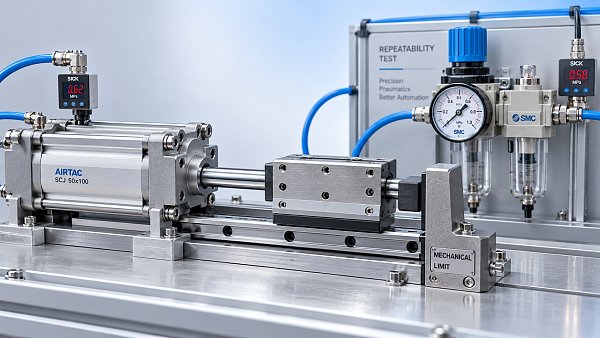
 2026.10.14How air pressure affects precision pneumatic actuator repeatabilityPrecision Pneumatic actuator repeatability depends on more than supply pressure. Discover how pressure, friction, and flow affect positioning—and how to improve consistency in your application.
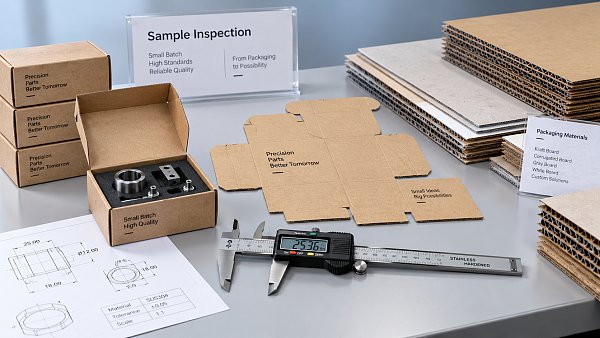
 2026.10.13How to choose a packaging manufacturer for small production runsChoose a packaging manufacturer for small production runs with confidence. Discover how to compare costs, verify samples, and secure quality packaging without excess inventory.
 2026.10.12Low-Impurity Silane Gas: Setting Acceptance Limits Beyond Total PurityEvaluate low impurity silane gas beyond total purity. Learn how to set contaminant limits, verify testing, and qualify suppliers for more reliable deposition.
 2026.10.12SEMI-Compliant Silane Gas: Which Specifications and Test Records Should You Check?SEMI compliant silane gas: Discover the standards, impurity limits, test records, and cylinder traceability checks that support confident purchasing and safer release decisions.
 2026.10.12Ultra-Pure Silane Gas Price: Comparing Quotes Beyond Cost per CylinderCompare ultra-pure silane gas price beyond cylinder costs. Learn how purity, usable quantity, freight, and return terms shape true value—and make a smarter purchasing decision.
 2026.10.12Moisture-Controlled Silane Gas: Tracing Water Contamination in Delivery LinesKeep moisture controlled silane gas reliable. Learn how to validate readings, trace water contamination in delivery lines, and verify recovery with safety-focused diagnostic insights.
 2026.10.12What Does 99.99999% Silane Gas Mean? Understanding 7N Purity and Detection LimitsEvaluate 99.99999 silane gas with confidence. Discover what 7N purity means, how detection limits affect results, and which supplier data to check before qualification.
 2026.10.12Ultra-Pure Silane Gas for Thin Films: Matching Gas Grade to Film RequirementsChoose ultra-pure silane gas for thin films with confidence. Learn to match impurity limits, supplier evidence, and delivery conditions to film requirements while avoiding unnecessary costs.
 2026.10.12Ultra-Pure Silane Gas for PECVD: Linking Impurities to Film DefectsQualify ultra-pure silane gas for PECVD with confidence. Learn how impurities affect film defects and use gas analysis, delivery checks, and film testing to set reliable acceptance limits.
 2026.10.12Qualifying an Ultra-Pure Silane Gas Manufacturer: Batch Consistency and TraceabilityQualify an ultra-pure silane gas manufacturer with confidence. Learn how to verify batch consistency, analytical results, and cylinder traceability to reduce sourcing risks.























FILTER_CORE
REF_NO: 0042
Editors' Picks
- 00
0000-00
India Hosts 61st CIML Meeting for First Time, Advances International Metrology Alignment - 00
0000-00
When should you call emergency medical services instead of driving? - 00
0000-00
Mycronic Wins $12–14 Million Photomask System Order from Asian Customer - 00
0000-00
Piezoelectric Actuator Selection: Balancing Stroke, Force, and Bandwidth